Category: Advice

  • Five Biggest Trends Impacting the Job Market

    Five Biggest Trends Impacting the Job Market

    Aging Baby Boomers.
    The largest demographic group in Canada  is heading for retirement. Of course, this will mean something very different for many Baby Boomers than for older generations. Boomers have maintained their health and stayed in the job market longer than any other generation of citizens in our country’s history.

    As they grow older, Baby Boomers will require more frequent, specialized medical care . They will also want to maintain connections with careers and family for as long as possible. Therefore, expect to see continued growth in fields that cater to their wishes. Growing teams of social workers and nurses will help care for the needs of these boomers

    Better Medicine.
    The high output of the pharmaceutical industry , combined with constant innovation in the rest of the medical field, helps us live longer, more productive lives. New treatments for previously fatal diseases require new approaches for rehabilitation. Likewise, many adults expect to work far beyond the traditional retirement age. Therefore, patients demand a new generation of physical therapists and other specialists to help prolong their quality of life.
    Child Care.
    As today’s parents demand higher quality from their child care providers, the marketplace has responded with a variety of programs to help meet parents’ needs. The explosive growth of pre-kindergarten educational programs call for highly trained educators who command more competitive salaries than their predecessors. Therefore, especially in major cities, the cost of caring for young children has skyrocketed. As a result, early childhood education has become a more lucrative and more stable profession than ever before. Though it has traditionally been a low-paying job, child care specialists today can expect to earn far more money today than peers who entered the field even a few years ago.
    Rapid Technology Growth.
    Despite fears that many  companies look overseas for development of new technology, the rapid advance of ideas and the need for constant upgrades assure  technology professionals of consistent job security over the next ten years. Businesses of all kinds have found themselves locked into the equivalent of an arms race with their competitors. Companies must provide their teams with the best equipment and resources, or face defeat.

    Likewise, continual innovation assures technology workers that new machines, cables, and other equipment will have to be installed every few years. Even Internet infrastructure, which was designed to provide nearly limitless connections, is being overhauled to accommodate a previously unimaginable number of new devices. Therefore, IT professionals who specialize in networking installation, and support will remain in demand as more businesses rely on new technology to help them compete.

    Distributed Work.
    The giant factories and smokestacks of a hundred years ago are fading into the pages of history books. Many of today’s workers report for duty at smaller offices or manufacturing plants, connected by information networks and sophisticated shipping infrastructure.

    A growing number of employees, especially specialized consultants and leaders, divide their time among multiple locations at companies or client organizations. This trend has led to the use of  “hot desking,” where workers report to a different workstation at the start of each shift, instead of keeping their own desk or cubicle. Many workers telecommute, allowing them to reinvest time spent commuting into more productive work or family time.

    As a side effect, more workers are relocating to larger homes, farther away from city centers. Whether they want to enjoy more peaceful surroundings or they simply want to reconnect with family or friends, these shifting workers create demand for home construction , renovation, and infrastructure development.

  • How to Prepare for The Dorm

    1. Write a list of the stuff you know you need. A good start can be found below

    * Bedding (sheets, comforter, pillows, mattress pad. A lot of colleges use Twin Extra Long mattresses which are a few inches longer than a regular twin. Do not skip the mattress pad; dorm room mattresses by themselves are not comfortable)

    * Toiletries (shower tote, towels, soap, shampoo, toothbrush, toothpaste, shower sandals, bathrobe)

    * Storage (under-bed plastic tubs, laundry hamper, drawers. Organizing your closet with a shoe rack or sweater organizer is always a good idea.)

    * Personal touches (posters, lamps, Christmas lights, knick-knacks)

    * Clothes (typically bring enough to last you three weeks without having to do laundry; you’re not going to want to do laundry every weekend. A wide variety is good as well so you’re covered no matter what the weather is doing. Remember to bring nice clothes you’d wear to a job interview because you never know if you’ll need to look snazzy.
    * Necessary miscellaneous (fan, alarm clock, refrigerator (optional), bedside lamp, clip-on shelf for your bed frame, laptop, laundry detergent, umbrella)
    2. Take this list to a trusted college graduate who can help you decide what you can do without.
    3. Start thinking about what necessities you need. Those necessities are; a couple pairs of shoes, clothes that are of a wide range (bring summer and winter stuff), shower and bathroom stuff, entertainment stuff.

    Tips

    * Wait until you have moved into your dorm before you begin buying a lot of things. You may find after you get there that that really cool organizer bin will not fit in the room, or the doors are not set up for organizers to be hung from them.

  • How to Survive Without a Salary


    Today my grandmother gave me a thick antiquated book entitled “How to Survive Without a Salary”, by Charles Long, circa 1981. The truth is that I’m employed, as a writer here for Jobspeopledo and a barista at a coffee shop. My grandmother is aware of both those facts. So I do in fact earn summer salaries, but with her infinite wisdom, my loving old granny felt the need to bestow the book upon me nonetheless. With a career as a student and jobs that pivot around an education’s schedule, it’s pretty much impossible to predict long term income or complete financial stability anyway. My grandmother knows that despite the state of a person’s finances, tips on how to adopt what Long calls the “conserver lifestyle” are always good to consider.


    So let’s consider them. Long defines the term conserver lifestyle as “a means of coping better with what (one) already has.” Chapter one of his novel deals with internal factors preventing you from finding success in that regard. For interest’s sake, let’s pretend we don’t have any of those. But chapter two is ‘Assessing Yourself: Making a Budget,’ which is definitely worth a look. You never want to be spending more than your wallet can handle, especially when, as students, there are some costs that can’t be evaded.

    According to Statistics Canada, Canadian student tuition fees alone averaged at $5,777 in 2008-09, with Quebec’s $2,488 average the lowest and Ontario the highest, at $8,797. But there are also “ancillary fees,” those compulsory extra charges over and above tuition to cover things like athletic programs, health services and student associations. These fees added an average of $695 more to the demands on a full-time Canadian undergrad in 2008-09, ranging from a low of $423 in New Brunswick to a high of $827 in Nova Scotia. Ancillary fees are usually unregulated, but you can often look into them on school websites and find opportunities to opt out of what you don’t need.

    We can all survive without a salary while we are students if we keep watch on costs and budget ourselves accordingly. Long claims that “costs are always more important than earnings…there is nearly always more advantage in reducing costs than in increasing earnings.”

    In order to be able to sustain yourself while you get an education with an unstable salary and all of these subsidiary costs to student life, several banks like RBC and TD Canada Trust have places for you to create your own budget lists on their websites. At the time the book was written, without widespread use of the Internet it was a bit tougher to budget, but today many student budget list templates can be found online as well. The Office of the Superintendent of Bankruptcy Canada’s student budget section is a good resource, at http://www.ic.gc.ca/eic/site/bsf-osb.nsf/eng/br01399.html.


    After the section on budgeting Long gives eleven more chapters of detailed analyses on financial strategies, many of them useful. He says, “A penny saved is not a penny earned. A penny saved is a hell of a lot more than a penny earned today.” We know that simply by keeping our savings in the bank, they grow with interest. That can apply to scholarship money or bursaries that may be extractable for personal holding (OSAP, for example).

    Chapter six, on ‘The Second-Hand Market’, is my personal favourite, advocating the benefits of getting everything and anything used or pre-owned. Shopping in thrift stores doesn’t only help your wallet, but choosing to reuse can help our planet too.


    I’m glad to have been given this book, and prepared to become more money-conscious. With sky high tuition costs and the absence of established careers at this point in our lives, it’s smart to consider advice from anyone, outdated or otherwise, especially a published professional. And where did my grandmother find this yellowing treasure? At Value Village, naturally.


  • The First-Year Flop

    The First-Year Flop

    With the first few weeks of September gone by, college and university students all over the country are getting into the swing of being back on campus.

    For first-year students this is a time to mispronounce your professors name, accidentally sit in on the wrong class, order a tea but get a coffee, and miss your bus to that one class that you promised yourself you would attend no matter what. Beyond that, there is one terrible truth looming over most students that they are blissfully unaware of; the first-year flop.

    Every year students come out of high school with enormous averages, expecting the trend to continue into university without a hitch. For most, September and October are a brisk reality check and a time to realize that you can’t get your mom to write you a note explaining why your first paper is late. If you wrote essays and scored in the 90s back in high school, you can almost guarantee that you won’t see that in your first year. The university grading level is an incredible change from high school, and first year is your bumpy transition into the upper echelon of academia.

    So what does all this mean? Well, prepare to be disappointed. Very few students excel in their first year as they did in high school, and it’s nothing personal. If you talk to any university professor or upper-year student, I would guarantee that they stumbled somewhere along the line when they first arrived at college or university. It happens, and it’s nothing to be afraid of!

    You are in a prime position to learn a lesson from this experience. If you receive a poor grade, go talk to your professor. See your TA, find out where you went wrong, and more importantly, how to fix it. And if it happens again, don’t sweat it. First year is meant for students to gain a foothold. As long as you can keep your grades high enough to enter your program of choice, in all reality, your grades from this year won’t matter too much in the long haul.

    If you’re still sweating it, there is one other thing you should know. For university students, most masters programs only look at your average over the last two or three years of study. If you think I’m getting too far ahead of myself, I’m not (I promise!). You should try to be as aware of your academic path as possible, even while you’re in first year. If you think you may have even the smallest interest in pursuing a masters degree, find out what they’ll be asking of you. While it’s 3 or 4 years off, you’ll be at ease if you can confirm that they don’t care about your first year grades. This isn’t an invitation to slack off because you’ll still need a solid average to get into an honours program if that’s what you’re aiming for, but it’ll definitely ease the tension after your first calculus exam comes back with a 68% instead of an 86%.

    If you can study hard, ask questions, and meet your deadlines, you’ll be ahead of the game throughout college or university. Meet with your professors and TAs, and your grades shouldn’t dip too much!

  • Bringing Ballet to the Bank

    Jobs People Do | JobsPeopleDo.comBrooke Nagy is an 18 year old on a fast-track to becoming Canada’s next prima ballerina. Becoming a professional ballet dancer was not a decision Brooke made on a whim. It has taken a lifetime of preparation and focus. Since age three she has been classically trained in Ceccetti ballet, and has developed an advanced knowledge of both classical ballet and modern dance.


    Brooke has had the opportunity to dance professionally at many points throughout her career, but decided that it was important for her to complete her high school education before devoting herself entirely to the art. “I’ve already trained with the CanadianNational Ballet School and the Quinte Ballet School,” Brooke explains.

    “For two summers I was accepted to study as a part of the Canadian National Ballet School’s ballet-intensive summer school program, which led to the opportunity to be a part of their full-time program. I’ve also been accepted to (and attended) the Quinte Ballet School’s Summer School Program, which led to an acceptance into their full-time program” she continued.


    Ballet may well be in her blood, as her mother is a classical ballet teacher and former professional ballerina for the Miami Cityballet. Brooke intends to one day take over her mother’s dance studio, after travelling and performing as much as possible. She applied to the National Ballet of Canada’s Teacher Training program, New York’s Adelphi College and Suny Purchase College’s Conservatories of Dance and George Brown College’s prestigious dance program, garnering preliminary acceptance to all, but choosing to accept George Brown’s offer.

    The Toronto-based program will prepare her for an intensive Bachelor of Fine Arts transfer after earning her two year diploma, and set her up for work with Canada’s Ballet Jörgen, a renowned Canadian classical ballet company that selects dancers from George Brown program alumnus.


    Among the highlights of Brooke’s auditioning process was when famed Canadian dancer Frank Augustyn called her out from a class of second and third year Adelphi ballet students she was placed with, praising her grace and skill above those of professional dancers with many more years of training. She was then offered a ten thousand dollar dance scholarship for Adelphi, a tempting offer that she may return to later in her career.


    Choosing a career in dance is not always wise. As a professional dancer, it is extremely rare for you to be onstage for more than ten years, and afterwards you are left with few employable skills unless you want to teach it. Commonly considered viable careers probably won’t care that you can do 32 continuous foutee turns. Also, even if you are taken into a ballet company or performance troupe, it is very unlikely for you to occupy any sort of principal or soloist position. “The vast majority of dancers in classical ballet companies still occupy positions at the bottom of the corps de ballet as very minor dancers in very large numbers”, according to Helena Wulf’s Career and Culture in the World of Dancers. But if you are passionate about becoming a dancer at any level, and you are willing to accept the likely financial instability and certain physical strain, you will find happiness in pursuing professional dance.


    For Brooke, the choice of dance over other more job-stable programs was quite simple. “I want to be a dancer over everything else. I know that the field of dance is where I excel and where I belong.” Whether it be the National Ballet School or Frank Augustyn himself, the ballet world agrees.

  • The Dorm: Your Home Away from Home

    The Dorm: Your Home Away from Home

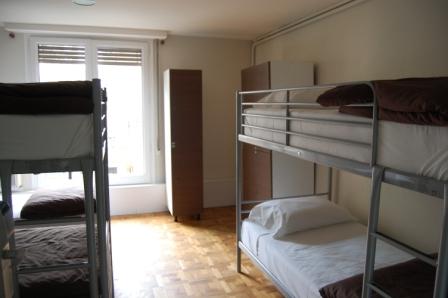
    Almost every university or college has dorms for students to live in while going to school. Dorms come in all shapes and sizes with unique characteristics just like the people who live in them every year. Depending on your school, you probably had/have to fill out a questionnaire type sheet asking you things like your interests, how much time you expect to spend studying, whether you prefer quiet all the time or are comfortable with noise, etc. These sheets are the university version of eHarmony for roommates; based on your answers the school will match you up with someone they think will be a suitable roommate for you for the year. Sometimes it works brilliantly, and other times it might feel like there’ve been a few snags. Before you start panicking though, remember that your on-campus experience is going to be what YOU make of it!

    Here is a quick guideline to two styles of the university/college room:

    The double:

    The room houses two people of the same sex (I’ve never heard of any college or university in Ontario or even Canada having co-ed rooms). Your first day in the room with your new roommate might be an awkward dance of deciding territory – I’ve heard of people putting a line of tape down the middle of the room – or it could be the start of a brilliant bonding experience with your new roommate. As long as you don’t have any gross hygiene habits (you really should try making sure that your dirty underwear makes it to the hamper and not over by the stack of comics that your roommate worships) and don’t hang up any scary posters (it might be nice to ask your roommate what they think of Marilyn Manson before plastering him all over the room) then you should be on your way to beginning a healthy roommate relationship.

    The single:

    A room all to yourself – home sweet home! During my first year at Brock University, I lived in a single room in a five-floor building. The rooms were big enough to be comfortable and despite the concrete block walls, my floor mates and I managed to make our rooms fun and even visitor-friendly. Each person shared a bathroom with one other individual. The bathrooms connected two rooms and if you left both doors to the bathroom open, you and your “broomie” could walk back and forth between your rooms. This was especially handy during long night study sessions or hall parties (with 51 students on each floor of the building, it was pretty tough to jam them all in one room so sometimes a bunch of rooms would be open and your floor friends could wander between them and socialize.)

    The dorm is your home away from home, so be excited! Once you get over your first-year jitters, you’ll probably love on-campus college/university life. Check back for more campus life tips and guides in the future!

  • Show Me the MONEY!

    Show Me the MONEY!

    SHOW ME THE MONEY!

    During your first year of post-secondary education, you might feel like you have a chorus of administrators telling you to SHOW ME THE MONEY! This is probably the least awesome part of your university/college experience but don’t lose hope! You can pay for your education and still have some dough left over if you manage your money.

    There are some great resources for student loans and scholarships that you can check out later but for now, I’m going to share the best money-managing tip that’s saved me some mulahs over four years of university.

    Some students may want to work during their first year, while some might prefer having more time to focus on their studies and soak up the university/college atmosphere. Either way, you’re going to want to have some extra cash handy to buy food, clothes, videogames, hovercrafts, etc. The best way to make sure you’re not broke by October 1st is to…
    (more…)

  • Five Places Teens Should Look for Summer Employment

    Five Places Teens Should Look for Summer Employment

    You can begin your search now  !
    1. Golf Courses. Golf courses are everywhere and have a huge need for seasonal employment. Caddying, landscaping and working in the gift shop or restaurant are some opportunities available to teens. (more…)

  • Living Off Campus

    Finally you have a shower and bathroom that’s your own, or shared with only a few. You can do in your room whatever you want as loudly or quietly as you want to. You have a lot more personal freedom (and personal peace and quiet) than your friends do back on the campus. You can buy your own groceries, which means you can enjoy some good home cooking

    Be Picky About Your Housemates
    If you’re looking for housemates, look carefully. Don’t assume everyone is honest or fair on the first glance. Make sure you know everyone well, and if you don’t, get references. New roomies shouldn’t care about you asking for references and if they do, think twice!
    Look for someone with a history of being responsible. When the rent comes due, you need someone you can trust to pay up, regularly and on time.  In most cases you will have to sign an agreement with the landlord that says if someone doesn’t pay, you will all have to be responsible for the money your housemate owes.  They may even call your parents to share in this money owed to them.
    Also look for someone who shares your ideas of quietness and neatness or living arrangements in general. Slobs need to live with slobs, and people who like to play heavy rock at midnight need to find roomies who enjoy rock at midnight. (Although, I don’t know when they study)
    If you’re a neat freak, look for another neat person. Otherwise you’re asking for constant conflict with someone who doesn’t mind the smell of beer-soaked carpet, or crusty dirty dishes on the coffee table.
    Before you move in, talk about how you feel about overnight guests, drug and alcohol use and late-night parties. Talk all this stuff out in the beginning, so everybody knows what the house rules are
    Enjoy and have fun!
    Sean,
    Prince Edward Island