Category: Elementary

  • I Want to Be A Robot!

    I Want to Be A Robot!

    Miss Inglis’ kindergarten class at Parliament Oak elementary school had to answer a special question this week. The question: what do you want to be when you grow up?

    The study of childhood occupation aspirations has been going on for decades and approached from many different angles. From the psychological transition of fantasy to realistic choices, to gendered influences on the traditional roles children choose.

    In a 1952 Ginzberg study, it was noted that children go through three stages in choosing occupations: “fantasy choices (before age 11); tentative choices (ages 11 to 17); and realistic choices (ages 17 to young adulthood).”

    Parliament Oak kindergartener Jack wants to be a robot. Maddie wants to be a rock star and James wants to be a spy.

    These children’s choices are fantastical. But as the workforce in Canada shifts towards the service industry and technological occupations, even a mail carrier may soon be considered a fantasy career choice.

    However, some career choices will stand the test of time. For example, kindergartener Ciaran wants to be an animal scientist, and Alexander wants to be a doctor. Career choices in science are likely to continue to be in high demand despite rapid changes in technology.

    Gender influences noted by scientists Levy, Sadovsky, Troseth, and Stroeher determined that early in life, especially from ages four to seven, young boys and girls are likely to choose traditionally male or female careers.

    This was a very common theme in Mrs. Inglis’ class; Oskar wanted to be a soccer player, Brian a policeman, Sophie a hair stylist, and Katherine a bride. However, social psychologists Garrett and Tremaine reported, “as children get older, they tend to be more flexible in choosing non-stereotyped careers”.

    An interesting aspect of these studies done in the 1970s is that boys reported to have double the amount of fantastical career choices than young girls. Garrett and Tremaine’s research noted, “girls learn early on that few adult vocations are open to them.”

    Today, we are living in the crossover effect of male/female college enrolment rates. According to the Population Reference Bureau organization, it officially occurred in 1993 and now leaves males seven percentage points behind females when it comes to college populations.  This change improves the likelihood of female success in the workplace and increases their vocational opportunities.

    Mrs. Inglis’ class did not reflect that change, with boys and girls averaging at very similar amounts of choices. The students are set to graduate this week, and it will be neat to see what they will become, and who will find success in the workforce of the future. My money is on the robot kid, but only time will tell.

  • What’s a Living Statue?

    What’s a Living Statue?

    Suppose that you could make a good living just by standing still. If you are physically fit, have good self-discipline, and enjoy acting, you could become a special kind of performer called a living statue. Ever since circus performers first started acting as living statues, this form of mime has become extremely popular, especially in Europe. People like Petronella Carter of London, England have made the art of being a living statue into a career.

    The name “living statue” describes what the job involves. Basically, living statues pretend to be real statues of various people, such as famous authors, painters, or characters from books or movies. They might join with other living statues to create a scene from history or everyday life or they might work alone.

    Every year, living statues in Europe hold competitions in the Netherlands to see who is best in various categories. Children, amateurs and professionals compete to see who has the best costume, best act, and most interesting entertainment. Each person portrays a certain character, such as a girl selling flowers or a man carrying luggage. These competitions bring a large audience to watch both the stillness and the movements of living statues.

    Being a living statue involves working on many different aspects of character, costume, and movement, according to Petronella Carter. She has been working as a living statue since the 1990s. During these years, she has learned a lot about the art and her own skills in portraying various characters.

    Many living statues work at street festivals and other outdoor events, but Petronella works mainly indoors, where she has a greater range of costumes and characters to use. Sometimes, she has to spend an hour and a half putting makeup all over any part of her body that is not covered by clothes. This makeup helps her to look like a statue made of bronze or other metals.

    Through her work, Petronella has developed ways of dealing with the challenges of being a living statue. She limits the amount of time she stands in one spot and has learned to control her breathing. Petronella can ease the pain of sore limbs with small, slow movements that no one is likely to notice. However, she also knows that standing still is not enough.

    Movement is what makes the difference between a living statue and a stone or metal one. Most living statues make an occasional small movement or even a large action. They might wink an eye or give out flowers to people going by to show that they are alive.

    Becoming a living statue does not require any special education, but it involves a lot of self-discipline and training. If you want to join this profession, you could start by learning to be a mime and by slowly increasing your ability to stand motionless.

  • Real Jobs: Hot Dog Vendor

    Real Jobs: Hot Dog Vendor

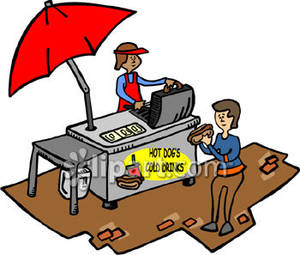
    Some jobs seem like they can’t be real – just think of being a hot dog vendor.  Everyone loves hot dogs, and it seems like a dream that you could even work with them. Work in this field can be very good for independent people who enjoy being with people and dealing with food.

    You and your family might sometimes eat food from street vendors. You go to a food cart and ask the person for a hot dog with mustard or ketchup, and then the vendor puts the food together and gives it to you. Hot dog vendors spend much of their time selling food to people on the street or in office buildings.

    The first step in becoming a hot dog vendor is to learn about how to handle the food. Wieners are easy to cook, but they have to be stored properly. Buns also have to be fresh, and the condiments (like ketchup and mustard) also require care. Before they start to work, hot dog vendors need to know about handling food safely and about cooking meat properly.

    Some hot dog vendors learn all that they need to know by working with others on the job. Others, however, might decide to take classes at a college or cooking school. A small percentage of hot dog vendors might even get a degree in a subject related to food or even something completely different. Education has little effect on a hot dog vendor’s salary, but it can help to provide background information that can be useful for the work.

    Besides learning about how to handle food, hot dog vendors need to learn about their equipment. They have to use fuel tanks, cooking utensils, and anything else that they need to run the business.

    Do you love food and being with people? Why not consider working as a hot dog vendor?

  • School vs. Life

    School vs. Life

    When you  make the move to junior high and high school, everyone seems to think that there is no way to balance both having a social life and excelling in you academics. However, there is always a way – as long as there is a will!

    The way I see it, you need to earn your breaks, vacations and time off; That is what used to drive me to finish up my last essays and my final projects. I would look at the calendar and mutter to myself, “It’s almost March Break – I got to work hard now so that I can fully enjoy my time off school”. Then I would put all of my effort into my work until the very last class and forget about (almost) everything! Essentially, you want to be able to relax during your breaks and long weekends, so you just have to think of this as a “crunch time”.  Even now, in university, I do this to myself – I work and study hard and once I finish the exam, I shop! Sounds odd to some people, but I call it a “Celebratory Spree Day”, the day when I get to relax after pushing myself to study so hard for my exam period.

    One can also practice time management by planning when you will study and setting aside a few hours for fun with friends, too. For example, give yourself some hours to hang out with your friends before heading home to finish assignments and study.  It’s possible to have great academic standing and a social life, you just need to have the determination and the planning.

    Always remember to enjoy life!

  • Reasons to Use Kids Help Phone

    Reasons to Use Kids Help Phone

    Kids Help Phone is a free, anonymous resource that is there for you 24/7. Its purpose is to give young people someone to talk to when they feel they have no one who will listen to them. It is important to know that there are people who care and want to help you with any problems you may have. Kids Help Phone has many uses – here are just a few.

    1) You need an objective opinion or want to ask questions anonymously.
    If you need to talk with someone who will listen to what you’re going through, and you don’t trust or want to speak to friends or family, then the Kids Help Phone is a great resource for you. Sometimes you don’t want the people closest to you to know what it is that you are feeling or thinking about. It may be because of a fear of losing their respect or simply of changing the image that they have of you. Whatever your reason, speaking with someone who is trained and knowledgeable on how to handle the information you will share with them is often a good option. When you call the Kids Help Phone you can rest assured that the information will remain confidential, unless it involves information that must be reported to the police (such as reporting a threat to your own or someone else’s life).

    2) You are undergoing a traumatic period in your life and would like support.
    Sometimes we suffer because of life’s circumstances, and in this case it is really important to talk with people about what you are going through. You may not want to talk with friends or family because you feel they may not understand, but with Kids Help Phone you can talk to a person who has been trained in dealing with emotional crises. They will be able to talk to you about relationships, sexuality, drugs and alcohol, eating disorders or anything else that you feel is affecting you.

    3) You want to speak with someone who will listen to you.
    Often in the hustle and bustle of everyday life, there is so much going on that we can feel ignored or that we don’t matter. It can be very hard to find someone who will just listen to what it is that you are going through. The time rarely comes up where you feel it is okay to pour out your soul, and because of this you can be left with some important issues bubbling just under the surface. It is important to “vent” and to talk about your life and what sorts of challenges you are facing.

    4) You need to report an incident.
    If you don’t feel comfortable speaking directly to the police or don’t know what to do after an incident, the people at Kids Help Phone will listen and help you to deal with the situation. This can range from bullying, an incident of physical or sexual abuse or a crime like theft.

    5) You are in a crisis and need to talk to someone as soon as possible.
    If you are feeling that you are in a crisis and are having thoughts of suicide, a counsellor at the Kids Help Phone will be a great person for you to speak with. They can help to “talk out” your problem and ensure that you get the assistance you require. Remember that you are never alone! Suicide is not the answer. Reach out to someone at Kids Help Phone and they will be there for you when you feel no one else is.

  • Paying It Forward

    Paying It Forward

    I recently heard about someone in a Tim Horton’s drive-thru paying for the coffee of the driver behind them. I thought it was such a nice thing to do for a complete stranger. I also couldn’t help but think about how great it would be if more people did kind things for others without expectations of owing them back.

    Couldn’t our society use a couple more acts of kindness? It all starts with one person, and that person could be you. Small acts of kindness can make a huge difference, even if it may seem like they aren’t. Something as simple as smiling at someone accompanied by a good morning greeting can really make someone’s day.

    On a larger scale, volunteering for different charitable causes can contribute to a larger issue. Many organizations rely on volunteers to bring about social change. You will be helping others who really need it and doing it out of the goodness of your heart.

    Paying it forward with kindness is a wonderful, selfless thing to do. It doesn’t have to require any money and doesn’t have to take a lot of time. There is no reward greater than doing nice things for others and making others happy. Although the reward isn’t in the form of money or recognition, the way you will feel about yourself after you pay it forward with kindness will be a reward in it itself. The key to paying it forward is that it comes from a genuine and sincere place within you. You should want to do kind things for others not because you think you will get something out of it, but for the betterment of the other person.

    The last time somebody held the door open for you, you probably felt gratitude. Maybe you made sure to hold the door open for the person that was behind you. Even a small gesture of kindness can make you feel great and make the world seem like a better place. Often kindness works in a chain reaction effect. It can start with one person doing something kind for another person and then that person wanting do to something kind for another, and so on and so forth. It can be almost infectious, in a good way.

    Doing kind things for others can also help strengthen the community. It allows you to connect with another person even if only for a short period of time. It brings people closer together and allows them to co-operate. People begin to act as a support system to one another and look out for each other’s best interests. So, today, why not try paying it forward and doing something kind for someone else? I guarantee that you will feel awesome after!

  • Dream Job: Hockey Player

    Dream Job: Hockey Player

    Many people dream of being a famous sports star when they grow up, but not everyone achieves that dream. Have you ever wanted to become a star in a sport like hockey? A Canadian athlete named Hayley Wickenheiser has become well known for her amazing athletic abilities and for her work in helping others. Like other hockey players, she has worked hard at her sport while also balancing it with the rest of her life.

    Becoming a professional hockey player takes a combination of talent and hard work. Hayley Wickenheiser discovered her athletic abilities early. She grew up in Shaunavon, Saskatchewan, where she became skillful at several different sports, including hockey and softball. When she was fifteen years old she started playing hockey at the Women’s World Championships as part of the Canadian National Women’s Team. The team won seven gold medals over the next years. Hayley later played on men’s teams in Finland and Sweden, and she has won gold and silver medals at several Olympic Games. She is now known as one of the best athletes in the world.

    For most athletes, the time they spend on playing their sport every year is fairly short because the work is seasonal. However, they spend a lot of time during the rest of the year on training and keeping themselves healthy. They run, lift weights, swim, cycle, and continue to practice their skills. They try to keep themselves healthy by eating good food and avoiding anything that might make them sick. They keep themselves strong so that they can play well.

    A career in sports is not usually very long, and most athletes move on to other jobs by the time they are about thirty years old. Some athletes have to leave sports because of injuries, but most of them leave because of age, when they no longer have the energy to keep up with the demands of the sport. Hayley Wickenheiser has continued in professional sports longer than many other athletes, but she is also preparing for a different career after she finishes playing hockey. In 2013, she received a science degree in kinesiology from the University of Calgary, which will help her if she works to help other athletes play better.

    Besides her sports and her studies, Hayley has been working in several other areas. She works with several groups that encourage girls to get into sports, and she also works with a group that buys mosquito nets for people in countries that have trouble with a deadly disease called malaria. Hayley has traveled to Africa to work with the charity that she started, Right to Play. Her personal life is also busy, since she is looking after her son in addition to everything else that she does. She is already well known for her hockey skills, but people also recognize her for this charitable work.

    Are you good at playing hockey?  If you practice your skills and become part of local teams, you might someday be able to make hockey your career.

  • Dream Job: Ice Cream Taster

    Dream Job: Ice Cream Taster

    Imagine a job where you could get paid to eat your favourite food all day. Could anything like that be real? Working as an ice cream taster, for example, sounds like an imaginary job, but it really does exist. A man named John Harrison samples many different flavours of ice cream every day as part of his job for Edy’s Grand Ice Cream. Becoming an ice cream taster like John Harrison involves education, constant learning and daily care of the taste buds.

    People who want to work as ice cream tasters might start by getting a job in an ice cream shop and learning about different flavours, as well as finding out what people like to eat. Knowing how to preserve ice cream and to make it look and feel right is also very important. After high school, the next step is normally to get a university degree in an area such as food sciences.

    A food sciences education will help the ice cream taster learn more about different flavours and how they interact with each other. Courses in this program are also helpful for learning about proper food handling procedures and other things that ice cream tasters need to know. Working as an apprentice in an ice cream manufacturing company is another way of learning the skills necessary for the job.

    For John Harrison and other ice cream tasters, taking care of the taste buds is very important. Do you know how your taste buds stop working properly when you burn your tongue with a hot drink? Anything that affects the taste buds can influence an ice cream taster’s work. Before John Harrison goes to work, all he has for breakfast is some oatmeal with tea to drink. He has about sixty types of ice cream to try every day, and he has to make sure that his breakfast has no effect on his taste buds.

    Ice cream tasters have to develop methods of having only one taste in their mouths at a time. Normally, they roll the ice cream around in their mouths and then spit it out. John Harrison starts his day with lighter flavours like vanilla and then works up to stronger flavours like chocolate. Between flavours, he eats a plain cracker to get rid of the previous taste. Sometimes, he has to sample flavours that he does not like, but he has to think about what others might enjoy.

    Do you love to try new ice cream flavours? Do you have very sensitive taste buds? If so, you might want to consider becoming an ice cream taster.

  • Working with Nature: Park Rangers

    Working with Nature: Park Rangers

    Every year, people across Canada go to visit national or provincial parks. They go hiking or camping, and they spend time walking in the forests or swimming in the lakes. Have you ever thought of the people who help keep those parks going? Someday, you might be able to look after the animals and people in these places if you decide to become a park ranger – also called a warden.

    Park rangers or wardens are people who help to keep parks running smoothly, helping both the animals that live there and the people who come to visit. If you love the outdoors and want to help preserve it for the future, working as a park ranger might be the job for you.

    Many different activities can be part of a park ranger’s job. Rangers have to know how to deal with both large and small animals and to be able to work with them safely. They have to know about the different types of animals in the area and to be able to help them when they are sick or injured. This work can often be dangerous. Moving animals from one place to another spot inside or outside the park is also a dangerous but important part of the job.

    Knowing about the plants in the area is also important for park rangers. If they know the locations of poison ivy, for example, they can tell people what areas to avoid and where they need to be careful. They can take people on nature tours to teach them all about the animals and plants they might see.

    Learning all about the plants and animals in the park takes a mixture of education and experience. Normally, park rangers have four-year degrees in areas such as wildlife biology or botany (the study of plants). Having a general knowledge is important, but park rangers can also become specialists in one or two areas, like bears or insects.

    In some cases, the work of park rangers is close to law enforcement, especially when they work with people who come to visit the park. Park rangers help to enforce the rules, such as the regulations about when people can build fires or what they can do in campgrounds. They might also have to search for people who are lost or help anyone who has been injured or is feeling sick. Park rangers have to know basic first aid and to be able to deal with whatever happens.

    If you decide to become a park ranger, you should be prepared to live in a small community instead of a city so that you can be close to your work. You should be comfortable with working alone but also be able to work with people and to talk with the public. If this kind of job sounds good to you, maybe you should consider becoming a park ranger.

  • Why Do I Have to Take Social Studies?

    Why Do I Have to Take Social Studies?

    Why do cars in Canada drive on the right side of the road while cars in England drive on the left? Why does Canada have a Prime Minister while the United States has a President? Why does an ice cream at one shop in my neighbourhood cost more money than the same ice cream at another shop? All the answers to these questions can be found when you learn about social studies.

    Social studies is made up of many different topics like history, politics, geography and economics. While these courses are taught in high school and university, students learn the very important basics of social studies in elementary school.

    A “society” is a community of people who live in the same geographical area and share the same cultural customs and laws. Because a society is made up of families, students of social studies first learn about how the family works within a community.

    Families are like mini societies because they are made up of people who live in the same place and share the same traditions and rules. Family members learn to work together as a team. By sharing and caring for each other, family members can more easily achieve their goals. In the same way, members of a society must learn to cooperate and understand each other so that the society’s goals can be achieved. In a very diverse society like Canada, it is important to learn about the people who live in your community so that you can learn how to get along. Students of social studies thus learn how to appreciate diversity within their communities and around the world.

    As students learn how to cooperate with others, they also learn how to be involved in their communities. They learn about the different ways that decisions are made by community leaders and they learn about what they can do to impact these decisions. For example, in social studies, students learn about why it is important to vote. They learn about how governments work and what politicians do. They also learn how to make decisions that will help to influence society the way they think would be best.

    Topics taught in social studies show how humans can achieve more when they work together. Students who learn the subject can actually learn how they can make the world a better place.

    In that way, social studies might just be the most important subject of all!