Category: Finance

  • NEADS NEWS: Seeking Your Financial Aid Stories!

    NEADS NEWS: Seeking Your Financial Aid Stories!

    Do you have stories of challenges you have faced in getting financial aid to support your college or university studies, as a student with a disability?

    If so, we want to hear from you! The National Educational Association of Disabled Students (NEADS) is collecting student narratives on the difficulties of navigating Canada’s student financial aid system. We are especially interested in your experiences with government grants and loans programs. Your stories will inform our advocacy to improve financial aid in Canada for students with disabilities.

    Please share your story with us by completing the following survey online, which is supported by the Canadian Association of Student Financial Aid Administrators and hosted by the University of New Brunswick: http://goo.gl/hj4Ndq

    We ask that surveys be completed by May 30, 2016. Thank you for your help in improving the post-secondary experience of students with disabilities in Canada!

    National Educational Association of Disabled Students (NEADS), Rm. 514 Unicentre, Carleton University, Ottawa, Ontario, K1S 5B6 tel. (613) 380-8065 ext. 201 www.neads.ca

    “Supporting access to post-secondary education and employment for students with disabilities”

  • No Cost Education? Ontario’s Future Proposal for Low-Income Families

    No Cost Education? Ontario’s Future Proposal for Low-Income Families

    On March 1st, 2016, it seemed that parents and students alike breathed a sigh of relief when it was announced in the news that the Ontario government will cover tuition fees for low-income families by 2017. After all, these parents and students know how costly it is to study at a college or university in the province.

    The said no-cost college or university education is courtesy of the Ontario Student Grant, which the Ontario government will introduce next year. Once up and running, students from households earning $50,000 or less will see their average tuition fees at a college or university entirely paid. On the other hand, those households with income of $83,000 can still qualify for non-repayable grants for tuition.

    An estimated 150,000 students from low-income to middle-income families are eligible for receiving the financial assistance. That is not all. It is said that about 80 percent of current OSAP recipients are expected to have diminished student loan debt compared to existing OSAP rules, while 90 percent of dependent college students whose parents earn less than $50,000 are expected to receive OSAP grants greater than average college tuition.

    These figures are promising indeed. However- they may sound too good to be true.

    As soon as it was announced, the news did receive a fair share of criticism. The Ontario Student Grant is paved with good intentions, of course, and that is to provide financial aid to students who need it the most. However, an article in Macleans.ca points out the significant discrepancy between what the provincial government considers as an average tuition fee.

    According to the provincial government, the average tuition fee is $6,160 for undergraduate studies at a college or university. However, according to Statistics Canada, the average tuition fee is $7,868. That’s almost $1,700 difference—not counting the fact that there is likely to be a tuition fee increase by next year.

    Proportion of dependent college students whose parents earn less than $50,000 expected to receive OSAP grants greater than average college tuition explains that the discrepancy is largely due to the fact that the average tuition fee computation did not include expensive programs such as the ones in engineering fields.

    Another thing that was left out according to critics was the mandatory fees that students have to pay, which can range from $800 to $1,200.

    Still, these critics can’t deny that the Ontario Student Grant is indeed a step in the right direction. Once it is in place, it will definitely be a big help for low to middle-class families. What the provincial government can do is to consider other factors so they can decide on a realistic average tuition cost for students. We are all eager to know more about this proposal, and we shall see if it lives up to the expectations of students who want a post-secondary education.

    SOURCES:

    https://news.ontario.ca/opo/en/2016/03/new-ontario-student-grant-making-tuition-free-for-tens-of-thousands-of-students.html

    http://ottawacitizen.com/news/local-news/complicated-system-gains-clarity-under-ontarios-free-tuition-plan

    http://www.macleans.ca/education/ontarios-free-tuition-promise-doesnt-add-up/

    http://www.ctvnews.ca/politics/2016-ontario-budget-free-tuition-for-low-income-students-price-increase-on-alcohol-1.2792076

  • May 2016 Scholarships and Bursaries: Apply Now!

    May 2016 Scholarships and Bursaries: Apply Now!

    Meridian’s Commitment to Communities Sean Jackson Scholarship

    Amount:  $10,000

    Provided by Meridian Credit Union

    Deadline: May 08, 2016

    Donor Niagara Community Foundation

    Number Available: 1

    Automatic Consideration: No

    Website: http://www.meridiancu.ca/meridian/community/seanjacksonscholarship/Pages/default.aspx

    Application Address:  http://www.meridiancu.ca/scholarship

    Via www.scholarshipscanada.com


    International Entrance Scholarships

    Monthly Views – Very High

    Amount: $14,800

    Provided by Humber College Institute of Technology & Advanced Learning

    Deadline: May 20, 2016

    Automatic Consideration: No

    Website: http://international.humber.ca/

    Application Address:  http://international.humber.ca/study-in-canada/scholarships.html

    Via www.scholarshipscanada.com


    Alberta Scholarships

    Scholarship Value: $1,000

    Awards Available: 10

    Award Deadline: May 15, 2016

    Address: http://www.albertascholarships.ca/

    Via www.studentscholarships.org


    Brower Youth Award

    Scholarship Value: $3,000

    Awards Available: 6

    Award Deadline: May 16, 2016

    Application: https://broweryouthawards.awardspring.com/Home/ScholarshipDetails/14130

    Via www.studentscholarships.org


    Optimist International Oratorical Contest

    Scholarship Value: $2,500

    Awards Available: 95

    Award Deadline: May 15, 2016

    Application Address: http://www.optimist.org/e/member/scholarships4.cfm

    Via www.studentscholarships.org


    MCO Scholarship

    Scholarship Value: $500

    Awards Available: 1

    Award Deadline: May 15, 2016

    Application Address: https://www.studentscholarships.org/available_scholarships_2016.php

    Via www.studentscholarships.org


    LM Scholarship Program

    Scholarship Value: $500

    Awards Available: 1

    Award Deadline: May 31, 2016

    Application: https://www.studentscholarships.org/grants.php


    Canadian Scholarship Trust Foundation Bursaries

    Deadline: All applications and supporting documents must be postmarked on or before the deadline of May 31, 2016

    Value: 6 across Canada @ $2,500

    Website: http://www.cst.org/en/about-cst/bursaries

    Via http://schools.ednet.ns.ca/avrsb/071/mhatt/SchoBurAwardschart.htm


    2016 Karthiha Guruparan and Bill Winsor Scholarship Program

    Deadline: All applications and supporting documents must be postmarked on or before the deadline of May 30, 2016

    Value: 2 @ $6000 (1 for female applicant and 1 for male applicant)

    Website: http://www.cst.org/

    Via http://schools.ednet.ns.ca/avrsb/071/mhatt/SchoBurAwardschart.htm


    C.D. Howe Scholarship Endowment Fund Thunder Bay / Port Arthur Scholarship Program

    Launch Date: Jan 27, 2016

    Deadline Date: May 30, 2016

    Value: $5,500 CD

    Number available: Two

    Guidelines: https://juno.aucc.ca/wes/2016_cd_howe_guidelines.pdf

    Via https://juno.aucc.ca/wes/hes.aspx?pg=934&oth=0001232016

  • Scholarships and Bursaries for Aboriginal Students in Canada- UPDATED!

    Scholarships and Bursaries for Aboriginal Students in Canada- UPDATED!

    Bursaries and Scholarships

    The Aboriginal Financial Officers Association of Canada is dedicated to helping Aboriginals reach the highest standard of excellence in finance and management. AFOA’s initiatives in the development of Awards and Scholarships are examples of that commitment.

    See link below for scholarships and bursaries: http://www.metisnation.org/programs/education–training/education/bursaries–scholarships

    Want even more options? Check out the scholarships and bursaries for Aboriginal students that we found:

    The Aboriginal Canada Portal Offers an online Aboriginal funding tool that offers a way to search for scholarships, bursaries, loans & grants according to your needs.

    Canada Post Aboriginal Education Incentive Award The Aboriginal Education Incentive Award is part of Canada Post’s nation-wide scholarship program and commitment to furthering individual potential. Each of Canada Post’s eight regions across the country will grant three awards annually: Two $1,000 scholarships for the return to and successful completion of one full year of high school and One $1,000 scholarship for the return to and successful completion of one full year of post-secondary education, including vocational or trade skills training.

    FAAY (Foundation for the Advancement of Aboriginal Youth) FAAY is a scholarship program operated by the Canadian Council for Aboriginal Business. CCAB is dedicated to developing the future generations of Aboriginal leaders. They have scholarships for high school or post-secondary students.

    AMMSA (Aboriginal Multi- Media Society) Large listing of scholarships and bursaries available to Aboriginal people (including youth) in a variety of educational programs. You can look up educational institutions and find the awards available to their Aboriginal students only.

    Royal Bank of Canada Aboriginal Scholarships  Royal Bank offers scholarships to all Aboriginal people and also has a summer placement program as an award to qualified applicants. Royal Bank has employment opportunities for Aboriginal students in grade 9-12 for summer employment.

    Helpful Scholarship and Bursary Links:

    Revised by Erin Lynne Bouman

  • Your Financial Future

    Your Financial Future

    “Money is the root of all evil” is not the full story. In fact, the old proverb is oft repeated incomplete; it is actually “The love of money is the root of all evil.” Those three words are paramount. When considered reasonably and given weighted importance with what matters most in your life, finances are something you want to start thinking about right away.

    Tax-Free Savings Accounts allow you to put money away and let it accumulate interest without having to worry about taxes. The government allows a limit each year for you to add to the account. If you are older than 18 and have not taken advantage of this yet, those amounts carry forward. You likely have a limit of tens of thousands of dollars. As you get older and advance in your career, you will likely switch over to Retired Registered Savings Plans, or RRSPS, for short.

    TFSAs are more ideal at this stage because the funds can be accessed much easier. RRSPs are, as their name suggests, ideal for your retirement as you pay tax on the money when you withdraw it. Your income bracket in retirement will be much lower, meaning the same can be said of your taxes. One thing to remember is your RRSPs are not required to be withdrawn only upon reaching retirement. If you decide to take a year off work to study, travel, or write a book, you can withdraw the savings just like you would when retiring. However, savings are also not the fully story.
    “It’s not what you earn; it’s what you spend.” My dad told me this over and over as I grew up, and still throws it into conversations the odd time to this day. The endless attention placed on saving is greatly valuable, but can also be misleading. When you neglect to nurture the other half of the finances equation, your savings prowess is at the mercy of your spending habits.

    For one week, make a list of every single cent that you spend. You might be surprised how the little expenses can add up over time. In a world of tapping cards and paying with our phones, it is easy to lose track. As life builds in complexity, so do your finances. By the time you are juggling a multitude of monthly expenses, you will be glad you built good habits back when you could count monthly costs in your head.

    Figure out the life you would like to live. This should be the ideal balance between having things that will bring you happiness worth the effort and discarding efforts not worth the result. How big of a place do you need? Will you take vacations? Eat out a lot? Is a car of great benefit in the area you live, or is the public transit system adequately robust to get you around? Be honest with yourself, and remember that your answers can and likely will change over time.

    Source:
    Fontinelle, Amy. 8 Financial Tips for Young Adults. http://www.investopedia.com/articles/younginvestors/08/eight-tips.asp

  • The Pros of Paying Your Own Way through School

    The Pros of Paying Your Own Way through School

    When you’re in high-school thinking about going to university or college, I bet one of the top questions you have is: How am I going to pay for it? The first struggle is figuring out where and why you want to go- once that is decided, you must find out how you’re going to pay for it.

    Paying for post-secondary school yourself, without any help from your parents, government or loans, can seem daunting and maybe, impossible. The good news is that it is not impossible- so don’t give up hope! Like any decision you make, there will be pros and cons on both sides.

    Below is a short list of pros when it comes to paying for school yourself:
    Pros:

    No guilt, worry or responsibility to anyone but yourself.

    Sometimes, when students pay their own way, they only have to answer to themselves. When you have your parents helping you, it is possible that you may feel slightly guilty that they are drowning their bank-accounts to do it. This isn’t true in all cases, but for some, parents will do anything for their kids to get a higher-education. Self-accountability is something that you must learn while in the workforce, and out, and it can begin when you start taking charge of your own finances. Also, if you don’t go to the bank for a loan, you don’t have to worry about them harassing you for payments with phone calls, letters in the mail and meetings.  The money you make doing a job can be put aside and saved for a brighter future.

    Debt is not always best.

    When you don’t take a loan from the bank or the government, you won’t have an enormous debt over your head. Some people spend years paying off their student loans, and don’t have much to show for it. Even though there are re-payment plans and assistance to help you, it can still be a weight on your shoulders and ultimately lead to distress. If you are late on any of your payments, it is reported to the credit bureau and your credit becomes damaged. Most student graduates have a hard time obtaining a job after school that is substantial enough to pay off their loans in good time.  Damaging your credit can result in not being able to take up a future mortgage for a house or a car loan. When you have your own money saved up from the job you are working and can pay your way through school, there are no strings attached. Building credit is important, but only when you have the money to pay it off.

    When you’re done, you’re done.

    When you work during school or save up all the money you need for school, you don’t have to worry much about anything but finding the right job in your chosen field, after graduation. You won’t be in a panic saying to yourself, “I’m in debt and I have to live with my parents until I find the right job!” If you keep a job while in school and support yourself from the beginning, you will be prepared for this situation. You would have been supporting yourself already, so there is no need for panic- be proud of yourself!

    In our May 2016 issue of JPD, I will be listing the possible cons of paying your own way through school- stay tuned!

  • The State of the Canadian Economy- How Will It Affect My Financial Future?

    The State of the Canadian Economy- How Will It Affect My Financial Future?

    If you watch the financial news these days, you might be very confused. It might seem as if the state of Canada’s economy changes every day, and whether it is doing well or badly can vary with media news reports and people’s own opinions. The Canadian economy might improve or get worse, but whatever happens, you can always prepare yourself for the future.

    Have you ever thought of how much the economy affects you? Every time that you eat food from a store or go out shopping, you are contributing to the Canadian economy- if you are a consumer, you are a big part of Canada’s Capitalist society. You might also have a part-time job or already be in a training program for a special type of career.

    Almost all of the people in Canada participate in the economy in some way- some may say you start “participating” as soon as you are born.  If you buy supplies from stores, use electricity from the power system, or send your children to schools, you are participating in the economy. Most people are very closely connected to the economy through their jobs, homes, and almost everything that they do.

    In recent years, the economy has shown signs of trouble, especially since wages and job opportunities have not kept up with costs-especially housing. In 2008, a large number of people in the United States were unable to pay for the houses that they had bought. It is widely suggested that the crisis started “because banks were able to create too much money, too quickly, and used it to push up house prices and speculate on financial markets” (http://positivemoney.org/issues/recessions-crisis/ ).  The problem started a worldwide economic crash which is still affecting people today. In 1929, also, the stock market crashed because the prices no longer reflected what people were able to buy.

    Our Canadian dollar has been at an all-time low. The unemployment rate has been climbing, especially in Alberta, but also elsewhere in Canada. People in the United States are not buying much from Canada because their economy is also struggling. Meanwhile, the amount of money that people owe for their education, homes, or other purchases has grown to over 163% of their annual income. Unless they can find better jobs or reduce their spending, people could find themselves in a really bad position. Because of the oil crisis happening in Alberta (and echoing across the country), it has the highest debt ratio amongst residents, more than any province in Canada.

    What does all of this mean for the future, especially for young people? The economy might eventually recover enough to provide good jobs and homes to everyone, but young people should be prepared to live more frugally than their parents. They also might need to be very flexible about the kinds of work they do, although it is still useful to train for a particular job. Avoiding risky investments and learning new skills might also be good ways to prepare for the future. The most important thing for the youth of today to realize is that debt and unnecessary spending will hold you back and may put you in a really bad position, financially.

    Predicting the future of the Canadian economy is very difficult, and no one really knows what will happen next. However, you can help prepare yourself by learning new skills, being flexible, and learning as much as you can. That way, you will still be able to manage and even thrive, whether the economy recovers or fails.

    Bibliography:

    Conference Board of Canada. Canadian Outlook Long-Term Economic Forecast: 2016. http://www.conferenceboard.ca/e-library/abstract.aspx?did=7514.

    Economy Watch. “Canada Economy.” http://www.economywatch.com/world_economy/canada/.

    Freeman, Sunny. “The Biggest Risks to Canada’s Economy in 2015, And Beyond.” http://www.huffingtonpost.ca/2014/12/30/canada-economy-2015-risks_n_6392052.html.

    History.com. “Stock Market Crash of 1929.” http://www.history.com/topics/1929-stock-market-crash.

    Huffington Post. “OECD Slashes Canadian, Global Outlook, Calls for ‘Urgent Policy Response’.”  http://www.huffingtonpost.ca/2016/02/18/canada-u-s-other-g7-countries-drag-down-oecd-s-forecast-for-economic-growth_n_9261762.html.

    Isfeld, Gordon. “Canada’s economy grows more than expected, lifting loonie higher.” http://business.financialpost.com/news/economy/canadas-economy-grows-more-than-expected-3.

    Marr, Garry. “Canada household debt ratio hits new record of 163.3%.” http://business.financialpost.com/personal-finance/debt/canada-household-debt-ratio-hits-new-record-of-163-3.

    Sorensen, Chris. “Assume the crash position: How far will the stock market fall?” http://www.macleans.ca/economy/economicanalysis/assume-the-crash-position-how-much-worse-will-the-stock-market-get/

    Tencer, Daniel. “Canada’s Unemployment Rate Rises to 7.2% — Largest Gap with U.S. Rate in 14 Years.” http://www.huffingtonpost.ca/2016/02/05/unemployment-canada-january-2016_n_9166884.html.




  • HOW to search for scholarships- where to begin?

    HOW to search for scholarships- where to begin?

    In this day and age it can be hard to escape debt, especially if one has strong academic ambitions and little family aid. So scholarships are obviously of high importance, and with all the different kinds available in Canada narrowing down your search can seem overwhelming at first. There are many and it will take a great deal of time. Before you buckle down and hit the search hard, keep these few things in mind:

    • BRAG. When applying for scholarships DO NOT shy away from this. Now is the time to let people know how good you are at what you do and the kind of potential you have. Get ready to talk about yourself a lot.
    • Ask for advice and help from teachers, parents, school councilors and advisors…use every resource at your disposal. There is a lot of free money out there and you have to work hard to get it.
    • Apply for as many scholarships as possible. Just keep doing it. Modify your letters of intent when needed and make searching for scholarships a number one priority; a job.

    Here are some tools for your financial quest:

    Canadian scholarship websites and information on scholarships and financial aid:

    • www.scholarshipscanada.com
    • www.universitystudy.ca
    • www.studentawards.com
    • www.schoolfinder.com
    • jobspeopledo.com (of course!)

    Narrow down your school of choice

    Typically students start searching for scholarships after they find out where they are going. Some scholarships require this, and knowing what province you will be in will help with the hunt. Many sites have drop-down school lists and will provide you with a complete list of scholarships and awards available to students of the school. If you would like a specific recommendation for what to apply for, meet up with one of your new university’s academic advisors. Their job is to make your transition more relaxed, so pick their brain!

    Keywords and Advanced Searches

    What are your major/minor interests? Are any members of your family a part of any union, club or company that hands out scholarships? Does your job have a scholarship fund? Do you have a learning or physical disability? What are your extra curricular credits and strengths? Are you of aboriginal decent? What province were you born in or where will you graduate from? All these points and more generate hits on Canada’s best scholarship websites. Sift through the ones that apply to you. Don’t forget to search by grade point average, particularly if yours is high.

    After you are done the searches you wish, sort the result lists by deadlines (do you have enough time to gather references and write the necessary application criteria etc.?), award names and the amount offered. Some scholarships can be as small as $500, and some can be as large as $10,000 and beyond.

  • The Truth about Debt: How Debt Can Bring You Down in the Future

    The Truth about Debt: How Debt Can Bring You Down in the Future

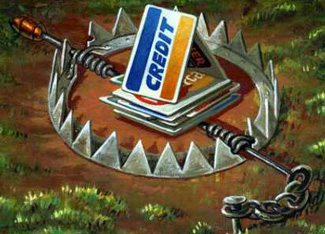
    If your family is like many in Canada, it is probably in debt. Your parents might owe money on the house or car, and you or your brothers and sisters might already have credit card debts or owe money to friends in school. Credit card use is a common way of buying products in Canada, but it can have negative effects on your future if you don’t pay it off.

    You might hear people talk about good and bad debt. Basically, “good debt” refers to something that the person has a good chance of repaying. For example, if someone has a high-paying, stable job, and they buy a house; unless something unexpected happens, like a major accident or job loss, the person can make regular payments on the mortgage, thus paying of the debt of the house.

    “Bad debt” is different. Bad debt refers to a debt that the person has little or no chance of paying off because of the size of the debt, a low-paying job, or other factors. This kind of debt could last a lifetime and affect the person’s ability to buy a house or a car, get insurance, or even to get a loan for a small project. If you have bad debt, you likely have a low credit score. A credit score is something banks, insurers and lenders look at to determine your financial position and how reliable you are in paying off things like your credit card or student loan.

    According to recent statistics, people who were born between 1980 and 1984 already have over five thousand dollars’ worth of credit card debt than their parents did at the same age. Unless they get very high-paying jobs in the future, that debt could follow them throughout their lives. If you do possesses that much debt at a young age (college and university students), the most important thing to do is always make your minimum payments. Also, you can notify your lender about your situation and arrange later payments.

    Being in debt can cause serious problems for people. They might not be able to go to university, and they risk losing their homes if they are unable to make the payments. Their wages might be taken to pay the debt, and they might have bill collectors calling to ask for the money. All of these things can cause a lot of stress.

    Buying everything with cash is probably the best way of avoiding any kind of debt. However, very few people actually have that kind of money, especially for large purchases like a house or car. However, other kinds of debt can be relatively easy to avoid or manage. For example, if you want to avoid credit card debt, you can start by paying off the entire balance every month. If you have cash with you when you go shopping, use that instead of credit or debit cards as much as possible. Staying out of debt can be difficult, but owing a lot of money is worse. Living within your means can be hard, however, very necessary when preparing for a healthy financial future.

    Sources:

    Kay, Michael F. The Truth About Debt. https://www.psychologytoday.com/blog/financial-life-focus/201602/the-truth-about-debt.

    Loans Canada. “How Your Debt Affects Your Credit Score.” https://loanscanada.ca/debt/how-your-debt-affects-your-credit-score/.

    White, Martha C. Today’s Young Adults Will Never Pay Off Their Credit Card Debts.”
    http://business.time.com/2013/01/17/todays-young-adults-will-never-pay-off-their-credit-card-debts/.

    Wolfe, Michael. “Problems That Personal Debt Could Cause.” http://www.ehow.com/list_7333636_problems-personal-debt-could-cause.html.

  • Got Weird? A Look into Unusual Scholarships

    Got Weird? A Look into Unusual Scholarships

    Are you closing in toward the end of your high school years and looking into the options of getting into college or university? One important thing you can’t overlook is your finances. Sure, you might have explored the possibilities of scholarships, and you believe you only have a shot at one if you’re truly a braniac or a future superstar athlete or a Van Gogh in the making. Don’t hold on to that thought too much- there are actually a few unusual scholarships where you don’t necessarily have to be a straight A student or possess the common qualifications.

    Frank J. Richter Scholarship

    This one is something that will catch the attention of train fanatics ala The Big Bang Theory’s Sheldon Cooper. This scholarship amounting to $1,000 and available through the American Association of Railroad Superintendents (AARS) is open to college or university students currently enrolled at an accredited college or university in the United States or Canada. Those enrolled in the transportation field are preferred. Applicants should have accumulated enough credits from their respective accredited schools in time for the Fall Semester that are equivalent to at least a sophomore level standing at the college or university of enrolment.

    The AARS Scholarship Committee evaluate applicants based on the materials submitted. Points are assigned for the narrative, recommendations, activities, and honours and the applicant’s overall abilities.

    Duck Brand Duct Tape “Stuck at Prom” Contest

    Ever played one Toilet Paper Dress Up? Well, this scholarship is, surprise, similar to that except that you would have to show your Project Runway skills by using duct tape and create a “His and Hers” prom attire. The scholarship amounts to $10,000 and is open to couples who are legal residents of the United States and Canada except the Province of Quebec. Along with the photograph of the couple in the duct tape prom attire, they should also submit the name, address, and telephone number of the high school, or home school association, which holds the prom, and the date the prom was held. Yes, this means they actually have to wear the outfits in public.

    Swann Foundation Caricature & Cartoon Fellowship

    Think comic artists never amount to anything? Think again! After all, the likes of Charles Schultz and Jim Davis practically built an empire with their comics. So if you like doodling, you might want to consider this scholarship. The award amount is $15,000 and is available to graduate students who are working toward the completion of a dissertation or thesis for scholarly research and writing projects within the field of caricature and cartoon or be engaged in postgraduate research within three years of receiving an M.A. or Ph.D.

    Annual Pasta Tales Essay Contest

    Is your love of pasta is getting out of hand? Why not take advantage and take a shot of this scholarship of $2,500 which is sponsored by Olive Garden. The main qualification is to write an essay (maximum of 250 words) about what you would help your local community if you have $5,000 on hand. The themes do change annually, but it usually fall along the lines about community.

    Are you ready to take a stab at these scholarships? All is fair in love and war, as they say—and maybe that goes for scholarships too.

    Sources:
    http://yescollege.com/2013/04/100-unique-and-weird-scholarships-worth-applying-for-2013/

    http://www.railroadsuperintendents.org/FrankJRichter

    https://www.scholarships.com/financial-aid/college-scholarships/scholarships-by-type/unusual-scholarships/duck-brand-stuck-at-prom-scholarship-contest/

    http://www.fastweb.com/college-scholarships/articles/unique-silly-fun-scholarships

    http://www.financialaidfinder.com/student-scholarship-search/college-scholarship-contests/olive-garden-pasta-tales-essay-contest-scholarships/