Category: News

  • Staying Organized with Technology

    Staying Organized with Technology

    How can you make the most of your technology? While electronics can certainly be frustrating distractions at times, they can serve as incredible organizational tools as well. Whether you’re working on a big project or are constantly misplacing your grocery list, chances are there’s an app out there for you.

    Here are a few ways you can use your devices to make your life more efficient.

    How many times have you missed one of your errands? A virtual to-do list is a great solution. Beyond just jotting down reminders (which you could easily do in a notebook), electronic lists allow you to set alarms, plan out short-term and long-term goals, and organize your tasks based on type and priority. Apps are available for most smartphones and computers, and in many cases, all you need is an Internet connection to keep your to-do list synchronized between devices and ready to go.

    Recommended (and free) to-do list apps: Todoist, Wunderlist, Any.Do, Remember the Milk

    If you’re balancing extra-curriculars or are struggling to keep track of your plans with friends, a calendar app is the best way to go.  Organize your events by type (work schedule, date night, final exams) and input them into a virtual calendar so you know exactly what’s coming up and how to prepare for it. Most calendars allow you to view your upcoming events by day, week, or month. For maximum efficiency, keep your to-do list and your calendar synchronized. You’ll never miss a deadline again!

    Recommended (and free) calendar apps: Cal, Sunrise, Google Calendar (Android-only), Timeful (iOS-only)

    Save some paper in your classroom and try using notation software instead. Digital notes allow you to easily modify what you’ve written, search for key terms in previous lectures, and even add links to online articles and videos to enhance your learning experience. If you prefer writing by hand or your classes don’t allow the use of computers, you can still use notation software to codify your lecture notes or create summaries for your tests and exams.

    Recommended (and free) notation software: Evernote, Microsoft OneNote, Google Docs, SimpleNote (iOS)

    Finally, here are some miscellaneous apps you should consider incorporating into your daily routine:

    • It can be hard to stay focused if you’re studying for hours on end. Set a timer with an alarm to keep you working for regulated lengths of time and allow for breaks in-between.
    • Distracted by the Internet? Self-regulation apps can help. For example, Self-Control for Mac (or its PC equivalent, Freedom) allows you to create a “blacklist” of your distracting sites and set a timer for your work period—then it blocks you from accessing those sites until the time’s up.
    • Reinforce your good habits (drinking enough water, not biting your nails, not going on Facebook at work). Habit trackers allow you to note the ups and downs of your daily routine over time. Check out Lift, Fail Log, and HabitBull.
  • Renewable Energy – A Trade for the Future

    Renewable Energy – A Trade for the Future

    Are you seeking a future-centric career? Looking to make a difference in the world? Want to join an industry destined to flourish significantly within your lifetime?

    With a growing awareness of the negative impacts humans have had on the environment, the increasing concern of environmental problems such as global warming, and the fight to preserve and find alternative ways to sustain the environment and human life, the renewable energy sector provides many opportunities for a rewarding career.

    As more alternative energy options are unveiled, more positions within the renewable energy sector are becoming available. Perhaps you’ll be the person responsible for energy audits, a technician working on solar panels, a designer of wind farms, or working to promote more sustainable building practices. The opportunities are endless and will continue to grow thanks to government initiatives to improve energy practices.

    In 2009, Ontario introduced a Green Energy Act, which was committed to promoting and supporting green energy projects and supporting energy efficiency province-wide, joining in a worldwide initiative to move toward renewable practices.

    The Ministry of Energy has also introduced many incentive programs, including tax rebates, to encourage Canadians to make energy updated to their homes. This could include installing solar panels or wind turbines, geothermal heating or cooling, and more.

    As the renewable energy sector grows, more programs are being offered at post secondary institutions throughout the province and country. Programs are for energy technicians, renewable energy technicians, sustainable building construction, sustainable agriculture, wind turbine technicians and more.

    If you’re looking to explore a rewarding career with opportunities for further growth, development and innovation, then a renewable energy career is perfect for you.

    Depending on the type of renewable energy career you’re interested in pursuing, there are apprenticeship, diploma, and degree opportunities available to suit your wants and needs. The opportunities are endless.

  • Climate Change and the Loss of Sea Ice in the Arctic

    Climate Change and the Loss of Sea Ice in the Arctic

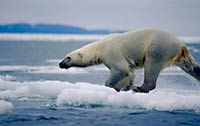
    Climate change affects every part of the world in a different way, but most experts agree the North will be impacted more than any other region. Sea ice spans most of the Arctic’s coastal and inter-island channels from eight to 12 months of the year and supports a number of species. It’s expected to undergo the most significant transformation.

    The effects of climate change in the North are not new occurrences. Actually, changes have been happening for quite some time. Over the past 25 years, Inuit and scientists have observed a decrease of roughly seven percent in sea ice area, with the largest rate of decrease during the summer months.

    Using highly scientific models of prediction, it has been determined that if warming trends continue at their current rate, by the end of this century the Arctic Ocean will be nearly ice-free during the summer.

    If Arctic sea ice melted away …
    Large sections of the Arctic Archipelago would open up.

    This would create more noise, traffic, pollution and safety issues for both humans and wildlife.
    (more…)

  • Media Release: Opening Doors for Aboriginal Students

    Media Release: Opening Doors for Aboriginal Students

    Canada’s universities recently launched a new online tool to provide Aboriginal students with better access to information on programs and services on campuses across Canada. The comprehensive, searchable database of resources designed to meet the needs of Aboriginal students was developed by the Association of Universities and Colleges of Canada.

    Prospective students and their families can use the tool to find information on the 286 different academic programs designed for Aboriginal students and other helpful resources available at Canadian universities, such as financial assistance, housing, cultural activities, counselling, availability of Elders, gathering spaces and mentoring.

    Aboriginal youth are one of the fastest growing segments of the Canadian population. There are more than 560,000 Aboriginals under the age of 25 across Canada, yet the university completion rate for the Aboriginal population overall is eight percent — a third of the national average.

    “The education gap in this country is large and growing. This needs to change,” said AUCC President Paul Davidson. “Canada’s universities recognize this and have significantly boosted the culturally relevant curricula, support programs and financial aid available to Aboriginal students. With this database, it’s easier than ever to locate and access these services.”

    This new online resource is part of universities’ ongoing efforts to improve access to university for Aboriginal students and help them achieve success in higher education. Fifty-five institutions now have gathering spaces for Aboriginal students, and more than 60 organize social and cultural activities. In addition to supports on campus, many universities have successful outreach programs in Aboriginal communities, providing educational support and mentoring opportunities to students starting as early as the elementary level.

    “I want to take this opportunity to acknowledge the AUCC for creating an online directory to assist students in finding and accessing the programs and services that are reflective of First Nations, Métis, and Inuit languages and cultures, as well as those resources that will assist them in the achievement of their university goals,” said Shawn A-in-chut Atleo, National Chief of the Assembly of First Nations in Canada.

    The web-based directory is an enhanced update of a print version that AUCC produced in 2006 and 2010. It will be regularly updated to reflect new and enhanced services for Aboriginal students at Canada’s universities. The database complements information in the Directory of Canadian Universities, published every year by AUCC.

    Aboriginal education is an ongoing priority for Canada’s universities. AUCC’s 2013 pre-budget submission to the federal government calls for increased postsecondary scholarships for Aboriginal students, with funding to be matched by the private sector. AUCC has also undertaken significant steps in recent years to help universities identify, develop and share ideas on best practices for services aimed at Aboriginal youth.

    The new directory of programs and services for Aboriginal students can be found here: www.aucc.ca/Aboriginal-directory.

    AUCC is the national voice of Canada’s universities, representing 95 Canadian public and private not-for-profit universities.

  • Child Labour: Working For A Living

    Child Labour: Working For A Living

    Do you usually have a lot of chores to do at home when you return from school? Do you have to help cook supper, walk the dog, mow the lawn, or shovel the driveway? If you’re like most Canadians, you probably have to do at least some of that kind of work. You might even have a paid job like delivering flyers or babysitting after school. Does it ever feel that you have to work too much? Many children around the world have to do much more. That’s why people in many countries have been working to end child labour by the year 2016.

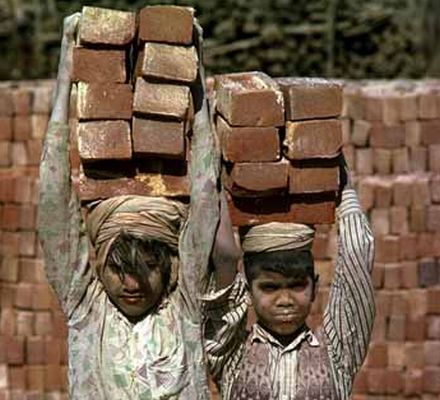
    When people talk about child labour, they don’t mean the times when parents tell their children to set the table for supper or to help wash the dishes. They mean work that prevents children from receiving an education or that damages their growth in any way. Sometimes the work even kills them. Young children sometimes work all day in factories or other unhealthy or dangerous places instead of going to school and getting an education.

    Canada has laws that require parents to send their children to school, and most people follow the rules. From the age of twelve, children are allowed to have jobs that don’t interfere with their education or harm them in other ways. In countries like Canada and the United States, rules about child labour usually work fairly well, although there are still many cases of children working long hours in dangerous conditions. Sometimes, the children even die on the job. The official estimate of child labour in wealthy countries is about one percent.

    In poorer countries, however, the situation is worse. Parents have many children to feed and often also have to support their own parents or other relatives. Even with long hours of work, parents might still not make enough money to survive. In some cases, they might not be able to find any work at all. They might need the income their children bring into the family. Also, sending children to school can often be too expensive for them to afford. The highest level of child labour is in Asia, where about sixty percent of children work.

    According to the International Labour Organization, in 2008 about 215 million children around the world had jobs which kept them from going to school or playing. That number was down slightly from 2004, but it actually increased among some groups of children. The problem will continue until people do something about the causes.

    How can you help solve the problem of child labour? You can encourage people in government to make better laws, but a more effective way to end the worst kinds of child labour is to get involved personally in helping the families. Even if the child labourers live in another country, you can donate money to help raise the family income or you can tell your friends and family about the issue. Every bit of help can make a difference!

  • The Great Pacific Garbage Patch: Filling the Ocean with Plastic

    The Great Pacific Garbage Patch: Filling the Ocean with Plastic

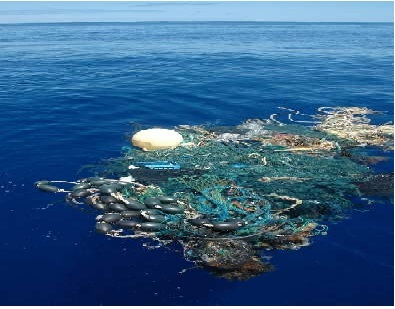
    Have you ever been to a garbage landfill? Have you seen cities where the garbage lies on the street without ever being cleaned up? If you have, you know all about the smell and the general unpleasantness. Did you know that the biggest landfill in the world is actually not on land but in the water? Far out in the Pacific Ocean is an area called the Great Pacific Garbage Patch, where plastic and other litter has been floating around and polluting the water. The patch is a major concern for scientists and other people who want to keep the oceans healthy.

    The world’s biggest garbage dump is made up of two sections in the Pacific Ocean, one between California and Hawaii and the other off the coast of Japan. The two sections are connected by a current called the Subtropical Convergence Zone and together make up the Great Pacific Garbage Patch. The area where the Garbage Patch is located is called the North Pacific Subtropical Gyre, a section of slowly spinning water. The area is often called an oceanic desert since it has very few plants or animals other than tiny plankton.

    Instead of animals, however, the North Pacific Subtropical Gyre has huge amounts of garbage, about 90% of which is plastic. The trouble with plastic is that it never completely disappears but instead photodegrades, breaking into smaller and smaller pieces of plastic called “mermaid tears” or “nurdles.” Garbage can float around in the ocean for years or even decades, but eventually it ends up in one of the garbage patches, often floating just below the surface or sinking down to the ocean floor. Some scientists estimate that the size of the garbage patch could be as big as the state of Texas, although others believe it to be much smaller. However big it is, it’s a cause for concern.

    As the pieces of plastic or other garbage float around in the water, they pick up poisons from fertilizers and other substances that wash into the ocean or they join other kinds of garbage floating in the water. Thousands of birds and marine animals, possibly up to a million every year, die from eating or being caught in the ocean’s garbage. Debris that floats in towards the land pollutes beaches along the coasts of countries like Japan and Canada, sometimes even piling up several feet high in some areas.

    Where does all of this garbage come from? Some of it comes from people dumping trash from ships, but about 80% of it comes from land. It could be garbage carried by the wind from landfills or from city streets, which eventually makes its way to the ocean. It could come from litter that people drop into in the lakes and rivers before it floats down to the oceans. That’s why some towns have banned plastic grocery bags, which make up a large part of the litter. In some towns and cities, volunteers help to clean up beaches and other areas where garbage accumulates.

    Every small change can help to get rid of garbage in the oceans. What will you do to keep the world’s water clean?

  • Gum Recycling

    Gum Recycling

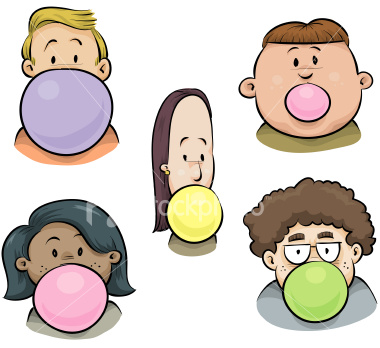
    Do you ever chew gum? How many times have you heard your parents or teachers tell you to put your finished gum in the garbage instead of spitting it out onto the sidewalk or leaving it under your chair? That’s good advice, since no one likes to have gum stuck to the bottom of their shoe or on their clothes or hair. Gum is sticky, and it can create a mess that is very difficult to clean up. Even in the garbage, however, gum can be a problem, since it never biodegrades. It would be far better if the gum could be reused or turned into something different. What if you could reuse gum and make it into a chair, a plastic container or fertilizer? Some scientists and inventors have found ways to turn discarded gum into many different products, and it’s helping to make cities cleaner.

    Cleaning up used chewing gum might not seem like a big problem, but it can be very expensive and difficult for city governments. According to research company Euromonitor International, Canadians bought more than 15,600 tonnes of gum in 2011. Much of that gum ended up on the streets. In one small area of a Toronto sidewalk, city officials once counted 2000 gum stains. Getting rid of that much gum can be difficult because it’s so sticky.

    One way to get rid of discarded gum is to use high-powered hoses that spray water and chemicals, but that can be expensive and wasteful. In Calgary, the government spends $50,000 each year on removing gum just from its light rail train stations, besides the money it spends to remove it elsewhere. The process ends up wasting a lot of water, as well as uses chemicals that might harm the environment. However, gum recycling might help to provide a solution for the problem.

    One of the first people to discover a way to recycle gum was a student named Anna Bullus from England, who found a way to change gum, which is made of rubber, into plastic. She now uses this plastic to make bright pink Gumdrop Bins where people can put more of their used gum. The bins come in 250-piece and 500-piece sizes and are appearing all over the country.

    Officials at the Southampton Airport in southern England, for example, claim to have the first airport in the world with gum recycling bins. Some of the gum from these bins ends up being recycled into a rubbery material used for construction and for running tracks. Some of the gum even ends up as toys. The United Kingdom already has a thousand gum bins in bus depots, train stations and other public areas. Some people estimate that the bins have reduced gum litter by 75%, and the project is still growing.

    Gum recycling is also coming to other parts of the world. Gumdrop Bins have appeared in an amusement park in the United States. In Canada, a company called Envyrobubble collects gum in 1000-piece containers and recycles it into fertilizer. If the idea of gum recycling catches on, who knows where it might appear next!

  • The Importance of Wetlands

    The Importance of Wetlands

    What Are They?
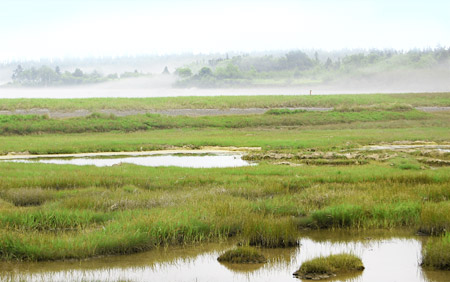
    A wetland is a habitat where land meets water such as ponds, marshes, swamps, bogs and fens. To classify as a wetland, the area must be completely covered or partially covered with water for a significant amount of time over the course of a year. This could be from flooding due to rain or melting snow, or because it exists as an established waterway. Wetlands are home to aquatic and land creatures, a combination that creates an incredible habitat able to function at great efficiency. This produces a rich environment for its inhabitants – wetlands sustain more life than any other ecosystem!

    Swamps: streaming water, often confused with marshes, set apart by the presence of trees and shrubs.
    Ponds: shallow waters, surface free of vegetation.
    Marshes: continually flooded with lots of surface vegetation.
    Bogs/fens: high water levels, large accumulation of peat, looks like solid ground but easy to fall through.

    Why Should I Care?
    Wetlands are home to more than 200 species of wildlife. Canada has a diverse population of amazing creatures, many that are endangered or at risk. Scientists have estimated that a third of these rely upon the wetland ecosystem. Migrating birds return to the same spot each year, and if that wetland is now a Superstore they have lost nesting grounds and their food source.

    Wetlands act like sponges, preventing floods from rainfall and melting snow. They also filter the water from pollution and chemicals, cleansing it before it recycles to the larger water basins. Amazingly, wetlands also remove and store greenhouse gases from the environment, making them important to the future of climate change as well.

    Cause to Worry
    Canada is home to many varieties of wetlands. It is estimated that 14% of the country is covered by a wetland, though the number shrinks every year. Wetlands are in danger of disappearing across the globe due to agriculture and residential development. According to the Alberta Wilderness Association, 70% of wetlands have been destroyed in that province alone. It is only in more recent years people come to understand the great importance of wetlands and their impact on our country. Without these powerful ecosystems, fowls, amphibians, mammals, reptiles and plants will eventually become extinct.

    What Can I Do?
    There are numerous organizations that recognize the value of wetlands and work hard to see them untouched and preserved. There are many things still yet to be done and much awareness that still needs to be raised. One factor in the decline of wetlands is the rapid consumption of water. We all need to conserve our water intake. Limiting the chemicals and pesticides we use will also have a positive effect on this ecosystem. Perhaps the most important thing one can do to help protect the wetlands is to educate themselves and others on the subject and become willing advocates. Finally, we can all take the time to enjoy the remaining wetlands and allow ourselves to be reminded why they are important.

  • Vertical Farming for the Future

    Vertical Farming for the Future

    What do you think about when you hear about farms or farming? You probably imagine huge fields planted with wheat or corn and a farmer driving a tractor, combine, or other farm machine. People have farmed the land for thousands of years, but that way of producing food might soon end due to increasing populations and limited land. Experts believe that by 2050, the world’s population could reach about nine billion people, with about 80% of them living in cities. All of those people will need up to 70% more food than the world currently produces. However, much of the world is covered by areas unsuitable for farming, such as oceans and deserts, and about 80% of the good, arable land is already in use. How will farmers ever produce enough for everyone to eat?

    One possible solution is vertical farming. Dickson Despommier, a professor at Columbia University in New York, believes that growing food and even raising animals inside buildings could help solve the food problem in the future. On a small scale, the roofs of buildings could become gardens where a few people could grow what they need to feed their families. On a larger scale, buildings the size of apartment blocks could become farms, with each floor used to grow a different type of food. Some of the space could even be used for raising animals such as fish. Eventually, traditional farms could be a thing of the past.

    Growing food indoors is not a new idea. Many people already use greenhouses to produce food when the growing conditions outdoors are unsuitable for farming, such as in winter or in small spaces. Indoor farming could solve many of the problems farmers currently face, including bad weather, insects, and the loss of soil due to drought or overfarming. An indoor farm would be climate-controlled and mostly insect-free, making it easier to grow large crops with less waste. A sample vertical farm in Dover, England, has already been very successful; the crop yields from this space have been twenty times as large as on traditional farms. The techniques for indoor farming would be new for many people, but there are already university programs in place for teaching them.

    Vertical farming has many benefits, but it also has drawbacks. The biggest barrier is the cost. Setting up a vertical farm could cost about fifty or sixty million dollars with all of the cost of developing technology to keep the place running. Providing heat, light, and air for the plants could be a very complicated and expensive process, likely making food more expensive than it is now. Vertical farming would also decrease the types of food that are available, since some are not suitable for growing in small spaces. Cattle and pigs, for example, would likely be unsuitable for life in vertical farms. However, the quality of the food would likely be greater.

    Is vertical farming the way farmers will grow food in the future? If it helps feed the world’s growing population, it could be part of the solution for helping people everywhere.

    Bibliography:

    Climate.org. “Vertical Farming.” http://www.climate.org/climatelab/Vertical_Farming.

    Parsons, Paul. “Vertical Farming Takes Agriculture to New Heights.” http://www.thenational.ae/business/energy/vertical-farming-takes-agriculture-to-new-heights

    University of Lancaster. Exploiting vertical growing strategies for sustainable crop production.”

    http://www.lec.lancs.ac.uk/postgraduate/pgresearch/research-degree-opportunities.php?phd_id=97.

    Vertical Farm.com. “The Vertical Farm.” http://www.verticalfarm.com/more.

    Walsh, Bryan. “Vertical Farming.” http://www.time.com/time/magazine/article/0,9171,1865974,00.html.


  • Carbon scrubbers to clean up emissions

    Carbon scrubbers to clean up emissions

    Research into methods of reducing carbon emissions is a continually advancing field, and a team of researchers developed an improved way to remove emissions directly from sources like smokestacks.

    The team recently had an article published in the Journal of the American Chemical Society detailing their findings, which focused on using substances based on a material called polyethylenimine to remove carbon dioxide (CO2) from sources. According to the article, these substances whoed some of the greatest results in removing CO2 from the air when compared to alternatives. The substances also proved capable of effectively capturing the CO2, and could either be re-used or isolated, so it wouldn’t contribute to global climate change.

    The team, which consisted of researchers from the Loker Hydrocarbon Research Institute and Department of Chemistry from the University of Southern California, explained in their article that the materials used are uniquely effective largely due to their low cost and reusability. The material is relatively inexpensive when compared to other options, and can be reused numerous times without losing its ability to capture CO2.

    The article also explains that materials manage to remain effective in real-world conditions. This means that the materials were observed as being able to accommodate for exceptionally humid, moist or dry environments, something that is important when considering practical application of scientific research such as this.

    Other options for CO2 reduction are more expensive, less effective or durable and use large amounts of energy than the processes being researched by this team. If the researchers are able to effectively implement these polyethylene materials, they will have created a valuable resource that is much easier to use. Considering the cost-effectiveness and stability of the polyethylenimine materials, the application of them will make sustainability much more accessible, and therefore potentially more widespread.

    The material’s main target for carbon reduction is smokestacks; however the research could also potentially be used to reduce CO2 emissions from car exhaust, submarines, and even the open atmosphere itself. Cleaning of the upper atmosphere would hopefully reduce the greenhouse effects of the CO2.

    CO2 is one of the greatest threats to the environment in recent years. The amount of CO2 emissions produced by humans is of great concern to the population due to its effects on climate change,rising sea levels and air pollution. Research on ways to reduce emissions of CO2 is an area of international concern.

    According to the World Health Organization, high levels of greenhouse gases — of which CO2 is a prominent part of — affect necessities to health like clean air and water and increase the incidence rates of climate-sensitive diseases.

    Up until now, finding ways to reduce these emissions has proven challenging and unpromising. However, if this research team is successful in implementing polyethylenimine as a way to reduce emissions, the levels of CO2 in the atmosphere may be significantly reduced. This would help reduce concerns of climate change, and result in cleaner air in an effective and affordable way.