Category: Volunteering

  • Volunteer Centres in Canada

    Volunteer Centres in Canada

    As you know, all high school students need to have 40 hours of community service in order to graduate. Use this information to discover where your 40 hours can best be used.

    Volunteering and Community Hours

    What is a Volunteer Centre?

    Volunteer Centres are non-profit organizations or groups dedicated to fostering and developing volunteerism in the community as a whole. While other organizations contribute to sustaining our national heritage of volunteering through their programs and outreach, Volunteer Centres serve the broadest membership. Volunteer Centres reach across the non-profit and public sectors to include organizations working in human and social services, health care, education, the arts and recreation – regardless of their source of funding.

    What if my community does not have a Volunteer Centre?

    Volunteer Centres reflect the needs of the community they serve. Volunteer Centres exist primarily to foster and develop volunteerism in the community as a whole. They engage in four general kinds of services and activities:

    1. Promoting volunteerism and raising awareness of the power of service
    2. Building capacity for effective local volunteering through management consulting on volunteer programs and training of managers of volunteer resources
    3. Providing leadership and advocacy on issues relating to volunteerism and volunteer programs
    4. Connecting people with opportunities to serve through recruitment and referral of volunteers to community agencies

    Four Main Reasons to Volunteer

    1. Make a contribution to society.
    2. Share your skills.
    3. Support a cause.
    4. Do something meaningful with your friends and colleagues.

    One of these reasons probably makes sense for you. You may already be working as a volunteer or are thinking about what you might want to do next. Whatever your reason, there are many different opportunities out there – and organizations that need your help.


  • The Benefits of Travel and Volunteerism

    The Benefits of Travel and Volunteerism

    Having volunteer experience is an essential part of every student’s life. Now that it a requirement for high school students to acquire 40 hours of volunteer time before they graduate, many new and varied opportunities are cropping up. It is a great time to travel as a student!

    Volunteering allows for an introspective look into your values and it gives perspective and fosters a better-rounded individual. Some of life’s richest experiences come from volunteering. When you free yourself to give your time to helping fulfill the needs of another it is rewarding on many levels. One way to volunteer is to go abroad and embark on a life-changing journey. This is something students should consider while they have the time and resources. Volunteering abroad is a meaningful experience that can provide great rewards.

    So, why go abroad when there are plenty of opportunities here at home?

    1. The opportunity to travel and visit a foreign country.
    There is something very different about reading about a country and actually visiting it in person. Travel is a great way to expand your mind and gain insight into the world and how you view it. It adds to your life experiences and creates memories you can draw upon for a lifetime.

    2.Unique projects.
    Perhaps you can help save the green turtle or be an ambassador for the environment. There are things you can do abroad that you simple cannot do at home. The animals are different, the government structure is different and the ecosystems are different. Every country comes with unique settings, strange habitats and diverse food.

    3. Take in a new culture.
    What better way to learn than to jump right in? Don’t just study different cultures in books and in movies, take the opportunity to live and breathe it. Engage all your senses and create a rich memory that helps support you through daily challenges.

    4. Make new friends.
    You will create memories that build a lifelong bond. Language is only a barrier for a short while before mutual respect and affection based on shared experiences take control.

    5. Learn a new language.
    No language curriculum can match being surrounded by language and culture. It is amazing how quickly one picks up a foreign language when it is all around them. The mind is fast to pick up words from action and gestures.

    There are many organizations to choose from when considering volunteering abroad. Take time to look into various opportunities. Some may be based on community or through schools, churches, and hospitals. Take a chance and do something different.

    Don’t forget that you don’t have to travel to volunteer. Your very own community needs you, too! The best part about volunteering is the feeling of accomplishment and knowing that you have made a difference, regardless of where you do it.

  • Projects Abroad: Offering Students Short-Term Volunteer Opportunities

    Projects Abroad: Offering Students Short-Term Volunteer Opportunities

    Projects Abroad is a youth-oriented volunteer trip association that can help you plan a volunteer trip to help shape you career, your education and your life.

    The company offers the opportunity to do two weeks to several months of volunteer trips in many of the destinations where they operate. For volunteers who don’t have the time to commit to a month or more of volunteering abroad, but would still like to contribute to the community or their project of choice, then short-term two-week volunteer placements are a great option. These trips are not available in all situations; they have hand-picked only the countries and projects where it is suitable for both the host community and the volunteer to be there for such a short time. To see where these trips are available, check out their prices page – if there is a price listed, then it is possible to go for two weeks.

    Although you will not be able to make quite the impact that our longer-term volunteers make, in your two weeks you will be working intensely within the local community and building relationships. This will impart a level of cultural insight that is not possible for tourists to achieve.

    These trips operate in the same way that normal four-week or longer projects do, with some small adjustments to help you make the most of your two weeks abroad. For instance, they ask that you arrive on the weekend so that they can give you a formal induction to the area and culture before your first day of work on Monday.

    International Volunteer Work: What you get on 2 Week Trips

    Volunteers on 2 Week Trips are given the same benefits as those who join for longer periods of time. Start dates are flexible – just pick any weekend to arrive – and you’ll begin your project quickly after your arrival to maximize the amount of work you can do in country.

    In-country staff will be available to assist you throughout your two-weeks. You will be a part of an extensive volunteer network and meet people from all around the world. In some circumstances, you may be living with a local host family, which will provide you with the opportunity to get completely immersed in the local culture during your stay. On other projects, you may live with volunteers in a community-housing situation.

    Meaningful Volunteer Work in Two Weeks: 2 Week Trips and 2 Week High School Specials

    Short Term Volunteer Opportunities with Children: whether you’re taking time off from school, work, or just need a small career-break, there is always a way for you to squeeze a two week adventure into your schedule.

    For high school students (ages 16-19), we recommend the “2 Week Specials” program. These are group projects that have a high level of structure and central planning by local staff. You will be in a group of students your own age for the entire project. Local staff are always close at-hand. It’s a great way to travel and volunteer abroad for younger people who have never done this before. Staff members are with these groups.

    For ages 20+, we recommend joining projects for a month or longer. Most volunteers go for about two months. But if you can only squeeze in two weeks,  a “2 Week Trip” is worthwhile and productive as well.

    For more information about studying abroad, contact www.projects-abroad.ca

  • Volunteering for Work Experience

    Volunteering for Work Experience

    Maybe you are new to the job scene, or maybe you have a very particular history of employment. Whatever your reason is for feeling that you don’t have enough experience to land you the job that you want – never fear! Employers respond positively to unpaid experiences as well. Perhaps you are looking to be a server in a bar or restaurant and your resume shows all you have is experience that relates to child care. Try searching an online job board for anything that relates to serving that is unpaid. Festivals are a great opportunity to practice serving, for example. Additionally, if you want to be a nanny but have no child care experience why not try looking around to see where you could volunteer your time to gain this experience? Often day cares will accept volunteers or perhaps your neighbour requires someone to watch their children for an hour or two each day.

    Volunteering may not immediately cover the exact work that you would like to do. You might have to do other smaller tasks like cleaning the studio or conducting phone calls at the beginning, but do not get discouraged! The more time you put in, the more responsibility you will be given. Each volunteer hour you put in provides you with more invaluable skills that can be put onto your resume.

    Become informed about what skills and certifications are required for your job of choice and go about getting those. Whether it is CPR or First Aid, a Red Cross babysitting course, a Smart Serve certification, a personal training certificate or even an NLS lifeguarding certification, it is vital to work on obtaining them. Sometimes a police record check is also required by potential employers. If you can get started volunteering in something of your choice, usually there is an option to get a police record check before you even start. Thankfully, the cost is generally covered by whatever agency you are looking to work for.

    Another possibility is to try job shadowing for an excellent opportunity to get to know the job that you would ultimately like to do. Job shadowing can be used in a subsection on your resume as well, an indication of your interest and/or passion for the job. Job shadowing could involve finding someone who is an expert in the field or simply finding someone who is knowledgeable enough to be a good leader. Whatever it is that you want to do, make sure that you start asking questions NOW. There is no better way to learn about something of interest than to get started. Even if it is not what you want to do, at least you will have some new experiences that will help to orient you to the RIGHT path for you.

  • Volunteering Abroad – A “Travel Bug” Cure!

    Volunteering Abroad – A “Travel Bug” Cure!

    Imagine what it would be like to travel the world when you finish high school. Just think of walking along the Great Wall of China, seeing the ancient tombs and Pyramids of Egypt, or exploring the Coliseum in Rome. If you have the “travel bug” you might find the idea exciting. Unfortunately, travelling to see these places can also be very expensive and could cost much more than you can afford. However, you might still be able to see the places you want without using up all of your money. One of the best ways of doing this is through going abroad for short-term or long-term volunteer assignments.

    Depending on what you want from travel, a volunteer assignment could be an ideal way of seeing the world. Tourists tend to stay in hotels and to visit the standard tourist sites like historic buildings, museums and monuments. They frequently avoid eating much of the local food in case it makes them sick. Usually they have very little contact with the people of the country, other than tour guides or staff in hotels and restaurants. For some tourists, getting away is not much different from being at home.

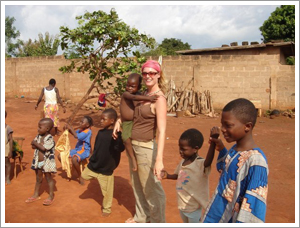
    Volunteers, on the other hand, usually get to know about everyday life in the places they visit. They frequently work together with the local people on projects directly related to the people living in the region. They might help build schools, work with orphans, study the habits of animals, or even help dig up ancient monuments. They might teach English or help with the children at the local school. Special skills might be necessary for some assignments, but strength and the ability to work hard in the sun might be all that’s needed for others.

    Some volunteer assignments might last for a few weeks or be part of an ongoing service to the local people. Many volunteer organizations offer both short-term assignments that last a few weeks and long-term assignments that can last several months or even a few years. A short assignment might fit well during summer holidays, while others might need to wait until you can take a year off to go somewhere for a longer period of time. If you’re thinking of volunteering abroad, it’s a good idea to check with several different organizations to see which one is the best fit for you.

    Another question to consider is the cost. Most short-term overseas volunteer programs involve some payment to cover the costs of expenses such as housing and food. There are often additional costs such as airfare to and from the assignment. In exchange you’ll get far more help and support than you would ever get while travelling alone. The costs might even be lower than for other kinds of travel. If you like the idea of seeing the world but want the safety and comfort of having help from other people, volunteering abroad might be the right choice.

    Does volunteering abroad sound good to you? If so, it’s never too early to start finding out about the possibilities you can consider!

  • Sports and Volunteer Hours

    Sports and Volunteer Hours

    With the cold now upon us, many of us are dreaming of next summer. During the summer months, the last thing you want to think about is school and especially about completing those mandatory volunteer hours so you can get your high school diploma. Not to worry, though! You can still have plenty of fun in the sun while completing those volunteer hours.

    How do I know that you can do this? Well, I know from personal experience of course. Just like all of you readers, I had to manage my time in the summer so I could complete my volunteer hours. I decided that since I have to do them, I would want to volunteer for something that I would enjoy. In my case, I liked sports, so I phoned some local sport clubs and asked if any were offering volunteer hours for students.

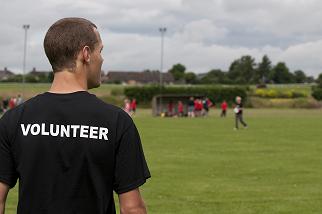
    After some sport searching, I discovered that I could coach for a junior league soccer team. As intimidating as coaching sounded, I was up to the challenge, and it turned out to be one of the best parts of my summer. I signed up, along with my brother, and we coached a soccer team for 8 year-olds soccer  for two months.

    We practiced once a week and played a game every weekend, putting in over 3 hours a week. It was a very small amount of time we had to take out of our normal summer, and it wasnʼt agonizing to do. In fact, I looked forward to seeing my kids learn and develop soccer skills through mine and my brotherʼs coaching. It was very rewarding, especially when we made it all the way to the finals and won the
    championship!

    Jamie Willett, a recent resident at Western University, had a similar experience with her high school volunteer hours. Jamie did her volunteer hours spending her summer assisting a junior gymnastic team. She spent hours every week planning and executing lessons for a group of young gymnasts.

    “It was really thrilling to teach the kids during the summer. Although it brought new challenges everyday, it allowed me to test my skills as a gymnast and as a teacher. It definitely helped me discover what I wanted to do after high school as well!”

    This fall term Jamie will be studying at teacher’s college at Western University for a year so she can teach students at the high school level.

    As you can see, there are plenty of ways to finish up those volunteer hours during your high school years and we have only covered the realm of sports! Be sure to check out the Jobs People Do Volunteer section to check out where you can lend a hand in your community!

    Start thinking about and planning your summer volunteer opportunities now!

  • Volunteer Centres in Canada

    Volunteer Centres in Canada

    As you know, high school students require 40 hours worth of volunteer work/community service in order to graduate. Use our handy guide below to discover how your hours can best be used!

    Volunteering and Community Hours

    What is a Volunteer Centre?

    Volunteer Centres are non-profit organizations or groups dedicated to fostering and developing volunteerism in the community as a whole. While other organizations contribute to sustaining our national heritage of volunteering through their programs and outreach, Volunteer Centres serve the broadest membership; this includes volunteers and organizations/volunteer-involving organizations. Volunteer Centres reach across the non-profit and public sectors to include organizations working in human and social services, health care, education, the arts and recreation – regardless of their source of funding.

  • High School Community Involvement

    High School Community Involvement

    In Ontario, all high school students attending public, private, independent and catholic schools are expected to complete 40 hours or more of community involvement work. The decision for this was made so that teens could display responsibility and contribute in various roles within their community.

    Acceptable Choices
    There are a number of choices for community involvement. Not-for-profit or charity services are considered appropriate choices. In addition, many local businesses are available for students to become involved with in public or private settings.

    Each school board has a list of acceptable involvement activities. Students under the age of 18 must have their parent’s permission to participate in a community activity. If a student is interested in an activity which is not on the board’s list, he or she must check with the principal to see if it is considered acceptable. The student must have a written note from the principal indicating their approval of this choice.

    The hours may be completed in one setting or the student may choose to gain a number of experiences in a variety of settings. Some school boards encourage students to complete their 40 hours in grades nine and ten. Other boards recommend completing ten hours each year.

    Requirements
    – the community hours are voluntary unpaid hours of work
    – students do not earn a credit when the 40 hours are complete
    – these hours are not part of the regular time spent in class
    – each school board has a specific form which should be filled out by the student and signed by the supervisor of the community hours
    – the form is returned to the high school to be signed by the principal and kept on file
    – the hours must be finished before the student graduates

    Examples of approved settings
    – World Vision’s 30 Hour Famine (for this fundraiser 15 hours are approved for community involvement)
    – helping in an office
    – various capacities at a church (kids’ programs, DVBS, worship team, cleaning, gardening, raking, snow shoveling)
    – assisting at various fundraisers for medical research for cancer, diabetes, heart and stroke etc.
    – supporting a community race/run with set up, take down, water table, giving directions etc.
    – helping the elderly or disabled by doing yard work, tidying, cleaning, computer skills, etc.
    – hospitals
    – offering an after school sports/activities program at an elementary school
    – assist in sports team at your school
    – tutor for a younger student or a peer
    – childcare
    – animal shelter or humane society

    Most communities will benefit from the hours which are volunteered. As a result of working on community hours, a student may discover new interests or perhaps a career path to follow after high school. A student may choose to continue volunteering after their hours are completed because of the role and responsibilities he or she has been given. Check with your own school board’s web site for suggestions on how to get involved!

  • Voluntary Internships and Volunteer Work

    Voluntary Internships and Volunteer Work

    Your graduation day has come and gone. Ideally, finding work in your main area of study is what most hope to achieve. For some recent grads, work is immediately obtained but for many others this is not the case.

    What do you do in the meantime?

    What you spend your time doing or not doing is important. When you are in a job interview, the person interviewing you will want to know what you were doing since the time of your graduation. Telling him or her that you have not been doing anything is not going to make you a very appealing candidate. Instead, if you are able to show that you have been furthering your learning by taking classes, working elsewhere and volunteering, you will be more likely considered for a position because of your initiative.

    The benefits of volunteering for an unpaid internship

    Gaining experience, learning new skills, trying out new roles and responsibilities and making connections (also known as networking) are some of the many benefits you will gain from volunteering your time as an intern. Most businesses, small companies, start-ups, charities, not-for-profits and institutions appreciate individuals who are willing to volunteer their time.

    Gaining experience
    You have the “book smarts” and some practical experience due to your school assignments. Now, as an intern, the real test is putting it into practice in a work setting. Then when you are asked on a job application or during an interview if you have any experience, you will be able to indicate that you do because of your internship.

    Learning new skills
    There is always something to be learned. It may take a couple of weeks or more to learn how your supervisor would like a task to be completed, but once you learn it you are ready to move on to the next set of tasks. In learning new skills, you are gathering more information and experience to add to your resume, portfolio or CV.

    Roles and responsibilities
    Does your volunteer internship require you to be part of a team, work independently or as a leader? Any and all of these roles and the responsibility you have in them are vital. Be certain that you include them on your resume. You may also be given the opportunity to discuss them during an interview.

    Networking
    Networking is connecting with people. Who you know and who they know may just be the way that you obtain a job. When you take the time to meet people, discuss your interests, listen to their interests, give out your name and contact information, and receive similar information from others, you are networking. This can be done in a variety of settings – from a talk that you attend to an informal gathering of people, in a class that you may be taking or a community meeting you may be attending.

    Volunteering for an unpaid internship is a way to keep active and busy while you look into your career choices. The experience you obtain, the new skills you learn, the roles and responsibilities you have, the connections you make and the networking you do can present options that you may not have considered. The link below to an article in the Globe and Mail may assist you as you volunteer and search for work. Good luck and have fun!

    http://www.theglobeandmail.com/report-on-business/careers/career-advice/how-can-i-get-experience-if-i-cant-get-a-job/article4106068/

  • Sports and Volunteer Hours

    Sports and Volunteer Hours

    Jobs People Do | JobsPeopleDo.comFinishing Your Community Hours in the Summer with Sports.

    When youʼre loving the summer, the last thing you want to think about is school especially completing those mandatory volunteer hours so you can get your high school diploma. Not to worry though, you can still have plenty of fun in the sun while completing those volunteer hours.

    How do I know that you can do this? Well, I know from personal experience of course. Just like all of you readers, I had to manage my time in the summer so I could complete my volunteer hours. I decided that since I have to do them, I would want to volunteer for something that I would enjoy. In my case, I liked sports, so I phoned some local sport clubs and asked if any were offering volunteer hours for students.

    After some sport searching, I discovered that I could coach for a junior league soccer team. As intimidating as coaching sounded, I was up to the challenge, and it turned out to be one of the best parts of my summer. I signed up, along with my brother, and we coached a soccer team for 8 year-olds soccer  for two months.

    We practiced once a week and played a game every weekend, putting in over 3 hours a week. It was a very small amount of time we had to take out of our normal summer, and it wasnʼt agonizing to do. In fact, I looked forward to seeing my kids learn and develop soccer skills through mine and my brotherʼs coaching. It was very rewarding, especially when we made it all the way to the finals and won the
    championship!

    Jamie Willett, a recent resident at Western University, had a similar experience with her high school volunteer hours. Jamie did her volunteer hours spending her summer assisting a junior gymnastic team. She spent hours every week planning and executing lessons for a group of young gymnasts.

    “It was really thrilling to teach the kids during the summer. Although it brought new challenges everyday, it allowed me to test my skills as a gymnast and as a teacher. It definitely helped me discover what I wanted to do after high school as well!”

    This fall term Jamie will be studying at teacher’s college at Western University for a year so she can teach students at the high school level.

    As you can see, there are plenty of ways to finish up those volunteer hours during your high school years and we have only covered the realm of sports! Be sure to check out the Jobs People Do Volunteer section to check out where you can lend a hand in your
    community!