Tag: activism

  • Inspiring Films About Social Change

    Inspiring Films About Social Change

    Movies and documentaries to get you inspired:

    The world is full of remarkable individuals and organizations, dedicated to making a difference within their communities. If you have community-building aspirations of your own, it’s important to become familiar with the kind of work that is happening in the world today. That includes reading newspapers and journals, as well as doing research on the organizations that interest you the most.

    However, film can also serve as a great medium for a social message. Though many movies are “inspired” by true stories and not 100% fact, they are nonetheless a fun and accessible way to discover the world of volunteering, community work, and social justice with your own eyes.

    To inspire your own community efforts, here are some movies and documentaries on the topic of social change.

    Gandhi (1982, directed by Richard Attenborough)

    Gandhi follows the story of the famed lawyer Mohandas Karamchand Gandhi (now referred to as Mahatma Gandhi worldwide). The film focuses on Gandhi’s incredible work through the nonviolent revolution against British colonials in India. The movie also places a particular focus on the revolution itself as opposed to providing in-depth background of Gandhi’s earlier life.

    12 Angry Men (1957, directed by Sidney Lumet)

    A classic film about crime, punishment, and the true meaning of justice, 12 Angry Men features a jury in the deliberation room, deciding on the verdict of a criminal trial. The film explores themes of bias and prejudice interfering with the true administration of justice—racism and classism, as mentioned in the film, are just two examples of biases that continue to affect the justice system today.

    Milk (2008, directed by Gus Van Sant)

    Milk is a biographical film about real-life politician Harvey Milk, an American gay rights activist who eventually became California’s first openly gay official to be elected into office. The movie follows Harvey Milk’s struggle both as a politician and as a representative for gay rights, and the amazing things he accomplished even when faced with the homophobia prevalent throughout the United States in the 1980s.

    An Inconvenient Truth (2006, directed by Davis Guggenheim)

    Arguably considered one of the most important environmental films ever made, this documentary outlines former U.S. Vice President Al Gore’s efforts to make the terrifying research about climate change widespread knowledge. The movie urges viewers to stop believing those who dismiss environmental claims as “myths”, and instead, to make efforts to salvage what remains of our planet before it’s too late.

    It is important to emphasize that though many of these films are not recent, they highlight issues that continue to be relevant today. The problems that these movies explore are far from being resolved, and it will take all of our efforts to ensure that progress is still made far into the future. Watch, and get inspired.

    Sources:

    IMDb. “12 Angry Men.” http://www.imdb.com/title/tt0050083/

    IMDb. “An Inconvenient Truth.” http://www.imdb.com/title/tt0497116/?ref_=nv_sr_1

    IMDb. “Gandhi.” http://www.imdb.com/title/tt0083987/

    IMDb. “Milk.” http://www.imdb.com/title/tt1013753/

  • Activism at School and Beyond

    Activism at School and Beyond

    What do student strikes in Montreal, people signing petitions about unjust laws, and asking for better working conditions in Central America have in common? When people try to help others by changing the way the world works, it can often be referred to as activism. No matter how old or young you are, you can be an activist and try to change the political, environmental, economic, or social order of the world. It is not just about changing things to the way you want them to be, but changing things for the better while working with people to find a common ground that will benefit the masses, not the few.

    People get involved in activism for many different reasons. Eight hundred years ago, students in France protested against the issues that concerned them in the universities and towns. Three hundred years later, students in Korea protested against what the king was doing. Over the centuries since then, students have continued to protest against things that they believed were wrong or unjust.

    Activism can take many forms, whether it’s about local or international issues. It can also be a good opportunity to learn about the world and about the problems that people are experiencing. Organizations like Amnesty International, for example, offer courses and workshops for students so that they can learn more about how to be advocates for people in need. Talking with other people can also be a good way to learn about how to become involved in activism.

    Knowing what issues interest you is the first step in becoming an activist. For example, if you have no interest in sports, you are unlikely to be very effective in being an advocate for hockey or football teams. However, if you care about poverty issues or about opportunities for young workers, you can find many organizations with information on how you can get involved.

    Once you know what issues you would like to pursue, you can find people to help you bring causes to light. Signing online petitions is one way of getting involved, and various social service organizations can provide information on issues that need your help. Your school might also have a special project that you can participate in.

    Are you interested in social justice and equality? Organizations like the Centre for Social Justice or Make Poverty History can be good places to start. With many of these kinds of organizations, people can choose their level of participation. If you want to sign petitions, you can do that. If you want to help organize rallies, you might have an opportunity to do that together with other people in the group.

    Many issues are ongoing, such as poverty or the need to help refugees. Others, however, might just involve short-term activism. A few years ago when the Quebec government wanted to raise tuition fees in universities, the students held a protest to try and keep their fees from increasing. Other students got involved in the Occupy movements in various cities to protest student debt and the greed of business leaders.

    If you are passionate about a certain subject and want to make a difference in the world, why not start now?

    Bibliography:

    Amnesty International. “Be a Youth Activist.” http://www.amnesty.ca/get-involved/be-a-youth-activist.

    Catalyst Centre. “School of Activism.” http://www.catalystcentre.ca/school-of-activism/.

    The Centre for Social Justice. “About.” http://www.socialjustice.org/index.php?page=about.

    Rabble.ca. “Quebec government lock-out of students will only add ‘fuel to the fire.’”

    http://rabble.ca/taxonomy/term/3170?page=4.

    Wikipedia.org. “Student Activism.” https://en.wikipedia.org/wiki/Student_activism.

  • Environmental Groups Across Canada

    Environmental Groups Across Canada

    Do you want to get involved with environmentalism in your community? There is a good chance that there is an organization in your town, city, or region where you can learn about environmentalism, attend events and fundraisers, or volunteer your own time and effort. Below is a sample of some of the options available for both independent organizations, and regional or provincial eco-networks that can help you locate smaller groups in your area.

    West Coast

    • Living Oceans Society

    British Columbia

    They strive to protect Canada’s oceans through sustainability management of sea life and coastal communities.

    https://www.facebook.com/livingoceans?fref=nf

    •  Ancient Forest Alliance

    British Columbia

    This group aims to protect Canada’s old growth forest, while making sure that employment in the forestry industry remains sustainable.

    http://www.ancientforestalliance.org/

    Prairies

    •  Nature Alberta

    Alberta

    A network of groups and clubs dedicated to enjoying, studying, and preserving Alberta’s wildlife.

    http://naturealberta.ca/

    •  Friends of Banff National Park Fellowship

    Alberta

    The Fellowship offers educational opportunities, and appreciation of Banff’s natural and cultural heritage.

    http://www.friendsofbanff.com/

    •  Green Action Centre

    Manitoba

    Through home, work, school, and city education programs, they promote sustainable green living through resource conservation, and help develop and advocate environmental policy.

    https://www.facebook.com/GreenActionCentre

    •  The Manitoba Eco-Network

    Manitoba

    An affiliate of the Canadian Environmental Network, they link more than fifty smaller environmental groups throughout the province.

    http://mbeconetwork.org/

    Central Canada

    •  Toronto Environmental Alliance

    Ontario

    An activist group engaged in supporting environmental issues in Toronto and the surrounding area.

    http://www.torontoenvironment.org/

    •  Ontario Parks Association

    Ontario

    Dedicated to enhancing, protecting, and educating about parks and other outdoor spaces.

    http://www.ontarioparksassociation.memberlodge.com/

    •  Les Cercles des jeunes naturalists (CJN)

    Quebec

    CJN is a group who aim to inspire youth to increase interest in nature and the natural sciences.

    •  Four Green Steps

    Quebec

    Operating online, they offer educational information and curriculum materials on green living, corporate responsibility, and sustainability.

    •  The Rivers Foundation/Fondation Rivières

    Quebec

    Dedicated to raising public awareness about preserving rivers and waterways against pollution, privatization, and electric dam projects.

    East Coast

    •  Petitcodiac Riverkeeper

    New Brunswick

    Leading efforts to restore, protect, and promote the watershed regions in New Brunswick and the Bay of Fundy.

    http://petitcodiac.org/welcome/

    •  East Coast Trail Association

    Newfoundland

    Dedicated to the development, operation, and maintenance of the East Coast Trail.

    http://www.eastcoasttrail.ca/association/

    • The Clean Nova Scotia Foundation

    Nova Scotia

    Encouraging communities to foster consideration, respect, and protection of the environment.

    The New Brunswick Environmental Network

    Newfoundland and Labrador Environmental Network

    Networks linking together multiple smaller organizations, to aid their communication and cooperation.

    Far North

    •  Yukon Conservation Society

    They perform research, advocacy, and educational tasks about environmental issues facing the Yukon.

    •  Nunavut Wildlife Management Board

    Their mission is to respect and preserve Inuit hunting and harvesting rights and priorities, while conserving wildlife and wild habitats of the far north.

    Across Canada

    • The David Suzuki Foundation

    Operating across Canada, they are an environmental science-based organization dedicated to protecting and balancing the needs of humans with the diversity of the natural world.

    • The Canadian Youth Climate Coalition

    Made up of a variety of youth environmental and other advocacy groups across the country, they aim to present and educate climate change as an issue facing society both locally, and globally.

    Sources:

    Canadian Universities and Colleges Higher Education and Employment in Canada

    http://www.canadian-universities.net/Volunteer/

    Environmental Organizations Based In Canada

    https://en.wikipedia.org/wiki/Category:Environmental_organizations_based_in_Canada

  • Canada’s Environmental Changes – How You Can Make A Difference

    Canada’s Environmental Changes – How You Can Make A Difference

    When you hear the words “global warming” or “climate change” you might immediately think of its impact on humans and our habitat. But what about the animals living in Canada – how does climate change affect them?

    Canada is the second largest country in the world and home to many different species of animals, all with unique needs. Some thrive in rainforest temperate , like that found on Vancouver Island in British Columbia. Others need the cold climate of Canada’s vast north, like Iqaluit or Churchill, Manitoba on Hudson’s Bay.

    Climate change affects all of these animals. Perhaps the most well-known issue is with polar bears in Canada’s north. Global warming is changing how long ice is available in the north and this greatly affects the ability of the polar bear to hunt, swim and move about their habitat. Ice has been thinner and melting faster than ever before, causing many polar bears to scavenge for food in nearby towns. Unfortunately, many of these bears then can easily come into contact with humans and will have to be either put down or tranquilized and moved away from the town. However, the problem of not being able to hunt will cause a vicious cycle of the bear then returning to the town to find food again.

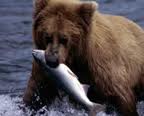
    A similar problem exists in the temperate rainforest of British Columbia (yes, Canada does have a rainforest. How amazing is that?). Grizzly and black bears thrive on hunting salmon in these habitats, but even the salmon spawns have been decreasing in size due to pollution and overfishing. When they cannot hunt, they also enter nearby towns and inadvertently threaten human populations.

    What can we do to help these animals? There are a number of seemingly small steps we can take to help slow down the effects of climate change that will in turn work to restore the natural habitats of these beautiful animals. One of the easiest things we can do is to turn down our thermostats. It may seem like a difficult thing to do in a Canadian winter, but lowering our heat consumption saves energy. Saving energy reduces the amount of fossil fuels our energy-producing plants need to expend. Turn your heat off when you leave the house or when you are sleeping.

    Another easy change is to take public transportation. Even if you only take it once a week, you are reducing the number of harmful emissions and pollutants in the air which threaten the ozone layer (causing the heat to rise). Imagine if we all took public transportation more rather than drove our cars – we would make a huge impact on the amount of pollution in our air!

    Our cell phone chargers, MP3 player chargers and other electronic devices all use up energy when they are plugged into the wall – even if they are not charging anything! Always unplug these chargers from the wall when you are finished using them.

    Finally, an easy way to reduce waste in our environments (which pollute our waters and forests) is to bring a reusable bag with you whenever you buy groceries. Most grocery stores now charge for plastic bags in an effort to convince people to bring their own reusable bags. It’s very easy to do – just pop one in your back pack and leave it there! You will never be without it or run the risk of forgetting it. Plastic bags do not break down for hundreds of years – imagine an entire forest filled with plastic bags, or our rivers and lakes choked with them. Breaking our addiction to these bags because they are convenient is very easy to do and will make a huge difference for our environment and animals.

    It may seem like an impossible feat, but making small changes in our everyday lives will make a big impact on the wonderful environment we get to call home. We are lucky to share this world with beautiful animals like polar bears, and it is our responsibility to help protect them. Implement these small changes listed above, encourage your friends and family to do the same, and we can ensure Canada remains beautiful and diverse.