Tag: apprenticeships

  • Non-Red Seal Trades

    Non-Red Seal Trades

    There is more to the trades than you think – here are other jobs that are part of the trade industry. See if one feels right for you! Click through to see more information on select trades from Service Canada, and check back each month as we feature profiles of some of these exciting careers right here on Jobs People Do.

    Construction Sector
    –Cement (concrete) Finisher
    -Concrete Pump Operator
    –Construction Millwright
    –Electrician (Domestic and Rural)
    -Exterior Insulated Finishing Systems Mechanic
    -Hazardous Materials Worker
    –Heat and Frost Insulator
    – Heavy Equipment Operator
    – Dozer Operator
    – Excavator Operator
    – Tractor Loader, Backhoe Operator
    -Native Residential Construction Worker
    –Painter and Decorator: Industrial
    -Precast Concrete Erector
    –Precast Concrete Finisher
    –Refractory Mason
    –Residential Air Conditioning Systems Mechanic
    –Residential (low rise) Sheet Metal Installer
    -Restoration Mason

    Industrial Sector
    -Bearings Mechanic
    –Blacksmith
    -CNC Programmer
    -Composite Structures Technician
    –Die Designer
    –Draftsperson (Mechanical, Plastic Mould Design, Tool and Die Design)
    -Electrical Control (Machine) Builder
    -Electrician – Signal Maintenance (TTC)
    -Elevating Devices Mechanic
    -Entertainment Industry Power Technician
    -Facilities Mechanic
    -Facilities Technician
    –Fitter-Assembler(Motor Assembly)
    –Gas Technician
    -Hydraulic/Pneumatic Mechanic
    -Light Rail Overhead Contact System Lineperson (TTC)
    -Locksmith
    -Machine Tool Builder and Integrator
    -Mould Designer
    -Mould Or Die Finisher
    -Mould Maker
    -Optics Technician (Lens and Prism Maker)
    –Packaging Machine Mechanic
    –Pattern Maker
    -Precision Metal Fabricator
    -Pressure Systems Welder
    -Process Operator (Food Manufacturing; Power; Refinery, Chemical and Liquid Process; Wood Products)
    -Pump Systems Installer/Mechanic
    –Railway Car Technician
    -Relay and Instrumentation Technician
    -Roll Grinder/Turner
    -Saw Filer/Fitter
    -Ski Lift Mechanic
    –Surface Blaster
    –Surface Mount Assembler
    -Thin Film Technician
    –Tool And Cutter Grinder
    -Tool And Gauge Inspector
    –Tool/Tooling Maker
    –Tractor Trailer Commercial Driver
    –Water Well Driller

    Motive Power Sector
    –Alignment and Brakes Technician
    –Auto Body Repairer – Br.2
    -Automotive Electronic Accessory Technician
    –Automotive Glass Technician
    –Marine Engine Mechanic
    -Motive Power Machinist
    -Powered Lift Truck Technician
    –Small Engine Technician
    -Tire, Wheel and Rim Mechanic
    –Transmission Technician
    -Turf Equipment Technician

    Service Sector
    -Aboriginal Child Development Practitioner
    –Agriculture – Dairy Herdsperson
    –Agriculture – Fruit Grower
    –Agriculture – Swine Herdsperson
    –Arborist
    –Baker
    -Bicycle Mechanic
    –Chef
    –Child and Youth Worker
    -Child Development Practitioner
    –Cook – Assistant Br. 1
    –Developmental Services Worker
    –Educational Assistant
    –Electronic Service Technician
    -Gem Setter/Goldsmith
    -Hardware, Lumber and Building Materials Retailer
    –Service Sector Horse Groomer
    -Horse Harness Maker
    –Information Technology (Hardware Technician,  Network Technician)
    –Institutional Cook
    -IT Contact Centre (Customer Care Agent, Sales Agent, Technical Support Agent)
    -Micro-Electronics Manufacturer
    -Native Clothing and Crafts Artisan
    -Network Cabling Specialist
    –Pool and Hot Tub/Spa Installer
    –Pool and Hot Tub/Spa Service Technician
    –Retail Meat Cutter
    -Saddlery
    –Special Events Coordinator
    -Utility Arborist
    -Wooden Boat Rebuilder/Repairer
  • All About Apprenticeships

    All About Apprenticeships

    What is apprenticeship?
    Apprenticeship is an agreement between a person (an apprentice) who wants to learn a skill and an employer who needs a skilled worker — “earning while learning.” Apprenticeship is a proven industry-based learning system that combines on-the-job experience with technical training to produce a certified journeyperson. Upon completion of the specified training period, apprentices receive a Certificate of Qualification. On average, 85% of the apprentice’s training, which usually takes two to five years, is spent in the workplace; the rest is spent at a training institution.

    What is a designated trade?
    Under the terms of the Canadian Constitution, each province and territory has the responsibilities for education and training which includes apprenticeship. The legislation permits each jurisdiction to designate occupations for apprenticeship.

    Designated trades are governed by regulations under the Provincial and Territorial Apprenticeship Acts. These regulations outline the administrative procedures and in some cases the standards and conditions of training for specific trades (e.g. methods of registering apprentices, curriculum, accreditation, and certification).

    Who administers apprenticeship programs?
    Apprenticeship programs are generally administered by provincial and territorial departments responsible for education, labour and training (under the direction of the provincial or territorial Director of Apprenticeship) with authority delegated from the legislation in each province and territory.

    The Program is supported by a network of advisory bodies, such as Apprenticeship and Certification Boards, Local Advisory Committees and Provincial Advisory Committees.

    Industry-driven provincial and territorial apprenticeship training boards are major policy-making and governing bodies for apprenticeship training relating to recommendations of trade designation, curriculum requirements and regulatory aspects of trades and occupations.

    Is certification compulsory or voluntary?
    The skilled trades are classified as either compulsory or voluntary. Generally, compulsory trades require workers to be certified or registered as apprentices in order to work in the occupation. Voluntary trades involve voluntary apprenticeship training and certification as workers are not required to be registered or certified to work in that trade.

    Even though many trades deemed compulsory in some of the jurisdictions are also Red Seal trades, it is not mandatory for a worker to obtain the Red Seal endorsement.

    What is the Interprovincial Standards Red Seal Program?
    The Red Seal Program represents industry’s recognition of an interprovincial standard of excellence for the skilled trades.

    Through the Program, apprentices who have completed their training and become certified journeypersons are able to obtain a Red Seal endorsement on their provincial or territorial Certificates of Qualification and Apprenticeship by successfully completing an interprovincial Red Seal examination.The Program encourages harmonization of provincial and territorial apprenticeship training and certification programs by developing and maintaining interprovincial standards of qualification for Red Seal trades, in partnership with apprenticeship and certification stakeholders. To date, there are 55 trades included in the Red Seal Program on a national basis.Legislation permits provinces and territories to designate trades and develop apprenticeship programs for their own requirements. Thus, in excess of 300 apprenticeship programs are available across Canada. The Ellis Chart, a comparative chart of apprentice training programs across Canada, is produced by HRSDC in collaboration and consultation with the provinces and territories and provides training and certification details for all of these apprenticeable programs.

    How to obtain a Red Seal?
    In certain trades, holders of provincial and territorial Certificates of Qualification can apply to write an Interprovincial Examination; if successful, they receive a distinctive Red Seal, which is affixed to their Certificate of Qualification.

    An Interprovincial Standards Red Seal can be obtained in the trades designated as Red Seal by:
    – graduating from a recognized provincial or territorial apprenticeship training program; o
    – meeting requirements established by the provincial or territorial apprenticeship authority; or
    – having the time and experience working in a Red Seal trade assessed to qualify to write the Red Seal examination.
    – passing the interprovincial standards Red Seal examination for that trade.

  • Youth Apprenticeship Programs

    Youth Apprenticeship Programs

    Youth apprenticeship programs are available in most provinces and territories. Check out the programs available in your area.

    Alberta
    The Registered Apprenticeship Program (RAP) allows high school students to participate in an apprenticeship program while they are still attending school. RAP apprentices earn income as well as hours of on-the-job training and work experience as credit towards their apprenticeship program, and their high school diploma. Scholarships are also available for RAP students.

    British Columbia
    The Secondary School Apprenticeship (SSA) is a career program that provides students with the opportunity to begin an apprenticeship while still in high school, and to earn high school credits for doing so. It provides a smoother road from school to work, and a head start to an apprenticeship.

    ACE IT is an industry training program for high school students, with trade classes offered at colleges and sometimes at a high school. ACE IT programs involve a partnership of schools, employers and industry and provides funding for the first level of schooling. Local employers get involved in the development of ACE IT programs, leading to a higher employment rate following completion of the program.

    Manitoba
    The High School Apprenticeship Program (HSAP) combines regular high school instruction with paid, part-time, on-the-job training. Students can earn up to 8 supplemental academic credits for graduation based on 110 working/practical hours per credit.

    Youth Build is a job training and pre-apprenticeship program whereby young people are working under the supervision of a journeyperson to renovate homes and develop building skills. Young people can attend the Youth Build Program full time, as an alternative to school. In Manitoba, there is a 30 hour per week paid vocational component and a 10 hour per week unpaid academic component.

    New Brunswick
    The Career Connections Program (CCP) offers students experience, hands-on paid work experience, and expands their essential employability skills.

    Newfoundland and Labrador
    Youth apprenticeship courses are available for high school students through Skilled Trades Jump Start Your Life.

    Northwest Territories
    The Schools North Apprenticeship Program (SNAP) is an opportunity for high school students to earn credit and pursue a career in the trades.

    Nova Scotia
    The Workit Youth Apprenticeship Initiative is open to youth between the ages of 16 and 19.

    Options and Opportunities (O2) offers students more hands-on learning experiences with a career focus. It’s designed to prepare students for successful transitions from high school to work, a career path, or a post-secondary program.

    Ontario
    The Ontario Youth Apprenticeship Program (OYAP) is a School to Work program that opens the door for students to explore and work in apprenticeship occupations starting in Grade 11 or Grade 12 through the Cooperative Education program.

    Prince Edward Island
    Youth Apprenticeship or Accelerated Secondary Youth Apprenticeship Program (ASAP)Youth Apprenticeship is for students wanting to explore their trade career options and gain a head-start on the post-secondary apprenticeship training program while working toward their Grade 12 diploma.

    Québec
    Québec offers vocational and technical education programs under the apprenticeship system, which are run jointly by Emploi-Québec and the Ministère de l’Éducation, du Loisir et du Sport .

    Saskatchewan
    Saskatchewan Youth Apprenticeship (SYA) raises awareness of apprenticeship in Saskatchewan schools by helping young people discover what rewards come with being a Youth Apprentice and working in the skilled trades.

    Yukon
    The Yukon Secondary School Apprenticeship Training program is open to Yukon secondary school students who would like to explore a skilled trade and complete high school at the same time.

  • Canada Apprentice Loan

    Canada Apprentice Loan

    Economic Action Plan 2014 proposes to create the Canada Apprentice Loan by expanding the Canada Student Loans Program to provide apprentices registered in Red Seal trades with access to over $100 million in interest-free loans each year.

    Apprentices in skilled trades do most (80 to 85 per cent) of their learning during on-the-job paid employment. They are also required to participate in technical training for short periods of time ranging from six to eight weeks each year. Apprentices can face significant costs to complete these periods of technical training required by their program, including educational fees, tools and equipment, living expenses and forgone wages. These costs can be particularly acute for apprentices who intend to complete their training after a number of years on the job, while supporting their families.

    Economic Action Plan 2014 proposes to create the Canada Apprentice Loan, which will offer interest-free loans to help registered apprentices with the cost of their training. The Canada Apprentice Loan will assist more apprentices in completing their training and encourage more Canadians to consider a career in the skilled trades.

    Apprentices registered in their first Red Seal trade apprenticeship will be able to apply for interest-free loans of up to $4,000 per period of technical training. Interest charges and repayment of Canada Apprentice Loans will not begin until after loan recipients complete or terminate their apprenticeship training program. At least 26,000 apprentices per year are expected to apply for over $100 million in loans. The estimated net cost of these loans to the Government would be $25.2 million over two years and $15.2 million per year ongoing.

  • Non-Red Seal Trades

    Non-Red Seal Trades

    There is more to the trades than you think – here are other jobs that are part of the trade industry. See if one feels right for you! Click through to see more information on select trades from Service Canada, and check back each month as we feature profiles of some of these exciting careers right here on Jobs People Do.

    Construction Sector
    –Cement (concrete) Finisher
    -Concrete Pump Operator
    –Construction Millwright
    –Electrician (Domestic and Rural)
    -Exterior Insulated Finishing Systems Mechanic
    -Hazardous Materials Worker
    –Heat and Frost Insulator
    – Heavy Equipment Operator
    – Dozer Operator
    – Excavator Operator
    – Tractor Loader, Backhoe Operator
    -Native Residential Construction Worker
    –Painter and Decorator: Industrial
    -Precast Concrete Erector
    –Precast Concrete Finisher
    –Refractory Mason
    –Residential Air Conditioning Systems Mechanic
    –Residential (low rise) Sheet Metal Installer
    -Restoration Mason

    Industrial Sector
    -Bearings Mechanic
    –Blacksmith
    -CNC Programmer
    -Composite Structures Technician
    –Die Designer
    –Draftsperson (Mechanical, Plastic Mould Design, Tool and Die Design)
    -Electrical Control (Machine) Builder
    -Electrician – Signal Maintenance (TTC)
    -Elevating Devices Mechanic
    -Entertainment Industry Power Technician
    -Facilities Mechanic
    -Facilities Technician
    –Fitter-Assembler(Motor Assembly)
    –Gas Technician
    -Hydraulic/Pneumatic Mechanic
    -Light Rail Overhead Contact System Lineperson (TTC)
    -Locksmith
    -Machine Tool Builder and Integrator
    -Mould Designer
    -Mould Or Die Finisher
    -Mould Maker
    -Optics Technician (Lens and Prism Maker)
    –Packaging Machine Mechanic
    –Pattern Maker
    -Precision Metal Fabricator
    -Pressure Systems Welder
    -Process Operator (Food Manufacturing; Power; Refinery, Chemical and Liquid Process; Wood Products)
    -Pump Systems Installer/Mechanic
    –Railway Car Technician
    -Relay and Instrumentation Technician
    -Roll Grinder/Turner
    -Saw Filer/Fitter
    -Ski Lift Mechanic
    –Surface Blaster
    –Surface Mount Assembler
    -Thin Film Technician
    –Tool And Cutter Grinder
    -Tool And Gauge Inspector
    –Tool/Tooling Maker
    –Tractor Trailer Commercial Driver
    –Water Well Driller

    Motive Power Sector
    –Alignment and Brakes Technician
    –Auto Body Repairer – Br.2
    -Automotive Electronic Accessory Technician
    –Automotive Glass Technician
    –Marine Engine Mechanic
    -Motive Power Machinist
    -Powered Lift Truck Technician
    –Small Engine Technician
    -Tire, Wheel and Rim Mechanic
    –Transmission Technician
    -Turf Equipment Technician

    Service Sector
    -Aboriginal Child Development Practitioner
    –Agriculture – Dairy Herdsperson
    –Agriculture – Fruit Grower
    –Agriculture – Swine Herdsperson
    –Arborist
    –Baker
    -Bicycle Mechanic
    –Chef
    –Child and Youth Worker
    -Child Development Practitioner
    –Cook – Assistant Br. 1
    –Developmental Services Worker
    –Educational Assistant
    –Electronic Service Technician
    -Gem Setter/Goldsmith
    -Hardware, Lumber and Building Materials Retailer
    –Service Sector Horse Groomer
    -Horse Harness Maker
    –Information Technology (Hardware Technician,  Network Technician)
    –Institutional Cook
    -IT Contact Centre (Customer Care Agent, Sales Agent, Technical Support Agent)
    -Micro-Electronics Manufacturer
    -Native Clothing and Crafts Artisan
    -Network Cabling Specialist
    –Pool and Hot Tub/Spa Installer
    –Pool and Hot Tub/Spa Service Technician
    –Retail Meat Cutter
    -Saddlery
    –Special Events Coordinator
    -Utility Arborist
    -Wooden Boat Rebuilder/Repairer

  • Why Red Seal Trades Might Work For You

    Why Red Seal Trades Might Work For You

    You may have heard the advice, “learn a trade – it’s an important skill to have.” That’s good advice: there will always be a need for carpenters, electricians, plumbers, mechanics, and welders. But what exactly is a Red Seal trade? What financial assistance is there for a person interested in becoming a tradesperson? How do you find out which trade is right for you? Read on to find out.

    In short, a Red Seal trade is one where you may work as a tradesperson in any province without having to take extra qualifications. The training and certifications of Red Seal trades are not individualized to each province; rather, they are standardized on a national level. Although each province is responsible for educating and training apprentices, or those who are at an entry level in their industry of choice, the Red Seal Program promotes the coordination of standards across the country. But in order to qualify as a journeyperson with a Red Seal, apprentices need a mix of classroom instruction and on-the-job training. Although they earn money while training on the job, acquiring necessary tools and classroom instruction is expensive.

    The government recognizes the necessity to fund tradespeople. There is a provision called the Apprenticeship Incentive Grant, which is a $1000-$2000 per year taxable cash grant for apprentices once they have successfully completed their first or second year or level of their program in one of the Red Seal trades. Another is the Apprenticeship Completion Grant, which is available to an apprentice who completes their training and acquires their journeyperson certification in a Red Seal trade. But tools are expensive, too. The government provides the Tradesperson’s Tools Deduction of up to $500 yearly to assist in the purchase of new tools necessary for the trade in question. That leaves one final question: which trade to choose?

    In Ontario, there are forty seven trades of the Program’s available 55 that you may choose from. These range from Automotive Service Technician to Baker to Hairstylist to Welder. The official website, www.red-seal.ca, contains a detailed job description of each. For instance, its page on carpentry tells us that “Carpenters construct, renovate and repair residential, institutional, commercial, and industrial … structures made of wood, steel, concrete and other materials.” We read about the risks involved, knowledge that a carpenter ought to have, and other skills that are useful. It tells us the career path a carpenter may be interested in taking. Further down the page, there is a chart that tells us that there is a provincial certification in all thirteen provinces and territories. Beyond that is additional information with links to relevant documents. You can also find this information on any of the other Red Seal trade pages. Read them over and decide which one may fit you best. Do you have an affinity for working in the kitchen? Bakers and Chefs can become Red Seal certified. Like tinkering with engines and other machines? A wide variety of trades will let you do just that: Automotive Service Technicians and Heavy Duty Equipment Technicians are among those who may acquire their Red Seal.

    The opportunities are numerous, and you can work anywhere in the country. Why not look into qualifying for a Red Seal trade?

  • Choosing A Trade

    Choosing A Trade

    With more than 200 trades across Canada to choose from, finding the right one can seem challenging. Here are some tips to help you identify what would be a perfect career choice for you.

    Consider a wide range of trades

    Do you like working in the garden, or fixing your car? Do you enjoy home maintenance projects or styling hair? Get familiar with the many trade choices first, and think about what work you like to accomplish.

    Narrow your choices down to 5 or fewer trades

    Keep it manageable by narrowing down your choices. Get as familiar as you can with the work, to see if you’d like it.

    Observe a trade or participate in a youth apprenticeship or pre-apprenticeship program

    Some school boards offer Observe a Trade days, which will give you the opportunity to see what’s involved in your favourite trades. For something more comprehensive, you can also participate in a pre-apprenticeship program, which gives you practical, on-the-job training with hours that are often transferable to your full apprenticeship.

    Talk to people who work in the trade

    See if you can get in touch with a journeyperson who works in the trade you’ve targeted, to see what advice they can give you. This is a great way to learn some tips from those who have already been there.

  • Not Your Typical Welder

    Not Your Typical Welder

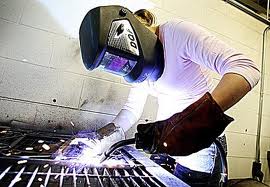
    Let’s be honest- how many of us girls grew up dreaming of being a mechanic or a welder? The answer is probably not many, and if you did you probably didn’t tell anybody because of the possibility of them thinking you were weird. When I was little I first wanted to be a marine biologist, I loved animals and wanted to work with them very badly. Then my life goal changed from a stunt car driver, to a photographer, to a mechanic and finally a welder.

    One of the things I was most excited about going to high school was that I was now able to take the auto mechanics and construction classes. I took them all through high school and loved every minute of it. I learned, fixed and made things that a lot of people didn’t, how many of you can honestly say you are comfortable with changing a flat tire on your own? I can say with all honesty I am and that’s because of my awesome auto teacher. My technology teachers not only gave me the skills and knowledge about their trades but also the courage to love the trades. To not be scared of trying something totally out of my comfort zone and to not care about what people think.

    I got the smart remarks in class “Girls can’t do that” and the classic “Don’t break a nail!” Taking those courses gave me the courage to pick something not many girls pick for a college program, Welding Technician. I knew two things that I wanted for sure out of what I picked for a program, I wanted to be able to get a job and I wanted to make money. I know those are not the best driving reasons for someone to pick a program, but they were honest. I had originally wanted to be a mechanic because of how much I loved my auto class but I soon realized there were a lot of mechanics and not a lot of jobs. So I had cut up an exhaust pipe about two times in auto with an old oxy-acetylene torch and I knew welding was an in demand job, so I decided on being a welder. The only knowledge I had on welding was what I learned from those two experiences using the torch, so not a whole lot.

    I remember showing up for my first welding class and them telling me that I would need safety boots, safety glasses and a welding helmet for tomorrow. The first thing I thought to myself is, “What have I done?! I have gotten myself into something I can’t handle, I know nothing about welding this is a horrible idea”. Then it got worse after I got all my equipment and they asked me to actually weld something, I don’t think I have ever sweated that much for a school assignment and it wasn’t from the heat of my torch. But with practice, some really great teachers and perseverance I got the hang of it and now I am actually a good welder. I am able to weld in shielded metal arc welding in flat, horizontal and vertical positions. I can use gas metal arc and flux core arc welding machines and I am learning tungsten arc welding at the moment.

    For those of you out there wondering what kind of woman I am, I would say I am not your typical looking welder, but then again isn’t that what we are trying to change? The notion of what the “typical” welder looks like? So this is what the typical welder looks like, a petite 19 year old woman, who stands at five feet and 2 inches, has a boyfriend and loves to go shopping just as much as anyone. The moral of the story is look at trades when you are deciding on college programs, any trade, believe me it’s a rewarding experience, that is challenging.

    If I can do it, you can do it.

  • The Human War with Technology

    The Human War with Technology

    Technology has become the essence of our everyday lifestyle. A life without our Blackberry’s or iPhone’s is a life that cannot be lived. Imagine how everyday tasks that have been simplified to suit our preference have been altered by technology to get the job done faster. Whether at school, work, or home, technology has made life easier by replacing everyday tasks with machines that process the work efficiently, saving you time and energy. However, one thing to be wary about is the replacement of, well, human beings. You see, with this booming techno-era becoming so dependent on machinery tools to operate us, they will soon operate without us. Technological innovation is so consistent and rapid that every day a couple of new items enter the market for competition and since every company is aware of this massive command, they go to extreme measures. For instance, the need to save time, reduce costs, and improve the safety and reliability of their product, companies will lay off and downsize their staff to hire professionals in the same field located overseas for cheaper labour, but who possess the same credibility and education level (if not more).

    According to Career Planner, some of the jobs that will witness a reduction from North America and Europe in the near future are data entry, programming, technical support, and customer service jobs. Even accounting will be done in countries unfamiliar to our roots; yet have perfectly mastered our education and language. Talent and expertise are no longer suited with a job offer and great pay; the willingness for companies to pay high prices for local contenders will soon be obsolete, and lower cost labour will move to other countries.

    However, students can surpass these challenges by choosing wisely their career path today. By picking a profession that cannot be performed remotely by someone else overseas, you can guarantee security. Here are some of the secure jobs of the future (to list a few) that will still be in demand, cannot be replaced, and require face-to-face interaction, speed, and are complex in their nature. When searching for the right career, make sure it requires physical energy, high level of skills and creativity (so it is not easily completed by someone else), and are hands on. Do not panic if the career you really love is technology based; do your homework and make sure you get familiar with onshore/offshore jobs for the future. No job is ever guaranteed, therefore to secure your position for tomorrow you must be aware of the fluctuation of the economy, along with its unexpected changes.  Plan it right today!

    High Demand Jobs for the Next 10 Years
    1.    Carpentry
    2.    Plumbing
    3.    Electrician
    4.    Hair Stylist
    5.    Construction Contractors
    6.    Auto Mechanics
    7.    Dental Hygienist
    8.    Truck Drivers for delivery service (UPS, FEDEX, Postal Service)
    9.    Airplane Mechanics
    10.  Entertainment (Actor, Singer)
    11.  Writer
    12.  Marketing Strategist
    13.  Lawyers
    14.  Doctors
    15.  Nurses (particularly home healthcare and nursing homes)
    16.  Politician
    17. Security and Financial Service Rep
    18. Real Estate Agent
    19. Teachers
    20. Emergency Medical Technicians
    21. Surgeon
    22. Chiropractor
    23. Therapists
    24. Medical Lab Technician

  • Joining the Trades: What Can I Be?

    Joining the Trades: What Can I Be?

    Are you wondering what types of careers are available to you in the trades sector? There is literally thousands to choose from. Check out just a few of the careers we found on CareersInTrades.ca!

    Construction
    Construction and Maintenance is the best known skilled trades sector. These jobs are available across Canada in both urban and rural areas. Some of its apprenticeable trades are:
    – Bricklayer
    – Heavy equipment operator
    – Painter and decorator
    – Ironworker
    – Mechanic
    – Plumber
    – Welder

    Transportation
    Transportation trades cover vehicles ranging from automobiles and motorcycles to airplanes and cranes. These jobs are anywhere vehicles can be found, which can be a farm, an airport, a harbour or any street! Some of the apprenticeship trades include:
    – Agricultural Equipment Technician
    – Aircraft Maintenance Mechanic
    – Auto Body Repairer
    – Motorcycle Mechanic
    – Transport Trailer Technician

    Manufacturing
    Manufacturing trades can lead to careers in many different sectors, including cars, textiles and even food production. These careers can secure a job in many manufacturers and bring you to the root of product development. Some of the apprenticeable trades include:
    – Automotive Machinist
    – Graphic Arts (Pre-Press, Press and Bindery)
    – Industrial Electrician
    – Power System Operator
    – Sawfiler/Fitter
    – Tool and Die Maker

    Service
    The service sector offers jobs for those interested in working more closely with the public. From chefs to hairstyling, this sector offers many career opportunities. Some of the apprenticeable trades include:
    – Arboriculturist
    – Baker
    – Barber
    – Graphic Arts Technician
    – Hairstylist
    – Jeweler and Goldsmith
    – Upholsterer