Tag: art

  • What Exactly Is a Sculptor?

    What Exactly Is a Sculptor?

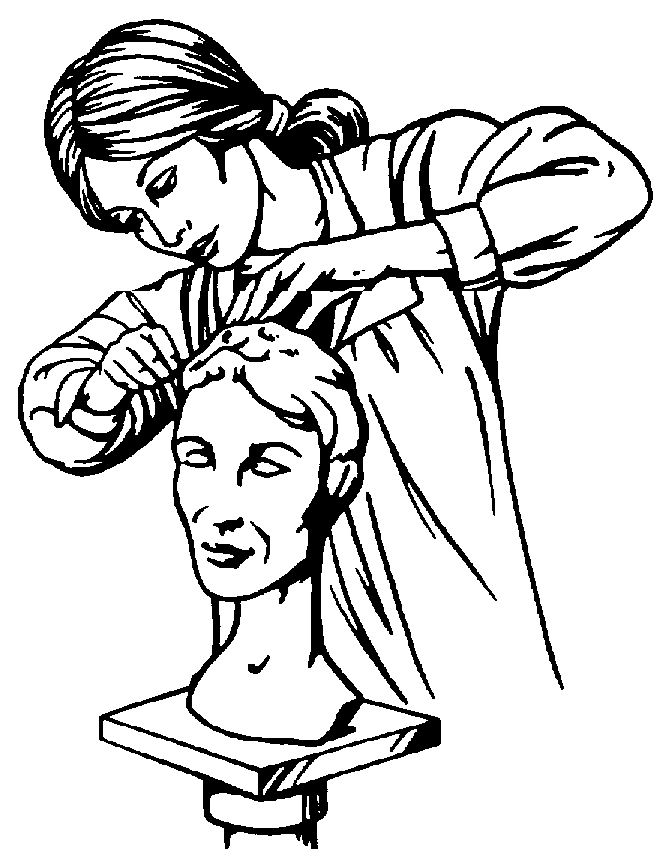
    People come from all over the world to see artwork such as sculptures at places like the Vatican in Rome and Parliament Hill in Ottawa. You might expect to see only work by world famous artists from Paris or New York. However, if you visit these places, you might find the work of a Winnipeg sculptor named Leo Mol. He was born as Leonid Molodozhanyn in Ukraine in 1915 but spent much of his life in Canada. He worked as a sculptor in Manitoba but sold his art to people around the world.

    Sculptors are artists who work with materials like bronze, clay, and stone to make statues of animals, people, or objects. Some sculptors are self-taught and learn their art from books or from many hours of practice. Others work as apprentices with more experienced artists who teach them what they need to know. Some sculptors attend university or art school. One important area of study is art history, which helps people understand the different styles of artwork that people have used in the past. The Canadian Art Foundation also had educational programs for students at many different levels.

    Like many other artists, Leo Mol studied art before he began his career. He first attended classes at the Kunst Akademie in Berlin, Germany, and at the Academy of Art in The Hague, Netherlands. He moved to Canada in 1948 and settled in Winnipeg, where he lived for the rest of his life. Some of his most famous sculptures are busts, which are carvings of people’s heads and necks. He made busts of several popes and cardinals in the Catholic Church and also of a former Canadian Prime Minister, John Diefenbaker. In 1989, he donated much of his artwork to the City of Winnipeg, and the Leo Mol Sculpture Garden opened in Assiniboine Park in 1992.

    Sculptors like Leo Mol can earn a lot of money by selling their work around the world, but their income depends on how much people like the statues. Some sculptors work in museums, schools, or advertising agencies, where they receive a regular salary. Even if they work in the same place as other people, sculptors generally work alone until the piece of art is ready to display. Then they need to work with others to find a place to put the sculptures. Often, sculptors work with commercial or non-profit galleries to display their work. They might sell some pieces to museums or art galleries or they might have art shows where people come to look at their work.

    Art shows are often a large part of a sculptor’s life. These shows give the artist a chance to meet others and to talk about the process of creating art. They also give people the chance to see the artistic works and possibly to buy some pieces. Are you artistic? Do you like to work with clay and other materials? If you are good with your hands and you enjoy creating art, you could consider becoming a sculptor.
  • Study More Effectively with Art

    Study More Effectively with Art

    It is a daunting task to study for a multi-chapter unit test. Besides the final exam, those are the tests that every high school student dreads – no matter how good their grades are. Many students have their own tried-and-true methods of study, while many others are still searching for the right method for them. Have you ever thought about using art when you study to help you remember things?

    When I was in grade eleven, one of my teachers had us make study guides. They were to include everything we needed to remember for each unit test. We were allowed to put whatever we wanted on it, as long as it fit on one side of a piece of paper. The first one I ever made was a work of art: it was probably the most colourful non-art assignment I’ve ever turned in.

    I came to realize that with that method of study, I was remembering more than ever. Suddenly, memorizing pages of vocabulary, trying to remember the parts of a diagram, and writing out textbook definitions word for word seemed boring. Limited to the space of one page, I quickly had to learn to condense information.

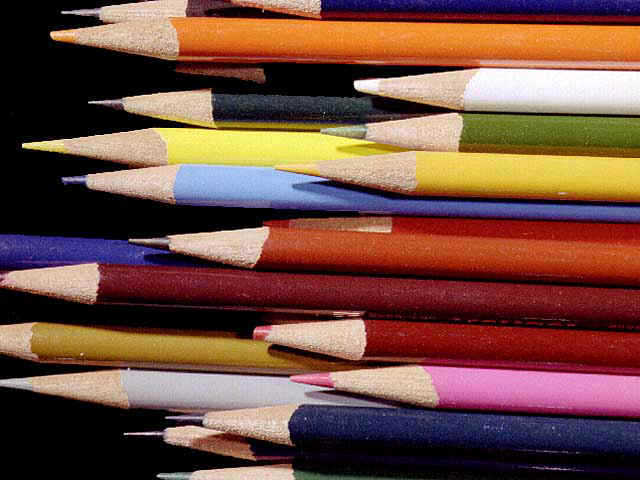
    I eventually came up with a system in three parts: replacing words and phrases with symbols, using illustrations to replace paragraphs, and colour coding the parts that I did wind up writing.

    Use a set of symbols that are meaningful to you. Not only will it be less boring when you are reviewing your notes, but the extra brain power you use to remember what the symbols mean will help you to recall that information in the future. The more complicated, but definitely more fun, part is the illustrating.

    Do not let a lack of faith in your artistic abilities stop you. No matter how well you can draw, even if it is just stick figures, you can use illustrations effectively. After all, they are there for your benefit. As long as you understand the concept, you have done what you have set out to do. If a few arrows and a vaguely-drawn map of North America help you to remember where vital battles took place? Excellent. A few scribbled lines and some swirls to show how ocean currents work? Wonderful! When you draw it out yourself, you are far more likely to retain the information you have put down than if you had stared at it on the page of a textbook.

    Next comes highlighting. Since you will need some words in your notes, why not come up with a colour-coding system? In my study guide, I would put a small legend on the side containing not only the above-mentioned symbols, but also what each colour meant.

    Try using a different colour for headings and subheadings, vocabulary words and definitions, and concepts you have difficulty remembering. Everything will be a lot easier to find when you know what colour to look for.

    Try it out sometime. Use it for the next big test you have. You might discover some hidden talents, and maybe even find studying enjoyable. You may realize that merely creating the study sheet is enough and never refer to it again. Maybe that unit test won’t be so daunting after all.