Tag: assistant

  • Are you a Leader or an Assistant?

    Are you a Leader or an Assistant?

    A good leader possesses the ability to motivate a group of people to complete a task or reach a goal. They need to know how to inspire others to work toward a common goal. Leadership is more about action then title. Good leaders have social influence, not just power garnered from holding a specific position.

    John Quincy Adams, the sixth President of the United States once said, “If your actions inspire others to dream more, learn more, do more and become more, you are a leader.”

    A good assistant is an indispensable and invaluable member of the team. Assistants are not less able or important than their bosses. In fact they are often referred to as their bosses “right hand.” Good assistants provide unconditional support whenever needed.

    Everyone has a different skill set and different aspirations. The best way to decide if you are a leader or an assistant is to ask yourself a few questions and take a look at the skill set that is unique to you. Take a look at the qualities listed below, which do you pose more of? Which would you like to pose more of?

    Leadership Qualities:

    • Ability to delegate
    • Good communicator
    • Motivational
    • Confident
    • Ability to read people
    • Trusts intuition
    • Inspirational
    • Positive attitude/ optimism
    • Accountability
    • Focus/ drive
    • Decisiveness
    • Responsible
    • Honest
    • Integrity

    Assistant Qualities:

    • Follows direction well
    • Organized
    • Teamwork
    • Time management
    • Adaptability
    • Willing to do any job big or small
    • Anticipating the needs of others
    • Ability to prioritize
    • Strong listening skills
    • Interpersonal skills
    • High energy
    • Multi-tasking
    • Self-management
    • Problem solving

    Depending on your skills and personality you may choose to be an assistant or a leader. These skills can be applied to your career choices, sports and extracurricular activities and relationships. Of course, you can still possess integrity and be an assistant, and vice versa.

    Some career choices common for people with strong leadership skills are: politics, coaching, managers (of an office, marketing, sales, construction etc.), lawyer, judge, detective, therapist, social worker, public relations, TV producer, motivational speaker, CEO, or school counselor.

    Some good career choices for those with strong assistant skills are: administration (school, office, medical, legal etc.), dental hygienist, executive assistant, paralegal, teacher’s aide, personal assistant, and research assistant or veterinary assistant.

    Sometimes it may seem like leaders get more glory, while assistants are working behind the scenes making sure all the necessary day to day tasks get done on time and on schedule. But it’s important to remember whatever your strengths and regardless of which category you fall into both leaders and assistants are invaluable members of any team.

  • The Most Important Skills to have as an Executive Assistant

    The Most Important Skills to have as an Executive Assistant

    In modern offices, you will be hard-pressed to not find an executive assistant. These individuals play a crucial role in organizations big and small. Ostensibly, an executive assistant supports just one person—but in practice, an exceptional executive assistant adds an extra dose of efficiency and productivity to the entire office.

    The job description for the executive assistant to a vice-president of finance will differ from the job description for the executive assistant to the CEO of a non-profit organization. However, certain skill-sets will always be in demand for this position.

    The most important skills to have or acquire:

    1. Time Management

    An executive assistant manages the day-to-day schedule for the person he or she supports. Therefore, you should be familiar with scheduling software, such as Microsoft Outlook, Google Calendar and PeopleSoft. These programs will also help with forward planning: you will be responsible for keeping an eye on what’s coming up, especially deadlines. Time management also involves being able to prioritize tasks. Your to-do list will no doubt be long; the key to making your list manageable is knowing which tasks are urgent and which ones can be safely put off to another day.

    2. Communication

    You will have contact with many people both inside and outside the organization. It goes without saying that your communications need to be professional. Not only are you representing your boss and your organization, but you need to maintain good working relationships. Another way to maintain professional rapport is to communicate and set appropriate expectations. Know when you need to say, “I’m sorry, event X has to take priority this week. Can I get back to you about event Y next week?” And when you promise to follow up; make sure you do!

    3. Flexibility

    Executive assistants need to be flexible. You may have put together the perfect schedule for your boss—but an emergency happens and now you’re busy coordinating with other busy people to reschedule meetings. Is this a headache? Yes. But if you react with a negative attitude, you are acting unprofessionally. Learning to roll with the punches is a necessary skill-set for executive assistants because life is not always going to follow your schedule.

    Now that you have a better idea of the core competencies of an executive assistant, you can investigate what skills and knowledge you need specific to your boss and your organization. For example, if you are applying to work for a vice-president of finance, you will stand out from the other applicants by having some experience in an accounting or finance environment. Becoming an executive assistant is a challenging and demanding position, but an incredibly rewarding one.

  • Educational Assistant

    Educational Assistant

    Description

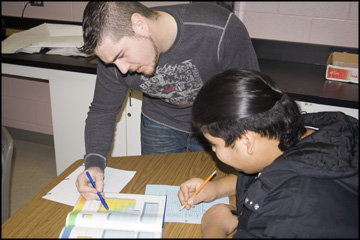
    Educational assistants help primary educators by working with students with special needs and implementing the education plan. They apply intervention strategies, create a climate for learning, assist with life skills development, and supervise the students’ use of specialized equipment.

    Certification Requirements
    • The Educational Assistant apprenticeship consists of 2,268 hours of on-the-job training.
    • Apprentices must also complete 432 hours of in-class technical training.
    • Once you have successfully completed the apprenticeship requirements, you receive a Certificate of Apprenticeship and are certified as a journeyperson in the trade.
    • A person with at least 2,700 hours of related work experience is eligible to apply for a Trade Equivalency Assessment (TEA) and, if successful, becomes certified as a journeyperson in this trade.
    Educational Prerequisites

    Grade 12 or equivalent.