Tag: cars

  • Career Profile: Automotive Painter

    Career Profile: Automotive Painter

    Cars and trucks come in all kinds of colours; from plain white or black to blue, yellow, and green. When the vehicles come from the factory, the paint is bright and unscratched. Once people start driving the vehicles, however, the paint may get scratched or chipped due to accidents, weather damage or age. Automotive painters are the people who can help make cars look nice and protect them from rust and other damage.

    Paint on cars makes them look nice, but it also helps protect them from the kind of damage that comes from rain and the salt that keeps drivers from sliding on icy roads. It also helps people to identify their own cars quickly and easily. Can you imagine how difficult it would be to find your car if every vehicle were painted the same colour?

    The first step in the process is to repair any damage like dents or broken parts. Automotive painters sometimes do the repairs themselves, but if they lack the knowledge or facilities for this type of work, the might let others finish that part before they begin their work.

    Since vehicles come in many different colours, painters have to try to match the exact shade of red or blue or green that the original paint contained. They mix different kinds of paint and add special protective chemicals like sealers.

    Next, workers might have to sand around the area that needs paint or use chemicals and power tools to remove any loose chips or anything else that could make the surface uneven. They put protective tape around the area to keep other parts of the vehicle clean and then start to paint.

    Painters might use many different tools for this part of the work, including spray painters and small brushes. Then, painters blend the newly done colour in with the old so that it all looks the same and then, after the paint is dry, they use a special tool to buff the area so that it shines.

    Being an automotive painter usually involves a combination of formal training and on-the-job experience. It can be creative work, especially in trying to match paint colours to each other, but it also involves some knowledge of mathematics for calculating the amounts of each paint to use. It sometimes includes some accounting or bookkeeping, especially in small repair shops with few employees. There is also specialty automotive painting where people request a specific design unique to their personality; this requires talent and knowledge in art. Auto art is like getting a tattoo but on your car instead of your skin. Average wages for automotive painters in Canada are about $21 per hour, and annual salaries are between about $33,000 and $66,000.

    A career as an automotive painter can be rewarding and interesting job for anyone who loves to work with vehicles; does that describe you? If so, check it out!

    Bibliography:

    Careers.org. “Occupation Profile for Automotive Body and Related Repairers.” http://www.careers.org/occupations/49-3021.00/automotive-body-and-related-repairers

    Industry Training Authority. “Automotive Painter (Automotive Refinishing Technician).”

    http://www.itabc.ca/program/automotive-painter-automotive-refinishing-technician.

    Monster.ca “Automotive Paint Technician.”

    http://my.monster.ca/job-profiles/Automotive-Paint-Technician.aspx.

    Payscale.com. “Painter Automotive Salary (Canada).” http://www.payscale.com/research/CA/Job=Painter_Automotive/Hourly_Rate.
  • Career Profile: Small Engine Mechanic

    Career Profile: Small Engine Mechanic

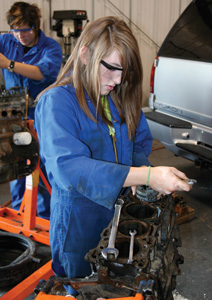
    A Small Engine Mechanic repairs and services small gasoline and diesel-powered equipment such as lawn mowers, motorcycles, boats, zero-turn mowers, snow mobiles, garden tractors and chainsaws. Mechanics can specialize in generators and power sports motors that include outboard motors, ATVs and dirt bikes.

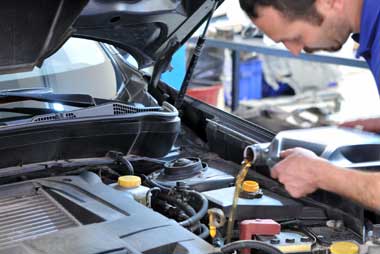
    Typical responsibilities include prioritizing work orders, inspecting and testing engines, estimating repair costs, diagnosing and isolating faults as well as adjusting and replacing parts. Customer service is an important role for the mechanic. They advise customers on the work performed and show them how to take care of the equipment.

    No day is routine in the life of a Small Engine Mechanic. In the morning, either the mechanic or foreman reviews and prioritizes the work orders. The day can start with a simple problem such as an oil change and end with a highly complex problem such as the motor not starting due to a carburetor problem.

    To be a successful mechanic, you need a strong mechanical and electrical aptitude as well as excellent problem solving abilities. You need to figure out if the problem is as simple as needing an air filter change or as complicated as the engine suddenly stopped running. Good manual dexterity is a must since you’ll manipulate a lot of small parts and use a variety of tools.

    You may get a customer like me who knows absolutely nothing about machinery and they may not explain the problem properly. They may just tell you “my lawnmower won’t start” which doesn’t say much, so you need imagination to picture what could have happened. For example, did the customer neglect or abuse it? Did they fill the machinery while the engine was running? Or did they use it improperly? Answers to questions like these will help you diagnose the problem.

    The job of a Small Engine Mechanic is very cerebral because you have to focus on a lot of detail for complex tasks like taking a carburetor apart. A carburetor has a lot of small parts. If you take it apart in the wrong order or get the parts mixed up, you may have a very hard time putting it back together and your carburetor could end up like Humpty Dumpty who fell of the wall.

    If you’re in high school, you can take courses in electronics, mechanics, business math and science to prepare for a Small Engine Mechanic career. You can get experience by working part-time or during the summer at a mechanic shop then further your education in a certificate program at your local college.

    Most Small Engine Mechanics work full time during regular business hours, but they may work more hours during peak times. Employers who hire mechanics include shops, marinas, motor vehicle dealers, garages, boatyards, equipment rental companies, wholesale distributors, and parts dealers. An experienced Small Engine Mechanic can earn about $59,288 or $16.50 per hour.

    If you’re mechanically inclined, practical and love problem solving, a Small Engine Mechanic career may be a step in the right direction for you.

    References:

    Education Experience For Motorcycle And Small Engine Repair Worker http://www.careerexplorer.net/education-experience/education-experience-motorcycle-and-small-engine-repair-worker

    Payscale.com – Small Engine Mechanic (Canada) http://www.payscale.com/research/CA/Job=Small_Engine_Mechanic/Hourly_Rate

    Small Engine Mechanics http://job-outlook.careerplanner.com/Small-Engine-Mechanics.cfm

    Small Engine Technician http://www.ycdsb.ca/departments/instructionalservices/scp/documents/smallenginetech.pdf

  • A Career in Trades: Automotive Service Technician

    A Career in Trades: Automotive Service Technician

    Do you…
    • Enjoy working with your hands?
    • Enjoy fixing cars, trucks, motorcycles or small engines?
    • Want to learn more about electrical, hydraulics (fluid power), pneumatics (air power) and mechanical components in machines?

    If you answered “yes” to any of the questions above, then a career as an Automotive Service Technician may be right for you!

    What Is An Automotive Service Technician?
    An Automotive Service Technician is a certified and skilled tradesperson who diagnoses and repairs motor vehicles (e.g. cars, minivans, SUV’s, light duty trucks and medium duty trucks).

    An Automotive Service Technician performs various duties that help maintain a vehicle as well as repair it. Some of these job activities include:
    • Engine maintenance and repair
    • Transmission maintenance and repair
    • Exhaust system repair
    • Body repair and adjustments
    • Brake maintenance and repair
    • Steering, suspension and alignment repairs

    Where Does An Automotive Service Technician Work?
    An Automotive Service Technician may work in:
    • Dealerships
    • Independent automotive shops, repair shops and garages (owned by other people or themselves)

    Some Automotive Service Technicians may prefer to work as:
    • Teachers in high school teaching automotive class
    • Teachers in colleges that offer an accredited Automotive Service Training program

    What Does A Typical Day For An Automotive Service Technician Look Like?
    A typical day for an Automotive Service Technician in a dealership or automotive shop usually begins when a customer brings their vehicle to the shop. The customer tells the service advisor what the problems are with their vehicle. The service advisor documents the problems on a work order. The vehicle and corresponding work order is then given to an Automotive Service Technician who begins to work on this particular job.

    An Automotive Service Technician follows a certain procedure when working on a new job. He/she:
    1. Reads the work order written up by the service advisor.
    2. Examines the vehicle to further assess the problems mentioned on the work order.
    3. Provides the service advisor with an estimate on how much it will cost to fix the problems.
    4. Waits for the service advisor to confirm that the customer is OK with the repair costs before fixing the problems.
    5. Fixes the problems once the service advisor gives the go ahead.
    6. Takes the vehicle for a test drive and/or performs operational checks to ensure that the customer’s concerns are resolved.
    7. Informs the service advisor that the customer can pick up their vehicle.

    How Do You Become An Automotive Service Technician?
    1. Attend a college that offers a certified Automotive Service Technician training program.
    2. Complete the Automotive Service Technician program successfully.
    3. Find a suitable employer who will hire and train you as an Automotive Service Technician apprentice. (Complete your apprenticeship booklet/hours/activities at work and get it signed off by your employer).
    4. Write the Automotive Service Technician certification exam put out by the Ministry of Training, Colleges and Universities.
    5. Pass the exam, obtain your 310S license and become a licensed Automotive Service Technician!

  • Career Profile: Automotive Service Technician

    Career Profile: Automotive Service Technician

    Do you…
    • Enjoy working with your hands?
    • Enjoy fixing cars, trucks, motorcycles or small engines?
    • Want to learn more about electrical, hydraulics (fluid power), pneumatics (air power) and mechanical components in machines?

    If you answered “yes” to any of the questions above, then a career as an Automotive Service Technician may be right for you!

    What Is An Automotive Service Technician?
    An Automotive Service Technician is a certified and skilled tradesperson who diagnoses and repairs motor vehicles (e.g. cars, minivans, SUV’s, light duty trucks and medium duty trucks).

    An Automotive Service Technician performs various duties that help maintain a vehicle as well as repair it. Some of these job activities include:
    • Engine maintenance and repair
    • Transmission maintenance and repair
    • Exhaust system repair
    • Body repair and adjustments
    • Brake maintenance and repair
    • Steering, suspension and alignment repairs

    Where Does An Automotive Service Technician Work?
    An Automotive Service Technician may work in:
    • Dealerships
    • Independent automotive shops, repair shops and garages (owned by other people or themselves)

    Some Automotive Service Technicians may prefer to work as:
    • Teachers in high school teaching automotive class
    • Teachers in colleges that offer an accredited Automotive Service Training program

    What Does A Typical Day For An Automotive Service Technician Look Like?
    A typical day for an Automotive Service Technician in a dealership or automotive shop usually begins when a customer brings their vehicle to the shop. The customer tells the service advisor what the problems are with their vehicle. The service advisor documents the problems on a work order. The vehicle and corresponding work order is then given to an Automotive Service Technician who begins to work on this particular job.

    An Automotive Service Technician follows a certain procedure when working on a new job. He/she:
    1. Reads the work order written up by the service advisor.
    2. Examines the vehicle to further assess the problems mentioned on the work order.
    3. Provides the service advisor with an estimate on how much it will cost to fix the problems.
    4. Waits for the service advisor to confirm that the customer is OK with the repair costs before fixing the problems.
    5. Fixes the problems once the service advisor gives the go ahead.
    6. Takes the vehicle for a test drive and/or performs operational checks to ensure that the customer’s concerns are resolved.
    7. Informs the service advisor that the customer can pick up their vehicle.

    How Do You Become An Automotive Service Technician?
    1. Attend a college that offers a certified Automotive Service Technician training program.
    2. Complete the Automotive Service Technician program successfully.
    3. Find a suitable employer who will hire and train you as an Automotive Service Technician apprentice. (Complete your apprenticeship booklet/hours/activities at work and get it signed off by your employer).
    4. Write the Automotive Service Technician certification exam put out by the Ministry of Training, Colleges and Universities.
    5. Pass the exam, obtain your 310S license and become a licensed Automotive Service Technician!