Tag: computers

  • Cursive Writing: A Dying Art in School

    Cursive Writing: A Dying Art in School

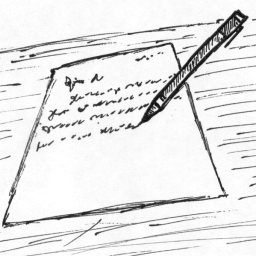
    With the modern popularity of computers, tablets, and smartphones changing the way people communicate, there is also the consequence of fewer people knowing how to use cursive writing. On the larger scale, this is partly because many people no longer regularly write by hand, and partly because in many places this skill is no longer taught in elementary school. While it is somewhat understandable that the focus is on typing and computers, given that more and more communication tasks are becoming digital, there are nevertheless some downsides to the loss of cursive writing.

    Learning and using cursive writing has many benefits.   Typing does not offer much feedback to the brain, so there is a better connection in the brain between the information and the physical act of handwriting, because handwriting engages circuits in the brain that typing with a keyboard simply does not. Cursive handwriting is a complex skill that affects and engages cognitive development, visual, motor and memory circuits, and hand-eye coordination. With the decline of learning cursive at a young age, there can potentially be a detrimental effect on people, such as taking longer to perfect these fine motor skills. There is also a strong scientific and psychological following that the use of handwriting affects how deeply and expressively people are able to understand and communicate their thoughts and ideas.

    There are of course many practical considerations to learning cursive writing skills. One of these is to develop your own unique written signature for signing documents. While there is an increased trend toward digital signatures and biometrics such as fingerprint scanning, the unique identifier of a written signature is still valuable.

    As well, there are still many times you will encounter situations in which using a computer, keyboard, or other electronic device is simply not an option; as a student, most of these will come in the form of in-class midterms and final exams, which are typically still handwritten. Especially in writing-heavy courses, time is of the essence when you have to complete essay answers and other written work in only an hour or two. Writing in cursive is much, much faster than printing, and can make the difference between being able to get all your answers down, or running out of time with questions and discussion points still unfinished.

    If you never learned cursive, it’s not too late! All you need is a guide of the letterforms, and then it’s just practice, practice, practice by forcing yourself to write in cursive all the time. Before long, it will be as natural as breathing! And if seeing fancy handwriting seems intimidating, just remember that no one expects perfect letters, loops and joins all the time; rather, learning cursive will allow you to develop a fast, easy, and personal writing style all your own!

    SOURCES:

    https://en.wikipedia.org/wiki/Cursive

    http://2machines.com/180907/

    http://www.pbs.org/newshour/updates/long-held-tradition-cursive-handwriting-slowly-dying-america/

  • Career Profile: CNC Machinist

    Career Profile: CNC Machinist

    Computer Numeric Control, more commonly known as CNC emerged during the 1940s and 50s. In its simplest form, it is the usage of a computer to create and machine a design with machine tools. CNC machines can control lathes, routers, grinders and mills[1]

    The entire process is done through a computer using numeric equations and using the x, y, z axis[2]. Here, the computer can make precise cuts based on what the operator has set. Additionally it can repeat as many cuts as you would like. This makes it easy to duplicate templates than manually machining a replica. It also saves time while limiting the number of potential inaccuracies.

    CNC is widely used by machinists. It is used to manufacture complex templates, fixtures and designs like crown molding. The cost of equipment is very expensive but has dropped since it has become more publicly available.[3]

    CNC is incorporated into the more broad trade of tool and die making. Sheridan college offers a course included CNC programming and mechanical drafting[4]. It prepares students for careers in the machine industry. Students should have good math skills and be excellent with problem solving and reading drafts.

    Typically, CNC machinists make approximately $14-30 per hour. Companies are in demand for CNC machinists as manually machining has been come less common with the emersion of CNC operated equipment. Automotive companies are constantly using CNC machines for productions of their vehicles and vehicle accessories.

    If you enjoy manufacturing and computers and want to be part of a major industry in demand, give CNC machining a shot and see how rewarding this career can be!

    Sources:

    [1] http://www.thomasnet.com/about/cnc-machining-45330503.html

    [2] http://www.technologystudent.com/cam/cnccut1.html

    [3] http://www.mmsonline.com/columns/different-company-types-have-different-cnc-needs

    [4] https://www.sheridancollege.ca/academics/programs-and-courses/mechanical-techniques-tool-and-die-maker.aspx

  • Career Profile: Software Developer

    Career Profile: Software Developer

    Every time you use a computer, you use software. Each game and program for writing or doing budgets has software that allows the computer to work and to respond to what people tell it to do. If you like to work with small details and to see how your work translates into something that everyone can use, becoming a software developer might be a good choice.

    Working as a software developer might sound like a very exciting job. You could imagine that you could spend the day playing games and learning new things, and it might include some of those kinds of activities. However, working as a software developer is mostly about working at the coding behind what people see. It takes creativity but also the ability to focus on small details and to see how different elements fit together.

    You might know a bit about the mechanics behind computer programs. Have you ever done any programming yourself? The end result can be very interesting, but getting to that point usually takes a lot of work that can sometimes be somewhat dull and time-consuming. Many software developers have degrees in computer science, but formal training is not always necessary. If you have talent as a software developer, you have a good chance of getting work in this area even if you have only a high school education.

    Software developers use many of the same skills as computer programmers. The know how to use the coding behind the programs to produce certain effects on the computer, such as a special sound or colour. If you want to be a software developer, you can already start to learn the technology behind what you see. Learn the codes that tell the computer what to do and become familiar with what happens when there are mistakes in the coding.

    Software developers have to know all of the technical aspects of how computers work, including computer languages. However, they also need to be creative. Most computer programs, such as word processing software, are designed to solve a problem or to fill a need, even if the need is only for entertainment. Some of the main areas where people in this field work are new technologies, healthcare, and security. However, software developers can work in almost any place where computers are important.

    Research is an important part of being a software developer. People in this field might spend a lot of time reading about what other people have done and thinking about how they can improve on old technology. Learning from other people and from books, magazines, and other sources of information can help to keep a software developer’s skills current.

    Depending on where they work, software developers can earn between $44,000 and $81,000, but the average is about $59,000. Experience can sometimes help people to earn the higher salaries, but most software developers move into other fields within about twenty years.

    Do you love computers and enjoy finding out how they work? You might want to consider becoming a software developer.

  • Job Profile: Data Entry Clerk

    Job Profile: Data Entry Clerk

    Most people are very familiar with the keyboards of computers and other electronic devices.  They might be able to send a message to their friends or post a comment on social media sites within seconds.  Are you like that? You might be able to send texts to your friends and family, but can you type information into a computer for hours at a time? If so, you might have a future in data entry.

    Everyone who uses a computer is a data entry clerk in a sense. Whenever you send a message to your friends to arrange an activity, the information you send is a form of data. Most of the people who work in data entry, however, deal with a different type of material. They might type out tax information or send out requests for payment. They might work in a university, keeping track of the courses that people are taking and how many students are studying. Almost any kind of information can be part of a data entry clerk’s job.

    Other types of work might also be part of careers in data entry. Besides entering information into the computer, data entry clerks might file papers or organize the offices where they work. They might answer telephones or deal with customers’ questions. They might need to write down what happens during meetings and send the notes to others in the office. Almost any office job can be part of a career in data entry.

    Working in data entry varies from one place to another. Some data entry clerks have full-time jobs in offices, but others work in many different places on short-term projects. For data entry clerks with full-time jobs, salaries range from about $22,000 to $41,000. Experience is an important factor in moving up in salary.

    Becoming a data entry clerk is also closely related to experience. Most data entry jobs require a high school diploma but no other formal education. However, knowledge of various computer programs, including word processing, is helpful. People with certificates in a variety of computer programs are more likely to find work than those who have completed only their high school studies.

    The main skill that data entry clerks need is a rapid typing speed. Most jobs require a speed of at least forty words per minute or more, using both the main part of the keyboard and the numbers on the right side. Being able to type even faster than that will help data entry clerks do their work more quickly and efficiently. A typing speed of eighty words a minute or more is common among data entry clerks. Speed is not as important as accuracy, however. Everyone makes mistakes, but data entry clerks need to be as accurate as possible.

    Practice can help data entry clerks become good at their jobs. If the job appeals to you, you should start practicing your typing and office skills whenever you have the chance.