
Tag: cover letters

  • Cover Letters: do you need them?

    Cover Letters: do you need them?

    Every day employers everywhere receive resumes. With such a volume of hopeful applicants, how does one stand apart from the pack? The answer—besides a professional and thorough looking resume and a great professional appearance—is a cover letter. This tells the employer about you personally, as well as your objections and intentions. Suddenly, you are not simply a faceless resume. Cover letters give applicants a personality and a quality that singles them out. A cover letter can mean getting you from a walk-in applicant to an up-and-coming employee.

    Highlight what makes you different

    Let your potential employer know about all your skills, attributes, experiences and talents because chances are you will have plenty of opportunities to display these in the job if you get hired. Think of your cover letter as a little movie trailer or a teaser for what you would be like as an employee. Have you never called in sick before? Are you punctual to a fault? Have you made a difference at a previous job that actually has a percentage statistic? Bring all this up!

    Do not be negative

    We repeat…do not be negative! Never, ever include personality conflicts with previous coworkers or employers in your cover letter or any legal issues or sarcastic remarks. You want to project all the positivity you can onto the page. If you are speaking ill about a current or previous place of employment, an interviewer may fear a similar situation if he or she hires you. You want to seem like a financially and emotionally sound decision.

    Do you talk about salary?

    If a prospective employer requests you to or the ad mentions it, then yes you may mention salary requirements and/or history. But if you are showing up to a business with no previous research into the role do not include it in the cover letter. This may be something you discuss later on in the interview.

    Be direct

    The more professional a cover letter or resume the more likely that an employer will deem you qualified to climb within the company. No matter what you are applying for, always approach the cover letter like you are applying for the highest level within the business; by that we mean attitude, manner and grammatical fluidity. Be as direct as possible, and mention your desire to grow with the business and as an employee in general. The best applicants are those that have all the potential to become the boss one day.
  • Uncover the Tricks for an Outstanding Cover Letter

    Uncover the Tricks for an Outstanding Cover Letter

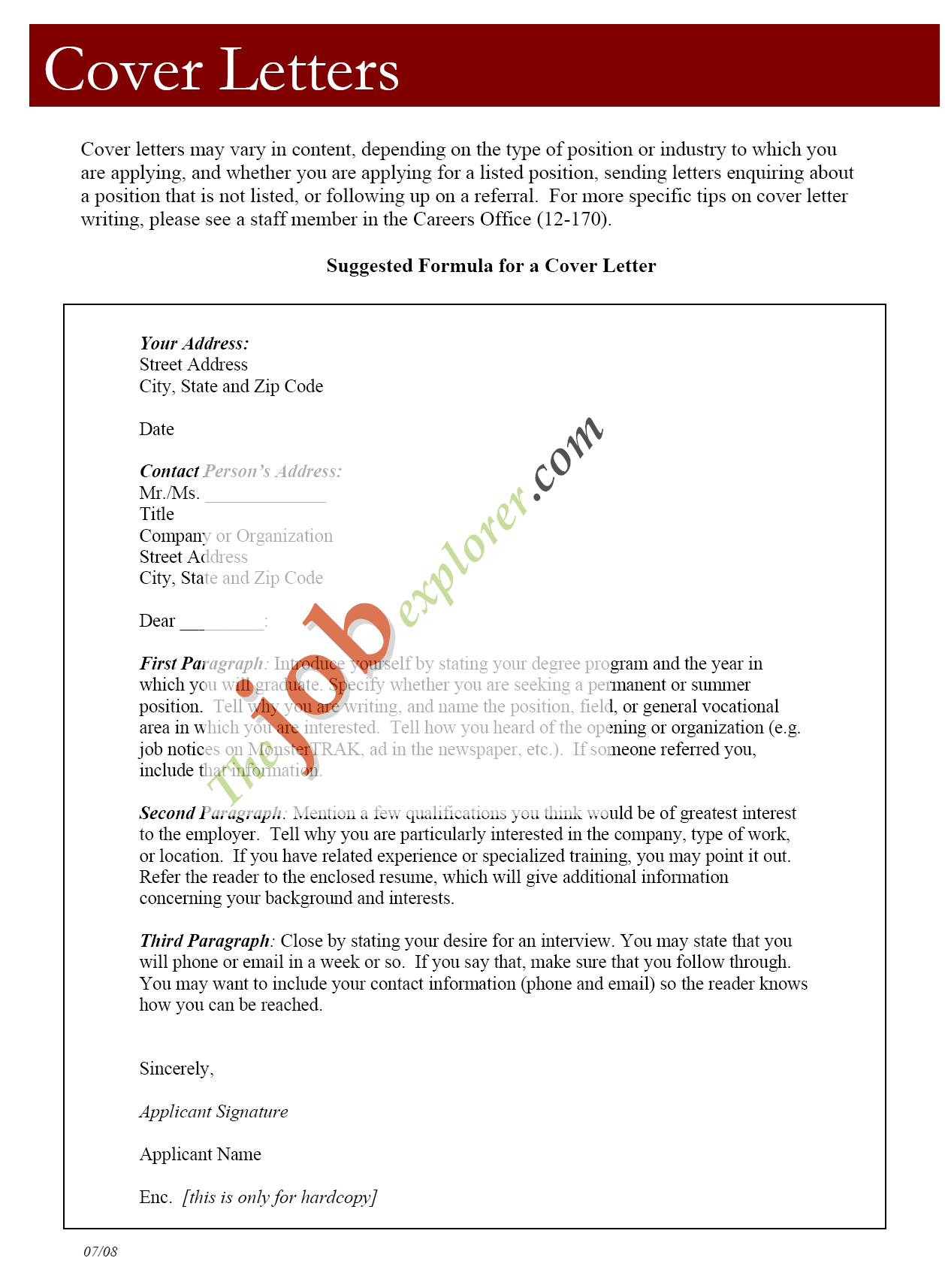
    We all know that a resume is a necessary tool when you set off to go job hunting. However, not a lot of people are aware that they should submit a cover letter along with their resume.

    Writing a cover letter though requires patience and attention to detail. However, once you have prepared a good resume for yourself, a cover letter will be manageable to craft within a few hours. The thing to remember about a cover letter is that a generic one is a no-no; you should always tailor it according to your target job. To do this, here are the tricks to keep in mind:

    Understand what your target position needs

    However, sometimes it will take you two or three passes to process what the essentials are. As such, when you see a job posting you are interested in , don’t be keyboard-happy and send your resume right away. Take the time to read the qualifications and skills required for the position and be sure to note a commonality. The most common thing you find out about them will be the one to highlight in your cover letter.

    Summarize your qualifications

    This is similar to the qualifications summary in your resume where you detail your job positions, core competencies, industry, length of experience, strengths, accomplishments, and educational experience. In this part, ensure that you are providing information that is relevant to the position you are applying for. For example, say you take pride in your email communication skills, but you are applying to a direct sales representative role. In this instance, you can play up your interpersonal skills and outgoing personality and mention your persuasive skills, but your writing skills may have to take a backseat.

    Align your strengths with the prioritized requirement

    If you are looking to apply as a shift supervisor at a busy café, what do you think is the most important quality that the hiring manager or recruiter will look for? The first thing an employer might look for in this role is a candidate who can provide efficient service and a positive environment. Once you know that, you can do a self-evaluation and look for your skill that best fits this necessity. For example, you worked as a supervisor at a clothing store at a busy mall during Christmas time; this will catch the attention of a prospective employer of a busy commercial establishment.

    Research the company

    A cover letter is essentially about you, but hiring managers and recruiters will also want to know how you fit into their team. This is the part when you have to take the time and do research on the company you are applying to. Find out about their mission and vision. Research their company values. Discover what foundations or organizations they support. Once you have researched these aspects, you can find something that speaks to you.

    A cover letter complements your resume, and it should not be taken for granted. It gives the hiring manager or recruiter a glimpse of what you can offer them. A cover letter can also distinguish whether they should have a look at your resume or throw it away. Follow the tips above and you will be on your way to having a cover letter that grabs attention.

    SOURCES:

    https://blog.livecareer.com/how-to-tailor-your-cover-letter-the-easy-way/

    http://careers.workopolis.com/advice/how-to-tailor-your-resume-to-any-job-posting/

    http://www.bubble-jobs.co.uk/blog/b2c/tailor-write-cover-letter/