

Tag: david suzuki

  • Getting Dirty May Be Healthy (French version available)

    Getting Dirty May Be Healthy (French version available)

    Jobs People Do | JobsPeopleDo.com

    For much of human history, we lived close to the natural world. As civilization evolved, we became increasingly urbanized, and most of us now live in cities. As we’ve moved away from nature, we’ve seen a decline in other forms of life. Biodiversity is disappearing. The current rate of loss is perhaps as high as 10,000 times the natural rate. The International Union for Conservation of Nature’s 2008 Red List of Threatened Species shows that 16,928 plant and animal species are threatened with extinction. This includes a quarter of all mammal species, a third of amphibian species and an eighth of bird species. And that’s only among those we know about; scientists say we may have identified just 10 to 15 per cent of existing species.

    It can be a challenge to communicate why this loss is important. We know species diversity is critical to the healthy functioning of ecosystems that provide services on which humans depend. But could we live with fewer? Some would argue we could do without mosquitoes and other annoying critters. We could keep the ones we want and those that are useful to us. Do we need biodiversity to keep humans healthy?

    According to an article in Conservation magazine, there is a link between biodiversity and human health. Ilkka Hanski and his colleagues at the University of Helsinki compared allergies of adolescents living in houses surrounded by biodiverse natural areas to those living in landscapes of lawns and concrete. They found people surrounded by a greater diversity of life were themselves covered with a wider range of different kinds of microbes than those in less diverse surroundings. They were also less likely to exhibit allergies.

    What’s going on? Discussion of the relationship between biodiversity and human health is not new. Many have theorized that our disconnection from nature is leading to a myriad of ailments. Richard Louv, author of Last Child in the Woods, says people who spend too little time outdoors experience a range of behavioural problems, which he calls “nature deficit disorder”. It fits with theories of modern ecology, which show systems lacking in biodiversity are less resilient, whether they’re forests or microbial communities in our stomachs or on our skin. Less resilient systems are more subject to invasion by pathogens or invasive species.

    Hanski studied a region in Finland where few people move far. He randomly selected 118 adolescents in an equal number of homes. Some were in the city, and others were in the woods or on farms. The team collected skin swabs from subjects and then measured the biodiversity of plants around each house. Their data revealed a clear pattern: higher native-plant diversity appeared to be associated with altered microbial composition on the participants’ skin, which led in turn to lower risk of allergies.

    Hanski and his colleagues found that one group of microbes, gammaproteobacteria, appears to be associated both with plant diversity and allergies. And it didn’t matter whether they considered allergies to cats, dogs, horses, birch pollen or timothy grass. People with more diverse kinds of gammaproteobacteria on their bodies were less likely to have allergies.

    The immune system’s primary role is to distinguish deadly species from beneficial and beneficial from simply innocent. To work effectively, our immune system needs to be “primed” by exposure to a diverse range of organisms at an early age. In this way, it learns to distinguish between good, bad and harmless. If not exposed to a wide array of species, it may mistakenly see a harmless pollen grain as something dangerous and trigger an allergic reaction. We also know that bacteria and fungi compete. Fungi are often associated with allergies, and it could be that the high diversity of bacteria keeps the fungi in check.

    A conclusive explanation for Hanski’s observations is not yet available. More research is needed. But we know we evolved in a world full of diverse species and now inhabit one where human activity is altering and destroying an increasing number of plants, animals and habitats. We need to support conservation of natural areas and the diverse forms of life they contain, plant a variety of species in our yards, avoid antibacterial cleaning products and go outside in nature and get dirty — especially kids. Our lives and immune systems will be richer for it.
  • Getting Dirty May Be Healthy (French version available)

    Getting Dirty May Be Healthy (French version available)

    For much of human history, we lived close to the natural world. As civilization evolved, we became increasingly urbanized, and most of us now live in cities. As we’ve moved away from nature, we’ve seen a decline in other forms of life. Biodiversity is disappearing. The current rate of loss is perhaps as high as 10,000 times the natural rate. The International Union for Conservation of Nature’s 2008 Red List of Threatened Species shows that 16,928 plant and animal species are threatened with extinction. This includes a quarter of all mammal species, a third of amphibian species and an eighth of bird species. And that’s only among those we know about; scientists say we may have identified just 10 to 15 per cent of existing species.

    It can be a challenge to communicate why this loss is important. We know species diversity is critical to the healthy functioning of ecosystems that provide services on which humans depend. But could we live with fewer? Some would argue we could do without mosquitoes and other annoying critters. We could keep the ones we want and those that are useful to us. Do we need biodiversity to keep humans healthy?

    According to an article in Conservation magazine, there is a link between biodiversity and human health. Ilkka Hanski and his colleagues at the University of Helsinki compared allergies of adolescents living in houses surrounded by biodiverse natural areas to those living in landscapes of lawns and concrete. They found people surrounded by a greater diversity of life were themselves covered with a wider range of different kinds of microbes than those in less diverse surroundings. They were also less likely to exhibit allergies.

    What’s going on? Discussion of the relationship between biodiversity and human health is not new. Many have theorized that our disconnection from nature is leading to a myriad of ailments. Richard Louv, author of Last Child in the Woods, says people who spend too little time outdoors experience a range of behavioural problems, which he calls “nature deficit disorder”. It fits with theories of modern ecology, which show systems lacking in biodiversity are less resilient, whether they’re forests or microbial communities in our stomachs or on our skin. Less resilient systems are more subject to invasion by pathogens or invasive species.

    Hanski studied a region in Finland where few people move far. He randomly selected 118 adolescents in an equal number of homes. Some were in the city, and others were in the woods or on farms. The team collected skin swabs from subjects and then measured the biodiversity of plants around each house. Their data revealed a clear pattern: higher native-plant diversity appeared to be associated with altered microbial composition on the participants’ skin, which led in turn to lower risk of allergies.

    Hanski and his colleagues found that one group of microbes, gammaproteobacteria, appears to be associated both with plant diversity and allergies. And it didn’t matter whether they considered allergies to cats, dogs, horses, birch pollen or timothy grass. People with more diverse kinds of gammaproteobacteria on their bodies were less likely to have allergies.

    The immune system’s primary role is to distinguish deadly species from beneficial and beneficial from simply innocent. To work effectively, our immune system needs to be “primed” by exposure to a diverse range of organisms at an early age. In this way, it learns to distinguish between good, bad and harmless. If not exposed to a wide array of species, it may mistakenly see a harmless pollen grain as something dangerous and trigger an allergic reaction. We also know that bacteria and fungi compete. Fungi are often associated with allergies, and it could be that the high diversity of bacteria keeps the fungi in check.

    A conclusive explanation for Hanski’s observations is not yet available. More research is needed. But we know we evolved in a world full of diverse species and now inhabit one where human activity is altering and destroying an increasing number of plants, animals and habitats. We need to support conservation of natural areas and the diverse forms of life they contain, plant a variety of species in our yards, avoid antibacterial cleaning products and go outside in nature and get dirty — especially kids. Our lives and immune systems will be richer for it.
  • Rail and Pipeline Disasters are Symptoms of Fossil Fuel Addiction

    Rail and Pipeline Disasters are Symptoms of Fossil Fuel Addiction

    Like smokers who put off quitting until their health starts to suffer, we’re learning what happens when bad habits catch up with us. We’re witnessing the terrible effects of fossil fuel addiction every day: frequent, intense storms and floods, extended droughts, rapidly melting Arctic ice, disappearing glaciers, deadly smog and pollution, contaminated waterways and destroyed habitats. Transport accidents are also increasing as governments and industry scramble to get fuels out of the ground and to market as quickly as possible.

    Throughout it all, we’re asking the wrong questions. Take the recent horrific disaster in Lac-Mégantic, Quebec. A train carrying fracked crude oil from North Dakota to a refinery in Saint John, New Brunswick, derailed, caught fire and caused explosions that destroyed much of the town and killed dozens of people, sending millions of litres of oil into the ground, air, sewers and Chaudière River. It’s a senseless tragedy that has everyone in Canada and beyond grieving for the community’s citizens and their families.

    Governments and the railway company must answer numerous questions about safety regulations and practices, to prevent a similar catastrophe from ever occurring. The larger questions, though, are about the dramatic increases in fossil fuel use and transport. Sadly, industry proponents quickly exploited the situation to argue for expanding pipelines.
    As growing human populations and increasing industrialization drive up the worldwide demand for fossil fuels, and as oil, gas and coal companies rush to extract, sell and burn as much as possible while markets remain strong, we’re seeing ever-increasing exploitation from difficult sources — fracking, oil sands, deepsea drilling and more.

    The Canadian Association of Petroleum Producers expects oil production in Western Canada to double from three-million barrels a day to more than six-million by 2030. This means a huge increase in the amount of fuels transported around the country and the world in pipelines, rail cars, trucks and ocean tankers. According to the Railway Association of Canada, rail shipment of oil has already increased dramatically in Canada, from 500 carloads in 2009 to 140,000 this year.

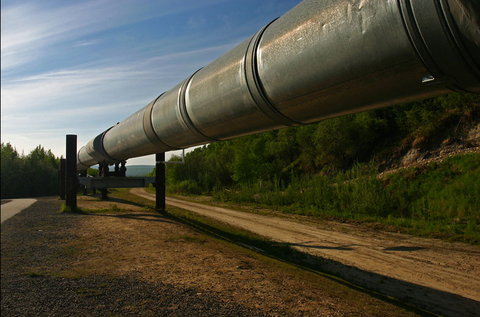
    It’s true that rail accidents can be more devastating to human life than pipeline accidents — although when it comes to oil, pipeline breaks usually spill greater quantities and cause more environmental damage than train derailments. But shipping massive volumes of oil and gas is unsafe by either method. As we transport ever-increasing volumes of fossil fuels over greater distances to broader networks, we can expect more spills and accidents. Wastefully and rapidly burning them is also driving climate change, which experts say may even affect rail safety, as extreme heat and sudden temperature shifts can cause rails to buckle, increasing the potential for derailments.

    Massive pipeline spills and devastating rail accidents are among the immediate and frightening consequences of our growing appetite for fossil fuels, but our bad habits are really starting to hit back with climate change. The homes and lives lost around the world, numerous plant and animal species facing extinction, rising health-care costs from pollution-related illness and massive clean-up efforts after flooding show that failing to address climate change is far more costly than doing something about it. Much of what we’re seeing now — from increased intense rainfall and flooding in some parts of the world to extended droughts in others — is what climate scientists have been predicting for decades.

    We’re not going to stop using oil overnight, and we will continue to transport it, so we must improve standards and regulations for pipelines, rail, trucks and tankers. This should include safer rail cars for moving dangerous goods. Also, many environmental groups are calling for “a comprehensive, independent safety review of all hydrocarbon transportation — pipelines, rail, tanker and truck.” But in the long run, we have to find ways to slow down. By conserving energy and switching to cleaner sources, we can start to move away from fossil fuels — and to use remaining reserves less wastefully.

    That’s the discussion we need to have, rather then getting mired in debates about transport methods. As energy writer Russ Blinch noted in a Huffington Post article, “Looking at pipelines versus rail tankers is really like asking, ‘Should I drive the car with bad brakes or the one with bad tires?’”

    We need to look at the big picture.

  • Bean Leaves, Bedbugs and Biomimicry

    Bean Leaves, Bedbugs and Biomimicry

    Scientists often come up with new discoveries, technologies or theories. But sometimes they rediscover what our ancestors already knew. A couple of recent findings show we have a lot to learn from our forebears — and nature — about bugs.

    Modern methods of controlling pests have consisted mainly of poisoning them with chemicals. But that’s led to problems. Pesticides kill far more than the bugs they target, and pollute air, water and soil. As we learned with the widespread use of DDT to control agricultural pests and mosquitoes, chemicals can bioaccumulate, meaning molecules may concentrate hundreds of thousands of times up the food web — eventually reaching people.

    As Rachel Carson wrote in her 1962 book Silent Spring, using DDT widely without knowing the full consequences was folly. She showed it was polluting water and killing wildlife, especially birds, and that it could cause cancer in humans. Her book launched the environmental movement but did little to change our overall strategy for dealing with bugs. Although DDT was banned worldwide for agricultural purposes in 2001, the chemical is still used to control insects that spread disease.

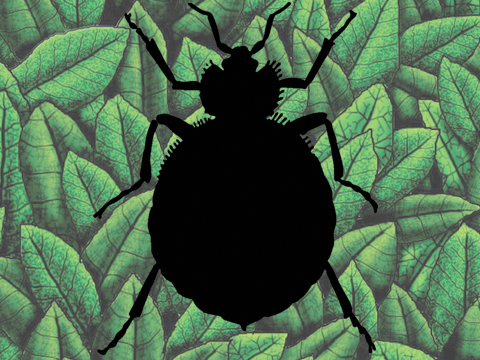
    Recent research shows that widespread use of pesticides like DDT may have caused us to ignore or forget benign methods of pest control. Because the chemicals were so effective, infestations were reduced and there was little interest in non-toxic methods. But bugs evolve quickly and can become immune to pesticides. That’s true of bedbugs, the now ubiquitous critters that are showing up around the world in homes, hotels, schools, movie theatres — even libraries.

    But a method used long ago provides an effective and non-toxic weapon against the pests, according to a U.S. study in the Journal of the Royal Society Interface. The authors looked into the once-common Eastern European practice of spreading bean leaves around a bed to control bedbugs;. What they found was fascinating.

    “During the night, bed bugs walking on the floor would accumulate on these bean leaves, which were collected and burned the following morning to exterminate the bed bugs. The entrapment of bed bugs by the bean leaves was attributed to the action of microscopic plant hairs (trichomes) on the leaf surfaces that would entangle the legs of the bed bugs,” the scientists, from the University of California, Irvine, and University of Kentucky, wrote.

    They discovered that after bugs get caught up in the hooked plant hairs, they struggle to escape, and in the process vulnerable parts of their feet are pierced by the hooks, permanently trapping them. The research focuses on a way to replicate this. “This physical entrapment is a source of inspiration in the development of new and sustainable methods to control the burgeoning numbers of bed bugs,” the researchers wrote, adding that the method “would avoid the problem of pesticide resistance that has been documented extensively for this insect.”

    Other research has literally dug up pest control methods that go back millennia. An international team of archeologists recently found evidence that people living in South Africa almost 80,000 years ago made bedding out of insect-repelling plants.

    According to the journal Science, the research team found 15 different layers containing bedding made from compacted stems and leaves of sedges and rushes, dating between 77,000 and 38,000 years ago. One layer of leaves was identified as River Wild-quince, which contains “chemicals that are insecticidal, and would be suitable for repelling mosquitoes.” The archeologists also found evidence that people often burned the bedding after use, possibly to remove pests.

    These are just two examples of what we can learn from our ancestors and from nature. Because natural systems tend toward balance, the fascinating field of biomimicry has developed to explore what nature can teach us. It’s aimed at finding “sustainable solutions by emulating nature’s time-tested patterns and strategies,” according to the Biomimicry Guild website. “The goal is to create products, processes, and policies — new ways of living — that are well-adapted to life on earth over the long haul.”

    Maybe the truest sign of human intelligence is not to learn how we can shoehorn nature into our own agenda, but to see how we can better find our own place in nature.

  • “Big Picture” Thinking Needed to Protect Nature

    “Big Picture” Thinking Needed to Protect Nature

    Few places on Earth have been untouched by humans, according to a study in the journal Science. Satellite images taken from hundreds of kilometres above the planet reveal a world that we have irrevocably changed within a remarkably short time.

    Although industrial projects like the proposed Enbridge Northern Gateway pipeline or the recently defeated mega-quarry in Ontario typically grab the headlines and bring out public opposition, it’s often the combined impacts of a range of human activities on the same land base that threaten to drive nature beyond critical tipping points. Once those are passed, rapid ecological changes such as species extinction can occur.

    For example, in British Columbia’s booming Peace Region, forestry, energy and mineral leases and licences are widespread and often multilayered in the same area. As various industries have exploited these “tenures”, a sprawling patchwork of large clearcuts, oil wells, dams and reservoirs, fracking operations and thousands of kilometres of seismic lines, roads and pipelines have come to dominate the landscape.

    Today, more than 65 per cent of the region has felt the impact of industrial development, leaving little intact habitat for sensitive, endangered species such as caribou to feed, breed or roam. Degradation or destruction of habitat has convinced scientists that remaining herds in the region are no longer self-sustaining and are spiralling toward local extinction. First Nations, who have relied upon caribou as their primary source of food for thousands of years, can no longer hunt them. This is a clear violation of treaty rights.

    This dire situation didn’t happen by accident or because of a laissez-faire approach to resource and land management. Numerous industries in the area have been operating legally and according to rules and regulations set by government.

    But legal experts, such as those at the nongovernmental organization West Coast Environmental Law, believe a root cause of the problem lies in laws about land, resource and water management that are “hardwired” to fail communities and the environment. The narrow focus of those laws enables industries to operate in isolation from one another.

    B.C., for example, has developed numerous individual laws, like the Forest and Range Practices Act, Oil and Gas Activities Act and Mines Act, alongside the regulated industries they enable. But the province lacks a legal framework to proactively and comprehensively manage the cumulative impacts of multiple resource industries operating within the same area.

    Because of this, WCEL and its First Nations partners are engaged in a multi-year law reform project that aims to overhaul the way we currently oversee and regulate cumulative impacts, ranging from declining water quality that may arise as a result of multiple industries using a common resource to emerging threats such as climate change.

    A cumulative-impacts approach to governing resource development would upend the current management paradigm. It would focus on the management needs of the land, water, air and wildlife and the communities that depend on them first, rather than the resources to be extracted. In practical terms, this would mean that, rather than focusing on what we should take from nature to create wealth and employment, we should first consider what must be retained in nature to sustain both wildlife and the well-being of local communities — such as clean air, safe drinking water and healthy local food.

    At a recent symposium on managing the cumulative impacts of resource development in B.C., numerous speakers — from First Nations to academics to business leaders — stressed that effectively managing cumulative impacts will require new institutions and governance mechanisms, even new legal tools. More importantly, it will require our leaders to adopt a more proactive and holistic way of thinking about the world — one that recognizes that far from just being a place to extract resources like fossil fuels, timber and minerals, nature is our home. Nature provides our most fundamental needs and dictates limits to growth and so its protection should be our highest priority.

    Managing our massive, growing human footprint on this planet more sustainably will require leadership, much of which is emerging from First Nations peoples who are on the frontlines of the day-to-day realities of cumulative environmental change. We need to look at the big picture rather than individual elements in isolation.

  • Let’s Resolve To Make It A Real Happy New Year

    Let’s Resolve To Make It A Real Happy New Year

    Wouldn’t it be wonderful if world leaders resolved to look at life in a different light this New Year? They could follow the example of Bhutan. In 1971, the small country, nestled in the Himalayas between China and India, rejected the idea of gross domestic product as the measure of progress. Instead, leaders focused on gross national happiness.

    The idea is finally gaining traction around the world, and I’m humbled and pleased to be involved with a global initiative to promote it. World leaders took the concept seriously enough to hold a United Nations Conference on Happiness in April 2012, and Bhutan was recognized for its environmental leadership at the recent UN climate summit in Doha, Qatar.

    Life isn’t perfect in Bhutan. It’s a poor country where most homes don’t have electricity. Crime is increasing and climate change is making life difficult for the farmers who provide much of the landlocked country’s food. Still, according to the Guardian, life expectancy in Bhutan has doubled over the past 20 years, almost all children now go to primary school and the country has been improving its infrastructure.

    Bhutan has also enshrined environmental protection and intergenerational equity in its constitution. The Right to a Healthy Environment is another initiative I’m excited about. The David Suzuki Foundation and I have been working with environmental lawyer and professor David R. Boyd and Ecojustice to promote the idea in Canada. Boyd’s book, The Right to a Healthy Environment: Revitalizing Canada’s Constitution, offers a wonderful analysis of where the world’s nations now stand on the concept, as well as strong arguments for why Canada should join the more than 140 nations that have put environmental protection in their constitutions.

    Caring for the environment can help achieve gross national happiness in many ways — by giving our children a more secure future, improving human health, ensuring resources are available to meet the needs of citizens, offering recreational and spiritual connections with nature and giving people a sense of pride and respect for the natural systems that keep us alive and healthy.

    There’s more to happiness than just having a clean environment — and Bhutan has yet to get there. According to research for the UN Conference on Happiness, “The happiest countries in the world are all in Northern Europe (Denmark, Norway, Finland, Netherlands).” Although these countries are wealthy, the study points out that money isn’t the only factor, as happiness is decreasing in countries like the U.S. “Political freedom, strong social networks and an absence of corruption are together more important than income in explaining well-being differences between the top and bottom countries,” the researchers write. “At the individual level, good mental and physical health, someone to count on, job security and stable families are crucial.” Note that the happiest countries all have healthy economies and robust social programs.

    We can also look at how various countries responded to the recent economic crisis. Those that bailed out banks and reduced social spending are facing the same kinds of problems as before. Iceland approached its massive financial meltdown in a way that was pretty much the opposite of that taken by the U.S. and Europe, refusing to rescue its banks and increasing social spending, among other measures.

    Iceland still has problems, but it has recovered faster than other nations, and its social safety net remains strong. Inequality has been reduced, and the crisis spurred citizens to propose and develop a new constitution, which is being considered by parliament.

    There’s an old saw that says the definition of insanity is to keep doing the same thing over and over expecting different results. In the case of leaders who focus almost entirely on economic growth and corporate interests, it’s a recipe for disaster. As George Monbiot recently wrote in the U.K.’s Guardian, “In return for 150 years of explosive consumption, much of which does nothing to advance human welfare, we are atomising the natural world and the human systems that depend on it.”

    As light gradually returns to the north and we celebrate a season of sharing, our leaders could brighten all our lives by considering what really makes our societies strong, healthy and happy.