
Tag: elementary

  • Changing Responsibilities: The Leap From Elementary School To High School

    Changing Responsibilities: The Leap From Elementary School To High School

    Jobs People Do | JobsPeopleDo.com

    The transition between elementary or middle school to high school is a big one. As you grow older and move into high school-level classes, your responsibilities will change as well. Don’t be nervous, though! High school is not as scary as it seems, and you might find that you meet a lot of new friends and try a whole bunch of new things. It’s one of the most exciting times of your life!

    So what are some of these new responsibilities? For one, most schools don’t tolerate lateness, and some teachers even lock their doors to late students, so it’s very important to get to your classes on time. It might be difficult to find your way around in the first few weeks of high school, but you’ll soon get the hang of it. Be sure to bring a copy of your timetable with you so you know where and when your classes start.

    Secondly, you will be expected to be much more independent than in the earlier grades. Teachers don’t hound students for homework or assignments and often penalize late essays. That’s why you need to keep track of when everything is due. The best way is to get a separate binder for each class (one in every colour) so you don’t get papers mixed up. An agenda, notebook or calendar is also vital in high school. You’ll want to be able to keep track of when tests are, when assignments are due and when the holidays start.

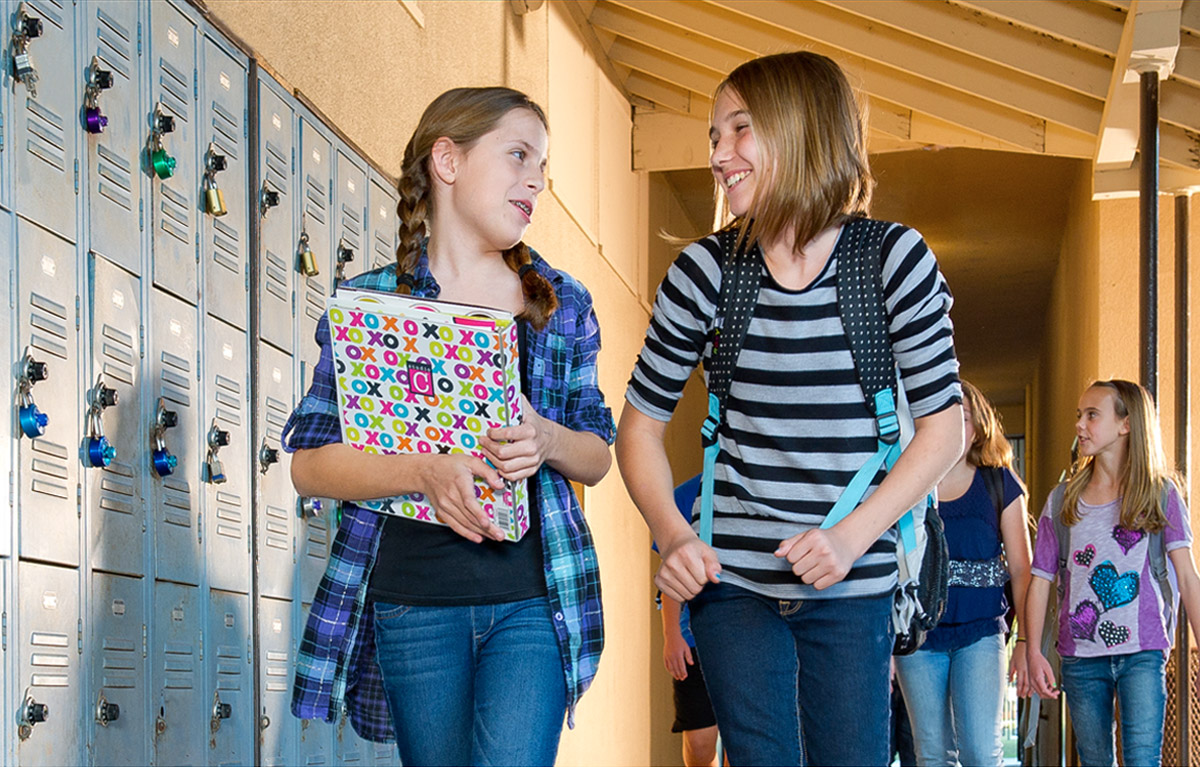
    You will have a locker where you can store your books, binders, sports equipment and any other assortment of pens, paper and articles of clothing. You are responsible for keeping your locker clean – or at least presentable.

    Meet some new people! While not necessarily a responsibility, you’ll find that if you reach out to other students, you might end up making friends you’ll have for years to come. Remember, this is a new experience for everybody in your classes.

    Work hard! Now that you’re in high school, you can’t slack on grades. These marks can affect which classes you take in the following years, and may even limit your options for college or university programs. If you pay attention to your teachers, show up on time, do your homework and hand in your assignments, then you’ll do fine in your classes. Just make sure to keep organized and on top of tests and assignments.

    Going from elementary into high school is a big leap, and with it comes new responsibilities and new freedoms.  If you work hard, show up on time and meet a few new friends, you might even find that you want to go to school in the morning. It’s a big adjustment to make, but soon you’ll be just as comfortable in your new school as you were in your old one.

  • History Is Fun!

    History Is Fun!

    Not only can we learn from history, but history makes us who we are!

    There are people who think history is boring – and sometimes it is.  For some people, history is just about remembering a lot of dates.  What happened on the 10th of July in 2003?  Who knows?  But history is more than just a bunch of dates.  History is also the story of the world. How do we know who we are without it?

    Think about it: what would your answer be if someone asked you,“who are you?”  Would you tell them you are a human who lives in North America on the planet Earth?  Or would it be a little more personal?  Maybe you would say, “I’m Anna.  I’m Brad and Janet Duffy’s daughter.  I am in the 6th grade at Sir John A. MacDonald Elementary School.”  I think most people would say something like that if they were asked who they were – and that is history!  History is simply a story and it can be as short as what you did last night or as long as all the books in the library combined.

    Now that we know what history is, the next thing we need to figure out is: why is history important?  Well, just like how knowing your own history tells you who you are, the history of a country tells us who the people of that country are and world history tells us who the people of Earth are. History gives people a shared story, one they can gather around and celebrate.  For example, your family may have its own traditions and heritage, but on Canada Day we are all celebrating the same thing.

    You may still be wondering, however, why history is an important subject to study in school.  Along with teaching us who we (and others) are, history also teaches us many important lessons.  You have probably heard the old saying that we learn from our mistakes and it is true – everyone learns from their mistakes!  Well, you can consider history a record of some of the greatest mistakes and successes ever made.  Imagine if your parents never taught you to look both ways before you crossed the road?  I bet you’re glad they did!

    Humanity has come as far as it has thanks to our unique ability to learn from the past.  And that is not just from our mistakes, but from the mistakes of others, too. This is something we should never stop doing!  So whether it is the story of your summer or ancient history, remember that history is our story and we can learn from it.

  • Changing Responsibilities: The Leap From Elementary School To High School

    Changing Responsibilities: The Leap From Elementary School To High School

    The transition between elementary or middle school to high school is a big one. As you grow older and move into high school-level classes, your responsibilities will change as well. Don’t be nervous, though! High school is not as scary as it seems, and you might find that you meet a lot of new friends and try a whole bunch of new things. It’s one of the most exciting times of your life!

    So what are some of these new responsibilities? For one, most schools don’t tolerate lateness, and some teachers even lock their doors to late students, so it’s very important to get to your classes on time. It might be difficult to find your way around in the first few weeks of high school, but you’ll soon get the hang of it. Be sure to bring a copy of your timetable with you so you know where and when your classes start.

    Secondly, you will be expected to be much more independent than in the earlier grades. Teachers don’t hound students for homework or assignments and often penalize late essays. That’s why you need to keep track of when everything is due. The best way is to get a separate binder for each class (one in every colour) so you don’t get papers mixed up. An agenda, notebook or calendar is also vital in high school. You’ll want to be able to keep track of when tests are, when assignments are due and when the holidays start.

    You will have a locker where you can store your books, binders, sports equipment and any other assortment of pens, paper and articles of clothing. You are responsible for keeping your locker clean – or at least presentable.

    Meet some new people! While not necessarily a responsibility, you’ll find that if you reach out to other students, you might end up making friends you’ll have for years to come. Remember, this is a new experience for everybody in your classes.

    Work hard! Now that you’re in high school, you can’t slack on grades. These marks can affect which classes you take in the following years, and may even limit your options for college or university programs. If you pay attention to your teachers, show up on time, do your homework and hand in your assignments, then you’ll do fine in your classes. Just make sure to keep organized and on top of tests and assignments.

    Going from elementary into high school is a big leap, and with it comes new responsibilities and new freedoms.  If you work hard, show up on time and meet a few new friends, you might even find that you want to go to school in the morning. It’s a big adjustment to make, but soon you’ll be just as comfortable in your new school as you were in your old one.

  • Pay It Forward with Kindness

    Pay It Forward with Kindness

    I recently heard about someone in a Tim Horton’s drive-thru paying for the coffee of the driver behind them. I thought it was such a nice thing to do for a complete stranger. I also couldn’t help but think about how great it would be if more people did kind things for others without expectations of owing them back.

    Couldn’t our society use a couple more acts of kindness? It all starts with one person, and that person could be you. Small acts of kindness can make a huge difference, even if it may seem like they aren’t. Something as simple as smiling at someone accompanied by a good morning greeting can really make someone’s day.

    On a larger scale, volunteering for different charitable causes can contribute to a larger issue. Many organizations rely on volunteers to bring about social change. You will be helping others who really need it and doing it out of the goodness of your heart.

    Paying it forward with kindness is a wonderful, selfless thing to do. It doesn’t have to require any money and doesn’t have to take a lot of time. There is no reward greater than doing nice things for others and making others happy. Although the reward isn’t in the form of money or recognition, the way you will feel about yourself after you pay it forward with kindness will be a reward in it itself. The key to paying it forward is that it comes from a genuine and sincere place within you. You should want to do kind things for others not because you think you will get something out of it, but for the betterment of the other person.

    The last time somebody held the door open for you, you probably felt gratitude. Maybe you made sure to hold the door open for the person that was behind you. Even a small gesture of kindness can make you feel great and make the world seem like a better place. Often kindness works in a chain reaction effect. It can start with one person doing something kind for another person and then that person wanting do to something kind for another, and so on and so forth. It can be almost infectious, in a good way.

    Doing kind things for others can also help strengthen the community. It allows you to connect with another person even if only for a short period of time. It brings people closer together and allows them to co-operate. People begin to act as a support system to one another and look out for each other’s best interests. So, today, why not try paying it forward and doing something kind for someone else? I guarantee that you will feel awesome after!

  • Are You A Solo Studier, or a Group Studier?

    Are You A Solo Studier, or a Group Studier?

    Effective study skills are essential to learning from your class readings, homework, and lectures. To get the greatest benefit from your study time, it is useful to know which type of studier you are, and how you learn best: solo studying, or group studying.

    You might prefer studying alone if you work best somewhere quiet with minimal distractions or interruptions, so that you can give your full and undivided attention to the topics you are reviewing. You may also learn the material best by thinking things through yourself, and independently researching when you are not sure of the answer.

    If you are a group studier, you likely prefer being able to discuss difficult material, ask questions when you get stumped, and explain things to others, in order feel that you have properly mastered the material at hand. You may also like quizzing each other on material, and being able to take a mental break with occasional moments of non-study socializing.

    Regardless of your methods, your top consideration should always be to study the way you feel you get the best understanding of the material. Whichever way you prefer to study, however, there are benefits to occasionally using the alternate method- mix it up.

    If you find your group study sessions become more about socializing than completing your work, or that everyone in your group wants to focus on material that you have already mastered, some solo study time might be a good idea. One solution is to have everyone in the group get through their own most-required material separately, then rejoin for a group review. This way you can focus independently on what you need to learn, and then later participate in a general review in the more social group setting.

    Conversely, if while studying solo you feel you’re not fully understanding the material, that you have trouble finding the correct answer or method on your own, or if the workload is extremely heavy and starts to feel overwhelming, it may be time for some group study. You can benefit from being able to talk through the difficult material with others, or you can take the opportunity to divide a heavy workload and note-taking tasks with a few trusted friends, then have regular review and note exchange sessions.

    Good study habits in school become good work habits, so learning early on what way you study and learn best will carry forward into any future career.


  • Meditation and You

    Meditation and the awareness of it is growing in Canada and western countries. Many centers, places and groups have been formed to practice meditation in a formal and informal way of improving well-being. With that in mind, wouldn’t mediation done by adults also be beneficial to you? It is well known that keeping your mind quiet and in one place may be harder than landing a man on the moon. Therefore meditation could be a great tool to for you to create calmness in your life; however it does come with some major obstacles. Before we get into the nitty-gritty of meditation, it would be good to give a simple overview of what mediation is:

     Mediation is the just the practice of sitting, lying down in a clam place and watching your breath, thoughts and sensations. It is a way of focusing attentively on the present moment.

    Some schools have brought mediation to the classroom. This allows students the time to take a break from all their daily activities. These time-outs have also proven to show positive effect.   Such visible benefits include enhanced relationship with parents, friends and better personal self-esteem.[1] The traits and benefits are long lasting and can provide a great foundation for you to build upon in future endeavors. So getting started early in your life, is a worthwhile undertaking. Suggestions include starting off with just sitting down and relaxing for a few minutes. Afterwards, watch the breath and progress onward from there… There should be a sense of wonder as you learn and try mediation in groups, at school, or with family and friends. If you continue practicing, you may achieve high levels of spiritual enlightenment. In brief, www.iamspirituality.com describes spiritual enlightenment as:

     “The concept of enlightenment implies complete understanding of life and the universe, which usually is accompanied by a detachment of all things impermanent and a complete awareness of everything that is, at the moment that it is.”[2]

     Growing up in our modern society is tougher than ever; you face a number of distractions and challenges. Consequently providing a way to relax and calm your mind through mediation is a great tool. Mediation acts to protect your mind from toxic stress by empowering oneself to be comfortable with your thoughts and emotions[3]. It may not be easy for the young at heart, but through practice and patience, can be a great experience.

    References:

    [1] O’Connor, B. (n.d.). “How to Get Kids to Meditate.” Retrieved June 7, 2015.

    [2] http://iamspirituality.com/top-10-ways-to-achieve-spiritual-enlightenment/

    [3] Machado, Amanda. “Should Schools Teach Kids to Meditate?” The Atlantic. Atlantic Media Company, 27 Jan. 2014. Web. 10 June 2015.

  • Becoming a 911 Operator

    Becoming a 911 Operator

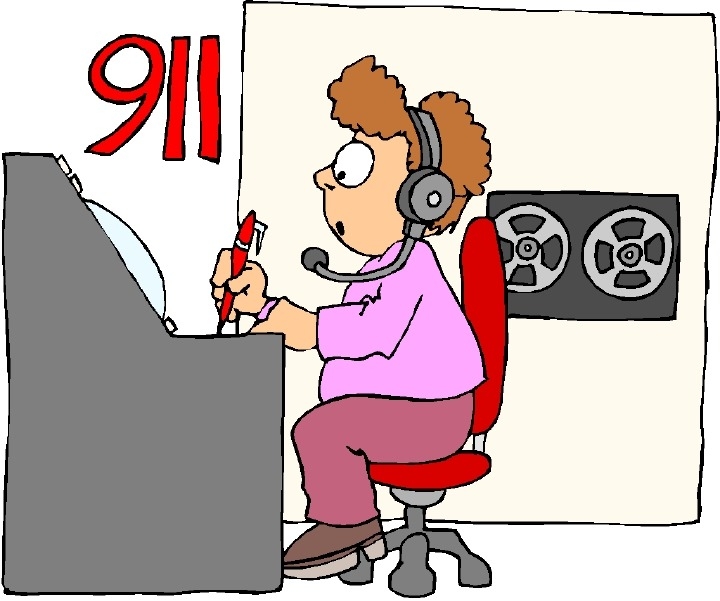
    You and your friends probably know that when someone is injured or in danger or otherwise needing assistance, they can call 911 and someone will come to help. It might be the police, paramedics in an ambulance or firefighters in a fire truck. The people who answered the phone and sent the help will not be there, however. Emergency operators for the 911 system don’t respond to crises themselves, but they work in call centres to help organize help for whatever people need.

    Imagine dealing with emergencies without a 911 system. If you saw a fire, you would have to call the fire department, but if you saw a store being robbed, you would have to call the police. A bad accident might require a call for an ambulance, and other situations might need all three. That could be very confusing and waste time as people tried to decide what number to call. The job of 911 operators helps to make the process easier.

    Basically, 911 operators take emergency calls and pass on the information to the right people. Sending the best help involves finding out as much as possible about the situation before doing anything else. The response for a fire, for example, will not be the same as the response to a heart attack.

    Before they send out help, operators need to find out what they can about the type and seriousness of a situation. They have to remain very calm, even when people are upset. If someone’s life is in danger, 911 operators have to be sure to send out the right type of help as quickly as possible.

    In Canada, most 911 operators work with the RCMP, although they work from call centres rather than in police stations. Canada has twenty-two federal or provincial call centres spread out around the country. They are the connection between people in need and the places that can send help.

    If you love to help people, you might want to become a 911 operator when you grow up!


  • Dream Jobs: Ballerina

    Dream Jobs: Ballerina

    Brooke Nagy is an 18 year old on a fast-track to becoming Canada’s next prima ballerina. Becoming a professional ballet dancer was not a decision Brooke made on a whim. It has taken a lifetime of preparation and focus. Since age three she has been classically trained in Ceccetti ballet, and has developed an advanced knowledge of both classical ballet and modern dance.

    Brooke has had the opportunity to dance professionally at many points throughout her career, but decided that it was important for her to complete her high school education before devoting herself entirely to the art. “I’ve already trained with the CanadianNational Ballet School and the Quinte Ballet School,” Brooke explains.

    “For two summers I was accepted to study as a part of the Canadian National Ballet School’s ballet-intensive summer school program, which led to the opportunity to be a part of their full-time program. I’ve also been accepted to (and attended) the Quinte Ballet School’s Summer School Program, which led to an acceptance into their full-time program” she continued.

    Ballet may well be in her blood, as her mother is a classical ballet teacher and former professional ballerina for the Miami Cityballet. Brooke intends to one day take over her mother’s dance studio, after travelling and performing as much as possible. She applied to the National Ballet of Canada’s Teacher Training program, New York’s Adelphi College and Suny Purchase College’s Conservatories of Dance and George Brown College’s prestigious dance program, garnering preliminary acceptance to all, but choosing to accept George Brown’s offer.

    The Toronto-based program will prepare her for an intensive Bachelor of Fine Arts transfer after earning her two year diploma, and set her up for work with Canada’s Ballet Jörgen, a renowned Canadian classical ballet company that selects dancers from George Brown program alumnus.

    Among the highlights of Brooke’s auditioning process was when famed Canadian dancer Frank Augustyn called her out from a class of second and third year Adelphi ballet students she was placed with, praising her grace and skill above those of professional dancers with many more years of training. She was then offered a ten thousand dollar dance scholarship for Adelphi, a tempting offer that she may return to later in her career.

    For Brooke, the choice of dance over other more job-stable programs was quite simple. “I want to be a dancer over everything else. I know that the field of dance is where I excel and where I belong.” Whether it be the National Ballet School or Frank Augustyn himself, the ballet world agrees.

  • Embrace Your Weirdness

    Embrace Your Weirdness

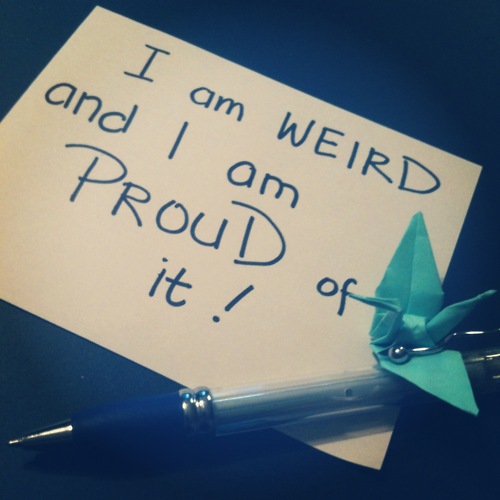
    A lot of people spend time trying to fit in. They don’t want to stand out or be considered different, weird, awkward or strange. Having the same clothes, interests and ideas seems like the most important thing in the world. Everyone just wants to fit in.

    But who established what is normal ?  And what exactly is considered weird? For most people, normal is what they are used to and weird is what they are not used to.

    The word weird is defined by www.dictionary.com in three ways, one of which is fantastic and bizarre. Interesting, isn’t it, how we took a word meaning fantastic and bizarre and created a label for people with an unflattering connotation? When you look at it like that, being “weird” really doesn’t seem that bad. In fact, some of the most successful people in the world were considered strange, different or weird growing up.

    Take Justin Timberlake, for example. He was once quoted as saying, “I grew up in Tennessee, and if you didn’t play football, you were a sissy. I got slurs all the time because I was in music and art.” He also suffers from Attention Deficit Disorder (ADD) and Obsessive Compulsive Disorder (OCD), both of which haven’t stopped him from succeeding.

    Prince Harry was ridiculed and bullied for being a redhead. He was quoted as saying he was teased “for being ginger.” However, not everyone made fun of him. His fellow soldiers in the British Army all wore red wigs to make him stand out less in combat.

    Michael Phelps is one of the most successful Olympians of all time, but as a kid his long limbs, large ears, and lisp caused him to be bullied and teased by his classmates. He also has ADD, and was told he’d “never be able to focus on anything.” Yet he didn’t let that stop him. He used all of his feelings, both good and bad, as motivation to win and as a result became the most decorated Olympian of all-time (winning 22 medals, 18 gold, 2 silver and 2 bronze).

    Chris Colfer, who plays Kurt on Glee, was called a “freak” growing up. He said, “I was teased daily, mainly because of my voice. They said I sounded like a chipmunk! Now everyone likes to remind me how they used to be my best friend, but I have a very good memory- that wasn’t always the case.”

    Lady Gaga has said she didn’t have the best high school experience. She said she didn’t fit in as a teen. “I wanted to be like Boy George and I felt like a freak. So I like to create this atmosphere for my fans where they feel like they have a freak in me to hang out with, and they don’t feel alone.”

    The list of differences goes on and on…

    Albert Einstein, whose name is pretty much synonymous with genius, was a theoretical physicist, and one of the most renowned scientists of all time. However, he didn’t talk until he was four and he didn’t learn to read until he was seven. It is now believed he had Asperger’s Syndrome, which is a form of Autism. Sir Isaac Newton is also believed to have had Asperger’s, and he too was a mathematical and scientific genius.

    Jay Leno, Orlando Bloom, Vince Vaughan, Alexander Graham Bell, John Lennon and Muhammad Ali all had dyslexia.

    Christopher Columbus, Karina Smirnoff, Eleanor Roosevelt, JFK, Walt Disney, Will Smith, Jim Carey and Ernest Hemingway and Bill Gates had ADD.

    Mozart, Daryl Hannah, Tim Burton, Andy Warhol and Susan Boyle all had or have forms of Autism.

    All of these people were considered weird for how they behaved, what they felt and what made them different. They all experienced obstacles they needed to overcome, and they did so by embracing their weirdness. They didn’t let others define who they were and what their limits would be.  They used their uniqueness to their advantage and succeeded. So don’t be afraid to embrace your weirdness too. As Lady Gaga has said, “let your teenage freak flag fly.”

  • The Road to Self-Acceptance

    The Road to Self-Acceptance

    How’s your self-esteem doing? If you’re like me, you tend to see the best in others—and the absolute worst in yourself. Self-acceptance can be a difficult concept to wrap your head around when you’re constantly beating yourself up for every little mistake. There’s good news, though; you aren’t alone by a long shot. By considering your lapses in self-acceptance, you might start to find that the people around you are in the exact same predicament.

    Maybe you’re hung up over your poor marks in Spanish, or you think you look “fat” today. Maybe you couldn’t run the ten-minute mile, or your shirt doesn’t match your shoes. Well, odds are – and it’s kind of funny if you think about it – the people around you probably won’t even notice. It’s not that people don’t care. But did you ever stop to wonder that you aren’t the only one who’s preoccupied with your own flaws? Just as you can’t stop thinking about what you’ve done wrong, the people around you are too busy wrapped up in their own shortcomings to really identify yours. Here’s what ends up happening: each individual person sees themselves as the odd one out, when in actuality, everyone is in the same boat.

    You’ve probably heard the (albeit cliché) phrase, “Nobody’s perfect.” Everyone has flaws, weaknesses, spots for improvement—but there’s no need to focus on those. The next time you find yourself hung up over your lesser traits, try redirecting your thoughts to something you actually like about yourself. “Maybe I’m not great at sports, but I have straight A’s in math.” “Maybe I’m a little shy, but I’m excellent at reading people.” It is important to acknowledge your shortcomings, but it is much more important to remember all the great things you have to offer. And when you’re trying out this little mental compromise, your good traits should always win out.

    You must realize, by this point, how damaging it is to sell yourself short. Time passes, things change, life goes on—basically, you are the only constant force in your life. Why not respect yourself for who you are? It’s normal to feel conflicted at times, but you should never feel like you don’t matter, and by obsessing over every little flaw, you’re doing yourself a serious disservice. The next time something goes wrong, instead of attacking yourself, focus on what you’re doing right. If you start to wean yourself off self-criticism, slowly but surely, those negative feelings will start to go away.

    As for myself? Well, I’m a work-in-progress too. But I know that I deserve more than to be constantly criticized and mistreated – even if it’s coming from my own head. The road to self-acceptance is a rewarding process, and in order to become stronger people we all have to overcome our insecurities. The self-hate stops now.