Tag: endangered

  • A Bad Deal for the American Eel

    A Bad Deal for the American Eel

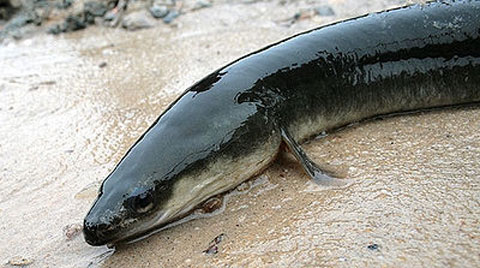
    Once extremely abundant throughout all tributaries to Lake Ontario and the St. Lawrence River, the American eel has seen a dramatic population decline. In 2006, the presence of eels in these waters decreased by almost 90 per cent. As of 2007, this species has been listed as Endangered under the Ontario Endangered Species Act.

    This dramatic population decline can be attributed to several factors, including the creation of hydroelectric dams, reduced access to habitat imposed by manmade barriers to upstream migration, general habitat destruction and alteration and commercial harvesting. The construction of dams threaten the American eel species in two ways: they result in habitat fragmentation and loss as they make it much more difficult for adult eels to migrate back to the ocean to spawn, and hydroelectric turbines contribute to higher injury and mortality rates of juvenile eels swimming downstream (depending on the size of the eels and the design of the turbines).

    The Canadian Wildlife Federation, in collaboration with the Ontario Ministry of Natural Resources, the Algonquins of Ontario and the Arnprior Fish and Game Club, have been tracking and tagging American eels in the Ottawa River since 2007. Previous work has been successful not only in determining which methods and locations are best for capturing eels, but also in documenting movement patterns and collecting data on habitat preferences and downstream migration timing. Currently the project aims to build on the knowledge gained in the first studies of eel movement and use this information to develop strategies for American eel recovery in the Ottawa River.

    On a section of the Ottawa River from Chats Falls dam to Chenaux dam, researchers are busily working to tag and track eels to monitor downstream migration patterns, determining if and when eels move past the Chats Falls dam. They are also monitoring upstream migration by installing temporary eel ladders at three barriers on tributaries to the Lac des Chats section of the Ottawa River. These ladders will be fitted with a trap at the upstream end, and eels that migrate up them and are trapped will be tagged and re-released downstream. If the eels are captured often enough, this will confirm to researchers that eels are indeed attempting migration through these routes and can provide important information about the barriers that may prevent later out-migration.

    Another important aspect of this project is the public awareness campaign that aims to educate people on the American eel and its importance in the ecology of the Ottawa River. This part of the project will be carried out through activities that increase local knowledge of the American eel, encourage the public to report eel sightings and discourage anglers from killing eels caught accidentally. Members of the public will also be invited to observe eel capture and tagging activities.

    The long-term goal is to re-establish a safe migration route for American eels in collaboration with local communities and hydroelectric producers. The ultimate goal is to see a future where the eel population is once again increasing in the Lac des Chats and adjacent sections of the Ottawa River.
  • The World’s Newest Snake

    The World’s Newest Snake

    Suppose that you saw a long, thin brown rope hanging from a tree and that the rope suddenly started to move. What would you think it was? If you were in the Chocoan forests in the South American country of Ecuador, you might realize that what looked like a rope was really the blunt-headed vine snake, which has only recently been discovered. For scientists and other snake enthusiasts, the discovery is exciting and will likely prompt years of exploration and study.

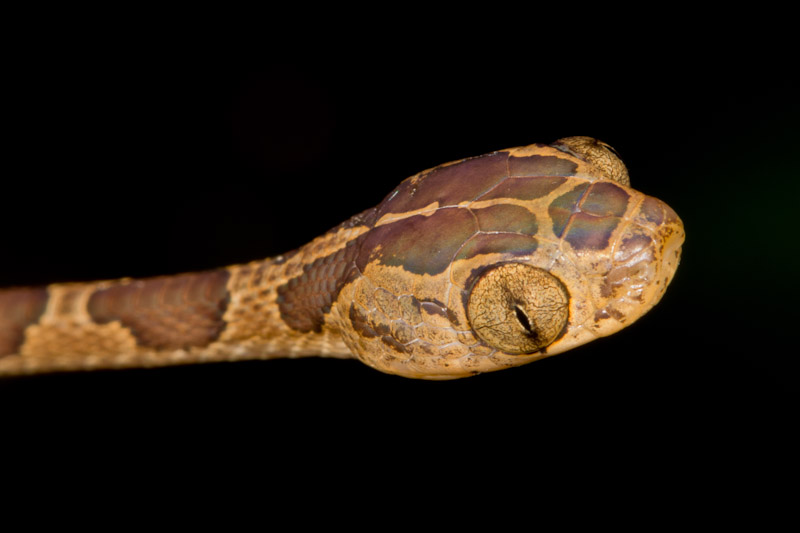
    Blunt-headed vine snakes are the seventh known species in a group called Imantodes chocoensis. These snakes live mainly in Mexico and in Central and South America. Blunt-headed vine snakes are long, thin, and normally brown or cream-coloured. They hunt for frogs, lizards, and other small animals at night, hanging from the trees where they live and grabbing animals that pass by the tree. Although they have some poison in their fangs, they are unlikely to do much harm to people with their venom.

    The most unusual thing about blunt-headed vine snakes is their appearance. They have long, thin bodies with thin necks which then bulge out to a large head. Sometimes, the head can even be about eight centimetres wide, making it seem very large on such a long, thin body. They have large, bulging eyes which take up more than 25% of their heads. Their stomachs and other internal organs are near the ends of their bodies, close to the tail. Their closest relatives live on the other side of the Andes Mountains in South America.

    Although most people have probably never heard of the blunt-headed vine snake, some scientists have known about it for a few years. The snake’s discovery came in April 2007, when a group of zoologists (people who study animals) led by a scientist, Omar Torres-Carvajal from the zoological museum, first found it. After looking closely at it and comparing it with other snakes, they realized that it was a species that no one had identified before. Now they will try to find out how to preserve the snake’s home and to keep it from disappearing.

    Finding an unknown snake in Ecuador was an exciting discovery, but possibly not entirely unexpected. Ecuador is known for its many types of animals and the many species that live there. The Amazon River region is home to many different species of plants and animals. The place where researchers found the snake is part of a region called Tumbes-Chocó-Magdalena, which has an area of 274,597 square kilometres. With so much space, there could be many more animals in the area that scientists have not yet discovered.

    For some zoologists, it might seem as if all of the world’s species of animals are already known and that there is nothing new to learn. However, the discovery of the blunt-headed vine snake in northwestern Ecuador could give people new enthusiasm to explore the world’s animals. They could also find new ways to keep the snakes safe from threats and to help them to thrive.

  • Endangered Animals of Canada

    Endangered Animals of Canada

    The vast, wondrous beauty of Canada is enriched with incredibly diverse wildlife. From the smallest insect to the largest mammal, the country proudly hosts some of the most beautiful creatures on the planet. But with great beauty comes great responsibility, and as the dominate species on the planet we have been charged with the task of caring for these animals. There have been times throughout history when we as a people failed in this and a species was lost. Today, despite watch groups and dedicated scientists, our wildlife continues to disappear. At present there are over 600 animals and plants in the At Risk Public Registry.

    We are considered to be living during a time of great threat to our wildlife. Never before has there been so many humans populating the world and our activity is continually threatening the ecosystems and upsetting the balance of nature. We build shopping centres, residential developments and parking lots all the while not paying much attention to the habitats that are destroyed in the process.

    There are five different classifications that the Government of Canada uses to keep track of this growing problem:
    Extinct –a species that no longer exists in Canada or elsewhere.
    Extirpated – a species that no longer exists in Canada’s wild but lives elsewhere in the world.
    Endangered – a species that may become extinct or extirpated.
    Threatened – a species at risk of endangerment in Canada if the nothing is done to stop the problem.
    Vulnerable – a species, who because of declining numbers (or other reasons), is at risk.

    Nine species are currently extinct in Canada: Dawson’s Caribou, Sea Mink, Great Auk, Labrador Duck, Passenger Pigeon, Deep-water Cisco, Longjaw Cisco, Banff Longnose Dace, and the Blue Walleye.

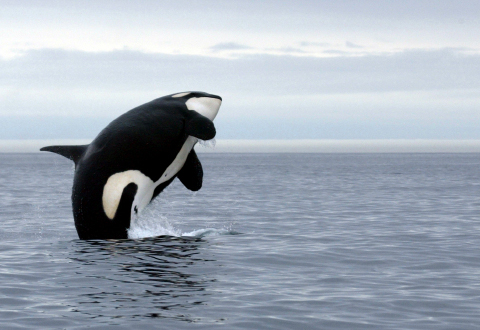
    The Woodland Caribou is on the endangered list because of the destruction of the Boreal Forests. The Golden Eagle lives in Ontario but is endangered because of loss of habitat. Chemical dumping in the ocean has put the Killer Whale on the list as well. Pollution has killed so many Spotted Turtles that they too are now on the list. Amphibians represent the largest animal group threatened with endangerment and extinction. One third of the world’s population of amphibians are threatened and, if they were to become extinct, it would be an event as epic as the loss of dinosaur life on the planet.

    A common factor in all of these creatures is the fingerprint of humanity. More must be done to protect Canada’s wildlife. In 2003 the Species at Risk Act was introduced, and yet many delays in implementing the Act have had a direct impact on threatened species. Awareness plus action is the only hope for our vulnerable, threatened and endangered species.