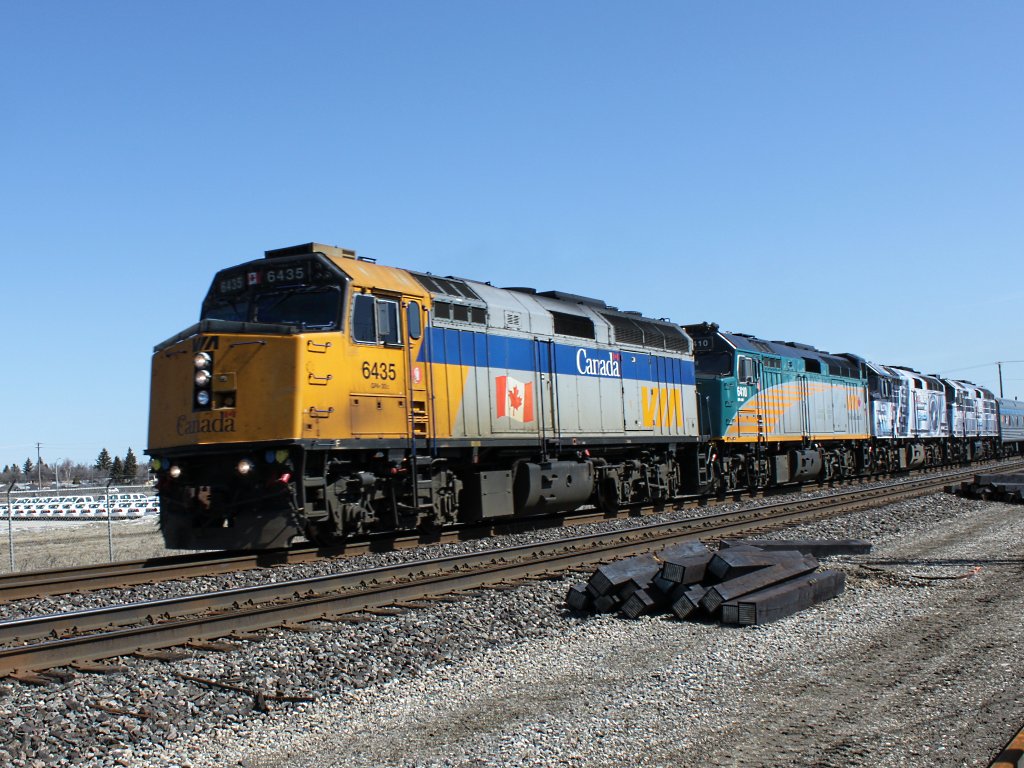
Tag: engineer

  • Career Profile: Train Engineer

    Career Profile: Train Engineer

    Depending on how old you are, you might already be learning how to drive a car. How would you like to drive something much larger? One of the biggest vehicles you might ever drive is a train. With experience and education, train (or locomotive) engineers can have good, fulfilling careers.

    Travelling by train is not as common now as it once was, but railways are still very important for carrying grain and other goods and for passenger travel. Every day of the year, trains travel around the country, sometimes for short trips and sometimes for long ones. The kinds of people who work on these trains depends on what the trains are carrying, but one person remains the same. Every train has a person who is called a train engineer or locomotive engineer. These are the people who drive the trains and make sure that they get to the right destinations safely.

    Being a locomotive engineer involves much more than just driving a train from one place to another. A lot of the work happens before the train leaves the station, especially in small towns where there are not many staff members to look after everything. In that case, an engineer might check the equipment to make sure that it is working properly and repair anything that is broken or wearing out. This part of the work often requires a lot of mechanical knowledge and the ability to use tools to repair the different parts of the train. Even when other people do the actual repairs to the trains, the engineer should know what changes are necessary.

    Another part of work as an engineer is doing paperwork. This job might include checking forms to make sure that the right amount of grain or lumber is on the train or filling in the proper documents for driving the train over the border into the United States. This part of the job takes practice, and it also requires a fairly good reading ability with complicated documents. Knowledge of mathematics is also helpful. Learning to read and understand technical documents, such as government forms, is a good way to get started.

    Becoming a train engineer does not usually require any special education, but it requires experience. After completing their high school diplomas, people start by trying to get work as conductors on trains. After about two years, they can transfer to the engineer training program and get a certificate which officially allows them to work as engineers. The training covers topics like how to stop and start the train and how to read the signals which tell engineers which track to take and what dangers to look for.

    Locomotive engineers have a lot of responsibility, and they often work long hours with few days to relax between trips. However, experienced engineers can make $95,000 per year, and the average pay is $78,000. For people who enjoy working with machines and who love to travel, a job as a locomotive or train engineer can be ideal.


  • STEM Jobs: Petroleum Engineer

    STEM Jobs: Petroleum Engineer

    What is a Petroleum Engineer?
    Oil and gas are two of the most crucial energy resources we rely upon in the modern world. Oil and gas companies extract the deposits of these resources from the earth and facilitate their distribution as an energy source. But how do they know where to dig? This is where a petroleum engineer enters the picture. Petroleum engineers are tasked with finding oil and gas deposits as well as developing ways to extract those deposits from the ground. They design, plan and execute drilling projects to ensure the safest, most effective way of implementing oil and gas wells.

    On-the-Job Duties
    The day-to-day duties of a petroleum engineer include designing and implementing ideal methods of drilling. Often they are responsible for monitoring the drilling area (including the ground, the rocks and the equipment) to ensure optimal conditions for drilling operations that harvest the maximum amount of oil and gas deposits.

    Who do they work for?
    Petroleum engineers are most often hired by companies who produced petroleum, but they can also find employment as consultants, researchers, and policymakers with the government. In some sectors petroleum engineers can also be called oil and gas reservoir engineers, well logging engineers, mud engineers, sub-sea engineers and drilling engineers.

    Salary
    Petroleum engineers can earn a yearly salary of anywhere from $35,000 to over $130,000, depending on seniority.

    Required Education
    The educational background of petroleum engineers can vary, but all are rooted in engineering. Attaining a bachelor’s degree in either petroleum engineering or a related program like biochemical engineering is the best way start off. Next, earn a master’s degree in petroleum engineering followed by a PhD to maximize career opportunities. For some aspects of the job, like approving drilling designs, a professional engineering license will be required.

    Other Skills
    Leadership, time management, critical thinking, logic, creativity, team work, and communication are crucial to the success of a petroleum engineer.

  • Career Profile: Agricultural Engineer

    Career Profile: Agricultural Engineer

    Agricultural engineering might sound like complicated work, but the nature of the job is really quite straightforward. It’s a collision of two worlds – bringing engineering solutions to agricultural projects, particularly concerning crop production and raising livestock.

    What is an Agricultural Engineer?
    An agricultural engineer designs the machines and tools used in farming including tractors, planters, animal housing facilities, harvesting machinery, drainage and soil conservation systems, water and flooding systems and much more. They are responsible for maintaining the efficiency of these machines and systems, making improvements to those that fail in order to meet the appropriate standards.

    Who do They Work for?
    Many work as consultants for large production companies or engineering firms that manufacture agricultural machinery and storage facilities. There are also teaching and research opportunities at colleges and universities and with branches of the federal government that deal with the farming industry. In some instances, they also work as sales representatives by selling products and engineering solutions to farmers and breeders in need.

    What Education Do I Need?
    If agricultural engineering is a field that piques your interest, it’s a good idea to focus on developing problem solving and critical thinking skills that enable you to think outside the box, so to speak. Typically, engineers will face problems with malfunctioning equipment and out-of-date practices that create time sensitive issues. Engineers must be able to think on their feet and discover solutions within the parameters given to them in the most efficient way possible.

    In high school, it is recommended that students take advantage of all available courses in mathematics, physics, chemistry and biology. In university, these courses are further explored with the addition of computer science, crop science, leadership, design and engineering courses.