Tag: engineering

  • Career Profile: Acoustical Engineer

    Career Profile: Acoustical Engineer

    Sometimes it can be very hard to understand what people are saying in a large room. The construction of a room can have a large impact on how much people can hear. Acoustical engineers work with all kinds of rooms and equipment to help make it easier for people to understand each other and to produce clear and full sounds.

    Have you ever listened to the different quality of sounds in rooms? If you play an instrument or sing, you might already know that your music sounds very different in your living room than it does in a large auditorium. At concerts, plays and other events, audience members have to be able to hear well, no matter where they are sitting. The acoustics (sound quality) have to be good for the functions of the space.

    Acoustics are important in any type of building. Factories with loud machines should have enough sound barriers to keep the noise from disturbing other workers. Offices need to have the right construction to prevent echoes and to keep the noise of photocopiers and other machines from drowning out all other sounds. Acoustical engineers can help.

    Working as an acoustical engineer usually requires at least a bachelor’s degree in the field. Students learn the principles of architecture, engineering, and physics so that they know how different types of construction affect the way that sound waves travel through the air. They need to understand something about how the sounds of music and speech differ from each other and know the needs of each one.

    Besides acoustics, vibrations and outside noise can affect the people in a room. A concert hall might have very good acoustics, but if people can hear the noise or feel the vibrations from every truck passing on the road outside the building, they will find it hard to listen to anything inside the room. Acoustical engineers need to work with keeping outside noise from coming inside without cutting people off from what is happening around them.

    Acoustical engineers often work with the plans of buildings before construction begins, but they might also sometimes advise people on how to improve the sound in a room. They work with concert halls or theatres, but they also work with recording studios, school auditoriums, and sports arenas. Some acoustical engineers might work mainly onsite to ensure that the sound quality is good and that recording equipment works well. Others might work mainly in offices to produce plans for building construction.

    Depending on where they work, acoustical engineers might earn between $50,000 and $100,000 per year. They work in many of the same areas as structural engineers, with an average salary of about $66,000 per year. Experience can have a small effect on salary, but the difference is not always very large.

    After working in this field for ten or twenty years, many people switch jobs. However, some stay for their entire careers. Do you like to work with space and sound? The job of acoustical engineer might be right for you.


  • Jobs of the Future: What to Expect When You Graduate

    Jobs of the Future: What to Expect When You Graduate

    Graduation is a major event for students; it’s a milestone in your life and an accomplishment that can’t be taken away. After you graduate you’ll be thrown into the adult world of jobs and careers.

    This is a major time of change and can be scary. That’s why it’s important to have a plan for what you want to do and what sort of education you need to do it. The path to personal success is a rough and bumpy ride, sometimes with many twists and turns.

    Don’t have any what you want to do? Don’t freak out. People change college and university programs multiple times. Most people will cycle through several jobs and careers in their lifetime. Education can help you discover what fits with your personality and what career path suits you the most. Working a job you don’t like, especially for many years, is not a fun experience and it’s important to find a comfortable balance between your working time and recreational time. Nobody likes to be stressed out all the time!

    We live in an exciting and rapidly changing world, and the job market reflects this. Many traditional careers are being changed or ended due to constantly evolving technology. This is why its important to research what sort of career path you want to take and keep up with new developments and changes in your chosen field. Statistics on the employability of certain graduates and the availability of jobs can be found in many online resources. In other words, keep informed!

    STEM, or science, technology, engineering and mathematics jobs, are very important. As technology improves so does the need for dedicated workers in these fields. There are a massive variety of STEM jobs, each field containing a huge variety of careers. A few examples include:

    Science: energy conservationist, agricultural worker, and industrial biotechnologist.

    Technology: construction, automotive manufacturing and economics.

    Engineering: civil engineers, structural engineers, and mechanical engineers.

    Mathematics: architect, high school mathematics teacher, and physicist.

    As you can see, STEM jobs are incredibly diverse and it’s up to you to find what suits you best. STEM jobs can be some of the toughest but also some of the most rewarding, both financially and personally. So keep an open mind and stay up to date on the evolving fields. Getting a STEM job isn’t for everyone, but they can be some of the most exciting and important jobs.

  • How to Prepare for a STEM Career

    How to Prepare for a STEM Career

    Ever wonder how Albert Einstein got started? How about Isaac Newton or even Steve Jobs? If you’re interested in learning about the world around you and how it works, STEM careers might be a good fit for you. Made up of the fields of Science, Technology, Engineering and Math, STEM careers are personally rewarding and a great outlet to explore your interests. You may not be at the stage where you have to set yourself on a career path (or you may have already decided to go down the STEM road), but there are things you can do to ensure you’re on the track to success in the field you choose.

    Almost every college and university out there offers a multitude of STEM programs for potential applicants. These programs often have rigorous requirements for admission (for example, in fields like Life Sciences), and the competition can be tough. To properly prepare for post-secondary education in STEM, make sure you take all the necessary prerequisites for the program you’re looking at—and make sure you study hard to meet the mark cut-offs.

    There are so many opportunities out there to get involved with STEM, even apart from post-secondary education. If you’re looking for some great job experience, you can investigate the opportunity for a STEM internship or apprenticeship, which could be a great way to put your practical skills to use. Volunteer positions with certain organizations can be very valuable as well, especially if they’re directly linked to your field of study (to continue the Life Sciences example, look into volunteering at a local hospital). Not only are these sorts of experiences good for your own personal fulfillment, but they look great on a resume, which can really set you apart.

    If you aren’t quite committed to a STEM field but want to learn more, a school club or organization is a fantastic place to start. This gives you the added bonus of being able to meet equally motivated students that share your interests without the serious responsibility of any of the above opportunities. STEM extra-curriculars also look good on post-secondary applications but, more importantly, they give you the chance to explore your options. You are considering pursuing a career that focuses on discovery, after all—why not take the opportunity to discover some of your own STEM-based interests?

    Though it may be a little early to start job-hunting, preparing for a STEM career can mean working on your academics, finding a volunteer or internship position, or even just joining a club. You may be surprised to see how truly valued these types of experiences turn out to be in the workforce. Good luck on your STEM path, whatever you decide it to be. Maybe you’ll be the one making all the discoveries one day!

  • Hot Jobs: Careers in Trades

    Hot Jobs: Careers in Trades

    The trades sector in Canada is constantly growing and changing. So how do you know which career path is right for you? Here at Jobs People Do, we’ve assembled a list of some of the hottest jobs in the trades industry that will be in high demand for years to come. Take a look at just some of your options and then click on the link to be taken directly to career information. Find out what kind of education you will need and how much you can expect to be paid.

    Aboriginal Child Development Practitioner
    Agricultural – Dairy Herdsperson
    Agricultural – Fruit Grower
    Agricultural – Swine Herdsperson
    Agricultural Equipment Technician
    Alignment and Brakes Technician
    Appliance Service Technician
    Arborist
    Architectural Glass and Metal Technician
    Assistant Cook
    Auto Body and Collision Damage Repairer
    Auto Body Repairer
    Automotive Electronic Accessory Technician
    Automotive Glass Technician
    Automotive Painter
    Automotive Service Technician
    Baker
    Baker-Patissier
    Bearings Mechanic
    Blacksmith
    Brick and Stone Mason
    Cabinetmaker
    Cement (Concrete) Finisher
    Chef
    Child and Youth Worker
    Child Development Practitioner
    Composite Structures Technician
    Computer Numerical Control (CNC) Programmer
    Concrete Pump Operator
    Construction Boilermaker
    Construction Craft Worker
    Construction Millwright
    Cook
    Developmental Services Worker
    Die Designer
    Draftsperson – Mechanical
    Draftsperson – Plastic Mould Design
    Draftsperson – Tool and Die Design
    Drywall Acoustic and Lathing Applicator
    Drywall Finisher and Plasterer
    Educational Assistant
    Electric Motor System Technician
    Electrical Control (Machine) Builder
    Electrician – Construction and Maintenance
    Electrician – Domestic and Rural
    Electrician (Signal Maintenance)
    Electronic Service Technician
    Elevating Devices Mechanic
    Entertainment Industry Power Technician
    Exterior Insulated Finish Systems Mechanic
    Facilities Mechanic
    Facilities Technician
    Fitter – Assembler (Motor Assembly)
    Floor Covering Installer
    Fuel and Electrical Systems Technician
    Gemsetter / Goldsmith
    General Carpenter
    General Machinist
    Hairstylist
    Hardware, Lumber and Building Materials Retailer
    Hazardous Materials Worker
    Heat and Frost Insulator
    Heavy Duty Equipment Technician
    Heavy Equipment Operator – Dozer
    Heavy Equipment Operator – Excavator
    Heavy Equipment Operator – Tractor Loader Backhoe
    Hoisting Engineer – Mobile Crane Operator 1
    Hoisting Engineer – Mobile Crane Operator 2
    Hoisting Engineer – Tower Crane Operator
    Horse Groomer
    Horse Harness Maker
    Horticultural Technician
    Hydraulic / Pneumatic Mechanic
    Industrial Electrician
    Industrial Mechanic Millwright
    Information Technology – Contact Centre Customer Service Agent
    Information Technology – Contact Centre Sales Agent
    Information Technology – Contact Centre Technical Support Agent
    Information Technology – Hardware Technician
    Information Technology – Network Technician
    Institutional Cook
    Instrumentation and Control Technician
    Ironworker – Generalist
    Ironworker – Structural and Ornamental
    Light Rail Overhead Contact Systems Lineperson
    Locksmith
    Machine Tool Builder and Integrator
    Marine Engine Technician
    Metal Fabricator (Fitter)
    Micro Electronics Manufacturer
    Motive Power Machinist
    Motorcycle Technician
    Mould Designer
    Mould Maker
    Mould or Die Finisher
    Native Clothing and Crafts Artisan
    Native Residential Construction Worker
    Network Cabling Specialist
    Optics Technician (Lens and Prism Maker)
    Packaging Machine Mechanic
    Painter and Decorator – Commercial and Residential
    Painter and Decorator – Industrial
    Parts Technician
    Pattern Maker
    Plumber
    Pool, Hot Tub and Spa – Installer
    Pool, Hot Tub and Spa – Service Technician
    Powered Lift Truck Technician
    Powerline Technician
    Precast Concrete Erector
    Precast Concrete Finisher
    Precision Metal Fabricator
    Pressure Systems Welder
    Process Operator – Food Manufacturing
    Process Operator – Power
    Process Operator – Refinery, Chemical, and Liquid Processes
    Process Operator – Wood Products
    Pump Systems Installer
    Railway Car Technician
    Recreation Vehicle Technician
    Refractory Mason
    Refrigeration and Air Conditioning Systems Mechanic
    Reinforcing Rodworker
    Relay and Instrumentation Technician
    Residential (Low Rise) Sheet Metal Installer
    Residential Air Conditioning Systems Mechanic
    Restoration Mason
    Retail Meat Cutter
    Roll Grinder / Turner
    Roofer
    Saddlery
    Saw Filer / Fitter
    Sheet Metal Worker
    Ski Lift Mechanic
    Small Engine Technician
    Special Events Coordinator
    Sprinkler and Fire Protection Installer
    Steamfitter
    Surface Blaster
    Surface Mount Assembler
    Terrazzo, Tile, and Marble Setter
    Thin Film Technician
    Tire, Wheel and Rim Mechanic
    Tool / Tooling Maker
    Tool and Cutter Grinder
    Tool and Die Maker
    Tool and Gauge Inspector
    Tractor-Trailer Commercial Driver
    Transmission Technician
    Truck and Coach Technician
    Truck-Trailer Service Technician
    Turf Equipment Technician
    Utility Arborist
    Water Well Driller
    Welder
    Wooden Boat Rebuilder
  • STEM Jobs: Petroleum Engineer

    STEM Jobs: Petroleum Engineer

    What is a Petroleum Engineer?
    Oil and gas are two of the most crucial energy resources we rely upon in the modern world. Oil and gas companies extract the deposits of these resources from the earth and facilitate their distribution as an energy source. But how do they know where to dig? This is where a petroleum engineer enters the picture. Petroleum engineers are tasked with finding oil and gas deposits as well as developing ways to extract those deposits from the ground. They design, plan and execute drilling projects to ensure the safest, most effective way of implementing oil and gas wells.

    On-the-Job Duties
    The day-to-day duties of a petroleum engineer include designing and implementing ideal methods of drilling. Often they are responsible for monitoring the drilling area (including the ground, the rocks and the equipment) to ensure optimal conditions for drilling operations that harvest the maximum amount of oil and gas deposits.

    Who do they work for?
    Petroleum engineers are most often hired by companies who produced petroleum, but they can also find employment as consultants, researchers, and policymakers with the government. In some sectors petroleum engineers can also be called oil and gas reservoir engineers, well logging engineers, mud engineers, sub-sea engineers and drilling engineers.

    Salary
    Petroleum engineers can earn a yearly salary of anywhere from $35,000 to over $130,000, depending on seniority.

    Required Education
    The educational background of petroleum engineers can vary, but all are rooted in engineering. Attaining a bachelor’s degree in either petroleum engineering or a related program like biochemical engineering is the best way start off. Next, earn a master’s degree in petroleum engineering followed by a PhD to maximize career opportunities. For some aspects of the job, like approving drilling designs, a professional engineering license will be required.

    Other Skills
    Leadership, time management, critical thinking, logic, creativity, team work, and communication are crucial to the success of a petroleum engineer.

  • STEM Jobs of the Future

    STEM Jobs of the Future

    Most of you probably know who Albert Einstein and Thomas Edison were, but you might not have heard of the famous mathematicians, John Nash or the ancient Greek scholar, Archimedes. Do you know what these people have in common? They were all part of a field of work often known as STEM, which includes science, technology, engineering, and mathematics. Work in these fields has always been important, and they are a good choice for anyone with a creative but disciplined mind and the ability to see how far their work can go.

    People like Albert Einstein and Thomas Edison are famous for a very good reason. They knew a lot of theory, but they also helped to change people’s everyday lives. Long winter evenings would be very different without Edison’s light bulb, for example. The value of work that mathematicians do is less obvious, but their discoveries make all kinds of other work possible. Without mathematics, for example, engineering would be impossible. Without engineers, we would have no bridges or tall buildings. Their calculations make it possible to build many of the towers and other structures we now have.

    Training for work in STEM jobs normally involves a high level of education. A minimum of a bachelor’s degree is normally necessary for work in these fields, and usually a master’s degree or PhD is required. The most specialized training is in engineering, where students learn to apply their education to building bridges and other structures. Other STEM fields of study lead to work in areas such as computer sciences, statistics, and agriculture. For many people, this involves further studies beyond a basic bachelor’s degree. With this training, they can become qualified to work in many different areas of society.

    Workplaces for people in STEM jobs can be in offices, universities, and laboratories. They might work with test tubes inside a building or travel around the country, collecting samples of soil or testing the water for anything that might harm the environment. Many people with training in STEM fields also become teachers or university professors, where they pass on their knowledge to others.

    STEM training can help in many areas of life. In biology and biomedical sciences, for example, research results can affect how doctors treat illnesses. Studies in mathematics can lead to work in gathering and analyzing statistical information, which can help people in government and many other fields to plan for the future. With so much variety in workplaces, salaries also vary. Low-level STEM jobs start at about $36,000 per year, but high-paid jobs can reach over $120,000 per year.

    What kinds of people work in STEM jobs? In the past, men tended to take most of the jobs in this field, and that can still often be the case. However, women are starting to become more involved in the work, and many of them are becoming well known in their fields.  Do these kinds of jobs appeal to you? Working towards a career in STEM fields can be a good choice for the future.

  • Career Profile: Chemical Engineer

    Career Profile: Chemical Engineer

    Suppose that one day you write on a piece of paper, use hand lotion on your dry skin, take some medication for your cold, put on a nylon jacket, and sit on a chair with metal legs. Do you know what all of those activities have in common? In all of them, you used products developed by chemical engineers. These scientists help turn raw materials like wood or flowers into products that people use every day. If you enjoy math, chemistry and other sciences and have the ability to solve problems, the job of chemical engineer might be right for you.

    Chemical engineers are involved in making many of the products that people use every day. Normally, their work is in developing processes for other workers to use in making products for customers to buy. For example, chemical engineers might experiment to find the right combination of plants and chemicals to produce a certain colour for dying cloth. Some chemical engineers work to make products better for the environment and some have even found a way to turn used chewing gum into other substances like plastic. That way, they turn what is normally garbage into something useful.

    Inventing ways to solve problems or to help make life easier for people is what chemical engineers do. Normally, a Bachelor’s degree in engineering with an emphasis on chemical engineering is the minimum requirement for working in this field. About twenty universities in Canada offer this kind of training. High school courses in mathematics, physics, and chemistry are good preparation for studies in chemical engineering, and reading magazines about the profession is also a good idea.

    In many cases, a Master’s or a Ph.D. degree is required for finding work as a chemical engineer, although a Bachelor’s degree is enough in some cases. Bachelor’s degrees normally take three or four years and Master’s degrees take another year or two after that. Getting a Ph.D. usually involves writing a book-length paper called a dissertation, which can also take a few years to finish. If you decide to become a chemical engineer, you will need to spend some time at a university.

    People with degrees in chemical engineering work wherever their knowledge is needed. They might help deal with problems in processing plants or do experiments in university laboratories. Some of them might work for cosmetic companies or help produce medications. Depending on their level of experience and where they work, chemical engineers make between about $50,000 and $70,000 per year in Canada, although salaries can also be higher. Job prospects in Canada are fairly good, but declining work in areas like construction has changed employment for engineers. However, jobs should still be available for new graduates.

    Do you enjoy combining different substances together to see what happens?  Why don’t you see if chemical engineering is right for you?

  • A Career as an Agricultural Engineer

    A Career as an Agricultural Engineer

    Agricultural engineering might sound like complicated work, but the nature of the job is really quite straightforward. It’s a collision of two worlds – bringing engineering solutions to agricultural projects, particularly concerning crop production and raising livestock.

    What is an Agricultural Engineer?
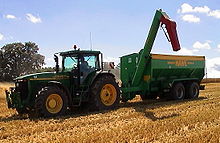
    An agricultural engineer designs the machines and tools used in farming including tractors, planters, animal housing facilities, harvesting machinery, drainage and soil conservation systems, water and flooding systems and much more. They are responsible for maintaining the efficiency of these machines and systems, making improvements to those that fail in order to meet the appropriate standards.

    Who do They Work for?
    Many work as consultants for large production companies or engineering firms that manufacture agricultural machinery and storage facilities. There are also teaching and research opportunities at colleges and universities and with branches of the federal government that deal with the farming industry. In some instances, they also work as sales representatives by selling products and engineering solutions to farmers and breeders in need.

    What Education Do I Need?
    If agricultural engineering is a field that piques your interest, it’s a good idea to focus on developing problem solving and critical thinking skills that enable you to think outside the box, so to speak. Typically, engineers will face problems with malfunctioning equipment and out-of-date practices that create time sensitive issues. Engineers must be able to think on their feet and discover solutions within the parameters given to them in the most efficient way possible.

    In high school, it is recommended that students take advantage of all available courses in mathematics, physics, chemistry and biology. In university, these courses are further explored with the addition of computer science, crop science, leadership, design and engineering courses.

  • What Does an Environmental Engineer Do?

    What Does an Environmental Engineer Do?

    Environmental engineers are the technical professionals who identify and design solutions for environmental problems. Environmental engineers provide safe drinking water, treat and properly dispose of wastes, maintain air quality, control water pollution, and remediate sites contaminated due to spills or improper disposal of hazardous substances. They monitor the quality of the air, water and land. They also develop new and improved means to protect the environment.

    Although many people are concerned about the state of our environment, environmental engineers are the people who do things to protect it from damage and to correct existing problems. Environmental engineers possess the scientific and technical knowledge to identify, design, build, and operate systems that make modern society possible.

    The environmental engineering field and environmental engineering education are multi-disciplinary. They involve traditional engineering components such as mathematics, physics, chemistry, and engineering design. But environmental engineering education and practice also includes a range of other disciplines, such as biology, microbiology, ecology, public health, geology, meteorology, economics, political science, and computer science. To address the spectrum of issues facing the environment, environmental engineers are broadly educated, as well as technically trained.

    Where do Environmental Engineers Work?

    Environmental engineers work in many places.

    • Engineering consulting firms that design and construct water pollution-control systems
    • Industries that need to treat their air or waste-water discharges
    • Private and municipal agencies that supply drinking water
    • Companies that treat and dispose of hazardous chemicals
    • Companies that operate treatment facilities for municipalities or industries
    • Government agencies that monitor and regulate waste discharges
    • Universities that teach and conduct research on environmental control
    • Private and government laboratories that develop the new generations of pollution-control systems
    • International agencies that transfer knowledge and technology to the developing world
    • Public-interest groups that advocate environmental protection

    What do Environmental Engineers Know?

    Like most engineers, environmental engineers must have a strong background in mathematics, physics, and chemistry. They learn engineering problem-solving and how to work in teams to accomplish goals. They develop the ability to apply scientific principles as part of making engineering decisions. Environmental engineers are skilled at analysis and design, and they apply their knowledge to protect the environment and human health.

    The breadth and multi-disciplinary nature of environmental issues requires that environmental engineers expand their skills beyond the range normally associated with any single engineering field. Depending upon their specific career goals, environmental engineers gain knowledge and skills in areas such as chemical technology, geology, water and atmospheric chemistry, microbiology, toxicology, hydrology, soil science, computers, economics, and law.

    What is Required to be Licensed as an Environmental Engineer?

    Engineering licensure is a prestigious step in professional growth and development. Licensure is a way for engineers to demonstrate to their employer and clients their commitment to the profession. Licensure is a four-step process. It requires graduation from an accredited civil engineering program, passing the Fundamentals of Engineering exam, having four years of work experience, and passing the professional engineering examination.

    How do You Become an Environmental Engineer?

    You can pursue environmental engineering as part of a Bachelor’s degree program in civil engineering.

    Graduate education, leading to a Master of Science or to a Doctor of Philosophy degree, is an important part of environmental engineering. Graduate programs are open to students who do not have a Bachelors degree in civil or environmental engineering, as well as to those students who study environmental engineering as undergraduates. This openness to students with a wide range of backgrounds is a hallmark of environmental engineering and continually brings fresh ideas to the environmental engineering field.

  • What are Environmental Engineers?

    What are Environmental Engineers?

    Environmental engineers are the technical professionals who identify and design solutions for environmental problems. Environmental engineers provide safe drinking water, treat and properly dispose of wastes, maintain air quality, control water pollution, and remediate sites contaminated due to spills or improper disposal of hazardous substances. They monitor the quality of the air, water and land. They also develop new and improved means to protect the environment.

    Although many people are concerned about the state of our environment, environmental engineers are the people who do things to protect it from damage and to correct existing problems. Environmental engineers possess the scientific and technical knowledge to identify, design, build, and operate systems that make modern society possible.

    The environmental engineering field and environmental engineering education are multi-disciplinary. They involve traditional engineering components such as mathematics, physics, chemistry, and engineering design. But environmental engineering education and practice also includes a range of other disciplines, such as biology, microbiology, ecology, public health, geology, meteorology, economics, political science, and computer science. To address the spectrum of issues facing the environment, environmental engineers are broadly educated, as well as technically trained.

    Where do Environmental Engineers Work?

    Environmental engineers work in many places.

    • Engineering consulting firms that design and construct water pollution-control systems
    • Industries that need to treat their air or waste-water discharges
    • Private and municipal agencies that supply drinking water
    • Companies that treat and dispose of hazardous chemicals
    • Companies that operate treatment facilities for municipalities or industries
    • Government agencies that monitor and regulate waste discharges
    • Universities that teach and conduct research on environmental control
    • Private and government laboratories that develop the new generations of pollution-control systems
    • International agencies that transfer knowledge and technology to the developing world
    • Public-interest groups that advocate environmental protection

    What do Environmental Engineers Know?

    Like most engineers, environmental engineers must have a strong background in mathematics, physics, and chemistry. They learn engineering problem-solving and how to work in teams to accomplish goals. They develop the ability to apply scientific principles as part of making engineering decisions. Environmental engineers are skilled at analysis and design, and they apply their knowledge to protect the environment and human health.

    The breadth and multi-disciplinary nature of environmental issues requires that environmental engineers expand their skills beyond the range normally associated with any single engineering field. Depending upon their specific career goals, environmental engineers gain knowledge and skills in areas such as chemical technology, geology, water and atmospheric chemistry, microbiology, toxicology, hydrology, soil science, computers, economics, and law.

    What is Required to be Licensed as an Environmental Engineer?

    Engineering licensure is a prestigious step in professional growth and development. Licensure is a way for engineers to demonstrate to their employer and clients their commitment to the profession. Licensure is a four-step process. It requires graduation from an accredited civil engineering program, passing the Fundamentals of Engineering exam, having four years of work experience, and passing the professional engineering examination.

    How do You Become an Environmental Engineer?

    You can pursue environmental engineering as part of a Bachelor’s degree program in civil engineering.

    Graduate education, leading to a Master of Science or to a Doctor of Philosophy degree, is an important part of environmental engineering. Graduate programs are open to students who do not have a Bachelors degree in civil or environmental engineering, as well as to those students who study environmental engineering as undergraduates. This openness to students with a wide range of backgrounds is a hallmark of environmental engineering and continually brings fresh ideas to the environmental engineering field.