Tag: Enviroment

  • Old-growth forests 101

    Old-growth forests 101

    Why are old-growth forests important?

    When thinking about healthy forests, it’s not often that we think about dead, dying or diseased trees but any forest manager will tell you that they’re an essential part of a healthy forest ecosystem, and a key characteristic of old-growth.

    Dr. Bill Freedman, a professor of biology at Dalhousie University in Halifax, Nova Scotia, and Chair of the Nature Conservancy of Canada’s (NCC’s) National Board of Directors, explains that “old-growth forest contains some large and old trees, but all age classes are present.” Old-growth forests exist because they have not been subjected to a significant disturbance such as wildfire or clear-cutting for a century or more. Overall, it’s not easy to pin down an age at which a forest becomes “old,” because depending on the climate, geography and soil, a forest’s composition and lifespan will vary drastically.

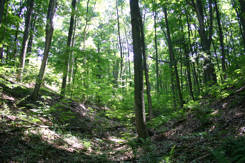
    So what makes old-growth forests unique, and why are they important? The first answer is that old-growth forests contain trees in all phases of their life cycle, from saplings, to mature trees, to dead standing trees and finally, as rotting trees on the forest floor. This provides a home for many species of plants, fungi, invertebrates, salamanders and snakes, and makes old-growth forests hotspots for biodiversity and a refuge for high concentrations of species at risk.

    “Protecting old-growth forests means respecting the elders, letting them die a natural death and crash down, even if they’re diseased,” notes Mark Stabb, NCC’s Central Ontario Program Manager. Dead trees significantly change the structure and composition of the forest, but there are always saplings waiting in the shadows to take their place. “This helps us understand how they will respond to disease and natural disturbances such as fire, tornadoes or earthquakes,” says Stabb.

    “There aren’t many old-growth forests left compared to a couple hundred years ago,” he adds. But the 200-year-old Happy Valley Forest (HVF) Natural Area in Ontario is a good example of a forest that is growing old. Located just 35 kilometres from Toronto, this 2,851-acre (1,154-hectare) forest is an outstanding example of mature Sugar Maple and beech forests characteristic of the Oak Ridges Moraine. The HVF is critical habitat for over 110 breeding bird species, including the nationally significant Acadian Flycatcher and Cerulean Warbler and amphibians like the Jefferson Salamander.

    Dr. Henry Barnett, whose land NCC helped protect in the HVF and who has been instrumental in convincing neighbours to put their land under conservation protection, remarks, “with more than 210 acres (85 hectares) protected so far, hopefully the Happy Valley Forest will have a chance to become truly old-growth in the years ahead.”


    Provided by Nature Conservancy Canada
    www.natureconservancy.ca

  • The Latest from David Suzuki

    The Latest from David Suzuki

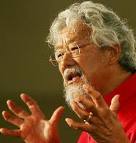
    Canadian environmentalist and scientist David Suzuki brings us the latest hot issues on global warming.

    The well being of our natural environment continues to increase in importance as the negative impacts of our unsustainable behavior become more and more apparent. In recognition of the damage humanity is instilling upon the earth, environmental super hero David Suzuki continues his commitment to educate Canadians and the world about our ecological footprint, long after most folks his age would have happily settled into retirement.

    Over the years, Suzuki has been a proponent for aboriginal rights, saving forests, the Kyoto accord and more, but in recent times, one of Suzuki’s most important and oft spoken platforms is global warming. Global warming continues to be one of society’s great debates, and while Suzuki recognizes this, he also points out that there is never anything to lose by being kinder to the environment. A resounding metaphor from Suzuki, regarding global warming, is this: If there was even a small chance a sandwich was poisonous, would you eat it? Likely not. The same goes from global warming.

    Suzuki’s recent communications about global warming have focused on whether or not natural gas will help Canada achieve a low carbon economy, aiding to keep our temperatures down. The David Suzuki foundation, in collaboration with The Pembina Institute, conducted a study to determine whether natural gas is in fact a key route in helping to avoid the use of coal and petroleum. The answer is no. Suzuki states that “Natural gas is also a powerful greenhouse gas in its own right, and creates warming effects 20 times more powerful than CO2” (Suzuki, 2011). Natural gas still produces emissions, so is obviously not the solution to emission reduction. However, Suzuki suggests that natural gas, if it must be used, be used as a transition until we find newer, cleaner sources of power.

    David Suzuki has also always been a strong proponent for the Canadian government to focus more on the environment and its people, and has pushed for more scientists to become involved in politics. On this note, a contributor to Suzuki’s blog, Leanne Clare, reported on the recent meeting of Canada’s energy and mine ministers, who had corporate sponsors (that’s right, apparently corporations are now sponsoring government meetings) for their meeting. Clare states, “How can our elected officials possibly claim to be unbiased and uninfluenced in their decision-making during this meeting?” (2011).

    Suzuki has never shied away from controversial topics, and whether or not you agree with him, his ability to stimulate discussion on these important issues in itself plays a key role in the education of Canadians. So whether or not you agree with global warming, at least understand that there is never any harm in being environmentally friendly.

    Check out Suzuki’s blog at http://www.davidsuzuki.org/blogs/.

    A brief end note from Suzuki on summer time shenanigans: While you’re out enjoying the beauty of the great outdoors, keep in mind that standing dead trees are “excellent habitats”, being the home for many species, so think twice about chopping one down for your camp fire!