Tag: first year

  • Transitioning to University Life

    Transitioning to University Life

    The idea of going off to college or university sends shivers of anxiety down spines and churns stomachs. Don’t worry – this is normal. It’s a big step moving from high school to post-secondary education and its natural to feel a bit nervous.

    There is usually a frosh week for university students or an orientation for those attending college. This can be a great way to meet people around campus or in your program. Post-secondary education is so diverse that making friends is easy, whether it be the person who sits beside you in class, a new roommate or someone you meet on campus.

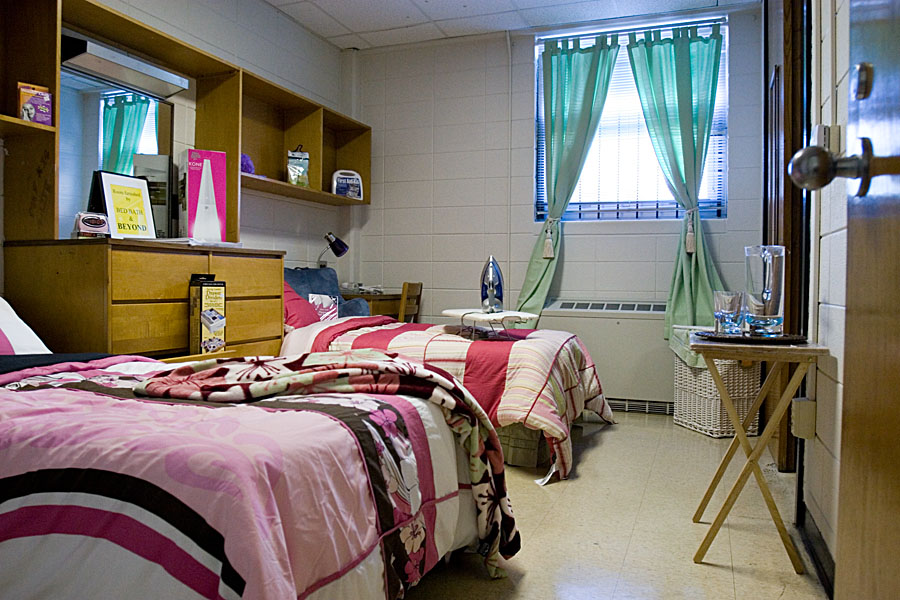
    Living in residence is another excellent way to make friends and makes the walk to class much easier. Most schools have single rooms as well as doubles so you can be paired with a roommate. The Resident Assistant will help you get integrated into the community with a number of activities in the residence and there is usually a common room with a TV for students to relax in.

    Residence life is not for everyone, though, and there are a number of other options such as off campus housing, driving or commuting via train or bus. There is nothing wrong with choosing to live at home while attending school, either. Living out on your own is exciting but it can get pretty expensive and sometimes its nice to have the comforts of home and your friends and family.

    Post-secondary school is nothing like high school. There is no attendance sheet or principal forcing you to go to class. The professors likely won’t harass you about it so it can be very tempting to skip a class here and there. This can lead to a very slippery slope and you don’t want to find yourself facing an exam sheet without having gone to class. It’s up to you to stay organized and keep on top of your assignments; letting them pile up then dashing them all off the night before is not the best strategy. Most schools use an email and online system so you can use the Internet to keep up to date on assignments, presentations, etc.

    Every college or university has at least a few clubs or teams and activities that provide exercise and entertainment. Most schools will have a free gym for people to lift weights, run on treadmills or play indoor sports. Some schools even have a pool.

    It’s a good idea to learn about your chosen school before beginning in the fall. An excellent way to do this is to check out their websites, do campus tours and speak to anyone you might know that has gone to that school. Ask them about their experiences there.

    Leaving high school marks a major change in life. While post-secondary education certainly has its challenges, they are far outweighed by the lifelong friendships and rewards.

  • How to Choose Your Classes

    How to Choose Your Classes

    You’ve gone to university fairs, read the websites, explored your options, submitted your applications and have finally chosen your new university or college. That’s the hard part. Now you just have to choose your first year classes and you will be ready to go. For many this is the fun part, though you should give serious consideration to your course selection as it may shape the next few years of your post-secondary education. You don’t want to find yourself forced into summer school or an extra year of your undergrad just because you are missing those few extra prerequisites. Sometimes it is easy – you may know exactly what you want to do or have selected a program that has your classes laid out for you. Regardless, don’t be afraid to be a little adventurous.

    You want to cover your bases, that’s a given, but this is also your opportunity to explore alternative subjects, different ideas and new concepts. If you have an idea of what subject you want to pursue, maybe try some to help compliment that. Want to study English? Try taking a Sociology or Art History class as well. It’s always good to test the waters. First-year courses are often (though not always) designed to give students a taste of what could be in store for them if they decide to pursue that subject further. Or, if you are still set on studying English, then these classes may give you a unique perspective or could turn into an interesting minor that makes your degree distinct and stand out from the pack.

    You never know, you could surprise yourself and end up going a completely different route then you would ever have imagined. Just remember to think ahead. There is
    nothing worse than seeing that history class on the course list that so speaks to your own personal interests and would compliment your degree so well only to find out that
    you don’t have the necessary prerequisite. At the end of the day, it’s your degree and your choice. There are an infinite array of course, degree and specialization combinations out there that can reflect your individual interests and aspirations and you should make decisions that reflect that. Just remember to cover your bases and don’t be afraid to be a little adventurous – your post-secondary education can surprise you.

  • Preparing for High School

    Preparing for High School

    Starting high school can be an exciting time for many people. If you’re nearing that point in your life, you probably feel a combination of fear and anticipation. It’s the beginning of the end of childhood, a time when people can start to make their own decisions and influence their own lives. At the same time, it can also be stressful and sometimes overwhelming with all of new pressures people face. By thinking ahead and planning for the future, however, you can make the transition to high school much easier than it might otherwise be.

    For most students, the biggest change is the sudden increase in both freedom and responsibility. You can choose to go to an academic high school and take university-entrance courses or choose a vocational school and learn a trade like carpentry or plumbing. You can take courses in the sciences or in areas like history and English literature. In many cases, these kinds of choices can affect people’s lives and careers for years, and sometimes for the rest of their lives. Taking on such a big responsibility can sometimes be overwhelming for students.

    Freedom and responsibility come in many different areas as well. Depending on the school, you might or might not be required to be in class every day, and teachers are less likely to remind you to get your assignments done. Students become responsible to get their work done so that they can pass to the next grade. Most high schools work on a credit system in which each student must have a certain number of credits to graduate. It’s up to the students to take enough courses each year and to pass them in order to go on to the next grade.

    In high school, the structure and content of classes can also change a lot. Normally, students receive more homework than before and have more difficult assignments, such as writing long research essays. Classes might take on more of a lecture format than in earlier grades, and marks might become important for people going on to university. For many people, there are also the pressures of going to a new school and making friends in a strange setting.

    How can you prepare for high school? One way is by going to a high school orientation session, where teachers and school administrators take students and their parents on tours around the school. Another is by attending a transition program run by the high school or a community centre. Some of the activities a transition program might include are social events for parents and students, where new and returning students can meet each other, and mentorship programs, where younger and older students are paired together to provide information and support for the newcomers.

    If you’re getting ready to begin high school, you know that it can be an exciting and frightening time. However, if you work hard to prepare yourself beforehand, you can help to make the transition as easy as possible.

  • Where, When, and Which Class?: A Course Scheduling Guide

    Where, When, and Which Class?: A Course Scheduling Guide

    If you are like many first year students, you have a vague idea of what courses you want to take in college or university. If you liked biology in high school, chances are “Biology 1000” will catch your eye as you browse through the course calendar. Of course, the first thing that should guide your decisions is your interests. For example, if the thought of reading War and Peace is taxing to you, steer clear of Advanced English Lit. But besides what you do and don’t like, how do you decide what courses should fill your schedule?

    The first thing to look at when creating your schedule is your program requirements. The faculty will dictate which courses you must take in first year to be eligible to continue in your program. For some programs, you may only have one mandatory course, or you may have five. To find out what you need to take for your program, look at the academic calendar for your school, usually available both in print and online. Or, go to the faculty page on your school’s website and select your program. Failing that, you can always call in to student services, where a representative will put you in contact with someone from your faculty.

    Once you’re aware of your program requirements, you can decide what to do with your electives. These classes can be anything, and should be guided by your interests and your skills. If the number of choices seems overwhelming, or you’re just plain good at everything, try choosing electives based on their time slots. After scheduling your mandatory classes, you’ll have some space left over. You can then see what electives would fit into the time slots you have, which will help narrow down your selection.

    When it comes to scheduling, lock down your mandatory classes first. Since all the students in your program have to take them, there will likely be some variety in times and professors. Then, put electives where you see fit. If they conflict, take a mandatory class over an elective; you can take an elective any time during your schooling career, but mandatory courses are often prerequisites for upper year classes. If a course you need, or just really want, to take is eluding you, remember that you can take some classes in the summer (sometimes at a different university) or online.

    You won’t always have a say in the timing of your courses, but when you can make decisions, be honest with yourself. If you can’t wake up before noon in the summer, you will have trouble with an 8:30 AM class. With all the freedom that post-secondary classes offer, you’ll be more likely to sleep in and miss class.

    When faced with the daunting task of scheduling your own classes, its easy to lose sight of what an awesome opportunity it is. For the first time, you have complete control over your schedule. When, where, and what courses you take are entirely up to you! Keep that in mind while you choose your classes, and you’ll be sure to come out with a great semester.

  • First Year University Woes

    First Year University Woes

    With August now here and September right around the corner, those of you in your first year of University may be feeling a little nervous. I do not blame you! I was in the same position a few years ago. After taking time off to figure out what I wanted to study I was ready to hit the books again… or so I thought!

    I registered with zeal and could not wait to re enter the world of notebooks, pencils, pens and knowledge! I bought all my books right away, stocked up on school supplies and RSVP’d for Orientation. Yes—I was ready!

    Finally September came and I entered the classroom with dozens of other nervous first years. It was hot, very hot. Maybe it was just my nerves. For the first time I doubted myself. Maybe I was not ready for this yet! What if it was too soon? I had only just begun tasting the world and all it had to offer. Was I ready to give it up for a desk and a textbook? Was I ready to learn rather than explore?

    As it turns out, I was not ready. In fact, I lasted about two weeks in University before I called it quits for the year. I felt like a failure. My friends did not understand. I did not understand! How did this go so wrong?

    I do not write this to scare you. In fact, I am now in my fourth year of University and I love it! I also am not writing this to convince you to leave University- quite the opposite. I wanted to write about how to survive your first year because I had such a tough time with it, and clearly did not make it. But my second pass at “first” year went much better. I’m writing this with the hope that you will learn from my experience and be more aware of what is ahead of you.

    In retrospect, here are a few things I wish I knew:

    1. Do not buy all your books before you start classes! Often, you will change your mind and realize another class may be a better fit. You don’t want the book you purchased to become a paperweight. If you go to the first one or two and think you will stick with it, then go purchase that textbook. Or even better, purchase an e-book if possible! If you do end up with an unnecessary book though, do not panic. Try selling it at the used bookstore and recouping some of your money. Or if you need to feel prepared, just check your bookstore’s return policy. Often if the book is unused they will refund you within an allotted amount of time! Just be prepared to lineup!

    2. You are not a failure if you have to drop a course, or two. It seemed like the end of the world when I dropped my first course. The reality is, it is not! In fact it is more important that you take on what you can handle in your first year of University. You can always make up courses in spring or summer sessions at school. Don’t sweat a few credits. The extra time you have to focus on your other classes will serve you more in the long run.

    3. Be on time. I know that they do not take attendance in several university classes, but out of respect to your professor and classmates, arrive on time. It is quite distracting when you arrive late, especially in the winter months when you have a large coat, and a backpack. That coat seems even puffier and the zipper seems more obnoxious when you are late. However, we all run a bit late sometimes, just try not to make it a habit.

    4. If you are one of the first few people on the waitlist, go to the first class! I did not do this my first year, and because of that am a year behind in my major. I was on the waitlist but thought that meant I was out. What I learned is that the first class they usually ask who is on the waitlist and they will talk to you after class. If they have enough spots for people in the classroom, sometimes they will expand their class list to let you in. I say sometimes because they do not have to. One of my classes this past year, the waitlist students took attendance every class and after about two weeks, those who had come every class were admitted in. It never hurts to try.

    5. If you decide that University is not for you this year that is ok too. I’ve already admitted to leaving University my first attempt at it. You may feel the same way- all the excitement may fizzle and you might realize that this is not what you thought it would be. Do not quit right away though. Look at the rest of your life. Are you working towards your career aspirations and it is harder than you thought? Do you just dislike homework? Are you missing your friends? Then I would suggest that you persevere. It does get easier as you get used to it. The homework becomes more manageable as you acquire time management skills and you will make friends as time passes.

    However, if you really feel lost, or your friends and family notice a change in you (and not for the better) consider if University is the correct next step. Talk to the guidance counselors they have at school or to your family and friends. In my circumstance all it took was a second year off to focus my career path. I needed to know what I was trying to achieve so that I was motivated to work hard. Once I figured that out, school has been so much easier. Sometimes working can really highlight what we love and which careers we may be best suited to. Or it can show us that perhaps we don’t want to work in that area. But that is another article…

    Whichever path you choose, I hope that this coming year is full of adventure, excitement and new memories. These first few years out of high school are amazing. Enjoy them!


  • How to Prepare for the Dorm

    How to Prepare for the Dorm

    1. Write a list of the stuff you know you need. A good start can be found below

    * Bedding (sheets, comforter, pillows, mattress pad. A lot of colleges use Twin Extra Long mattresses which are a few inches longer than a regular twin. Do not skip the mattress pad; dorm room mattresses by themselves are not comfortable)

    * Toiletries (shower tote, towels, soap, shampoo, toothbrush, toothpaste, shower sandals, bathrobe)

    * Storage (under-bed plastic tubs, laundry hamper, drawers. Organizing your closet with a shoe rack or sweater organizer is always a good idea.)

    * Personal touches (posters, lamps, Christmas lights, knick-knacks)

    * Clothes (typically bring enough to last you three weeks without having to do laundry; you’re not going to want to do laundry every weekend. A wide variety is good as well so you’re covered no matter what the weather is doing. Remember to bring nice clothes you’d wear to a job interview because you never know if you’ll need to look snazzy.
    * Necessary miscellaneous (fan, alarm clock, refrigerator (optional), bedside lamp, clip-on shelf for your bed frame, laptop, laundry detergent, umbrella)
    2. Take this list to a trusted college graduate who can help you decide what you can do without.
    3. Start thinking about what necessities you need. Those necessities are; a couple pairs of shoes, clothes that are of a wide range (bring summer and winter stuff), shower and bathroom stuff, entertainment stuff.

    Tips

    * Wait until you have moved into your dorm before you begin buying a lot of things. You may find after you get there that that really cool organizer bin will not fit in the room, or the doors are not set up for organizers to be hung from them.

  • Choosing Your Perfect Post-Secondary Program

    Choosing Your Perfect Post-Secondary Program

    No more writing poetry or reading and interpreting novels for the math enthusiasts, no more complex scientific equations for the creative writers, no more arts or drama classes for the scientists. The time has come to pick a college or university program geared toward your interests and future goals.

    In high school you were given the opportunity to pick elective courses. Perhaps you took philosophy or sociology, a language course, physical education, music, culinary arts, or history to satisfy your need for something more exciting than interpreting a symbol in a novel or solving for ‘x.’ 


    College and university allow students to choose a program suited to their interests, strengths and career goals, allowing much more enjoyment than a couple of elective courses. For students interested in science, they have an opportunity to specialize and expand on their high school studies by developing hands-on skills or theoretical knowledge to succeed in a specific area of scientific study.

    There are opportunities to study social work, child studies, journalism or advertising, film and media, culinary arts, business, engineering, architecture, dental, law, event planning and countless more.

    Finding programs that are of interest to you likely won’t be an issue. To help narrow down the list of programs you will apply to, investigate career opportunities and the likelihood of finding employment in your fields of interest. For example, you wouldn’t want to pursue a Bachelor of Arts and major in English without first knowing how many career opportunities it affords.

    Ensuring that you graduate from college prepared to enter the workforce is essential. Is there a demand for the position you’re interested in taking? Do you meet the admission requirements? Are you content with your potential income? If you choose to pursue additional education, are there opportunities?

    Choosing a program is an exciting part of post-secondary education. Look for a program that interests you, builds on your current strengths, has exciting career opportunities you’re interested in pursuing and promises a future you’re excited about working toward.

  • Waiting To Choose Your Major

    Waiting To Choose Your Major

    Your first year of university or college is going to be stressful for a lot of reasons. It’s a time when many of your life skills will be put to the test. You’ll break boundaries and rebuild, only to break them down again. Your academic life will probably demand most of your time with course work, lectures, labs, research projects and more. It will all seem overwhelming at first, and to combat that feeling you might feel pressured to be proactive – to get things done and get them out of the way as soon as you can. Caught up in the confusing whirlwind that is school, new friends and living on your own, you might feel like you need to make your decisions right away without taking the time to ask questions and really consider what those decisions might lead to in the future. One of those decisions is choosing a major or minor.

    When applying to universities, most will offer the option of applying to a specific degree program. The decision you make there isn’t set in stone and it’s important not to treat it that way. Most universities will give you until your third or fourth year to change your major or minor if you need to.

    In your first year, you’ll be taking some of the courses required in the major you chose initially. This is a good time to get a feel of what the coursework in your program will be like in the future. That said, most first year courses will barely scratch the surface as far as what that program is really about. Taking a couple of second year courses in your second semester of first year will give you a clearer picture. If you find your original program isn’t something you’re interested in anymore, it might be time to change your major. However, you should hold off on that decision until you have a better idea of what you do want to learn. Remember: most universities will give students at least until third year to declare a major.

    Most programs will allow taking courses from other disciplines provided you still meet the requirements of your original program. Keep in mind the suggested course schedules for first year tend to have a large amount of open spots which you can use to take courses outside your program that you might be interested in while still staying on track to complete your current major.

    If, while at university, you find yourself doubting your academic path, make an appointment with an academic program counsellor. Ask them about taking courses outside your major and figure out where your academic boundaries are set. You’ll be paying thousands of dollars for higher learning, so you might as well learn the skills you’re most interested in.

  • Why Choose a School Far Away From Home?

    Why Choose a School Far Away From Home?

    Discerning where to continue your education after high school is a major life decision. The first question to ask yourself is whether you want to stay home, close to the comforts of your current lifestyle, or if you are willing to take a bold step and move elsewhere. When you attend a university or college far from home, the majority of what you learn happens outside of the classroom.

    Maturity
    At a university or college far from home, you will be away from the watchful eyes of the parents or guardians who led you through high school. You will face new kinds of peer pressure and have the freedom to choose how to balance your social life with your school life. You will be free to stay out all night long celebrating on weekday nights with your friends and you alone will have to face the consequences of your actions.

    Sociability
    Moving away from home means you will have to temporarily leave your circle of friends behind during the school year. The distance will not only make you appreciate each other more, but it will also mean your classes will be filled with new faces, all of whom are potential new friends.

    Respect for others
    Whether the stranger you share a dorm room with becomes one of your closest friends or drives you completely crazy, you will still have the perfect opportunity to learn how to share a space with another person. You might discover you have a whole host of new pet peeves, but you might also learn quickly how to successfully deal with them.

    Health consciousness
    Establishing a healthy and balanced diet can be just as important for succeeding in post-secondary education as studying for your exams. If your new school provides an “all-you-care-to-eat” buffet-style meal hall, you will need to learn how to have discretion in your choices.

    Time-management
    Or perhaps you choose to cook for yourself. Sometimes you will have to squeeze in three classes, two labs, a trip to the grocery store and time to cook dinner all into a single day. And that’s before you hit the books and get through all the readings you will have to have done for the next day.

    The first year of post-education can be arguably much more difficult than later years because that is when students transition into their new lifestyles. The learning curve is sharp and the work load is heavy. Many first year classes act as introductions to topics so there is often a huge amount of daily readings and assignments for students to do. But always keep in mind that the harder a challenge is, the more satisfying it will feel to overcome it.

  • Can I Change My Major?

    Can I Change My Major?

    If this is your first year in university or college, you will have now made it through your first semester. At this point, you may be questioning if you made the right decision in regards to the major you selected. It can be a confusing time and you may find yourself asking endless questions; the chief of which will be if you can change your major.

    The answer? Of course you can change your major. University is a time of change as you discover and/or reaffirm what you are interested in, what you want to study and the career path you would like to pursue following your education. Many go in looking to study politics to find themselves in the midst of a history degree by their third year, while some change faculties completely and move from an English major in their first year to a biology major in their second.

    Sometimes it can be difficult and, in some instances, it may set you back and force you take a few extra credits. But it is a common occurrence in post-secondary education and you are not alone! That being said, you have to be careful when switching majors or minors as it’s a big decision.

    Unless you are in a specialized program, students generally don’t have to declare their major until second year. So take advantage of your time! Many will tell you to take a variety of courses in your first year and they’re completely right. Take courses that you think may lead into your major, but don’t be afraid to take some random courses also. Roman history? Sociology? Applied chemistry? Who knows, you may just find your new passion!

    Keep in mind that at some universities you will have to complete some first year pre-requisites to continue your studies in a particular field of study. So don’t forget to sign up for those first year art history seminars if that’s a subject you may want to pursue as a major, minor or just for fun.

    Hopefully by your second year you’ll have a better idea of the direction you want to take your education. Though the option to switch majors is always available later in your post-secondary career, the later you wait the more backtracking you’ll have to do to catch up to your fellow students. Many who switch later potentially face losing those extra credits usually reserved for niche electives, have to take extra summer courses or, in some cases, may even have to tack an additional year or two onto their degree.

    It can be more work, but sometimes that’s what it takes. This is your post-secondary education, which will hopefully shape your own outlook and your future career path. If you feel like you need to make a change – go for it! Sometimes it means a few extra classes, but if it is what you want, it’ll be worth it.