Many people like to grow flowers and vegetables in their houses and yards. They take care of the grass on their lawns, water their plants in dry weather, and pull weeds from among the plants. Sometimes, they put special fertilizer on the plants to help them grow better. When they take care of plants in this way, they do some of the work of a horticulturalist.
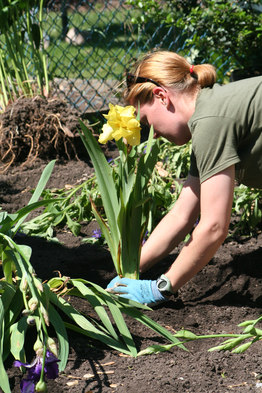
The work of a horticulturalist can take many different forms. Some horticulturalists do very basic labour, such as digging up the soil in gardens to prepare them for planting or mowing and trimming lawns. They also prune trees by cutting off extra branches and prune smaller plants by removing dead leaves and flowers.
These horticulturalists need only a basic education, such as a high school diploma. They do all of the basic jobs that keep the plants healthy and growing. Horticulturalists at this level are normally not paid very well, and usually they work only in the growing season from late spring until early fall. However, this kind of job can be good for students or for people who prefer not to spend years studying.
Some horticultural work requires much more knowledge than a basic labourer needs. People working at this level often have degrees in agriculture, botany, or related fields. They research new plant species for different climates or try to find ways of making plants stronger and easier to care for. Some horticulturalists at this level also help design gardens or advise people on the best methods of plant care. Others become crop inspectors for large farms or work with small, local groups. Still others become professors and teachers in colleges and universities. These horticulturalists are generally fairly well paid, although the salary can vary according to what kind of work is available.
Either of the two levels of horticultural work could be good choices for anyone who enjoys working with plants. They can work in edible horticulture, growing plants for food. Employment in this area is generally quite secure since people always need food. However, the low pay and seasonal work for some horticultural workers are disadvantages, as well as exposure to dangerous chemicals. Some of the work, such as digging up flower beds, can also be physically difficult. Another option is to work in ornamental horticulture, growing plants like flowers or shrubs for show rather than for food. Work in this area is often less physically difficult, although dealing with chemicals is still a problem.
Do you love to work with plants and to see them grow? If so, maybe a career as a horticulturalist is right for you.