
Tag: get involved

  • The Long and Winding Road from Volunteer to Employee

    The Long and Winding Road from Volunteer to Employee

    Giving your time for a cause has its many altruistic perks. From getting to meet new people to helping the less fortunate in your community, unpaid work does wonders for your sense of worth and belonging in society. Nevertheless, the responsibilities of our society beckon, and the necessity of employment can often mean less fulfilling opportunities. But you can have both. You can do community-enriching work and get paid for it. In the modern age of nearly infinite possibilities, volunteering and internships can be stepping stones to fantastic paying jobs. The key is knowing how to traverse that path.

    Do not overemphasize the importance of an immediate paycheck. The skills you acquire now can be much more lucrative than making a few quick dollars in the present. Devoting some of your time to volunteer opportunities will reward you with new skills. In the film and television industry, a world I have traversed as a scriptwriter, internships allow people to learn about production and editing by actually doing these activities instead of sitting in a classroom. This hands-on approach is far more educational than simply reading about these tasks. Think of these skills as an investment. What you learn can translate into a better career, and hence greater pay, further down the road.

    Beyond skills, volunteering gives you experience that is quite impactful on a resume. It demonstrates your commitment to certain fields and hardworking nature to employers, and can help fill in questionable gaps of periods of unemployment that are frowned upon. Use this time to not only learn, but to build relationships and make contacts. Put your passion on full display. By going above and beyond what has been asked of you, others will be more likely to remember you. These people can become very valuable references, and may even offer you employment based on what they have seen. Internships are often pathways to employment in film and television, as well as many other industries.

    The final days of your volunteering position are critical. Strive to stay connected to the people you have met during your time there. This may not be immediately rewarding. Yet weeks, months, or even years from now, their recommendation or need for an employee could be exactly what you need. Perhaps most importantly, reflect on the skills and confidence you have gained from your experience. You are now a better prospect for employers and have made progress towards your dream career. This may not come to fruition immediately, but the foundation has been laid. Utilize your newfound confidence to contact companies you may not have reached out to before. Attend networking events. Stay in touch with existing contacts. All it takes is one opportunity and one “yes” to make that dream career a reality.

    Volunteering is far from ideal in certain ways – beyond the obvious lack of pay, it can feel like a frustrating speed bump on the path you are determined to take. Focus instead on the positives. Accept that volunteer work and internships are necessary building blocks. Gain skills, make contacts, and overcome insecurities that stifle confidence. The path to the career you want will be winding, but opportunities exist as long as you persist.

    Sources:

    Doyle, Alison. “How to Turn a Volunteer Position into a Job.” The Balance. https://www.thebalance.com/how-to-turn-a-volunteer-position-into-a-job-2062644

    Shifman, Julie. “7 Reasons Volunteering Can Lead to a Job.” Next Avenue. http://www.nextavenue.org/7-reasons-volunteering-can-lead-job/

  • The Value of Volunteering

    The Value of Volunteering

    Volunteering has almost become a dirty word in some circles, and it’s not hard to see why: when you’re looking for a job, giving away your labour for free can seem counter-productive at first. In spite of this, statistics show that some 12 million Canadians take part in volunteer activities each year—that’s nearly half the population . Let’s take a closer look at what you gain when you decide to volunteer.

    First and foremost, volunteering is a great opportunity to learn about yourself and what you enjoy doing. No matter where your interests lie, chances are there is a volunteer opportunity out there for you. Do you love animals? Volunteer at your local animal shelter. Are you passionate about the arts? Volunteer at a music festival. Think you might want to become a doctor? Volunteer at a hospital. You might love it and decide you want to pursue a career in that field—or you might discover that a particular job just isn’t for you.  Either way, you’re gaining valuable self-learning and awareness. Volunteering is the ultimate tool for exploring your interests and experimenting with different kinds of work.

    Not only can volunteering give you a chance to indulge your hobbies and find your passion, it looks great on a resume. Whether you spend a year doing it or just a weekend, volunteer experience can signal to employers that you’re the kind of person who has varied interests, takes initiative and isn’t afraid to try new thing. Given the number of resumes most employers go through, it never hurts to have something that sets you apart from the crowd.

    Another area where volunteering can be invaluable is networking. If you’re having a hard time finding work in a particular field, volunteering is a great way to break into the industry and get your name known. The contacts you meet through volunteering could serve you as references in the future, or they might be able to let you in on trade secrets or even job opportunities that aren’t available to the general public. Most organizations are extremely grateful for the work volunteers do and are more than willing to help you out if they can, so don’t be afraid to ask.

    The final reason to try out volunteering is the simplest: it feels good to give back. Volunteers are the lifeblood of many charitable organizations; without them, the good work these places do would never be possible. Keep in mind that volunteering is best experienced when it’s something that you find personally meaningful. Luckily, given the wealth of volunteer opportunities out there, finding one that matches your passion (and fits your schedule) shouldn’t be too difficult.

    This article has covered a few of the main benefits of volunteering, but don’t take our word for it. Get out there and discover the value of volunteering for yourself!

  • The Importance of Wetlands

    The Importance of Wetlands

    What Are They?
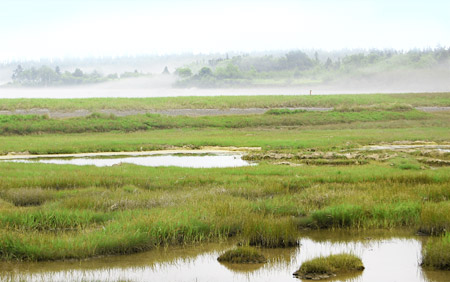
    A wetland is a habitat where land meets water such as ponds, marshes, swamps, bogs and fens. To classify as a wetland, the area must be completely covered or partially covered with water for a significant amount of time over the course of a year. This could be from flooding due to rain or melting snow, or because it exists as an established waterway. Wetlands are home to aquatic and land creatures, a combination that creates an incredible habitat able to function at great efficiency. This produces a rich environment for its inhabitants – wetlands sustain more life than any other ecosystem!

    Swamps: streaming water, often confused with marshes, set apart by the presence of trees and shrubs.
    Ponds: shallow waters, surface free of vegetation.
    Marshes: continually flooded with lots of surface vegetation.
    Bogs/fens: high water levels, large accumulation of peat, looks like solid ground but easy to fall through.

    Why Should I Care?
    Wetlands are home to more than 200 species of wildlife. Canada has a diverse population of amazing creatures, many that are endangered or at risk. Scientists have estimated that a third of these rely upon the wetland ecosystem. Migrating birds return to the same spot each year, and if that wetland is now a Superstore they have lost nesting grounds and their food source.

    Wetlands act like sponges, preventing floods from rainfall and melting snow. They also filter the water from pollution and chemicals, cleansing it before it recycles to the larger water basins. Amazingly, wetlands also remove and store greenhouse gases from the environment, making them important to the future of climate change as well.

    Cause to Worry
    Canada is home to many varieties of wetlands. It is estimated that 14% of the country is covered by a wetland, though the number shrinks every year. Wetlands are in danger of disappearing across the globe due to agriculture and residential development. According to the Alberta Wilderness Association, 70% of wetlands have been destroyed in that province alone. It is only in more recent years people come to understand the great importance of wetlands and their impact on our country. Without these powerful ecosystems, fowls, amphibians, mammals, reptiles and plants will eventually become extinct.

    What Can I Do?
    There are numerous organizations that recognize the value of wetlands and work hard to see them untouched and preserved. There are many things still yet to be done and much awareness that still needs to be raised. One factor in the decline of wetlands is the rapid consumption of water. We all need to conserve our water intake. Limiting the chemicals and pesticides we use will also have a positive effect on this ecosystem. Perhaps the most important thing one can do to help protect the wetlands is to educate themselves and others on the subject and become willing advocates. Finally, we can all take the time to enjoy the remaining wetlands and allow ourselves to be reminded why they are important.