Tag: girls

  • Why Should Girls Get Involved with STEM?

    Why Should Girls Get Involved with STEM?

    In our society, girls seem to be underrepresented in fields related to science, technology, engineering, and mathematics. Even more interesting is that in contrast to girls, boys seem to be actively involved in all of these fields. So what’s the deal? Why are girls not participating in these fields as much as boys? These are questions that are stumping researchers and other experts.

    There is a stereotype that has been circulating around, that maybe girls just aren’t as good at these subjects as their male counterparts. However, research suggests that there isn’t any evidence to support this claim. We all know girls are just as capable and smart as boys. Researchers have found that, when tested, girls are equally as successful in any of these subjects as boys. However, as long as this negative stereotype continues to persist it can cause real harm. It can actually cause girls to believe that they aren’t good at these subjects before even trying them. There is a natural bias for people to assume that science and math are fields best suited to males and that the arts are better suited to females. Why not disprove this theory?

    People also believe that maybe girls aren’t involved in STEM because there aren’t enough female role models in these fields to look up to. Seeing women who are thriving and successful in these fields could make them more enticing to younger females. People like Bill Gates and Mark Zuckerberg have made their fortunes in fields related to STEM. However, there still seems to be lacking female equivalents. It would be great to see females who have invented or developed ideas related to STEM in our society. The women that are contributing and involved in STEM should be given more visibility in order to promote these fields.

    There are many reasons why girls should get involved in STEM. Firstly, positions related to these fields are abundant. Why not make contributions to them and stand out from others? Scientists are trying to solve some of the most difficult questions in our time. Engineers are designing different things that we can use to better our lives and make things easier. With the internet and other forms of communication becoming more popular, there are a wide variety of job opportunities relating to technology.  People in these professions are doing creative and innovative things. In addition to this, these positions provide a person with a really great income (who doesn’t like money?). Helping the world and making great money doesn’t sound like a bad thing to me!

  • Feminism and Its Many Perspectives

    Feminism and Its Many Perspectives

    When you ask people what they think feminism means, you will likely get a variety of answers. Some may say it means a feminist is a woman who can do anything that a guy can do, while some may say a woman who is happily single.

    Such definitions sometimes hit a moot point, however, and are entirely generalized. If a woman can’t do hard labor, does that mean she can’t be a feminist? And what about women who are leading blissful lives with their male partners? Does this mean they can’t be feminists?

    People that are active on social media tend to have a lot of opinions of what feminism is, and what it means to be a feminist. In our digital age, there is a lot of attention paid to how women are illustrated and portrayed on and off the internet, causing many debates and discussions to commence around the world.

    One thing that is not arguable, is that feminism encourages women to speak their minds and be themselves. Being a feminist also means supporting the rights of women, whether it is concerning their reproductive system, or the ability to speak up when threatened by violence or other means.

    A good thing to do is to stop putting the term “feminism” in a box. The media has an incredible influence on young people, and it tends to confuse the masses. Feminism may mean different things to people, but it absolutely means equal rights for both genders in work, home and beyond. Whatever your beliefs are, be supportive of other women, regardless of the differences in beliefs and opinions. Just be your own individual and always make the best effort to achieve your dreams and ambitions. Feminism is about togetherness, so let’s get together!

    SOURCES:

    http://feminist.com/resources/artspeech/genwom/feministteacher.html

    http://www.genderandeducation.com/issues/why-is-feminism-a-%E2%80%9Cdirty-word%E2%80%9D-among-teenage-girls/

    http://lipmag.com/opinion/why-teenage-girls-need-feminism/

    http://elitedaily.com/women/thats-just-like-rules-feminism-5-instances-support-fellow-women/872867/

  • Don’t Be THAT Girl

    Don’t Be THAT Girl

    “Your hair is so ugly!”

    “Did you gain weight?”

    Have you heard some of these or other worse things uttered in the hallways? Were you the one who said some of those nasty things? A recent article from the New Zealand Herald found that 85 per cent of teenage girls have experience some sort of bullying. The most shocking thing is that, when it comes to girls, some of this bullying is coming directly from their friends.

    If you’re the victim of a friend’s torment you may be blaming yourself first and bringing unnecessary doubt and confusion to yourself. Rachel Simmon, author of Odd Girl Out, found that “one of the chief symptoms of a girl’s loss of self-esteem is the sense of being crazy, of not being able to trust one’s own interpretation of people’s actions or events.” If you don’t understand why your BFF is turning on you, it may be her problem – not yours.

    Now, if you’re on the other side of the equation and are part of bullying, please think about your actions. It’s a false position of power to be the bully. Girls may form cliques and have their own way of dressing, talking or sharing of a secret. Leora Tanenbaum states it simply in her book Catfight – “the ironic thing about being included is that it necessarily entails exclusion.”  Bullies need to ask themselves why they are excluding others. There isn’t a guarantee that you’ll stay in the exclusive clique forever; you may just end up being the outcast.

    Some would tend to think that bullying would involve violence, but this isn’t always the case. Getting a group of friends to ostracize, say hurtful things and spread rumours about you are all forms of bullying, too.

    The one thing someone being bullied should do is also the thing they will most likely avoid: to talk to your parents about what you’re experiencing. If you’re too scared to do that, you should talk to an adult you trust. Sometimes it’s beyond your own control when it comes to bullying. It’s important to let someone in a position of authority know what’s going on. High school should be a place that will give you four years of great memories, not something you should dread.

  • Women in Trades

    Women in Trades

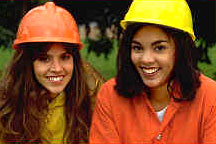
    In the past, asking a girl what she wanted to do when she grew up probably would have resulted in a blank stare. Most girls got married and raised families. Even if they worked, they had only a few choices for the kinds of work they could do, and they were discouraged from getting into other types of work. If they chose another kind of work, they would probably face all kinds of barriers and problems. Many things have changed over the years and women now find it much easier to get into professions like law and medicine. They can work as editors, scientists, and computer analysts. Women are also entering traditionally male-dominated trades and are becoming electricians, plumbers, construction workers, and more.

    The history of women in the trades really began during the Second World War (1939-1945), when many of the men from North America and Europe were away fighting in the war. Their jobs as welders, ship-builders and painters still needed to be done, and women took over and learned to work in job fields that included electricians, insulators, and pipe-fitters. When men returned after the war, many women went back to their regular work while men took over the trades again. However, women had discovered that they could do much more than their traditional work. Slowly, they began to get back into the trades that they had left at the end of the war.

    Getting women back into the trades after so long has not been easy. Teachers and parents have had to encourage girls to consider the trades instead of getting into more traditional fields like teaching or nursing. Training schools have had to make their programs appealing to women so that they would consider trades as possible careers. Even the government has become involved by funding support programs for women entering the trades or lending students the money they need to pay their tuition fees. Other groups have had to help, as well.

    One way that organizations can help is by guiding women into the right training program. Canada has over two hundred different trades, and making a decision about which trade is best can be difficult. The next stage is finding a good training program. Training is important for anyone who wants to be a skilled tradesperson rather than a labourer. Even if no job is available for people after they graduate, their skills are always valuable.

    Most training programs in the trades involve a combination of classroom work and practical training, often ending with a work-placement segment. This is when students get to work at an actual job but still learn at the same time. A typical program might include about seven or eight months of instruction, followed by four or five months of work on the job to gain experience. Sometimes, a full-time job can be the result of the work placement.

    Women are entering the trades in greater numbers than they have in years. If you’re a girl, maybe you should consider being one of these trendsetters!