Tag: global warming

  • Report shows action on climate change is critical

    Report shows action on climate change is critical

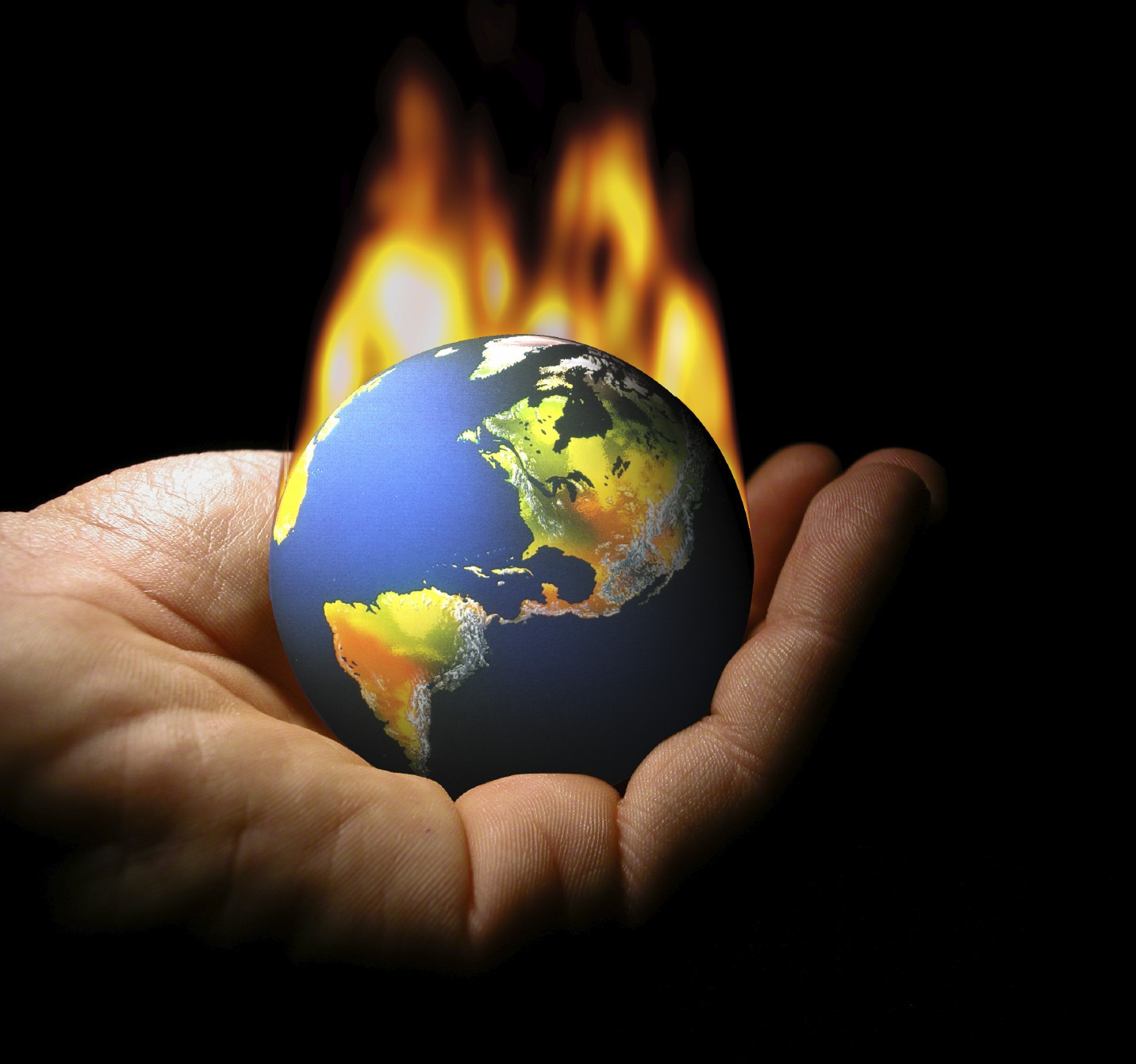
    The Intergovernmental Panel on Climate Change just released the first of four chapters of its Fifth Assessment Report. It shows scientists are more certain now than in 2007 when the Fourth Assessment was released that humans are largely responsible for global warming — mainly by burning fossil fuels and cutting down forests — and that it’s getting worse and poses a serious threat to humanity. It contains hints of optimism, though, and shows addressing the problem creates opportunities.

    The IPCC was set up in 1988 by the World Meteorological Organization and UN Environment Programme at the request of member governments. For the recent study, hundreds of scientists and experts worldwide combed through the latest peer-reviewed scientific literature and other relevant materials to assess “the state of scientific, technical and socio-economic knowledge on climate change, its causes, potential impacts and response strategies.”

    Scientists are cautious. That’s the nature of science; information changes, and it’s difficult to account for all interrelated factors in any phenomenon, especially one as complicated as global climate. When they say something is ‘extremely likely’ or 95 per cent certain — as the latest report does regarding human contributions to climate change — that’s as close to certainty as science usually gets. Evidence for climate change itself is “unequivocal”.

    According to the latest installment, which cites 9,200 scientific publications in 2,200 pages, “It is extremely likely that human activities caused more than half of the observed increase in global average surface temperature from 1951 to 2010.” It also concludes oceans have warmed, snow and ice have diminished, sea levels have risen and extreme weather events have become more common.

    The report also dismisses the notion, spread by climate change deniers, that global warming has stopped. It has slowed slightly in recent years, scientists say, because of natural weather variations and other possible factors, including increases in volcanic ash, changes in solar cycles and, as a new scientific study suggests, oceans absorbing more heat.

    An increase in global average temperatures greater than 2 C above pre-industrial levels would result in further melting of glaciers and Arctic ice, continued rising sea levels, more frequent and extreme weather events, difficulties for global agriculture and changes in plant and animal life, including extinctions. The report says we’ll likely exceed that threshold this century unless we choose to act.

    This means a strong, concerted global effort to combat climate change is necessary to protect the health of our economies, communities, children and future. That will cost us, but far less than doing nothing. Although governments of almost 200 countries agreed global average temperature increases must be kept below 2 C to avoid catastrophic warming, we are on track for the “worst case scenario” outlined by the first assessment report in 1990. Research indicates it’s possible to limit warming below that threshold if far-reaching action is taken. We can’t let skeptics sidetrack us with distortions and cherry-picking aimed at creating the illusion the science is still not in.

    The reasons to act go beyond averting the worst impacts of climate change. Fossil fuels are an incredibly valuable resource that can be used for making everything from medical supplies to computer keyboards. Wastefully burning them to propel solo drivers in cars and SUVs will ensure we run out sooner rather than later.

    Working with other nations to meet science-based targets to cut global warming pollution and create clean, renewable energy solutions would allow us to use our remaining fossil fuel reserves more wisely and create lasting jobs and economic opportunities. That’s why the David Suzuki Foundation is working with the Trottier Energy Futures Project to identify clean-energy opportunities for Canada.

    Shifting to cleaner energy sources would also reduce pollution and the environmental damage that comes with extracting coal, oil and gas. That would improve the health of people, communities and ecosystems, and reduce both health-care costs and dollars spent replacing services nature already provides with expensive infrastructure.

    The IPCC report gathers the best science from around the world. It’s clear: There’s no time to delay. The first chapter examines the current science of climate change, the second will look at impacts and the third will consider strategies to deal with the problem. A report synthesizing the three chapters will be released in 2014. We must take it seriously.
  • Climate Change and the Loss of Sea Ice in the Arctic

    Climate Change and the Loss of Sea Ice in the Arctic

    Climate change affects every part of the world in a different way, but most experts agree the North will be impacted more than any other region. Sea ice spans most of the Arctic’s coastal and inter-island channels from eight to 12 months of the year and supports a number of species. It’s expected to undergo the most significant transformation.

    The effects of climate change in the North are not new occurrences. Actually, changes have been happening for quite some time. Over the past 25 years, Inuit and scientists have observed a decrease of roughly seven percent in sea ice area, with the largest rate of decrease during the summer months.

    Using highly scientific models of prediction, it has been determined that if warming trends continue at their current rate, by the end of this century the Arctic Ocean will be nearly ice-free during the summer.

    If Arctic sea ice melted away …
    Large sections of the Arctic Archipelago would open up.

    This would create more noise, traffic, pollution and safety issues for both humans and wildlife.
    (more…)

  • Researching the Effects of Climate Change on the Polar Bears of Southern Hudson Bay

    Researching the Effects of Climate Change on the Polar Bears of Southern Hudson Bay

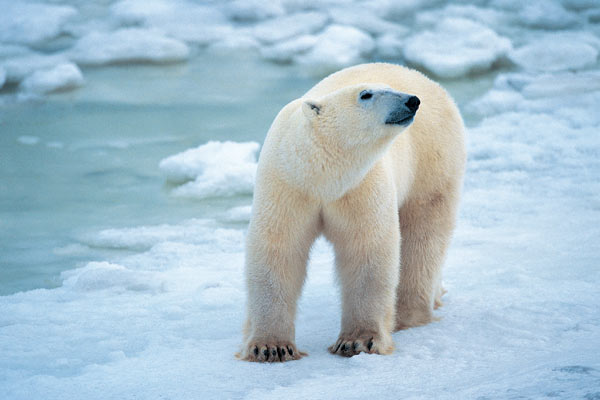
    As I sit comfortably in my warm office in Toronto writing this post, the polar bears of the Southern Hudson Bay subpopulation are out on the frigid sea ice in the middle of Hudson Bay and James Bay looking for seals. Food is relatively plentiful for polar bears this time of year, and with so many adaptations that allow them to live in this Arctic marine habitat, these winter conditions suit the bears just fine. Mother polar bears of this subpopulation are warm in their dens along the northern coast of Ontario, having just given birth to their cubs. After a few months of nursing the tiny dependent newborns, these family groups will leave their dens to head out on the ice where the mother polar bears will catch as many seals as they can to feed their young families before the ice breaks up in the summer. All of the Southern Hudson Bay polar bears are then forced to retreat to the northern Ontario coastline or islands of James Bay to fast and await the return of the ice next winter. Because the life history of the polar bear is so intrinsically tied to the sea ice, the recent weakening of the Hudson Bay annual sea ice through the effects of climate change will have dire consequences for this population of polar bears that lives at the southern extent of the species range.

    This year represents the first of a three year project through a partnership between York University and the Ontario Ministry of Natural Resources to study the effects of a changing climate on the feeding habits of the Southern Hudson Bay polar bears. We completed our first field season this past fall, handling polar bears along the shore of Akimiski Island and the western shore of James Bay. We had a very successful field season, deploying ten GPS collars on adult female polar bears and collecting important biological samples and morphometric information from a total of 36 bears. My PhD supervisors Dr. Gregory Thiemann and Dr. Martyn Obbard are experienced polar bear biologists, but this was my first time getting hands on experience studying polar bears. It was an amazing experience getting to appreciate the sheer size and power of these animals up close. The bears we handled ranged from young subadults spending their first fall apart from their mothers, to large, stoic adult males tipping the scales at over 1,200 pounds! We certainly encountered a wide range of bears, including pregnant females in excellent body condition who were preparing to enter dens later in the season, as well as mothers with dependent cubs who were quite thin from the added stress of feeding their young.

    The range in individual polar bear size and condition is really quite striking, and ties in closely with our research which will compare the feeding habits of different classes of polar bears based on age, gender, and body condition. By determining the food habits of individual polar bears and linking this information with movement patterns of bears equipped with GPS collars, we will increase our knowledge on the specific types of sea ice habitat polar bears exploit. By combining this information with future predictions of sea ice extent and prey availability in Hudson Bay, we will contribute to ensuring that informed and proper conservation measures are taken in the future. Through the support of the Canadian Wildlife Federation Endangered Species Fund, this important research will help in predicting the future of polar bears in this region, as the challenges currently faced by the bears by an extended ice-free season are forecasted to intensify in the coming decades.

  • The Latest from David Suzuki

    The Latest from David Suzuki

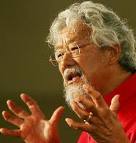
    Canadian environmentalist and scientist David Suzuki brings us the latest hot issues on global warming.

    The well being of our natural environment continues to increase in importance as the negative impacts of our unsustainable behavior become more and more apparent. In recognition of the damage humanity is instilling upon the earth, environmental super hero David Suzuki continues his commitment to educate Canadians and the world about our ecological footprint, long after most folks his age would have happily settled into retirement.

    Over the years, Suzuki has been a proponent for aboriginal rights, saving forests, the Kyoto accord and more, but in recent times, one of Suzuki’s most important and oft spoken platforms is global warming. Global warming continues to be one of society’s great debates, and while Suzuki recognizes this, he also points out that there is never anything to lose by being kinder to the environment. A resounding metaphor from Suzuki, regarding global warming, is this: If there was even a small chance a sandwich was poisonous, would you eat it? Likely not. The same goes from global warming.

    Suzuki’s recent communications about global warming have focused on whether or not natural gas will help Canada achieve a low carbon economy, aiding to keep our temperatures down. The David Suzuki foundation, in collaboration with The Pembina Institute, conducted a study to determine whether natural gas is in fact a key route in helping to avoid the use of coal and petroleum. The answer is no. Suzuki states that “Natural gas is also a powerful greenhouse gas in its own right, and creates warming effects 20 times more powerful than CO2” (Suzuki, 2011). Natural gas still produces emissions, so is obviously not the solution to emission reduction. However, Suzuki suggests that natural gas, if it must be used, be used as a transition until we find newer, cleaner sources of power.

    David Suzuki has also always been a strong proponent for the Canadian government to focus more on the environment and its people, and has pushed for more scientists to become involved in politics. On this note, a contributor to Suzuki’s blog, Leanne Clare, reported on the recent meeting of Canada’s energy and mine ministers, who had corporate sponsors (that’s right, apparently corporations are now sponsoring government meetings) for their meeting. Clare states, “How can our elected officials possibly claim to be unbiased and uninfluenced in their decision-making during this meeting?” (2011).

    Suzuki has never shied away from controversial topics, and whether or not you agree with him, his ability to stimulate discussion on these important issues in itself plays a key role in the education of Canadians. So whether or not you agree with global warming, at least understand that there is never any harm in being environmentally friendly.

    Check out Suzuki’s blog at http://www.davidsuzuki.org/blogs/.

    A brief end note from Suzuki on summer time shenanigans: While you’re out enjoying the beauty of the great outdoors, keep in mind that standing dead trees are “excellent habitats”, being the home for many species, so think twice about chopping one down for your camp fire!