Tag: government

  • What are Taxes?

    What are Taxes?

    Taxes are collected by the government so they can provide programs and services to people every day. Everyone in Canada is required to pay taxes in some way. It may seem like people pay a lot of taxes, but the services the government provides are very costly, and lots of people use them. Therefore, everyone needs to help contribute to the city, province and country they live in.

    Some of the programs and services that are funded by taxes are public schools, parks and recreational centers, hospitals and health care, medical research, national defense, disaster relief, roads and highways, railways, public broadcasting and social assistance (which helps support the very poor when they need it).

    Common types of taxes include income tax, sales tax, property tax, corporate tax and inheritance tax. They are paid at three levels of government: Federal, provincial and municipal (city).

    Most people have money taken from their paychecks each time they get paid. This is called income tax. Each year, Canadian citizens must complete an income tax return claiming all of the income they made that year. They can also claim certain deductions and tax credits (these vary from province to province). Common deductions are tuition and books for post-secondary education, interest paid on student loans, etc. When you file your income tax, you will either get a return, meaning you overpaid that year and will receive some money back, or you will owe, meaning you didn’t contribute enough and you are required to pay more. In Canad, the CRA (Canada Revenue Agency) collects income tax.

    If you own property (land, house, apartment building, office complex, cottage, etc.), you are required to pay property tax. This tax is based on the value of the property. Property values are determined by property assessors who establish what the property is worth based on what it could sell for on the market.

    For young people, the most common tax you will have to pay is sales tax. It is a surcharge applied to most items you want to buy like candy, clothes, books, music, video games, toys, movies and sports equipment. For example, if you want to buy a new video game that costs $39.99 and you work hard, save up and take two twenties to the store, you will not have enough to cover the cost of the game. This is because a sales tax will be applied to the “sticker price”. Sales taxes or consumption taxes are collected on most goods, with the exception of basic food necessities, prescription medicines and baby necessities. In Canada, sales tax also differs from province to province. There is PST- Provincial Sales Tax, GST- Goods and Services Tax and HST- Harmonized Sales Tax.

    Sales Tax by Province

    Province GST/ HST PST
    British Columbia 5% (GST) 7%
    Alberta 5% (GST) 0%
    Saskatchewan 5% (GST) 6%
    Manitoba 5% (GST) 7%
    Ontario 13% (HST) 0%
    Quebec 5% (GST) 9.98%
    Newfoundland 15% (HST) 0%
    Nova Scotia 14% (HST) 0%
    New Brunswick 15% (HST) 0%
    Prince Edward Island 15% (HST) 0%
    Northwest Territories 5% (GST) 0%
    Nunavut 5% (GST) 0%
    Yukon Territory 5% (GST) 0%


  • Government Grants For Students in Canada

    Government Grants For Students in Canada

    Money is always hard to come by when getting ready for University or College. Thankfully, the Government of Canada can help students at different income levels, achieve their educational goals. As a student wanting to go to College or University, you should explore all the options you can.

    Click on the links below to find out how the Government of Canada can help you, no matter what your financial situation:

    • For Low-Income Families:

    http://www.canlearn.ca/eng/loans_grants/grants/low.shtml

    • For Middle-income Families:

    http://www.canlearn.ca/eng/loans_grants/grants/middle.shtml

    • For Full-time students with Dependents:

    http://www.canlearn.ca/eng/loans_grants/grants/dependants.shtml

    • Grants for Part-time studies:

    http://www.canlearn.ca/eng/loans_grants/grants/part_time.shtml

    • Grants for Part-time students with dependants:

    http://www.canlearn.ca/eng/loans_grants/grants/part_time.shtml#dependant

    • Grants for students with permanent disabilities:

    http://www.canlearn.ca/eng/loans_grants/grants/disabilities.shtml

    • Grant for services and equipment for students with permanent disabilities:

    http://www.canlearn.ca/eng/loans_grants/grants/disabilities.shtml#service
    International Grant and Scholarship Options:


  • Campus Politics: Getting Involved with Student Government

    Campus Politics: Getting Involved with Student Government

    If you’re an avid politics fan, like to connect and communicate with others, and appreciate the work that goes into a good campaign, student government is the thing for you. Here’s some information about my personal experience as a student representative, and why I think you should consider running, too.

    First of all, I want to clarify that I am speaking from my own experience. I was in student council in high school, and I will be a director on student government in my second year of university (which begins in the fall). I don’t know what schools you all go to or the way they handle student representation, so the advice I give you may not necessarily apply in your case.

    That being said, in my opinion, student government (council, advisory, etc.) is a valuable experience. You get to collaborate with like-minded peers, as well as represent the interests of your fellow students. You will likely take on a lot of responsibility, whether it is to plan events, fill out paperwork, or communicate with upper-years, teachers, or administration representatives. It can be stressful and it’s certainly a lot of work. But overall, I found it to be a greatly rewarding experience.

    The eligibility for a student government seat varies depending on the institution, and your respective guidance office or registrar can provide you with more information. However, seats are almost always elected, which means you have to be voted in by your fellow peers. There is typically a campaigning period, during which you can put up posters, distribute campaign materials, make speeches, and so on, in order to convince your constituents that you are the right person for the job.

    If you are thinking of running for a position, you have to be prepared to commit. Not only does campaigning take a lot of effort (you’ve never known true exhaustion if you haven’t stayed up all night cutting out flyers), but the job itself is also very demanding. Of course, your responsibilities depend on your position, but it goes without saying that you’ll have to work hard in order to do your job properly.

    The thing is, though, in my personal experience, it was all worth it. Regardless of how hard I had to work, the effect my efforts had on the student body was evident. As a representative, you are responsible for ensuring that the needs of your peers are met. Even if the scope of your powers seems limited, you actually have the opportunity to make student life better in some way. For me, that was the most rewarding part of the experience, and I am sure that I will get to do the same kind of work next year as well.

    If you’re looking to make a change, no matter how small it may seem, this is one of the ways you can do it. Consider running this year and put your hard work to good use.

  • “Big Picture” Thinking Needed to Protect Nature

    “Big Picture” Thinking Needed to Protect Nature

    Few places on Earth have been untouched by humans, according to a study in the journal Science. Satellite images taken from hundreds of kilometres above the planet reveal a world that we have irrevocably changed within a remarkably short time.

    Although industrial projects like the proposed Enbridge Northern Gateway pipeline or the recently defeated mega-quarry in Ontario typically grab the headlines and bring out public opposition, it’s often the combined impacts of a range of human activities on the same land base that threaten to drive nature beyond critical tipping points. Once those are passed, rapid ecological changes such as species extinction can occur.

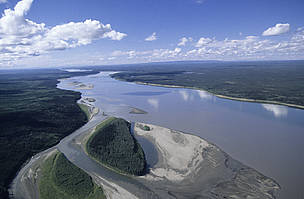
    For example, in British Columbia’s booming Peace Region, forestry, energy and mineral leases and licences are widespread and often multilayered in the same area. As various industries have exploited these “tenures”, a sprawling patchwork of large clearcuts, oil wells, dams and reservoirs, fracking operations and thousands of kilometres of seismic lines, roads and pipelines have come to dominate the landscape.

    Today, more than 65 per cent of the region has felt the impact of industrial development, leaving little intact habitat for sensitive, endangered species such as caribou to feed, breed or roam. Degradation or destruction of habitat has convinced scientists that remaining herds in the region are no longer self-sustaining and are spiralling toward local extinction. First Nations, who have relied upon caribou as their primary source of food for thousands of years, can no longer hunt them. This is a clear violation of treaty rights.

    This dire situation didn’t happen by accident or because of a laissez-faire approach to resource and land management. Numerous industries in the area have been operating legally and according to rules and regulations set by government.

    But legal experts, such as those at the nongovernmental organization West Coast Environmental Law, believe a root cause of the problem lies in laws about land, resource and water management that are “hardwired” to fail communities and the environment. The narrow focus of those laws enables industries to operate in isolation from one another.

    B.C., for example, has developed numerous individual laws, like the Forest and Range Practices Act, Oil and Gas Activities Act and Mines Act, alongside the regulated industries they enable. But the province lacks a legal framework to proactively and comprehensively manage the cumulative impacts of multiple resource industries operating within the same area.

    Because of this, WCEL and its First Nations partners are engaged in a multi-year law reform project that aims to overhaul the way we currently oversee and regulate cumulative impacts, ranging from declining water quality that may arise as a result of multiple industries using a common resource to emerging threats such as climate change.

    A cumulative-impacts approach to governing resource development would upend the current management paradigm. It would focus on the management needs of the land, water, air and wildlife and the communities that depend on them first, rather than the resources to be extracted. In practical terms, this would mean that, rather than focusing on what we should take from nature to create wealth and employment, we should first consider what must be retained in nature to sustain both wildlife and the well-being of local communities — such as clean air, safe drinking water and healthy local food.

    At a recent symposium on managing the cumulative impacts of resource development in B.C., numerous speakers — from First Nations to academics to business leaders — stressed that effectively managing cumulative impacts will require new institutions and governance mechanisms, even new legal tools. More importantly, it will require our leaders to adopt a more proactive and holistic way of thinking about the world — one that recognizes that far from just being a place to extract resources like fossil fuels, timber and minerals, nature is our home. Nature provides our most fundamental needs and dictates limits to growth and so its protection should be our highest priority.

    Managing our massive, growing human footprint on this planet more sustainably will require leadership, much of which is emerging from First Nations peoples who are on the frontlines of the day-to-day realities of cumulative environmental change. We need to look at the big picture rather than individual elements in isolation.

  • Child Labour: Working For A Living

    Child Labour: Working For A Living

    Do you usually have a lot of chores to do at home when you return from school? Do you have to help cook supper, walk the dog, mow the lawn, or shovel the driveway? If you’re like most Canadians, you probably have to do at least some of that kind of work. You might even have a paid job like delivering flyers or babysitting after school. Does it ever feel that you have to work too much? Many children around the world have to do much more. That’s why people in many countries have been working to end child labour by the year 2016.

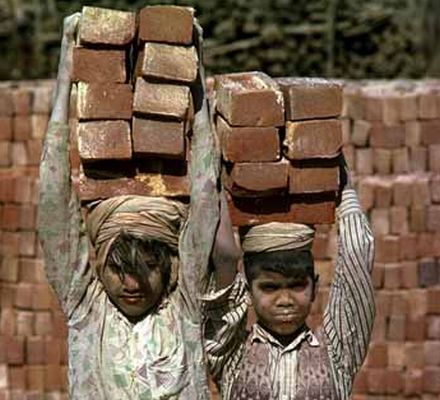
    When people talk about child labour, they don’t mean the times when parents tell their children to set the table for supper or to help wash the dishes. They mean work that prevents children from receiving an education or that damages their growth in any way. Sometimes the work even kills them. Young children sometimes work all day in factories or other unhealthy or dangerous places instead of going to school and getting an education.

    Canada has laws that require parents to send their children to school, and most people follow the rules. From the age of twelve, children are allowed to have jobs that don’t interfere with their education or harm them in other ways. In countries like Canada and the United States, rules about child labour usually work fairly well, although there are still many cases of children working long hours in dangerous conditions. Sometimes, the children even die on the job. The official estimate of child labour in wealthy countries is about one percent.

    In poorer countries, however, the situation is worse. Parents have many children to feed and often also have to support their own parents or other relatives. Even with long hours of work, parents might still not make enough money to survive. In some cases, they might not be able to find any work at all. They might need the income their children bring into the family. Also, sending children to school can often be too expensive for them to afford. The highest level of child labour is in Asia, where about sixty percent of children work.

    According to the International Labour Organization, in 2008 about 215 million children around the world had jobs which kept them from going to school or playing. That number was down slightly from 2004, but it actually increased among some groups of children. The problem will continue until people do something about the causes.

    How can you help solve the problem of child labour? You can encourage people in government to make better laws, but a more effective way to end the worst kinds of child labour is to get involved personally in helping the families. Even if the child labourers live in another country, you can donate money to help raise the family income or you can tell your friends and family about the issue. Every bit of help can make a difference!