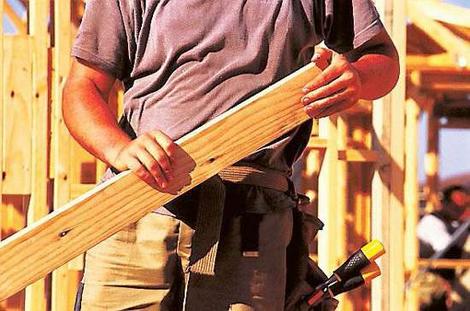
Carpentry is a broad trade that includes many sub-trades. Carpentry is also a registered apprenticeship trade with internationally recognized certification. In a very general summary, carpentry is building structures or really anything out of wood.
You can begin your career in this trade by calling your local Carpenter’s Union, going directly through a college course, or by simply applying to a job as a first year apprentice or helper. As the trade carpentry is so broad, usually after the initial training process carpenters specialize in an aspect within carpentry. A few examples may be: concrete form carpenter, finish carpenter, framing carpenter, commercial carpenter (ISM), wood shop carpenter. There are also many more examples of possible specializations within carpentry and each has its’ own hurdles and benefits. Nine time s out of ten, a general contractor comes from a carpentry background due to this wide ranging set of skills and understanding.
When you are working in this trade you should be prepared for being outside all day in all seasons; generally carpenters are first on construction sites and the elements can be a challenge at times. The job requires you to be physically fit, and you must be able to perform muscle burning tasks for extended periods of time. You will often be asked to work at heights. In this case, a proper fall arrest protection should be used and training should be completed. Carpenters usually start their work day early to beat the hottest part of the day; a normal day will run from 7AM to 5PM or sometimes 6AM to 4-5PM.
Income can vary depending on geographical region and your specialization within carpentry. For example, currently in Canada, a general carpenter can make between $35,000 and $120,000 per year. At some point in your career you may wish to work for yourself and start a small business; many carpenters do. At this point, income can increase beyond the above mentioned.
If you are interested in what working in the trades, carpentry is a good place to start because it allows you a wide variety of choices and exposure to specializations and an understanding of construction in general. There is also a great feeling of pride looking at the work you accomplish at the end of the day; the work you complete is often there for many years to come. There are very strong unions to train and protect workers that choose to take up the trade; this has a side benefit of keeping non-union carpenter’s hourly rates within a fair range.
If you want to keep your body in shape and are not afraid of some hard physical work, perhaps carpentry is a trade that is for you. Construction in Canada is an ever growing industry and as the aging workforce retires, there will be more and more opportunities in the future. If this interests you, grab yourself a hammer and start building your exciting future in the world of carpentry!