
Tag: high school

  • Changing Responsibilities: The Leap From Elementary School To High School

    Changing Responsibilities: The Leap From Elementary School To High School

    Jobs People Do | JobsPeopleDo.com

    The transition between elementary or middle school to high school is a big one. As you grow older and move into high school-level classes, your responsibilities will change as well. Don’t be nervous, though! High school is not as scary as it seems, and you might find that you meet a lot of new friends and try a whole bunch of new things. It’s one of the most exciting times of your life!

    So what are some of these new responsibilities? For one, most schools don’t tolerate lateness, and some teachers even lock their doors to late students, so it’s very important to get to your classes on time. It might be difficult to find your way around in the first few weeks of high school, but you’ll soon get the hang of it. Be sure to bring a copy of your timetable with you so you know where and when your classes start.

    Secondly, you will be expected to be much more independent than in the earlier grades. Teachers don’t hound students for homework or assignments and often penalize late essays. That’s why you need to keep track of when everything is due. The best way is to get a separate binder for each class (one in every colour) so you don’t get papers mixed up. An agenda, notebook or calendar is also vital in high school. You’ll want to be able to keep track of when tests are, when assignments are due and when the holidays start.

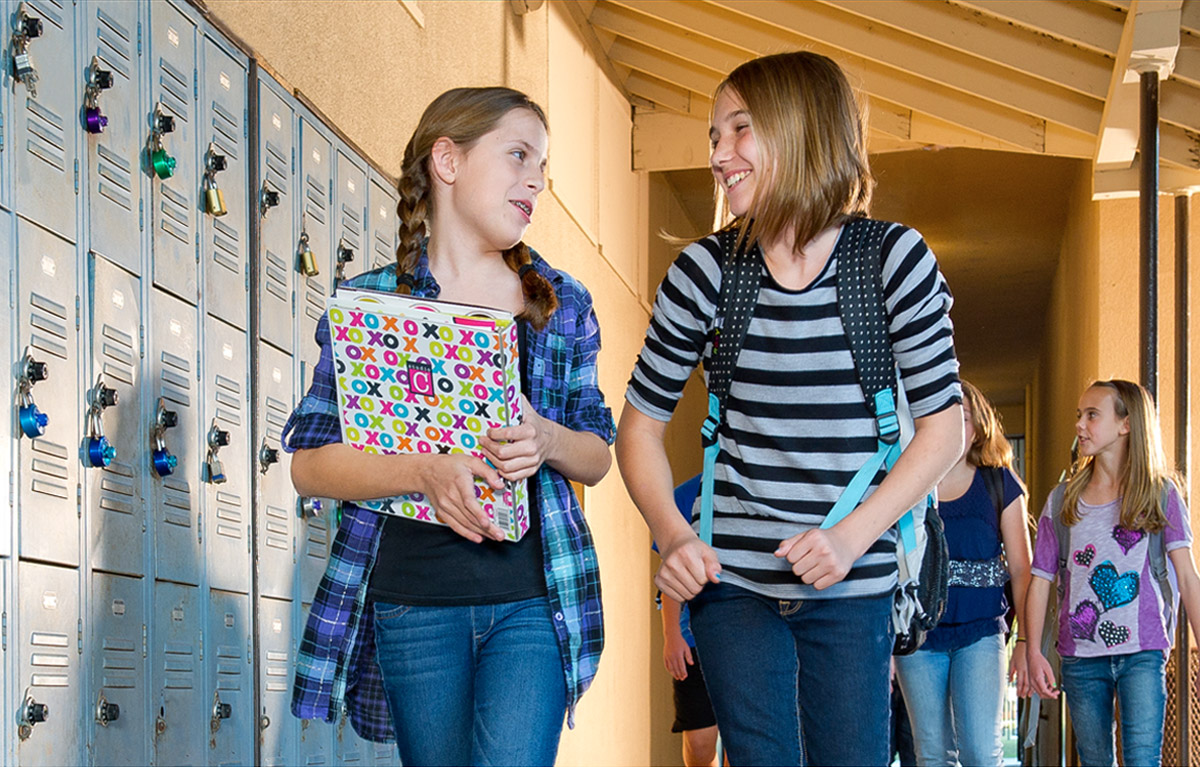
    You will have a locker where you can store your books, binders, sports equipment and any other assortment of pens, paper and articles of clothing. You are responsible for keeping your locker clean – or at least presentable.

    Meet some new people! While not necessarily a responsibility, you’ll find that if you reach out to other students, you might end up making friends you’ll have for years to come. Remember, this is a new experience for everybody in your classes.

    Work hard! Now that you’re in high school, you can’t slack on grades. These marks can affect which classes you take in the following years, and may even limit your options for college or university programs. If you pay attention to your teachers, show up on time, do your homework and hand in your assignments, then you’ll do fine in your classes. Just make sure to keep organized and on top of tests and assignments.

    Going from elementary into high school is a big leap, and with it comes new responsibilities and new freedoms.  If you work hard, show up on time and meet a few new friends, you might even find that you want to go to school in the morning. It’s a big adjustment to make, but soon you’ll be just as comfortable in your new school as you were in your old one.

  • Changing Responsibilities: The Leap From Elementary School To High School

    Changing Responsibilities: The Leap From Elementary School To High School

    The transition between elementary or middle school to high school is a big one. As you grow older and move into high school-level classes, your responsibilities will change as well. Don’t be nervous, though! High school is not as scary as it seems, and you might find that you meet a lot of new friends and try a whole bunch of new things. It’s one of the most exciting times of your life!

    So what are some of these new responsibilities? For one, most schools don’t tolerate lateness, and some teachers even lock their doors to late students, so it’s very important to get to your classes on time. It might be difficult to find your way around in the first few weeks of high school, but you’ll soon get the hang of it. Be sure to bring a copy of your timetable with you so you know where and when your classes start.

    Secondly, you will be expected to be much more independent than in the earlier grades. Teachers don’t hound students for homework or assignments and often penalize late essays. That’s why you need to keep track of when everything is due. The best way is to get a separate binder for each class (one in every colour) so you don’t get papers mixed up. An agenda, notebook or calendar is also vital in high school. You’ll want to be able to keep track of when tests are, when assignments are due and when the holidays start.

    You will have a locker where you can store your books, binders, sports equipment and any other assortment of pens, paper and articles of clothing. You are responsible for keeping your locker clean – or at least presentable.

    Meet some new people! While not necessarily a responsibility, you’ll find that if you reach out to other students, you might end up making friends you’ll have for years to come. Remember, this is a new experience for everybody in your classes.

    Work hard! Now that you’re in high school, you can’t slack on grades. These marks can affect which classes you take in the following years, and may even limit your options for college or university programs. If you pay attention to your teachers, show up on time, do your homework and hand in your assignments, then you’ll do fine in your classes. Just make sure to keep organized and on top of tests and assignments.

    Going from elementary into high school is a big leap, and with it comes new responsibilities and new freedoms.  If you work hard, show up on time and meet a few new friends, you might even find that you want to go to school in the morning. It’s a big adjustment to make, but soon you’ll be just as comfortable in your new school as you were in your old one.

  • Getting Your 40 Volunteer Hours

    Getting Your 40 Volunteer Hours

    As you know, all high school students need to have 40 hours of community service in order to graduate. Use this information to discover where your 40 hours can best be used.

    Volunteer Centres work in local communities to strengthen volunteering and citizen engagement. With more than 200 in Canada, each volunteer centre’s name, size, structure and services reflect the unique characteristics of their community.

    To find a volunteer centre in your area, click here.

    Many volunteer centres are independent non-profit organizations, while others are part of a United Way, Social Planning Council, Community Information and Referral Centre or municipal services. Though diverse in many ways, they share the following common functions:

    – Promote volunteering

    – Build the capacity of organizations to engage volunteers

    – Facilitate connections between people with volunteer opportunities

    – Provide leadership on issues related to volunteering and citizen engagement

    If you want to volunteer, your local volunteer centre is there to connect you to opportunities in your community. It may have a database of volunteer opportunities or can connect you directly to opportunities within its member organizations.

  • School vs. Life

    School vs. Life

    When you  make the move to junior high and high school, everyone seems to think that there is no way to balance both having a social life and excelling in you academics. However, there is always a way – as long as there is a will!

    The way I see it, you need to earn your breaks, vacations and time off; That is what used to drive me to finish up my last essays and my final projects. I would look at the calendar and mutter to myself, “It’s almost March Break – I got to work hard now so that I can fully enjoy my time off school”. Then I would put all of my effort into my work until the very last class and forget about (almost) everything! Essentially, you want to be able to relax during your breaks and long weekends, so you just have to think of this as a “crunch time”.  Even now, in university, I do this to myself – I work and study hard and once I finish the exam, I shop! Sounds odd to some people, but I call it a “Celebratory Spree Day”, the day when I get to relax after pushing myself to study so hard for my exam period.

    One can also practice time management by planning when you will study and setting aside a few hours for fun with friends, too. For example, give yourself some hours to hang out with your friends before heading home to finish assignments and study.  It’s possible to have great academic standing and a social life, you just need to have the determination and the planning.

    Always remember to enjoy life!

  • Getting Your 40 Volunteer Hours

    Getting Your 40 Volunteer Hours

    As you know, all high school students need to have 40 hours of community service in order to graduate. Use this information to discover where your 40 hours can best be used.

    Volunteer Centres work in local communities to strengthen volunteering and citizen engagement. With more than 200 in Canada, each volunteer centre’s name, size, structure and services reflect the unique characteristics of their community.

    To find a volunteer centre in your area, click here.

    Many volunteer centres are independent non-profit organizations, while others are part of a United Way, Social Planning Council, Community Information and Referral Centre or municipal services. Though diverse in many ways, they share the following common functions:

    – Promote volunteering

    – Build the capacity of organizations to engage volunteers

    – Facilitate connections between people with volunteer opportunities

    – Provide leadership on issues related to volunteering and citizen engagement

    If you want to volunteer, your local volunteer centre is there to connect you to opportunities in your community. It may have a database of volunteer opportunities or can connect you directly to opportunities within its member organizations.

  • Transition Programs for Students with Disabilities

    Transition Programs for Students with Disabilities

    One of the best ways students can get a sense of what to expect when beginning a post-secondary program is to talk with people who have first-hand experience in such programs. These people may be instructors or administrators at the college or university you plan to attend, or they could be other students who have already made the transition to postsecondary school.

    Transition programs are available in many parts of the country, and offer students the opportunity to gather information on the post-secondary experience. There are also initiatives that assist in the transition from school to work, providing valuable opportunities in a workplace environment. Most of these programs are led by students, professors and others from colleges and universities, and some even give participants the chance to spend time living in campus dormitories. Transition programs other than the ones listed here may be available. Contact your local postsecondary institutions to ask if they offer such opportunities.

  • Succeeding In High School

    Succeeding In High School

    Whenever we are facing a life change, we are worried that there may be new challenges that we may have difficulty with. This is natural and is actually adaptive for your survival as a human being. By thinking about what high school might be like, you are helping yourself to be prepared for what may lie ahead. Try thinking of yourself as an explorer entering the jungle on an expedition. Would it be smart for that explorer to enter the jungle without first having thought through the possible outcomes of their expedition? The answer is no. The explorer must prepare themselves for what lies ahead in order to stay out of danger and ensure their success on their expedition. As you enter high school, you are like the explorer – in need of some preparation for what lies ahead. Be sure to think through some of the challenges you may encounter and try as best you can to prepare for these, such as buying appropriate school supplies and being open to learning new things.

    It’s important to keep in mind that a positive attitude is your best friend wherever you go, especially when you are facing new challenges that may intimidate you and challenge you to change yourself in some ways. Being positive will help you to overcome situations that are unpleasant or uncomfortable and to help you remember what it is that you do have, as opposed to focusing on what you don’t have, what you lack, or what is negative.

    That being said, it is equally important to have your own goals and ambitions that surpass your desire and need to be better than others. Remember that you are your highest competitor, and that you can most satisfactorily achieve your goals by competing with YOUR goals and only YOUR goals. Set goals for yourself using the SMART formula: Specific, Measurable, Achievable, Realistic, Timed (Wikipedia, 2013) and make your own success. You will have more work in high school than you’ve had before, so it’s important to set your goals and work to achieve them!

    Overall, being prepared, having a positive attitude, believing in yourself and setting goals for yourself is the way to success in high school. Good luck and, above all, have fun!

  • Entering High School: Why You Should Join Extracurriculars

    Entering High School: Why You Should Join Extracurriculars

    If you’re worried about trying to find the place you belong in the confusing high-school landscape, joining extracurricular groups is a great thing to do. These groups can range from sports teams, cultural clubs, interest clubs, and beyond.

    Joining these groups allows you to meet new people who share the same interests that you do. They also provide you with the opportunity to make new friends and become closer with the teachers who lead the groups. Developing relationships with teachers is important because they make awesome academic references for job applications as well as university applications down the road. Together, with your peers and teachers, you can explore these interests and satisfy your curiosities.

    Participating in extracurricular groups also looks fantastic on your resume and university/college applications. Employers and post-secondary institutions like to see that you are participating in groups outside of the classroom. Joining these extracurricular groups makes students seem well-rounded. It shows that you have interests that go beyond academics and make you stand-out. In a job interview, leveraging similar interests as the person interviewing you or showing passion for an interest outside of academics makes you a more memorable candidate.

    Through participating in extracurricular groups you can gain valuable skills. These include teamwork skills which you develop through working co-operatively with other members of the group. You may also develop leadership skills by leading a group project or inspiring and motivating others in the group. Both of these skills are very valuable in the work environment and the post-secondary school environment.

    Joining one of these groups will give you a sense of belonging. They can also be an outlet for stress from your academic life. You may even try out a new activity and discover that you really enjoy it. If you don’t end up enjoying it, no harm done – you now know more about yourself. There are definitely many more positive outcomes than negative outcomes from getting involved in extracurricular groups. They can make your overall high-school experience more enjoyable!

  • Transition Programs for Students with Disabilities

    Transition Programs for Students with Disabilities

    One of the best ways students can get a sense of what to expect when beginning a post-secondary program is to talk with people who have first-hand experience in such programs. These people may be instructors or administrators at the college or university you plan to attend, or they could be other students who have already made the transition to postsecondary school.

    Transition programs are available in many parts of the country, and offer students the opportunity to gather information on the post-secondary experience. There are also initiatives that assist in the transition from school to work, providing valuable opportunities in a workplace environment. Most of these programs are led by students, professors and others from colleges and universities, and some even give participants the chance to spend time living in campus dormitories. Transition programs other than the ones listed here may be available. Contact your local post-secondary institutions to ask if they offer such opportunities.

    Access information about high school transition programs on the NEADS website.

  • Succeeding In High School

    Succeeding In High School

    Whenever we are facing a life change, we are worried that there may be new challenges that we may have difficulty with. This is natural and is actually adaptive for your survival as a human being. By thinking about what high school might be like, you are helping yourself to be prepared for what may lie ahead. Try thinking of yourself as an explorer entering the jungle on an expedition. Would it be smart for that explorer to enter the jungle without first having thought through the possible outcomes of their expedition? The answer is no. The explorer must prepare themselves for what lies ahead in order to stay out of danger and ensure their success on their expedition. As you enter high school, you are like the explorer – in need of some preparation for what lies ahead. Be sure to think through some of the challenges you may encounter and try as best you can to prepare for these, such as buying appropriate school supplies and being open to learning new things.

    It’s important to keep in mind that a positive attitude is your best friend wherever you go, especially when you are facing new challenges that may intimidate you and challenge you to change yourself in some ways. Being positive will help you to overcome situations that are unpleasant or uncomfortable and to help you remember what it is that you do have, as opposed to focusing on what you don’t have, what you lack, or what is negative.

    That being said, it is equally important to have your own goals and ambitions that surpass your desire and need to be better than others. Remember that you are your highest competitor, and that you can most satisfactorily achieve your goals by competing with YOUR goals and only YOUR goals. Set goals for yourself using the SMART formula: Specific, Measurable, Achievable, Realistic, Timed (Wikipedia, 2013) and make your own success. You will have more work in high school than you’ve had before, so it’s important to set your goals and work to achieve them!

    Overall, being prepared, having a positive attitude, believing in yourself and setting goals for yourself is the way to success in high school. Good luck and, above all, have fun!