Tag: hockey

  • Dream Job: Hockey Player

    Dream Job: Hockey Player

    Many people dream of being a famous sports star when they grow up, but not everyone achieves that dream. Have you ever wanted to become a star in a sport like hockey? A Canadian athlete named Hayley Wickenheiser has become well known for her amazing athletic abilities and for her work in helping others. Like other hockey players, she has worked hard at her sport while also balancing it with the rest of her life.

    Becoming a professional hockey player takes a combination of talent and hard work. Hayley Wickenheiser discovered her athletic abilities early. She grew up in Shaunavon, Saskatchewan, where she became skillful at several different sports, including hockey and softball. When she was fifteen years old she started playing hockey at the Women’s World Championships as part of the Canadian National Women’s Team. The team won seven gold medals over the next years. Hayley later played on men’s teams in Finland and Sweden, and she has won gold and silver medals at several Olympic Games. She is now known as one of the best athletes in the world.

    For most athletes, the time they spend on playing their sport every year is fairly short because the work is seasonal. However, they spend a lot of time during the rest of the year on training and keeping themselves healthy. They run, lift weights, swim, cycle, and continue to practice their skills. They try to keep themselves healthy by eating good food and avoiding anything that might make them sick. They keep themselves strong so that they can play well.

    A career in sports is not usually very long, and most athletes move on to other jobs by the time they are about thirty years old. Some athletes have to leave sports because of injuries, but most of them leave because of age, when they no longer have the energy to keep up with the demands of the sport. Hayley Wickenheiser has continued in professional sports longer than many other athletes, but she is also preparing for a different career after she finishes playing hockey. In 2013, she received a science degree in kinesiology from the University of Calgary, which will help her if she works to help other athletes play better.

    Besides her sports and her studies, Hayley has been working in several other areas. She works with several groups that encourage girls to get into sports, and she also works with a group that buys mosquito nets for people in countries that have trouble with a deadly disease called malaria. Hayley has traveled to Africa to work with the charity that she started, Right to Play. Her personal life is also busy, since she is looking after her son in addition to everything else that she does. She is already well known for her hockey skills, but people also recognize her for this charitable work.

    Are you good at playing hockey?  If you practice your skills and become part of local teams, you might someday be able to make hockey your career.

  • Dream Job: Sports Coach

    Dream Job: Sports Coach

    Many people dream of becoming great hockey players or tennis stars. A few of them manage to fulfill their dreams and to play in the sport they love. However, the career of an athlete is usually fairly short. Depending on the sport, athletes might be finished by the time they are twenty-five or thirty years old. What can they do after that?  Some of them get into an entirely different type of work, like teaching or accounting. Others, however, stay in their sports through becoming coaches. That was the case for Michel Therrien, coach of the Montreal Canadiens hockey team.

    If you play on a sports team at school or a community centre, you probably know a bit about what coaches do. Basically, they help the athletes in the sport to play better than before. They might help players improve a certain part of their style, such as how they hold a hockey stick, or they might just generally encourage them to keep on practicing. Often, being a coach involves making decisions about who will play and for how long. Being a coach involves an ability to deal with people calmly and to make good decisions quickly.

    Normally, coaches work in sports that they also have played in the past. Michel Therrien, for example, used to be a player for the Montreal Canadiens hockey team. Now he is the team’s coach. His experience as a player is useful in helping him understand how players can improve their hockey skills. He also knows how to advise the players on the best way to play their game. For example, he might see how a really fast skater can help someone who is slower but very good at getting goals. He can see when a player is working well with the others and when someone needs help. Michel Therrien has experience with both the Montreal Canadiens and the Pittsburgh Penguins, and everything he has learned has helped him to become a better coach.

    The requirements for being a coach can vary a lot. Coaches for school teams are usually teachers with degrees in education, and many coaches take courses to become certified in their area. Through these programs, they learn different coaching techniques and ways of dealing with people. Experience, however, is often the most important way to learn the work. Many people start out as assistant coaches and learn from someone who has been doing the job for a long time. Michel Therrien started his coaching career in the Quebec Major Junior Hockey League, where he coached two teams before becoming a professional hockey player.

    If you love sports and dream of playing them for the rest of your life, becoming a coach just might be the job of a lifetime!

  • Dream Job: Hockey Player

    Dream Job: Hockey Player

    Many people dream of being a famous sports star when they grow up, but not everyone achieves that dream. Have you ever wanted to become a star in a sport like hockey? A Canadian athlete named Hayley Wickenheiser has become well known for her amazing athletic abilities and for her work in helping others. Like other hockey players, she has worked hard at her sport while also balancing it with the rest of her life.

    Becoming a professional hockey player takes a combination of talent and hard work. Hayley Wickenheiser discovered her athletic abilities early. She grew up in Shaunavon, Saskatchewan, where she became skillful at several different sports, including hockey and softball. When she was fifteen years old she started playing hockey at the Women’s World Championships as part of the Canadian National Women’s Team. The team won seven gold medals over the next years. Hayley later played on men’s teams in Finland and Sweden, and she has won gold and silver medals at several Olympic Games. She is now known as one of the best athletes in the world.

    For most athletes, the time they spend on playing their sport every year is fairly short because the work is seasonal. However, they spend a lot of time during the rest of the year on training and keeping themselves healthy. They run, lift weights, swim, cycle, and continue to practice their skills. They try to keep themselves healthy by eating good food and avoiding anything that might make them sick. They keep themselves strong so that they can play well.

    A career in sports is not usually very long, and most athletes move on to other jobs by the time they are about thirty years old. Some athletes have to leave sports because of injuries, but most of them leave because of age, when they no longer have the energy to keep up with the demands of the sport. Hayley Wickenheiser has continued in professional sports longer than many other athletes, but she is also preparing for a different career after she finishes playing hockey. In 2013, she received a science degree in kinesiology from the University of Calgary, which will help her if she works to help other athletes play better.

    Besides her sports and her studies, Hayley has been working in several other areas. She works with several groups that encourage girls to get into sports, and she also works with a group that buys mosquito nets for people in countries that have trouble with a deadly disease called malaria. Hayley has traveled to Africa to work with the charity that she started, Right to Play. Her personal life is also busy, since she is looking after her son in addition to everything else that she does. She is already well known for her hockey skills, but people also recognize her for this charitable work.

    Are you good at playing hockey?  If you practice your skills and become part of local teams, you might someday be able to make hockey your career.
  • Could Hockey Become an Endangered Sport?

    Could Hockey Become an Endangered Sport?

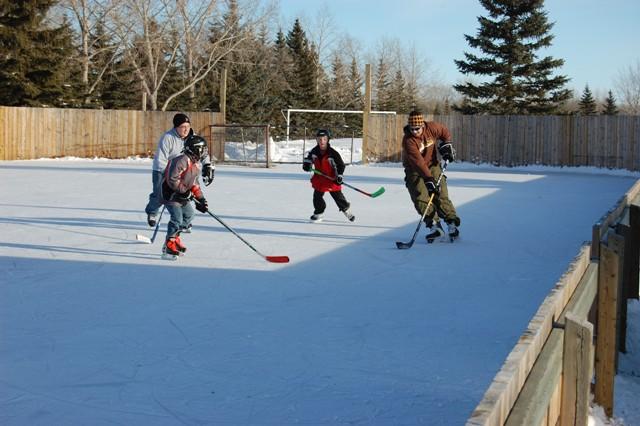
    One benefit of the National Hockey League strike: it gave people time to play outside on real ice! But outdoor skating could face the same difficulties as the NHL – a drastically shorter season or outright cancellation. Research from Montreal’s McGill and Concordia universities shows global warming is already having an effect on outdoor rinks in Canada.

    “Many locations across the country have seen significant decreases in the length of the OSS [outdoor skating season], as measured by the number of cold winter days conducive to the creation of rink ice,” their study states. “This is particularly true across the Prairies, and in Southwest Canada, which showed the largest (and most statistically significant) decreases in the calculated OSS length between 1951 and 2005.”

    This echoes a 2009 David Suzuki Foundation report, On Thin Ice: Winter Sports and Climate Change. The McGill investigation looks at constructed outdoor rinks while DSF’s focuses on frozen rivers, canals and lakes, but the conclusions are similar. Both predict that, unless we rein in greenhouse gas emissions, outdoor skating in parts of Canada could be history within the next 50 to 100 years (the McGill study’s authors now say it could happen within 20 to 30 years), and the length of the outdoor skating season will continue to decline across the country.

    Meanwhile, at Ontario’s Wilfrid Laurier University, geographers have launched www.RinkWatch.org, a website where people can record information about backyard or neighbourhood rink conditions over the winter.

    “Our hope is that Canadians from coast to coast will help us track changes in skating conditions, not just this year, but for many years to come,” associate professor Robert McLeman said in a release. “This data will help us determine the impact of climate change on winter in terms of length of season and average temperatures.”

    According to the DSF report, one of Canada’s best-loved outdoor skating venues, Ottawa’s Rideau Canal, provides an example of what to expect. It concludes that, with current emissions trends, the canal’s skating season could shrink from the previous average of nine weeks to 6.5 weeks by 2020, less than six weeks by 2050 and just one week by the end of the century. In fact, two winters ago, the season lasted 7.5 weeks, and last year it was down to four. The canal had yet to fully open for skating when this column was written.

    “On Thin Ice” notes that many of Canada’s hockey heroes got their start on outdoor rinks. “Without pond hockey, we probably wouldn’t have what has become the modern game of hockey,” the authors state. The DSF study says climate change could have a profound effect on many other winter sports, from skiing and snowboarding to winter mountaineering.

    With food and water problems caused by more frequent droughts and floods, property losses and high infrastructure costs from rising sea levels, and increasing illness and death from extreme weather and pollution, hockey may be the least of our worries. But losing winter recreation opportunities, let alone our ability to produce food and keep our homes warm and people healthy, needn’t happen. Solutions to our human-created problems exist. We just need our leaders to start taking this and other environmental issues seriously.

    That’s not likely as long as we keep electing people who show more concern for the future of the fossil fuel industry than the citizens they are supposed to represent. Politicians who only look ahead three or four years — until the next election — aren’t seeing the big picture.

    We need to consider every solution possible, now — from putting a price on emissions through carbon taxes and/or cap-and-trade to stopping the rapid exploitation of fossil fuels and switching to cleaner energy sources.

    A skate or hockey game outside is a good place to start!