Tag: human rights

  • Understanding and Respecting the LGBTQ Community

    Understanding and Respecting the LGBTQ Community

    Understanding sexuality and LGBTQ rights are important in order to accept those who may have a different sexuality from you. It may seem like there’s a lot to learn and while it’s true that there are a few definitions to learn, it’s important to remember that they’re all part of helping people live in peace. Respecting others is something we must learn to do whether it is in the workplace, home or at school.

    First and foremost: what does LGBTQ mean? It stands for Lesbian, Gay, Bisexual, Transgender, and Queer. In case you don’t know what all of these things mean, don’t worry! I’m here to define them for you. A lesbian is a woman who is romantically interested in women. Gay can refer to men who are romantically interested in men but can also refer to lesbians. Someone who is bisexual refers to a man or woman who romantically likes both men and women. Transgender and Queer seem to be the definitions that are the trickier ones to understand so I’ll do my best to help.

    Transgender refers to someone who identifies as a gender different from the one they were classified as at birth. Queer can actually be defined in several different ways. The term can be defined as someone who is romantically interested in people of many different genders and can also relate to someone who sees themselves as going against society’s norms.

    There are a few terms out there that I haven’t mentioned here but are just as important in accepting others and understanding that, just like you, they’re people who deserve respect. A boy who has a boyfriend is just as much a person as a boy who has a girlfriend. One of the best things you can do for yourself and other people is to respect their lifestyles. Simply, it is their life and we are all different.

    The great news is that the world is slowly but surely moving towards accepting anyone who fits into the above categories. An animated short film titled In a Heartbeat follows the story of a young boy whose heart leaps out of his chest because of the overwhelming feelings that he feels for another boy. You can watch this film to get a little more information into the LGBTQ world and also see why being gay or a lesbian or transgender really isn’t a big deal.

    As children we all know what it feels like to be teased. Being made fun of is terrible and it often hurts our feelings. You probably know what it feels like to be made fun of, which is why you should never do it to someone else. If someone isn’t bothering you, it’s important to let them live their lives but it’s just as important to educate yourself on these terms so you can be more accepting. Remember the Golden Rule: treat others as you want to be treated. The world will be a better place for it!

    Sources:

    http://www.liberateyourself.co.uk/lgbtq/what-is-lgbtq/

    http://www.urbandictionary.com/define.php?term=transgender

    http://www.uua.org/lgbtq/identity/queer


  • Activism at School and Beyond

    Activism at School and Beyond

    What do student strikes in Montreal, people signing petitions about unjust laws, and asking for better working conditions in Central America have in common? When people try to help others by changing the way the world works, it can often be referred to as activism. No matter how old or young you are, you can be an activist and try to change the political, environmental, economic, or social order of the world. It is not just about changing things to the way you want them to be, but changing things for the better while working with people to find a common ground that will benefit the masses, not the few.

    People get involved in activism for many different reasons. Eight hundred years ago, students in France protested against the issues that concerned them in the universities and towns. Three hundred years later, students in Korea protested against what the king was doing. Over the centuries since then, students have continued to protest against things that they believed were wrong or unjust.

    Activism can take many forms, whether it’s about local or international issues. It can also be a good opportunity to learn about the world and about the problems that people are experiencing. Organizations like Amnesty International, for example, offer courses and workshops for students so that they can learn more about how to be advocates for people in need. Talking with other people can also be a good way to learn about how to become involved in activism.

    Knowing what issues interest you is the first step in becoming an activist. For example, if you have no interest in sports, you are unlikely to be very effective in being an advocate for hockey or football teams. However, if you care about poverty issues or about opportunities for young workers, you can find many organizations with information on how you can get involved.

    Once you know what issues you would like to pursue, you can find people to help you bring causes to light. Signing online petitions is one way of getting involved, and various social service organizations can provide information on issues that need your help. Your school might also have a special project that you can participate in.

    Are you interested in social justice and equality? Organizations like the Centre for Social Justice or Make Poverty History can be good places to start. With many of these kinds of organizations, people can choose their level of participation. If you want to sign petitions, you can do that. If you want to help organize rallies, you might have an opportunity to do that together with other people in the group.

    Many issues are ongoing, such as poverty or the need to help refugees. Others, however, might just involve short-term activism. A few years ago when the Quebec government wanted to raise tuition fees in universities, the students held a protest to try and keep their fees from increasing. Other students got involved in the Occupy movements in various cities to protest student debt and the greed of business leaders.

    If you are passionate about a certain subject and want to make a difference in the world, why not start now?

    Bibliography:

    Amnesty International. “Be a Youth Activist.” http://www.amnesty.ca/get-involved/be-a-youth-activist.

    Catalyst Centre. “School of Activism.” http://www.catalystcentre.ca/school-of-activism/.

    The Centre for Social Justice. “About.” http://www.socialjustice.org/index.php?page=about.

    Rabble.ca. “Quebec government lock-out of students will only add ‘fuel to the fire.’”

    http://rabble.ca/taxonomy/term/3170?page=4.

    Wikipedia.org. “Student Activism.” https://en.wikipedia.org/wiki/Student_activism.

  • Child Labour: Working For A Living

    Child Labour: Working For A Living

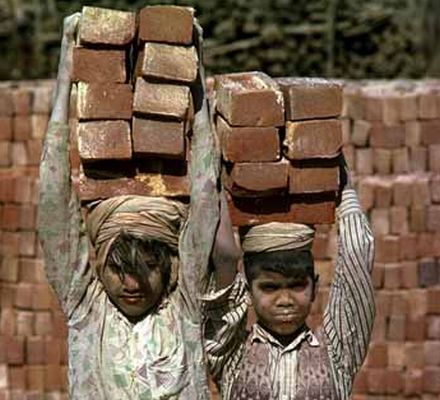
    Do you usually have a lot of chores to do at home when you return from school? Do you have to help cook supper, walk the dog, mow the lawn, or shovel the driveway? If you’re like most Canadians, you probably have to do at least some of that kind of work. You might even have a paid job like delivering flyers or babysitting after school. Does it ever feel that you have to work too much? Many children around the world have to do much more. That’s why people in many countries have been working to end child labour by the year 2016.

    When people talk about child labour, they don’t mean the times when parents tell their children to set the table for supper or to help wash the dishes. They mean work that prevents children from receiving an education or that damages their growth in any way. Sometimes the work even kills them. Young children sometimes work all day in factories or other unhealthy or dangerous places instead of going to school and getting an education.

    Canada has laws that require parents to send their children to school, and most people follow the rules. From the age of twelve, children are allowed to have jobs that don’t interfere with their education or harm them in other ways. In countries like Canada and the United States, rules about child labour usually work fairly well, although there are still many cases of children working long hours in dangerous conditions. Sometimes, the children even die on the job. The official estimate of child labour in wealthy countries is about one percent.

    In poorer countries, however, the situation is worse. Parents have many children to feed and often also have to support their own parents or other relatives. Even with long hours of work, parents might still not make enough money to survive. In some cases, they might not be able to find any work at all. They might need the income their children bring into the family. Also, sending children to school can often be too expensive for them to afford. The highest level of child labour is in Asia, where about sixty percent of children work.

    According to the International Labour Organization, in 2008 about 215 million children around the world had jobs which kept them from going to school or playing. That number was down slightly from 2004, but it actually increased among some groups of children. The problem will continue until people do something about the causes.

    How can you help solve the problem of child labour? You can encourage people in government to make better laws, but a more effective way to end the worst kinds of child labour is to get involved personally in helping the families. Even if the child labourers live in another country, you can donate money to help raise the family income or you can tell your friends and family about the issue. Every bit of help can make a difference!