
Tag: instincts

  • Study What You Love

    Study What You Love

    At any level of education, it is important for students to take courses that are interesting and enjoyable. This is especially true in the first year or two of college. Many students enter college with no idea what they want to do after they receive their diploma, and that’s okay! The purpose of going to college is of course to achieve a degree, but also to explore your identity and discover what your passions are. General education courses in college are designed to allow students to dip their feet into different subjects in order to test the waters. Taking these basic courses could turn interests into passions, or help students to discover passions they never even knew they had.

    As an example, if you excelled in English and writing in high school, but are unsure on how to apply those skills in college, a basic creative writing course could be beneficial. You may find you have a knack for fiction writing or poetry. Sometimes required general education courses are seen as a nuisance, but you just might find that random course on your schedule to be your new favorite subject. If you have never studied psychology before, and find yourself fascinated by the way the mind works, that random class could lead to a rewarding career path.

    Colleges that require a variety of general education courses, or introductory courses, produce graduates with a broad spectrum of knowledge. These days, employers are looking for well-rounded employees who can adapt to different situations and challenges. Graduates are more likely to succeed in the real world if they have been introduced to several different subjects in college. Adding diversity to your schedule will allow you to meet different people and learn new things. It may also lead to interest in on-campus organizations, and allow you to be more involved at your school, which always looks good on a resume. Not only will taking enjoyable classes lead to career discovery and success, but you will be happier too. You will look forward to going to class, and you will be more eager to learn new material.

    If nothing else, taking interesting and enjoyable courses is important to finding the correct career path for you. For a student, the best possible outcome of graduating with a degree is to find themselves with not only a job but a career they love. College is a lot of work, so the reward of a good career is well deserved. There is nothing worse than rolling out of bed in the morning and groaning at the thought of going to work. If you study what you love and pursue your passions, you will end up with a fulfilling career and a happy life.
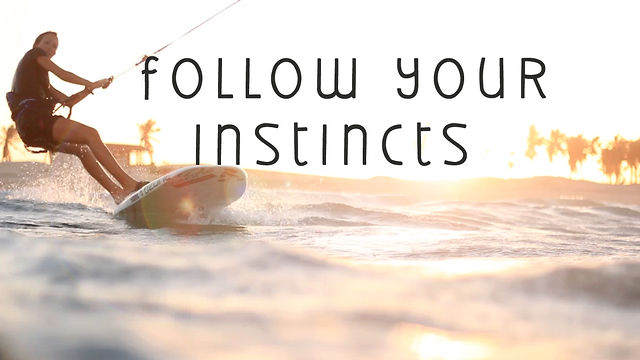

  • Following Your Gut Instincts

    Following Your Gut Instincts

    Making decisions can be tough — not only for the very difficult decisions, but also for the easy ones. Sometimes, people can make life-changing choices in a few moments but then spend a very long time deciding what to eat for supper or what kind of chocolate to buy. They might weigh their options carefully or go with their first instincts. How do you make your decisions? Different decisions demand different levels of thought and planning, but your gut instincts might be very good for guiding you into the best choice for your future.

    Trusting your instincts might seem like a very doubtful way of making life-changing choices. If you’re like most people, you’ve probably bought things and then later regretted your purchase or said things you later wished you could take back. Not every impulse at every moment of the day is trustworthy, partly because so many factors can affect thinking. People who are under a lot of stress from work, school, or family can make bad decisions that affect them for the rest of their lives, for example. Similarly, people who usually have very strong opinions might tend to make quicker, if not always better, decisions than people who try to look at issues from all sides. What kind of person are you? Knowing your personality can help you know how much to trust your instincts in decision-making.

    Gut instincts might not always be right, but they are still important because they tell you about your values and preferences. If you love composing stories, for example, you might want to consider some kind of writing as a career, even if the life of a novelist is not for you. If you dislike a lot of noise, you might want to stay away from a career with young children. If you have a strong instinct to help people in need, you might want to consider a career in social work or in writing about social issues and urging the government to respond. You can learn to understand and interpret your instincts to help you make good decisions for your future.

    How can you learn to use your instincts to your best advantage? You need to learn more about yourself and about what keeps you from making good decisions, and you need to know when you can trust your first impulse. Practice is an important factor in following your instincts. When people have worked a long time in their field, they often find that their first instincts are right because they are based on experience. Learning to work with your instincts will tell you when you can trust them.

    The best kind of decision-making is a combination of factors, including analysis, experience, and a natural sense of what might work best. With practice, you can find ways to use all of these different factors to arrive at the best possible decisions for your situation. You won’t always be right, but if you learn how to appreciate your instincts, you can follow them throughout your life.

  • Follow Your Instincts

    Follow Your Instincts

    There is pressure to know what career you ought to settle on for the rest of your life, even well before you are finished high school. Students are guided toward a career at a young age and are expected to follow the direct path counselors and parents present to them. Decisions about the future can be made for a variety of reasons including salary, job availability and aptitude, but there is no better reason than natural inclination and passion to help you determine your future employment.

    When it comes to how to choose what to do for the rest of your life, it is most important to take your time and really consider what it is that you enjoy. Is there something you love to do and learn about? Why not consider investing in education to make it your profession? If you follow your passion and interests you will find yourself working in a field that allows you to build continuing joy in your life. Take a closer look at your hobbies and investigate whether or not you could see yourself making a living in a relatable field. Work does not need to be mere labour; it has the potential to be a labour of love.

    The next step is confirmation. Can you turn your interests into a profession? Investigate, research and do your homework. What kinds of jobs are available in your area of interest? Is it really feasible or should you continue to search other avenues?

    Now that you have found something you think you would love to do, take the next step and offer your time as a volunteer. Be bold and assertive. Talk yourself into a place of business that you can learn from and experience the tangible reality of your choice. If you do this and discover you are not suited to the trade or craft, do not be afraid to change paths. Perhaps a pivot rather than a jump is in order. You may not need to change directions completely but simply tweak the dream a little to suit your needs.

    It is important to lean on your intuition when it comes to your future. Do not decide on a career solely based on numbers. To do that is a potential set up for burn out and early disenchantment. Take the time to understand what you really enjoy and trust that you have the skill set to see your dreams realized. It takes more than hard work to be successful – there is a necessary component of happiness and contentment that not only sets the course, but helps define just what success means to you.

    When you follow your instincts and choose a career path based on something you enjoy, life becomes an exploration of your interests and the anticipation of each new day lingers well into the future.

  • Love What You Do – Follow Your Natural Instincts!

    Love What You Do – Follow Your Natural Instincts!

    If you’re unsure of where you want to end up career-wise, try sitting down with a pen and paper to brainstorm. Write down all of the things that make you happy and all of the things that you’re passionate about. Think about what inspires you and write down what your hobbies and interests are. If writing doesn’t work for you, take out some magazines and cut out images or words that make you feel good or grab your attention. Doing this will help you to see what you like and what you’re naturally attracted to. By knowing what you like, it will make it easy for you to determine what you don’t like. Seems pretty straight forward, but you would be surprised by the amount of people that don’t take the time to figure out what interests them!

    If you’re someone like this, you may end up going into a work placement knowing you don’t like it and you’ll end up switching jobs a week or a month down the road. This isn’t necessarily a bad thing because trying one job and not liking it may actually lead you to the one you really want to be doing. However, you want to avoid bouncing around from job to job because it doesn’t help you build up your credentials and ultimately takes time away from you growing at what you’d actually love to be doing.

    There can be negativity surrounding the idea of pursuing what you love. Have you ever heard the expression, “love doesn’t pay the bills?” Some people don’t feel it’s possible to actually do what they love, or that if they did the money wouldn’t be worthwhile. In reality it can be quite the opposite. A mentor once told me, “If you love what you’re doing, the money will come. But you need to really love what you’re doing and you need to really believe in it.”

    If you don’t believe you can make a living doing what you love, then you won’t. Attitude is important when it comes to pursuing a passion. Having the right attitude and the right support group can make doing what you love a lot easier. There are many people that earn an income from their passions, but understand that none of them got to where they were just by thinking about it or by staying at a job they hated. They put in a lot of time, blood, sweat and tears. They put themselves out there, learned what they needed, practiced their craft and took risks. Photographers, writers, graphic artists, designers – the list goes on! Find these people that are doing what they love and surround yourself with them. It will help to inspire you to do what YOU love.

    Choosing a career based around things that you enjoy will not only motivate you to continue with it, but will also give you a reason to wake up in the morning. You’ll have something to be excited about and to look forward to. There is nothing worse than waking up dreading your work day and being unhappy and resentful because you aren’t enjoying what you’re doing. In order to love what you do, you need to know what you love first. So write it down, cut out magazine images, try different things and talk to the people who are doing what you want to be doing. The best part about finding a career that makes you love what you do is the fact that you’ll feel like you’ve never worked a day in your life.