Tag: job

  • Career Profile: Teacher

    Career Profile: Teacher

    Teaching is a career which requires a great deal of knowledge and passion. While knowledge can certainly be learned, passion cannot be taught. However, if an aspiring teacher is passionate about the profession, a teaching education can certainly help him or her to develop the skills necessary to organize and manage a classroom that effectively promotes learning.

    Education
    In Ontario, teachers must hold a four-year Bachelor of Arts degree from any recognized University. A primary/junior teacher (grades K-6) will have a degree in any discipline, while an intermediate/senior teacher will hold a double-major degree in two “teachable” subjects.

    Then, teachers will complete the Bachelor of Education. This is a one-year degree where candidates spend most of their time taking courses in education, and the rest of it student teaching. For an average of two to three months spread across the year in “blocks” of time, the student teacher is paired with a working teacher, giving lessons and grading work in order to practice his or her skills.

    Job Searching
    Teaching jobs in Ontario are notoriously limited. Specializing in certain subjects (for example, French) will give candidates a hard competitive edge when job hunting. Many teachers must begin work as “occasional” (supply) teachers, sometimes having to work for several years before securing permanent positions. If you want it, don’t give up – however, if you are debating between several career options, this is something that you might want to keep in mind.

    What to Take?
    Primary/junior teachers are best advised to take a variety of subjects throughout their Bachelor of Education. For example, an aspiring teacher candidate might choose a major in child psychology, rounding out the timetable with diverse electives in math, art, or physical education.
    Intermediate/senior teachers are to have a minimum of two “teachable” subjects; this means that they have taken a certain number if courses in a high-school relevant subject. Examples of “teachable” subjects include mathematics, general science, biology, physics, history, English, and French.

    Do Your Research
    The Teaching Profession: www.edu.gov.on.ca/eng/teacher/employ.html
    Teacher Education Application Service (TEAS): www.ouac.on.ca/teas
    Ontario College of Teachers: www.oct.ca

  • Career Profile: Aviation Inspector

    Career Profile: Aviation Inspector

    Job Summary
    An aviation inspector is responsible for making sure that an aircraft is ready to fly. He or she performs safety checks, testing and carefully inspects all components of a plane before it is cleared for takeoff. Any repairs or maintenance work is also checked by an aviation inspector, who will report any damage or request further repairs if necessary. He or she is ultimately one of the last lines of defense in preventing aircraft malfunctions and accidents.

    A typical day for an aviation inspector is focused on inspecting aircrafts. There are several safety regulations that a plane must pass in order to be allowed to fly and aviation inspectors ensure aircrafts pass these measures. Much of an inspector’s responsibility lies in diagnosing mechanical issues and providing a recommendation for repairs. He or she may also observe an aircraft’s inflight performance as well as the pilot’s ability to fly with respect to flight regulations. If an inspector believes changes should be made to flight regulations, he or she is expected to make recommendations for amendments to the board of flight safety.

    Education
    If aviation inspection is a career that interests you, it’s best to get on the right track as soon as you can. In high school the best courses to take are physics, computer science, algebra and geometry. Technology and mechanic courses are also good options. Even if you decide aviation inspection isn’t for you, these courses will give you a good start in any other STEM (Science Technology Engineering Math) career you might want to pursue.

    After high school there are a few different options available to you. A Bachelor’s degree in engineering followed by vocational training specific to aviation inspection and maintenance will give you a good educational base to begin your career. In some cases, going right to the vocational training from high school may also be an option. Most inspectors start out as aircraft mechanics which is likely to require a 2-4 year degree.

    Skills Required
    There are some basic skills that every aviation inspector should possess. Interpersonal skills and the ability to effectively communicate with different kinds of people is essential. Problem solving, thinking critically, mechanical aptitude and a keen eye for detail are also crucial skills to cultivate. As the job title suggests, aviation inspection relies heavily on the inspection aspect. Well-developed skills of observation are paramount.

    Salary
    Most aviation inspectors make anywhere from $40,000- 60,000 a year.

    For anyone with mechanical talent, keen observation skills and knack for staying organized, ‘aviation inspector’ is a career path worth considering.

  • Advertising Your Skills

    Advertising Your Skills

    It’s never too early or too late to put together a resume that you can pair with a strong cover letter to make sure you land the perfect summer job. Ideally, each resume and cover letter that you give to potential employers should be tailored to the position for which you are applying. There is no need to fret if you don’t have much previous work experience as long as you can demonstrate that you have skills, goals and a desire to learn.

    When you lack years of work experience, a skills-based resume that highlight your strengths can come in handy. The skills-based resume includes a list of your education and work/volunteer history, but it focuses in on the key skills that you have that would be most important for the job. In a short list that summarizes some of your skills, include examples from your experiences that show how you have successfully demonstrated those skills.

    A lot of the skills might derive from things you use do every day at school. For instance, you demonstrated effective “time-management” and “organizational skills” that your teacher commended you for because you continually handed in assignments on time, even though you attend choir and basketball practices after school most days of the week. Perhaps you have shown strong “multi-tasking skills” when you babysat twins while finishing all of your math homework. That also demonstrates that you are “responsible”. If you planned a large birthday party for your sibling and invited everyone online, you may have demonstrated your aptitude for “event planning” and “computer skills”. If you play on a team or are a member of a club, you can tell your potential employer that you are a “team leader “and “personable”. If you started a club or program or ran for a spot on the student council, you can say you are a “goal-oriented” individual who “demonstrates initiative “and has a “strong work ethic”. There are loads of examples to use, just be sure you choose the ones that relate most closely to what you think you’ll be doing at work when you get the job.

    Use the resume and cover letter to show the employer that the job you want fits in with your goals. Make sure he or she knows that you are eager to learn what it takes to excel. Learn about the company you’re applying for and refer to that knowledge in your letter. Finally, when you go in for an interview be confident that you’re the right person for the job!

    Good luck and happy job hunting!

  • Tree Planting as a Summer Job

    Tree Planting as a Summer Job

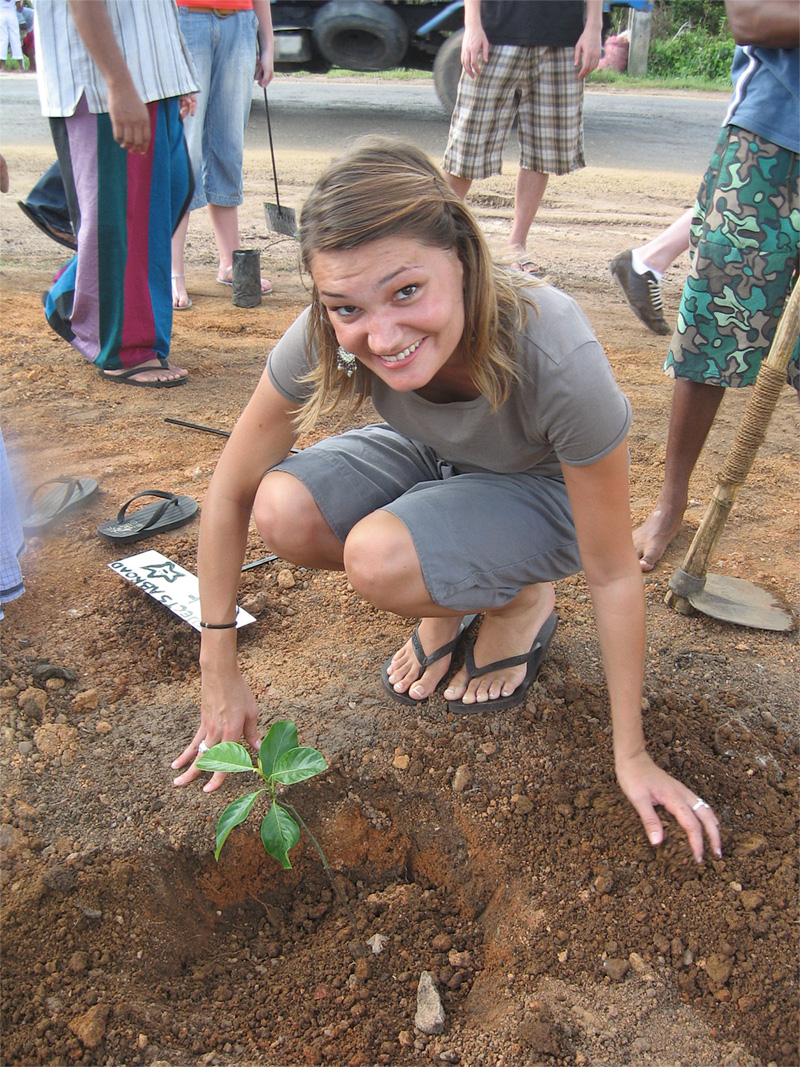
    The most common summer job field for teens is the food service industry followed closely by the retail trade industry, according to the American Bureau of Labour Statistics. That means that most of us spend our summers flipping burgers or folding t-shirts, honest work that feeds and clothes the capitalist masses. But for some, the call of consumer culture falls on deaf ears. 17 year old Sam Krawec has decided to earn his summer income while serving a greater purpose; tree-planting in Northern Ontario.

    Sam is a freshman in St. Francis Xavier University’s Development Studies program. He has always been environmentally conscious, thanks to a family that values sustainable living and global citizenship. “My mom inspired me to care about the world when I was very young,” he explains. “I always felt that it was important to give back.”

    By planting trees, Sam will be helping to filter pollutants from the air, reducing carbon dioxide levels in a community and producing healthy oxygen in a renewable, recyclable, and biodegradable way. Summer tree planting jobs generally coincide with the planting season; between six and eight weeks beginning in early May and ending in late June/early July. The average worker ends up planting upwards of 20,000 trees in that time, making a substantial impact in removing large quantities of the major greenhouse gases involved in global climate change.

    Tree planting is ‘piece work’, wherein you are paid according to the amount of trees you produce. This means that the income you earn is a direct reflection of your productivity. In Ontario, agencies generally pay planters between 8 and 12 cents per tree, with first year planters averaging between $2500 and $5000 in gross pay for the season. This varies depending on several factors, including whether or not your agency is unionized. Unionized agencies typically have better health and safety options, and may pay slightly more. The Ontario Forestry Safe Workplace Association produces written packages to educate planters on their health and safety rights.

    Joanna Gillies of Lakehead University compiled “A Qualitative Pilot Study of the Physical Demands of Tree Planting”, outlining them as specific areas of concern for any wishing to apply to a tree planting program. She claims that, “factors affecting a planter’s performance include flexibility, grip strength, balance and agility, back strength, hand-eye coordination, manual dexterity, strength endurance, mental toughness, aerobic fitness, and body fat percentage.” There are tests online to see if your general health is cohesive to the demands of life as a tree planter. If so, you are ready to start digging and making a difference in your environment.

    For Sam, every little bit he can contribute is worth the physical demands and summer time commitment. “The pay is good, and it’s something tangible that I can do to help the planet. The world is a beautiful place, and I want to have a positive part in maintaining that”.

    If you are interested in working with a tree planting agency, check out http://www.tree-planter.com/, http://www.replant.ca/ or http://hardcoretreeplanters.com/.

    Maybe your summer working in tree planting will encourage you to continue working in this in-demand trade for years to come!

  • Discover What You Love To Do

    Discover What You Love To Do

    Do what you love. You’ve probably already heard this advice plenty of times before. But what if you don’t know what you love doing? What if the question, “what do you love to do?” results in a blank stare on your face? Don’t worry, you aren’t alone. There are a lot of people (young and old) who don’t know what they love to do. The irony is that the answer is already within you. You just have to pay attention to the clues to find out what it is.

    Here is a little exercise which might help you gain some clarity on what you love doing or what your interests are. First, find a quiet spot away from all distractions. Turn off the TV, your phone and any other thing that could distract you when completing this exercise.

    Next, take out a blank sheet of paper and write the title Interests. Write down anything and everything you are interested in. For instance, if you are interested in bugs, write bugs. If you are interested in fashion, write fashion. If you are interested in plants, write plants. If you are stumped for things to write, try to think of activities you currently do which you completely get lost in — where time just seems to fly by! (The clock seems to be extra slow when doing activities you don’t enjoy!) For example, if you get completely absorbed fixing a car, then writing fixing cars as one of your interests. Or if you get completely engrossed baking a cake, then put down baking as one of you interests.

    Once you feel you have made a thorough list of your interests, look over the list you just wrote. Do you notice any similarities between the different items on your list? Does one interest seem to pop up several times on your list? If it helps, highlight similar interests in the same colour.

    Now, if you had to pick three interests from your list, which three would you choose? Be honest with yourself. Consider which things you truly enjoy. Could you see yourself doing one or more of these things for many years to come? Does this thought excite you or fill you with dread? If it fills you with excitement, then you know you are on the right track.

    Remember, do what you love. Those four words are the most important words to keep in mind when choosing a career path. If you choose a career path or job that involves something you love doing, you will be much happier and fulfilled than if you choose one in which you don’t. So discover what you love to do, and pursue a career path which reflects that. Good luck!

  • Career Profile: Librarian

    Career Profile: Librarian

    Imagine a stern-looking middle-aged woman wearing half-glasses at the end of her nose. What kind of job do you think she would have? Many people would say that she was a librarian. For them, librarianship is a job for plain, quiet people who enjoy spending all day with dusty books. These days, however, librarians and library technicians do much more than that. They can be important sources of information and research help for people of all ages and backgrounds.

    If you visit libraries, you probably know that libraries are about far more than just books. Most of them also have computers, videos, DVDs, and online catalogues where people can find information on what’s available in the library. Working in a library usually requires knowledge of many different computer programs and Internet sites. Library staff members might also need to know how to find information in special computer databases on medicine, law or other subjects. Helping people use and understand library materials like these is a large part of what librarians and library technicians do.

    Besides helping people find information or books and DVDs, library staff members do many other jobs. Some of them catalogue new materials by recording information such as the author and title and by choosing a number like 398.2 that tells people where to find the books or other materials. Some of them work with children’s programs or help organize events for adults, such as information sessions on job searching or on retirement. Others choose new materials and decide when to get rid of the old ones. Others hire and train new employees or work with budgets to decide what to buy and when to spend money. Even putting books and other materials back onto the shelves is a job for librarians, library technicians or library clerks.

    What education do you need to work in a library? That really depends on where you want to work and what you want to do. In the past, people needed a Master’s degree in librarianship to be put in charge of a library or to work in other areas such as the reference desk where they would answer people’s questions. Library technicians would get a certificate or diploma and learn to do jobs such as cataloguing. Library clerks would put materials back on the shelves and do other jobs requiring only a small amount of library knowledge. In many cases that has now changed, and people with different levels of education can work in almost any role. This is true especially in small libraries.

    If working in a library sounds interesting to you, you can already get started on preparing for your career. You can read different types of books and get to know how to use databases and other resources. If your school or public library has volunteer opportunities, you can begin to learn more about what a job in librarianship is like. That will help you decide what training to get and how to find the best library job for your skills and interests.

  • Exploring Careers in Your Field of Interest

    Exploring Careers in Your Field of Interest

    You may already know what you love to do. Great! So what’s the next step? The next step would be figuring out what kinds of jobs are available within your field of interest. Did you know that there are many career paths you can take for any one thing you love to do and are interested in? For example:

    • If you love to write, you could consider a job that involves writing. There are many jobs that would be a perfect fit for a person who loves to write. For instance, you could be a newspaper or magazine columnist, you could work as a copywriter for an advertising agency or you could even be an author!
    • If you love to dance, you could be a dancer. But you could also be a dance teacher or even choreographer!
    • If you love to work with animals, you may be interested in being a veterinarian, animal trainer, zoo keeper or even biologist.
    • If you love to work with your hands, then you may want to consider carpentry, auto mechanics, engineering, dentistry or even massage therapy.
    • If you are an outdoorsy person, then sitting at a desk job is definitely not your thing. Instead, consider jobs in which people primarily work outdoors, such as construction workers, landscapers, forest rangers or even adventure travel guides.
    • If you love to work with children, professions such as teacher, pediatrician, child psychologist or early childhood education assistant would be right up your alley!

    As the above examples show, there are many different career paths available within a certain area of interest. Do a little bit of research to discover what career opportunities align with your interests. Try to determine which of these various careers you would be interested in pursuing and why. Read profiles of various jobs to get a sense of what they involve. And finally, if possible, talk to people who work in these jobs. After all, the best way to find out what a job is all about is to talk to someone who is already doing it!

  • Recognize Your Skills and Talents – and Use Them!

    Recognize Your Skills and Talents – and Use Them!

    Do you know yet what you want to do with the rest of your life? If you have a talent for singing or playing an instrument, you might want to be a professional musician. Maybe you love to work with your hands and want to become a mechanic or a carpenter. Whatever you want to do, it’s never too early to start working on your skills and talents. You can enjoy what you’re doing now and also prepare for the future.

    Everyone has some kind of talent, but it needs to be developed to be useful. If you have a talent for working with your hands, you’ll still need to learn building and repair skills. Even if you have a talent in music or art, you’ll need to develop it. You’ll have to learn skills like teamwork, leadership, and commitment so that you can work well with others. Your skills can help you turn the things you love to do into a job that can support your lifestyle.

    Skills fall into two main categories: hard or soft skills. Soft skills can usually be transferred from one type of job to another, and they include personal skills like the ability to listen to others or to get along with people at work or school. Communication skills, a strong commitment to the job, and self-confidence are other important soft skills that can help you work well.

    Hard skills are more likely than soft skills to lead directly to a job. Knowing how to design a bridge that doesn’t fall down will help you get a job as an engineer and knowing how to use machinery will help with finding work in construction or mining. For some jobs, having these hard skills is the best way to find work.

    Almost every job is a combination of hard and soft skills. Even if you get a job as a welder, you’ll need interpersonal and problem-solving skills to be able to work with other people and to deal with equipment failures or sudden increases in the workload. If you get work at a television station, you might need to have many different hard and soft skills to use the equipment and maybe edit the stories.

    Career-related training programs are often the best places to learn hard skills, but you can work on your soft skills anywhere. Developing your ability to work with others or to complete assignments on time, for example, will always be useful no matter what career you choose.

    How you learn these skills depends on your talents and interests. You could develop your artistic and leadership skills by volunteering to lead art sessions at a summer camp. You could develop your ability to work with others by being part of a sports team or develop your ability to listen by volunteering at a seniors’ home. You can also improve your management skills by organizing a sports event, art show, or concert, even if only your family attends the event.

    Whatever you decide to do in the future, you can already start developing your skills and talents now.

  • Interview Do’s and Don’ts for 2013

    Welcome to your job interview 2013. As we all know, it is getting harder to get jobs and fighting for that position will make you feel like a gladiator. It is important you don’t sabotage your opportunities by saying or doing the wrong things during the interview process.

    Do’s

    Practice your greeting in the mirror and be realistic. This means friendly eye contact and a good hand shake. If you are not comfortable with eye contact, practice it. It shows confidence and attention and will make the difference between landing and losing the job.

    Use professional body language. It is 2013 and all fields are competitive – so sit up and show some interest. If this rings a bell for it’s probably because you’ve been asked to sit up before in school as it shows the teacher you are taking interest.

    Dress to impress! You may have heard the phrase, “Dress for the job you want – not the job you have”. This is definitely true in an interview situation! Dress well and pay attention to little details, like your hair and make-up. Do not go overboard on cologne or perfume as the interviewer may have an allergy to it.

    Be prepared to answer a variety of questions. “What makes you an asset to our company?”, “How do you handle stressful situations?”, “Why THIS company?”, “ What would you say your weaknesses are?” Some of these questions are hard to answer on the spot. Make sure not to advertise
    any insecurities or doubt. Research a bit about the company you’re applying with and prepare for some of these questions.

    Shake and smile as you leave and do a follow up. You can follow up through email or by phone 24 hours later, reinforcing your interest for the position. If you have worked through an employment agency it would be a good idea to call them and express you interest in the job as well.

    Don’ts

    Say” I don’t know”. “I don’t know” may just be the most unintelligent thing you could ever say after “whatever”. To not know implies that you are clueless or haven’t given it any thought.

    Blast former employers. We all have past employers who we don’t think fondly of but this interview is not the time to express it. Consider it a test. When asked why you left your last job be vague, if it was for negative reasons.

    Ask about sick days or days off. Whether you mean it or not, it will imply you are irresponsible and that the employer will expect you to call in sick within your first month of being hired. If you are sick, get a doctor’s note.

    Never look at your phone. To an employer it’s a smack in the face. If you can’t not look at your phone for ten minutes during an interview it shows lack of interest and that you are not taking the interview seriously. Turn the phone off.

    Have anything in your mouth. Gum, toothpick, attitude – none of these things should be in your mouth.

  • Working As A Vet Tech

    Working As A Vet Tech

    Nature of the Work
    Pet owners, zoos and aquariums expect excellent care from their veterinarians and thus to provide the optimal services, veterinarians use veterinary technicians and technologists to assist them, much as doctors use nurses in the medical field. Job duties vary depending on the employer, but generally technicians and technologists complete similar tasks for their employers even though there are differences in the formal education and training of the two titles. Most technicians work in private veterinary practices; but because of their additional education and training, technologists can choose to work in jobs that are more advanced research related.

    Job Description of a Veterinary Technician and Technologist
    Veterinary technicians and technologists usually work under the supervision of a licensed veterinarian. They are often required to perform skills such as venipuncture, or skin scrapings to treat and diagnose health concerns of the animals as well as performing various medical tests. Tests they conduct include blood work ups, urinalysis, and taking tissue samples. They may assist in dental care and surgeries and may be required to perform and maintain anesthesia. Other duties might include taking patient histories, expose and develop X-rays and radiographs, dressing wounds, applying splints, and taking vital signs. There are a variety of diagnostic tests which the veterinarian may rely on the technician or technologist to conduct. Experienced veterinary technicians may be expected to train new personnel in the clinic or discuss a health issue with a pet’s owner. In some practices they may be required to assist in administrative tasks such as maintaining treatment records and inventory records of supplies, equipment and pharmaceuticals.

    In most clinical private practices, the technician and technologist will assist in the care of small animals such as cats and dogs, but also may perform duties with animals such as cattle, horses, sheep, birds, mice and lizards. It is rare for a technologist to work in practices that care for both small pets and large wild animals.

    Another area of work for technologists and technicians is research facilities. In these facilities veterinary technicians and technologists work under the supervision of veterinarians as well, but they may also be supervised by a physician. The job duties in this area of the field may include administering medications, and recording information about the animals such as diet, genealogy, food intake, and weight. They may be required to monitor and record signs of pain and distress in animals, sterilize surgical equipment and provide postoperative care. Veterinary technologists may be required to give an animal a vaccination or euthanize an animal.

    In some instances, veterinary technologists assist in research projects that involve other scientists in medical-related fields. They can work in biomedical research, livestock management, pharmaceutical sales or wildlife medicine. There are increasing opportunities for technologists in the biosecurity and disaster preparedness jobs.

    Job Outlook
    The job outlook for veterinary technicians and technologists is excellent as there is a need to replace those leaving the field and there are limited numbers of qualified technicians graduating The demand for the positions is not expected to be met in the period of 2008-2018 as the field is expected to grow at a much faster rate than the average.

    The biggest factor in the expected growth rate of 36 percent is the attitude of pet owners. Pets are often considered part of the family and pet owners are becoming more affluent, knowledgeable and more willing to pay for advanced veterinary services for their pets. This is expected to continue to increase the demand for veterinary services and thus the increase in veterinary clinical practices that will need assistants.

    It is expected for the number of pet owners utilizing veterinary services to grow and increase job opportunities. Advanced services such as surgical procedures or preventive dental care will provide more opportunities for those technicians and technologists who specialize in those areas. Demands for feline services and medicine are expected to rise as the number of cats as companions is steadily growing. It is expected animal shelters, humane societies, animal control facilities, boarding kennels, animal hospitals and clinics will want to replace veterinary assistants with highly skilled technicians which will further the demand for workers who are specialized in specific areas.