Tag: journalism

  • The State of Journalism and the Media: Positives and Negatives

    The State of Journalism and the Media: Positives and Negatives

    It’s no secret that the newspaper industry has been in a dire situation in recent years. In truth, the industry has undergone a complete reorganization, which has not only impacted news consumers but also specifically employees and perspective young journalist and students. The average weekday combined newspaper circulation, digital and print outputs are steadily falling each year. Unfortunately, digital subscriptions and increased online traffic has not exhibited any real revenue solutions in the grand scheme of things. Yes this does sound negative. But while many are prophesying the death of journalism as we know it, there are new positives on the horizon that will depend on the industry’s ability to persevere, become more entrepreneurial and not hold on too strongly to classic publishing tactics. Lets break the situation down in order to give you an honest look at where things are at:

    Internships and contract positions are either unpaid or very low in wage

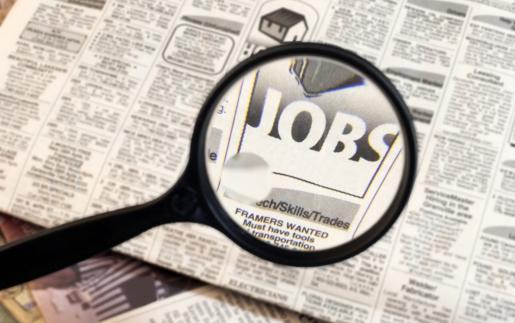
    There is not a single writer out there who is not familiar with having to work for free (but very hard) in order to even have the remote possibility of getting ahead in the journalism field. Right now on the landscape of journalism the job security is simply not there, so journalists need to stay on their toes and keep their freelance options open. There is very little possibility of landing a union-protected staff position at a publication or media outlet. This is why, unfortunately, many students considering their futures are heading directly into public relations and corporate communications. The whole news and entertainment-sharing medium is deemed highly impractical.

    Training quality is at an all-time high

    Here’s a HUGE positive: university journalism training is becoming much more thorough and students are being trained on everything from electronic journalism to social media to management to marketing and graphics. The fact of the matter is that one simply cannot hope to succeed in journalism nowadays without a far-reaching collection of skills and knowledge. Know how to do it all and you will have the better chance at landing a coveted full-time job in journalism.

    Budget costs

    Newspapers are shutting down or becoming non-profit, and fast. With the way information is shared and consumed nowadays companies simply do not have the budgets to fund nor can they feasibly value large staffs or really any staff member that does less than absolutely amazing and innovative work. These budget issues are North America wide and require journalists to stand out from the pack and also be able to write in multiple different areas of interest.

    Prioritizing creative fulfillment over job security

    This is not a real thing. Do not do it. Have your creative outlet, but know that the money—for the most part—will always come from high-need areas. Economics, marketing, business writing, social media consulting and managements…this is where the money is at. Understand the needed symbiotic union between artistic needs and economic ones.

    So…

    Do not be discouraged. If you are an aspiring journalist, the field is a challenge that—if conquered—can be extremely rewarding. Just know that these days it demands of you to know more and do more than ever before. These are the jobs that take smart people to brilliant levels through the process of creativity, rejection, perseverance and social change.

    Works Cited:
    www.journalism.org

    www.thewalrus.ca

  • Career Advice for Up and Coming Journalists

    Career Advice for Up and Coming Journalists

    Ah, the journalist. One of the only career paths people assume you’re going down when they find out that you’re an English major. Or, heaven forbid, if you’re studying writing. Journalism is tricky. If you’re familiar with John Oliver (or just basic updates on print media) then you know the industry is suffering-not just with job and budget cuts but also with this faux-journalism that the millennials seem to have gravitated towards. The age of “listicles” and cute puppy gifs are in lieu of legitimate news stories that matter to the masses. It’s because of these hiccups and miscommunications in the industry that people don’t seem to be taking journalism seriously anymore. Or, if you’re like me, they find out that you’re on a school paper and immediately assume that you’re working on ways to expand your social media presence. Everything needs to be an Instagram post. When it comes to succeeding in the journalism field, at least at this level, there are a few things you should know:

    From my experience, you can’t be afraid of investigating or being negative. A student paper can live under the assumption that you’ll promote every club or praise every performance. That’s not how this works. And it’s okay to upset people so long as you’re justified and not unnecessarily cruel (and have the facts and research to back up your statements). But, I can’t stress it enough: part of being a serious journalist is stepping on the toes of those who are used to having their shoes shined. You have a job to do. It’s okay to get your hands dirty and ask the tough questions.

    Remain true to the craft. In the digital age, things have taken a serious turn for the worse with some outlets focusing solely on gossip or the colour of Kim Kardashian’s bikini. But to be a serious journalist is to remain true to the practice. In the face of complaints and arguments, it’s important to stick to your guns and hold your integrity close. Everyone assumes that young journalists don’t take the craft seriously or that they can bend the rules more easily because, hey, we’re kids; prove them wrong.

    One of the biggest and final pieces of advice I can offer is to not be ashamed of working for a smaller publication. These campus papers can serve as an amazing foundation for us to build a future on. Just because others may not take us seriously doesn’t mean we have to follow suit- hold that newspaper up with pride!

  • Career Profile: Print Journalism

    Career Profile: Print Journalism

    The field of print journalism is an exciting and challenging career path. Journalists have been an important part of society for hundreds of years, writing in newspapers, periodicals, magazines and now, with the widespread use of the Internet, websites.

    A print journalist working in 2014 has to master skills that journalists in former years didn’t have to consider. It’s a fast-paced and ever-evolving field, requiring the ability to think quickly and work under deadlines. For those who are dedicated, journalism can be a very rewarding field.

    Aspiring journalists learn how to write a variety of articles, from straightforward news pieces to music, sports, fashion and culture articles. Journalists learn to be proficient in photography, newspaper and magazine layouts and stay up-to-date with computer programs. Journalists need to know how to conduct proper interviews, ethics behind good journalism, the history of journalism and current issues in the media. Nowadays, Twitter, Facebook and Tumblr have been added into the journalist’s tool belt, as they have to keep up-to-date with current events at all times.

    Journalists are expected to find their own story ideas, especially as the jobs move from steady positions at newspapers such as Metroland and The Toronto Star to contract positions for freelance writers. A good journalist is always on the lookout for potential stories and has a sharp eye for detail.

    Reporters can find jobs doing a variety of things aside from writing. They can work at newspapers, magazines and trade publications, writing about subjects such as fashion, sports, crime, science, medicine, fitness, travel and more. Aside from reporting, other jobs in the field include editing, doing layout, drawing cartoons or copyediting. The editor and copyeditors make sure that the stories reporters submit are verified and true, as well as removing or altering sections. In addition, copyeditors have the important job of checking and correcting the grammar, style and spelling of articles. A poorly written article reflects badly on the publication.

    A journalist’s wage varies depending on the size of publication, seniority, what stories they cover and whom they interview. The average starting wage is $19,000 but it can go up into the six figures for the best and most experienced reporters. Some journalists become famous for their writings and exploits. Tom Wolfe, known for his famous non-fiction New Journalism book The Electric Kool-Aid Acid Test, was one of the first celebrity journalists. Others include the famed novelist Ernest Hemingway, music critic Lester Bangs (who was portrayed in the film Almost Famous) and Rolling Stone reporter Hunter S. Thompson, known for pioneering Gonzo journalism and writing Fear and Loathing in Las Vegas and The Rum Diaries, both of which were adapted into major Hollywood movies starring Johnny Depp.

    Print journalism is an exciting, fast-paced and challenging career path that would be rewarding for those who like to do something different every day and don’t want to work in an office.

  • Career Profile: Journalist

    Career Profile: Journalist

    Journalists can have a specialty.  In large organizations, the journalists may specialize in only one task. In small organizations, each journalist may have to do many different tasks. Here are some of the jobs journalists do:

    Reporters gather information and present it in a written or spoken form in news stories, feature articles or documentaries. Reporters may work on the staff of news organizations, but may also work freelance, writing stories for whoever pays them.

    General reporters cover all sorts of news stories, but some journalists specialize in certain areas such as reporting sport, politics or agriculture.

    Sub-editors take reporter written stories and put them into a form which suits the special needs of their particular newspaper, magazine, bulletin or web page. Sub-editors don’t usually gather information themselves. Their job is to concentrate on how the story can best be presented to their audience. They are often called subs. The person in charge of them is called the chief sub-editor, usually shortened to chief sub.

    Photojournalists use photographs to tell the new. They ether cover events with a reporter, taking photographs to illustrate the written story, or attend news events on their own, presenting both the pictures and a story or caption.

    The editor is usually the person who makes the final decision about what is included in the newspaper, magazine or news bulletins. He or she is responsible for all the content and all the journalists. Editors may have deputies and assistants to help them.

    The news editor is the person in charge of the news journalists. In small organizations, the news editor may make all the decisions about what stories to cover and who will do the work. In larger organizations, the news editor may have a deputy, often called the chief of staff, whose special job is to assign reporters to the stories selected.

    Feature writers work for newspapers and magazines, writing longer stories which usually give background to the news. In small organizations the reporters themselves will write feature articles. The person in charge of features is usually called the features editor. Larger radio or television stations may have specialist staff producing current affairs programs – the broadcasting equivalent of the feature article. The person in charge of producing a particular current affairs program is usually called the producer and the person in charge of all the programs in that series is called the executive producer or EP.

    There are many other jobs which can be done by journalists. It is a career with many opportunities.

  • The Power of the W’s

    The Power of the W’s

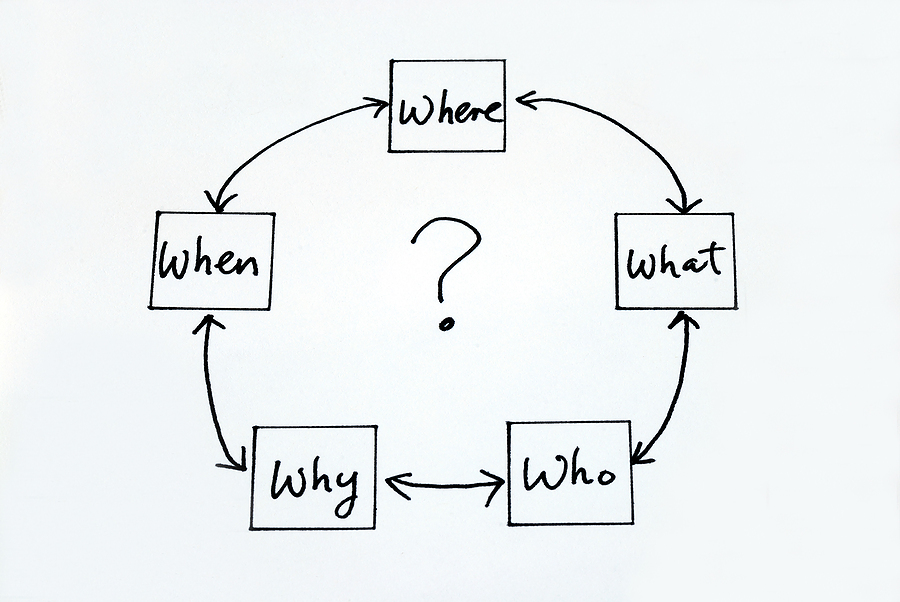
    You’ve probably heard of the five W’s a million times in class. This little family of questions – “Who, what, where, when, why” and their cousin “how” – are memorized by every student who ever has to put together a presentation. But their true power in everyday conversation is never really explained.

    No two people in the world agree on everything. You’re bound to talk to people on a daily basis who think differently than you do. Whether you like it or not, this will be the case for your entire life (unless you want to live alone in a cave in Antarctica!) So you might as well take what you can from these little disagreements.

    If someone tells you that aliens were in the neighbourhood last night, you can say, “You’re crazy” and walk away. Or, instead, you can use those W’s. Ask them “What do you mean?” or “Why do you think that?” or “How did aliens get here?” Your neighbour will tell you about all the evidence they collected. You’ll find out that there’s a thought process behind their opinion. People don’t just come up with wild ideas out of nowhere and fixate on them. They take the evidence around them and put together a case, the same way you or I do. Whether or not you agree, you are learning about your neighbour’s view of the world and giving yourself a broader perspective.

    Maybe you think peanut butter M&Ms are the best candy ever and your friend disagrees. If you just ask why, you might find out he’s allergic to peanuts – which is a great reason not to like peanut butter M&Ms! Or maybe he won’t remember why he thinks that and he’ll give it a second thought.

    So if you’re talking about global warming and someone else tells you it’s a myth, don’t call them an idiot. Ask them, “Why? What’s the point of the myth?” Maybe they’ll have a worthwhile answer or maybe they won’t. But it doesn’t hurt you to ask.

    A conversation is not a chance to prove you’re right. It’s a chance to inform yourself. Two people can sit and fight all day over which hockey player is the best or which prime minister is the best person to lead Canada, but arguing gets you nowhere if you don’t listen to what the other person is saying.

    So just ask questions. It’s easy and it takes you away from an argument and into the world of discussion. Just because all us humans live together, it doesn’t mean we feel the same things.

    Often, after asking these questions, you’ll find that even if you still don’t agree, at least you’ll have a better understanding of the issue as a whole and not just the side you see. Plus, you’ll have more respect for the person you’re talking to, who will be a normal, respectable person you happen to disagree with and not just a lunatic sent here to drive you crazy.

    If you really love asking these questions of other people, it might even lead you down an exciting career path! Journalists, writers, editors and reporters all ask these questions on a daily basis. Even people who work in marketing and advertising ask themselves these questions to determine the wants and needs of their target audience.