Tag: machines

  • Career Profile: Heavy Equipment Operator

    Career Profile: Heavy Equipment Operator

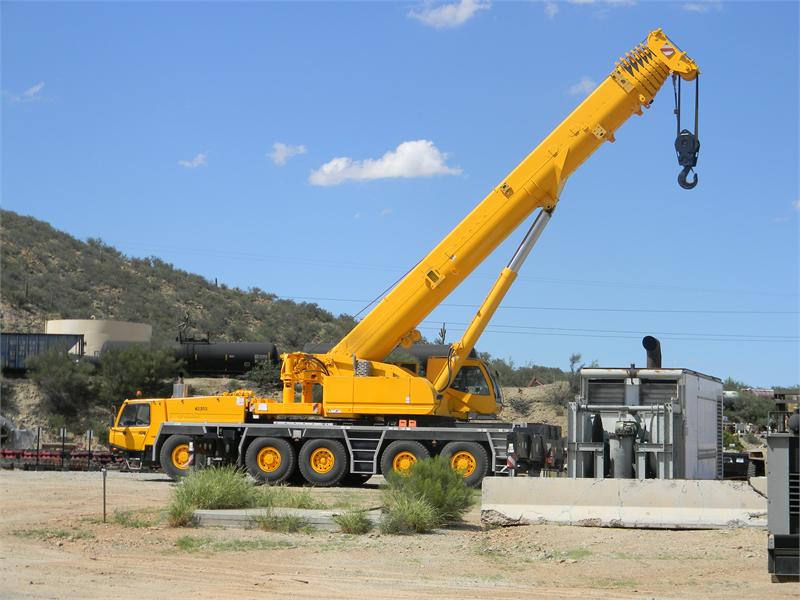
    As a Heavy Equipment Operator, you’ll operate large, expensive equipment such as backhoes, loaders, graders, dozers and excavators to build and maintain roads, bridges, airports, gas and oil pipelines, tunnels, buildings and other structures. You may also operate this equipment to excavate rock, ore or other materials from open-pit mines, strip mines, quarries or construction pits or to move, load, unload cargo or material. These are just a few out of the many opportunities that are available.

    Your typical day may start with performing pre-operational checks to make sure the equipment is working properly and safely. Duties may also include regularly maintaining the track or rubber tire undercarriage, buckets and attachments, refilling the equipment and lubricating the components and attachments to prepare it for service. You may complete log sheets and reports when testing or maintaining the equipment.

    Since safety is #1 in construction careers, you may have to wear Personal Protection Equipment or PPE and take special precautions to protect yourself and others from injury. You may even have to take safety training either through your company or from a construction safety training facility.

    To prepare for a Heavy Equipment Operator career, you’ll need a minimum of a grade 10 education, but with competition getting stiffer for jobs, you’ll be better off if you finish high school. Certification varies based on where you live. In Quebec, it’s mandatory that you get certified as a journeyman or apprentice to work on a construction site, but in some provinces certification is voluntary. Some provinces may not have certification; and if this is the case where you live, you may be able to study as an apprentice through your local labour organization.

    The typical work week is 40 hours per week (8 hours a day, Monday till Friday), but you may have to work overtime during the busy construction season. Heavy Equipment Operators make on average $24.00 per hour or $58,000 per year, but your salary depends on where you live, your experience and skills, and the employer.

    The employment outlook is fair with job prospects increasing slightly over the next few years. Employment opportunities open up when operators retire, get promoted to management positions or become contractors. Operators are typically hired at heavy equipment contractors, public works departments and pipeline, logging, cargo-handling, mining and construction companies.

    Before becoming a Heavy Equipment Operator, ask yourself …

    • Can you operate heavy, industrial machinery?
    • Can you work outside even when it’s icy, rainy, snowy, windy or very hot?
    • Do you have good reading, writing, analytical and problem-solving skills?
    • Are you an excellent communicator, able to listen and take direction from others? This is critical as you may have to use hand signals or radio communication to operate the equipment safely.
    • Can you bend, stretch, kneel, stand, mount and dismount equipment easily?
    • Do you have good eye-hand coordination?
    • Are you mechanically inclined, able to maintain or check equipment?
    If you can answer “yes” to these questions, a heavy equipment operator career may be for you.

    ____________
    Giselle Mazurat is a resume writer living in Winnipeg, Manitoba. She also writes technical and business content for government and private companies.

    References:

    7421 Heavy Equipment Operators (Except Crane)
    http://www30.rhdcc.gc.ca/CNP/English/NOC/2006/Profile.aspx?val=0&val1=7421
    Careers In Construction Heavy Equipment Operator
    http://www.careersinconstruction.ca/en/career/heavy-equipment-operator
    Heavy Equipment Operators (Except Crane)
    http://www.servicecanada.gc.ca/eng/qc/job_futures/statistics/7421.shtml
    Pay Scale – Heavy Equipment Operator Salary (Canada)
    http://www.payscale.com/research/CA/Job=Heavy_Equipment_Operator/Hourly_Rate
    What Does a Heavy Equipment Operator Do?
    http://www.apprenticesearch.com/AboutTrades/GetTradeDetails?tradeId=78
  • Career Profile: CNC Machinist

    Career Profile: CNC Machinist

    Computer Numeric Control, more commonly known as CNC emerged during the 1940s and 50s. In its simplest form, it is the usage of a computer to create and machine a design with machine tools. CNC machines can control lathes, routers, grinders and mills[1]

    The entire process is done through a computer using numeric equations and using the x, y, z axis[2]. Here, the computer can make precise cuts based on what the operator has set. Additionally it can repeat as many cuts as you would like. This makes it easy to duplicate templates than manually machining a replica. It also saves time while limiting the number of potential inaccuracies.

    CNC is widely used by machinists. It is used to manufacture complex templates, fixtures and designs like crown molding. The cost of equipment is very expensive but has dropped since it has become more publicly available.[3]

    CNC is incorporated into the more broad trade of tool and die making. Sheridan college offers a course included CNC programming and mechanical drafting[4]. It prepares students for careers in the machine industry. Students should have good math skills and be excellent with problem solving and reading drafts.

    Typically, CNC machinists make approximately $14-30 per hour. Companies are in demand for CNC machinists as manually machining has been come less common with the emersion of CNC operated equipment. Automotive companies are constantly using CNC machines for productions of their vehicles and vehicle accessories.

    If you enjoy manufacturing and computers and want to be part of a major industry in demand, give CNC machining a shot and see how rewarding this career can be!

    Sources:

    [1] http://www.thomasnet.com/about/cnc-machining-45330503.html

    [2] http://www.technologystudent.com/cam/cnccut1.html

    [3] http://www.mmsonline.com/columns/different-company-types-have-different-cnc-needs

    [4] https://www.sheridancollege.ca/academics/programs-and-courses/mechanical-techniques-tool-and-die-maker.aspx

  • Machinist

    Machinist

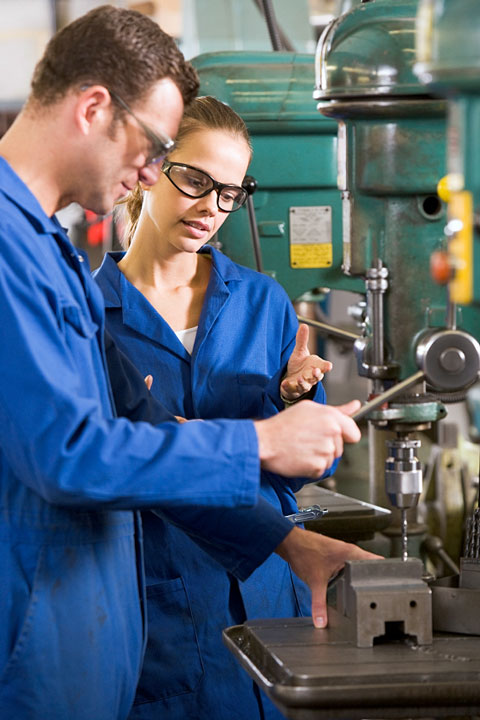
    Fully qualified machinists possess the knowledge and abilities to set up and machine using conventional, portable and Computer Numerical Control (CNC) machines that cut or grind metal and other materials into products with precise dimensions. These machines include lathes, milling machines, saws, grinding machines, drilling machines, boring machines, line borers and portable milling machines.

    Machinists work from drawings, specifications and their own measurements to calculate dimensions, tolerances and types of fit. Precise measurements are critical to machinists’ work. They must be knowledgeable about the properties of metals and non-metallic materials.

    Machinists may work in industries where machines are manufactured, repaired or used. These may include industries that manufacture machinery equipment, motor vehicle or aerospace parts. Machinists produce precision parts that are used in all aspects of manufacturing. They may also work in shipyards, rail yards, refineries, pulp and paper mills, mines, smelters, metal fabricating and repair shops. Shiftwork is common in some companies. Machinists tend to work indoors.

    Safety is important at all times. There are risks of injury working with moving machine parts, sharp edges, flying debris and extreme temperatures from heated or chilled materials. Precautions are required while working with manufacturing chemicals and airborne irritants.

    Key attributes for people entering this trade are: communication skills, mechanical aptitude, hand-eye coordination, manual dexterity, an ability to work independently and knowledge of mathematics and physics. The work often requires considerable standing and the handling of heavy objects. This analysis recognizes similarities or overlaps with the work of other tradespeople such as tool and die makers, mould makers, welders and industrial mechanics (millwrights).

    Experienced machinists may move into supervisory positions. With additional training, they may transfer their skills to related occupations such as tool and die maker, mould maker, industrial mechanic (millwright) or CNC programmer.