Tag: marine biologist

  • Career Profile: Marine Biologist

    Career Profile: Marine Biologist

    Every year, humpback whales travel 4000 kilometres from the ocean around Alaska and British Columbia to the water near Hawaii. Soon afterwards, they turn around and make the return journey. Throughout the entire journey, they eat little or nothing until they return to their northern feeding grounds. While they swim, they make musical sounds that sound like singing. Sometimes, humpback whales can stay underwater for half an hour or more without breathing. When they swim near the surface, they often throw themselves out of the water and then crash back into the depths.

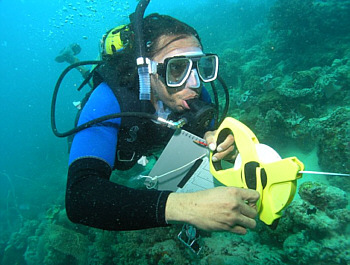
    Do facts like these or about other ocean animals interest you? If so, you might want to consider becoming a marine biologist. These scientists work to understand the fish, birds, and other animals that live in the world’s water, especially saltwater animals like whales or crabs.

    If you choose to become a marine biologist, you will need to take as many science courses as you can in high school and university. These courses could be in chemistry, biology, conservation, or oceanography (the study of oceans). Later on, you can to choose a specialty like the life cycle of crabs or the effects of pollution on sea turtles. Your work might end up being much very general, but having a specialty will help you find work. Volunteering at an aquarium or pet shop now might help you choose a field.

    Most marine biologists have at least a Bachelor’s degree, and many have Master’s or PhD degrees as well. If you prefer not to study for such a long time, you can decide to get a technical certificate instead and then work mainly with the daily care of animals instead of conducting studies and writing academic papers. As a biologist, you might collect and analyze samples of various animals. As a technician, you might clean fish tanks or feed the animals. Depending on what you do, you might make anywhere from $30,000 to $100,000 as you work to help people understand the world in which they live.

    Besides helping people understand the world, marine biologists help alert others to problems in the natural world. As they watch the animals in the world’s oceans and seas, for example, they can tell how water and soil quality affects these animals and humans. They see the connections between people’s health and the world around them.

    Do you love to explore streams and lakes to find out what lives in them? Do you have an interest in preserving the natural world? Maybe a career as a marine biologist is right for you.
  • Discovering Marine Science in The Maritimes

    Discovering Marine Science in The Maritimes

    New Brunswick is the second largest aquaculture producing province in Canada (behind British Columbia). Each year the province earns hundreds of millions of dollars as a result of aquaculture production. There are currently over 2000 people in the province working as direct employees in various capacities in the aquaculture industry. Due to the important part the industry plays in the province, it is important the public has the opportunity to become educated and engaged in the subject.

    The Huntsman Marine Science Centre and Fundy Discovery Aquarium located in St. Andrews, New Brunswick provides a unique and educational aquaculture experience for all ages. The 20,000 square foot facility first opened in 1972, but was re-built and re-opened in September 2011. The centre has a research facility, including labs, where research is being done to find a way to sustain and develop the aquaculture industry.

    There are two harbour seals that call the centre home, Snorkel and Loki, who love to entertain the crowds of people who come by to see them. Harbour seals are found in the coastal waters of the Northern Atlantic and Pacific Oceans, as well as the Baltic and the North Seas. They are brown, tan or gray in colour with v-shaped nostrils and small ear canals. There are an estimated five to six million harbour seals worldwide. The seals at the aquarium are fed twice a day and enjoy eating fish such as menhaden, anchovy, sea bass, herring, mackerel and cod. They also know a variety of tricks, which they have learned since being in captivity.

    There are two touch tanks – one that houses a variety of interesting creatures including sea cucumbers, which are rubbery and slimy and hard to hold on to; clams, which can spit water; and starfish which are hard and prickly. There are an estimated 1800 different species of starfish worldwide. They have a central disk and five arms, though some species have many more. There is also a touch tank designated for skates. There are more than 200 different kinds of skates (and I don’t mean hockey or speed skates!). The skates found at the aquarium are similar to sting rays; they are flat and shaped like a kite and have their eyes located on top of their head. They are found in the Atlantic, Pacific and Indian oceans, and they have a row of spines on their back that can stab and tear if they feel threatened by predators.

    Other interesting sights to see at the aquarium include a large sturgeon tank, a yellow lobster named Fiona and a blue lobster named Lily. Only one out of every two million lobsters is blue, and one out of every thirty million lobsters is yellow.

    If you enjoy learning about marine life, why not consider becoming a Marine Biologist?