Tag: mechanic

  • Career Profile: Motorcycle Mechanic

    Career Profile: Motorcycle Mechanic

    If you go out to the street where you live, you are likely to see several different methods of transportation. Cars and bicycles are two popular choices, but many people prefer to ride something that is halfway in between, like a motorcycle. Have you ever heard of a job called a small engine mechanic? People sometimes refer to motorcycle mechanics by that term because most other mechanics work with much larger machines, such as cars or airplanes.

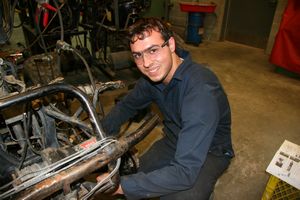
    Becoming a motorcycle mechanic involves putting motorcycles together, maintaining and repairing them, and sometimes restoring old machines. Some mechanics might also work with other small vehicles, such as all-terrain vehicles (ATVs). Anything other than bicycles that has controls in the handlebars can be part of a motorcycle mechanic’s work.

    Becoming a motorcycle mechanic takes good physical coordination, a good grasp of details, and the ability to handle small objects. The job is not suitable for people who tend to be clumsy and to drop things, although practice in working with motorcycle parts can help. You can already start to train yourself by taking your bicycle apart and putting it back together, or possibly by working on an old engine that is no longer being used. That way, you can learn about how machines work as early as possible.

    Once you finish high school, you can start training to become an official motorcycle mechanic. Training programs are available at several different career colleges in Canada, and some schools also offer distance education programs that allow students to complete their courses at home. Some employers might also require mechanics to complete an apprenticeship program in which they work together with experienced people who can show them what to do; this is highly recommended.

    After the training period is over, new mechanics can find work on their own as freelancers or get jobs with repair businesses. In many parts of Canada, the work tends to be seasonal because of the cold winter weather, but there is likely to be at least some work throughout the year. If you want to be a motorcycle mechanic, it is a good idea to find another type of machine to fix during the coldest months of the year.

    Salaries for motorcycle mechanics can vary, depending on where and how much they work. The average hourly wage in Canada is almost $21 per hour, and most mechanics earn between $30,000 and $65,000 per year. Knowing about many different types of motorcycles can help, since then the mechanic can work on machines that were made both in North America and in other parts of the world.

    If you like motorcycles and working with machinery, this might be the right career for you!

    Bibliography:

    Alberta Learning Information Service.” Occupational Profile Motorcycle Mechanic.”

    http://occinfo.alis.alberta.ca/occinfopreview/info/browse-occupations/occupation-profile.html?id=71003095.

    Career Opportunities.net. “Motorcycle Mechanic.”

    http://www.career-opportunities.net/career_profiles/motorcycle_mechanic.

    Enginecycle.ca. “Motorcycle Technical Training Schools—Canada.” http://www.enginecycle.ca/motorcycle-technical-training-schools-directory.

    Payscale.com. “Motorcycle Mechanic Salary.” http://www.payscale.com/research/CA/Job=Motorcycle_Mechanic/Hourly_Rate

    PCDI.com “Motorcycle Mechanics.”

    https://www.pcdi.ca/career-programs/motorcycle-mechanics/job-outlook/.
     

  • Motorcycle Mechanic

    Motorcycle Mechanic

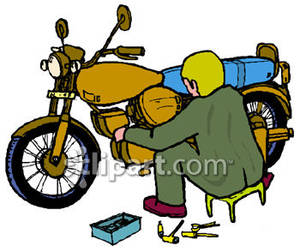
    Motorcycle mechanics work on motorcycles and other units such as motor scooters and all-terrain units. They inspect, clean, test, assemble, diagnose, maintain and repair engines, transmissions, drive systems, steering assemblies, braking systems, chassis, suspension, electrical systems, vehicle management systems, fuel systems and exhaust systems.

    Motorcycle mechanics work on motorcycles and other units such as motor scooters and all-terrain units. They inspect, clean, test, assemble, diagnose, maintain and repair engines, transmissions, drive systems, steering assemblies, braking systems, chassis and suspension, electrical systems, vehicle management systems, fuel systems and exhaust systems. They may specialize in repairing, rebuilding, customizing or servicing these systems or assemblies.

    Motorcycle mechanics work with hand, power, pneumatic and measuring tools, shop equipment, and diagnostic and testing tools. Reference material, documentation and computers are also necessary tools in this trade.

    Motorcycle mechanics may work in service shops of motorcycle dealerships, manufacturers and retailers or in independent service establishments. They may specialize in specific motorcycle, scooter and all-terrain unit makes or types.

    The work environment may include noise, fumes, odours, hazardous compounds, drafts and vibrations; therefore, safety procedures are important. The work often requires considerable standing, bending, crawling, lifting, pulling and reaching.

    Some important attributes of motorcycle mechanics are good hand-eye coordination, mechanical aptitude, time management skills, document use, numeracy, logical thinking and decision making skills, excellent communication and the ability to educate themselves as technology advances. They must also be competent to test ride units.

    Experienced motorcycle mechanics may advance to supervisory positions, shop foreman, service manager or instructors. Some mechanics may open their own garage or motorcycle specialty shop. With additional training, motorcycle mechanics can transfer their skills and knowledge to related units and equipment such as, but not limited to, snowmobiles, watercraft and outdoor power equipment.

  • Career Profile: Automotive Service Technician

    Career Profile: Automotive Service Technician

    Do you…
    • Enjoy working with your hands?
    • Enjoy fixing cars, trucks, motorcycles or small engines?
    • Want to learn more about electrical, hydraulics (fluid power), pneumatics (air power) and mechanical components in machines?

    If you answered “yes” to any of the questions above, then a career as an Automotive Service Technician may be right for you!

    What Is An Automotive Service Technician?
    An Automotive Service Technician is a certified and skilled tradesperson who diagnoses and repairs motor vehicles (e.g. cars, minivans, SUV’s, light duty trucks and medium duty trucks).

    An Automotive Service Technician performs various duties that help maintain a vehicle as well as repair it. Some of these job activities include:
    • Engine maintenance and repair
    • Transmission maintenance and repair
    • Exhaust system repair
    • Body repair and adjustments
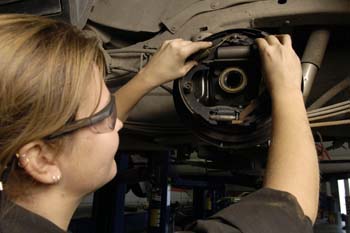
    • Brake maintenance and repair
    • Steering, suspension and alignment repairs

    Where Does An Automotive Service Technician Work?
    An Automotive Service Technician may work in:
    • Dealerships
    • Independent automotive shops, repair shops and garages (owned by other people or themselves)

    Some Automotive Service Technicians may prefer to work as:
    • Teachers in high school teaching automotive class
    • Teachers in colleges that offer an accredited Automotive Service Training program

    What Does A Typical Day For An Automotive Service Technician Look Like?
    A typical day for an Automotive Service Technician in a dealership or automotive shop usually begins when a customer brings their vehicle to the shop. The customer tells the service advisor what the problems are with their vehicle. The service advisor documents the problems on a work order. The vehicle and corresponding work order is then given to an Automotive Service Technician who begins to work on this particular job.

    An Automotive Service Technician follows a certain procedure when working on a new job. He/she:
    1. Reads the work order written up by the service advisor.
    2. Examines the vehicle to further assess the problems mentioned on the work order.
    3. Provides the service advisor with an estimate on how much it will cost to fix the problems.
    4. Waits for the service advisor to confirm that the customer is OK with the repair costs before fixing the problems.
    5. Fixes the problems once the service advisor gives the go ahead.
    6. Takes the vehicle for a test drive and/or performs operational checks to ensure that the customer’s concerns are resolved.
    7. Informs the service advisor that the customer can pick up their vehicle.

    How Do You Become An Automotive Service Technician?
    1. Attend a college that offers a certified Automotive Service Technician training program.
    2. Complete the Automotive Service Technician program successfully.
    3. Find a suitable employer who will hire and train you as an Automotive Service Technician apprentice. (Complete your apprenticeship booklet/hours/activities at work and get it signed off by your employer).
    4. Write the Automotive Service Technician certification exam put out by the Ministry of Training, Colleges and Universities.
    5. Pass the exam, obtain your 310S license and become a licensed Automotive Service Technician!