Tag: moving away

  • Moving into your Dorm

    Moving into your Dorm

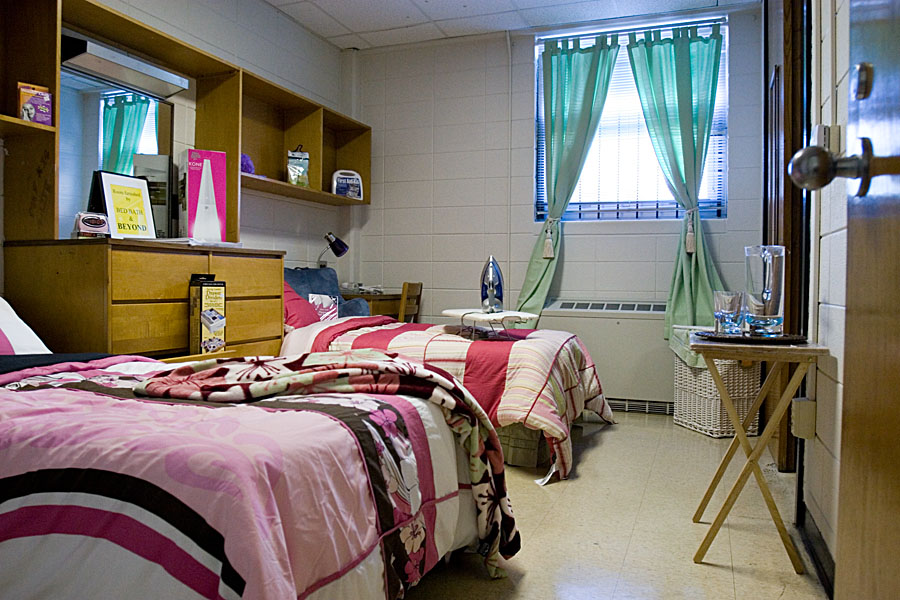
    So you’re moving into your school’s dormitory? Congratulations! However, there are some things to consider first, as things can vary from school to school. So, consider the following:

    1. What size is the dorm?

    You’ve taken the campus tour, which usually includes a dormitory example. Not all dorms are the same size, and can even differ by building type, but you can get a rough idea of what to expect once you get a spot on the waiting list. Are you sharing with a roommate? Is it a smaller room than you expected? Do you have a full-fledged apartment? By knowing what the room will look like, you’ll have a better idea of what you need to have in the room to make it feel like home away from home, and what will be both useful and necessary. There are also dorms with a common washroom: bring flip-flops, it will be healthier for your feet; and a caddy to carry all your toiletries so they can stay easily in one place.

    1. What are the school’s / dormitory’s policies?

    This varies from school to school as well. Since dormitory rooms vary in size (and shape), dorm policies will differ as well, depending on how strict they are. The policies are generally there for safety reasons, or events that have happened in the past that have made it necessary. If you don’t have a kitchen, you may be able to have a small fridge in your room, but no hot plates for cooking. Some electronics (other than laptops) may be restricted as well.  You should always research to ensure that you can bring what you want to bring to the dorm. By failing to do so after the first couple of weeks, you might get a fine, which can add up at the end of the year. There are fire drills within the first couple of weeks, so ensure that you know how to easily evacuate from your building, and know where your dorm is.  In addition, find the laundry machines (you’re going to have to do laundry at some point, trust me; or let your parents do it when you’re at home?!).

    1. What to pack (other than the essentials)?

    So now you know what your room looks like, and you’ve got all the equipment. What else do you need to pack? There are lots of good suggestions online, but the basics are bedding and clothing. Some items you never thought you needed (or things you realized you actually don’t need), you can always take back on a trip home. Another essential is a battery-powered alarm clock, as power outages do happen, (even on campus) and it can be a backup to your usual alarm clock. There are some things that have multiple uses such as coffee cups that can double as a spoon; a multi-purpose charger, so do some research and ask yourself if they are both useful and necessary.

    I hope these first questions help you know what to move into your dorm. There are always further questions, but with some research, you’ll be confident enough to be comfortable at your dorm, and to have fun on campus!


  • College & University: Where to Live and What to Bring

    College & University: Where to Live and What to Bring

    Deciding to attend college or university can lead to an endless stream of decision making. Starting with which schools to apply to, getting more complex from there. What will you study? How will you pay? Will you work? Play sports? Get involved in student politics? Where will you live; on campus in a dorm, or off campus in an apartment?

    There are benefits and draw backs to both. Dorms are close to school and can be quite convenient. They are secure, social, there are planned activities and people around to help you with school work, or comfort you if you are feeling down. The downside is they can be loud. There are rules, and there’s little privacy.

    Apartments can be quieter and provide more privacy. It’s much easier to control who’s coming and going. But it can be a longer commute to campus (you may need to budget for transportation expenses). Apartments can be less secure and expensive if you have to pay for rent, utilities, phone, cable, internet, apartment insurance, groceries, laundry, parking, etc. Often a lot of additional expenses will be included in your dorm fee, like a meal card and internet for example. Having an apartment will most likely come with you having to sign a 1 year minimum lease (however, sometimes you can get out of it if needed).

    The other challenge is pinning down what to bring once you decide where to live. Most colleges provide a list of basic necessities in their orientation package. However, these lists might not be detailed, especially for apartment living. You can use the internet to find detailed lists.

    Here are a few links that may help:

    http://www.dormsmart.com/Dorm-Room-Checklist.html

    http://www.hercampus.com/life/campus-life/what-bring-college-best-college-packing-list-ever

    http://www.fastweb.com/student-life/articles/college-apartment-packing-checklist

    http://www.bedbathandbeyond.com/store/registry/apartmentchecklist

    These sites can help you narrow down what to pack and what to leave behind. You can also use apps like Pinterest, which has packing lists, decorating tips and storage ideas for living in small spaces. There are other apps available at the Google Play Store you can download for free. These apps provide checklists, so you can keep track of what you’ve already purchased and packed, tips on each item, and the ability to add or remove items. You don’t want to over pack. Often times an item seems like a necessity, but will end up unused, taking up space.

    Whether you move into an apartment or dorm make sure you know the rules before you start packing. Know what is and isn’t allowed. If you are moving in with a roommate, check with them so you don’t have two of everything.

    Here’s a list of items you might not think of for Dorms and Apartments:

    Dorms:

    • Shower shoes (like flip flops with good treads so you don’t slip)
    • Dish liquid, washer and dryers
    • Microwavable dishes and storage containers
    • Mini fridge
    • Bed risers
    • Noise cancelling headphones
    • Extra blankets and pillows (for guests, cool nights or extra seating)

    Apartment:

    • Plunger
    • Cleaning supplies (including broom, dust pan, mop, vacuum, toilet brush etc.)
    • Shower curtain
    • Garbage cans
    • Shovel (if you live where it snows)
    • Condiments , spices and olive oil for cooking
    • Tin foil, parchment paper, plastic wrap and storage bags
  • Why Choose a School Away From Home?

    Why Choose a School Away From Home?

    Better opportunities
    You may decide to move far away to attend a college or university that will give you more opportunities. Even if you currently live near a post-secondary institution, that school might not have the resources you require. These could include a prestigious faculty, excellent scholarships to help you fund your studies, and renowned academics to give you the best start in your career. Here’s some great advice: choose a school that best suits you. Don’t let the location of the school and how far it is from your home deter you from pursuing your dreams.

    Grow up
    A university or college, with its residence or “dorm-style” living, can be the perfect environment for you to develop into a young adult. Such living arrangements give you sufficient support while also providing you with the space you need to spread your wings and “grow up” at the same time — but not too fast. Under the shelter of the university or college bubble you can make smoother transition into adulthood.

    Indeed, moving far away from home will give you plenty of independence. No one will be there to wake you up in the morning, drive you to school, or check up on you when you come home late at night. Away from your family, perhaps for the first time, this freedom can be intoxicating. Yet, even though you will have more responsibilities than ever before, when you live in a dorm you won’t have to worry about paying a hydro bill and most of your food will be provided for you on campus.

    These responsibilities will prepare you for the following year, when you probably wont be living in a dorm anymore but will instead be living with your friends in an apartment or house for the first time. Living far away from the shelter of your family home, you can grow up much faster than you ever expected.

    Become a World Citizen
    Step outside your comfort zone. Why not move to a metropolitan area that has a much more diverse, multicultural population than your hometown? Such a prospect might terrify some who are afraid to leave the “nest” and venture out into the world. But for those who are up for the challenge, moving away from home can be an excellent opportunity to expand your worldview. You can meet new people from diverse cultural backgrounds and make friends with a wide range of people — especially if you choose a university or college that’s really far away from home (in another province or even another country). Either way, new experiences and adventures will abound: the world is your playground.

    Personal growth
    Have you ever heard the saying “you don’t know what you’ve got till it’s gone?” Well, sometimes spending time away from your roots and your regular routine can help you see your life from a different perspective. Such fresh insight might help you appreciate your life and relationships in ways you never imagined possible. Your sense of gratitude for all the wonderful things and people in your life can actually strengthen your bond with your family and friends. Ironically, moving away can help you move closer to your loved ones.

  • Why Choose a School Far Away From Home?

    Why Choose a School Far Away From Home?

    Discerning where to continue your education after high school is a major life decision. The first question to ask yourself is whether you want to stay home, close to the comforts of your current lifestyle, or if you are willing to take a bold step and move elsewhere. When you attend a university or college far from home, the majority of what you learn happens outside of the classroom.

    Maturity
    At a university or college far from home, you will be away from the watchful eyes of the parents or guardians who led you through high school. You will face new kinds of peer pressure and have the freedom to choose how to balance your social life with your school life. You will be free to stay out all night long celebrating on weekday nights with your friends and you alone will have to face the consequences of your actions.

    Sociability
    Moving away from home means you will have to temporarily leave your circle of friends behind during the school year. The distance will not only make you appreciate each other more, but it will also mean your classes will be filled with new faces, all of whom are potential new friends.

    Respect for others
    Whether the stranger you share a dorm room with becomes one of your closest friends or drives you completely crazy, you will still have the perfect opportunity to learn how to share a space with another person. You might discover you have a whole host of new pet peeves, but you might also learn quickly how to successfully deal with them.

    Health consciousness
    Establishing a healthy and balanced diet can be just as important for succeeding in post-secondary education as studying for your exams. If your new school provides an “all-you-care-to-eat” buffet-style meal hall, you will need to learn how to have discretion in your choices.

    Time-management
    Or perhaps you choose to cook for yourself. Sometimes you will have to squeeze in three classes, two labs, a trip to the grocery store and time to cook dinner all into a single day. And that’s before you hit the books and get through all the readings you will have to have done for the next day.

    The first year of post-education can be arguably much more difficult than later years because that is when students transition into their new lifestyles. The learning curve is sharp and the work load is heavy. Many first year classes act as introductions to topics so there is often a huge amount of daily readings and assignments for students to do. But always keep in mind that the harder a challenge is, the more satisfying it will feel to overcome it.

  • Why Choose a School Far Away from Home?

    Why Choose a School Far Away from Home?

    When considering post-secondary options, there are many decisions that dictate which school you settle on. This can range from the programs offered, the cost or the familiarity of the school itself. Yet there is often one question central to every student’s choice: whether to stay at home or go away for school.

    Each options has its pros and cons and are often influenced by the specific school, what they offer and their corresponding communities. But for many students, going to school away from home proves to be a fantastic and self-defining experience.

    Moving away from home is scary. You are thrown into a new room in an unfamiliar city surrounded by strangers. The independence you have always fought for is now imposed upon you and you are expected to not only adapt to your new circumstances but also excel academically and socially. It can be absolutely terrifying at first and you may want to forget the whole thing and go home.

    Soon the room will become your own, you will be able to successfully navigate between your classes and you will have met more new, young, enthusiastic individuals then you will know what to do with. It is completely natural to get homesick sometimes, but new friends, clubs and classes will keep you busy while waiting for the latest update from home.

    By going away for school you finally receive, and accept, your first taste of independence. You are now responsible for forcing yourself up for those 8:30 classes, eating right and simply taking care of yourself while effectively balancing your studies with your social life – both of which are crucial to a healthy student lifestyle.

    Your experience throughout university or college will only further advance these sentiments and allow you to grow as an individual. As you continue through second, third and fourth year you will come upon different challenges and tests, whether mundane or monumental, that will continue to define both yourself and your post-secondary experience. Such experiences may not be unique to those who go away for school but by choosing an independent lifestyle you are now more responsible for your own decisions.

    It can be difficult but it can also be a sensational, unforgettable experience. By going away for school you will become part of a new community of like-minded students, experience a new city and grow as an individual!