Tag: ocean

  • Career Profile: Marine Biologist

    Career Profile: Marine Biologist

    Every year, humpback whales travel 4000 kilometres from the ocean around Alaska and British Columbia to the water near Hawaii. Soon afterwards, they turn around and make the return journey. Throughout the entire journey, they eat little or nothing until they return to their northern feeding grounds. While they swim, they make musical sounds that sound like singing. Sometimes, humpback whales can stay underwater for half an hour or more without breathing. When they swim near the surface, they often throw themselves out of the water and then crash back into the depths.

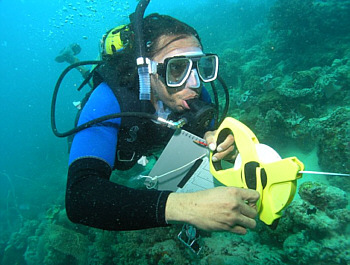
    Do facts like these or about other ocean animals interest you? If so, you might want to consider becoming a marine biologist. These scientists work to understand the fish, birds, and other animals that live in the world’s water, especially saltwater animals like whales or crabs.

    If you choose to become a marine biologist, you will need to take as many science courses as you can in high school and university. These courses could be in chemistry, biology, conservation, or oceanography (the study of oceans). Later on, you can to choose a specialty like the life cycle of crabs or the effects of pollution on sea turtles. Your work might end up being much very general, but having a specialty will help you find work. Volunteering at an aquarium or pet shop now might help you choose a field.

    Most marine biologists have at least a Bachelor’s degree, and many have Master’s or PhD degrees as well. If you prefer not to study for such a long time, you can decide to get a technical certificate instead and then work mainly with the daily care of animals instead of conducting studies and writing academic papers. As a biologist, you might collect and analyze samples of various animals. As a technician, you might clean fish tanks or feed the animals. Depending on what you do, you might make anywhere from $30,000 to $100,000 as you work to help people understand the world in which they live.

    Besides helping people understand the world, marine biologists help alert others to problems in the natural world. As they watch the animals in the world’s oceans and seas, for example, they can tell how water and soil quality affects these animals and humans. They see the connections between people’s health and the world around them.

    Do you love to explore streams and lakes to find out what lives in them? Do you have an interest in preserving the natural world? Maybe a career as a marine biologist is right for you.
  • What Does A Ship’s Agent Do?

    What Does A Ship’s Agent Do?

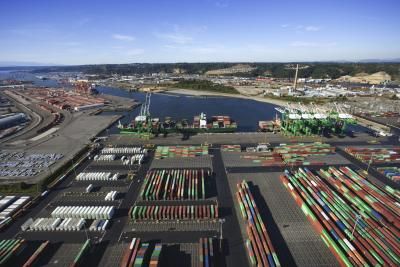
    Before he heads to the office, the ship agent boards the vessel as it arrives in the port. He walks up a steep gangway with people from the federal government who work for the Canadian Food Inspection Agency (CFIA) and Transport Canada. As the latter inspects the ship, the agent finds the captain and assists him as he signs various documents that are required before the ship is allowed to enter the port.

    It is the ship agent’s job to coordinate the arrival of all vessels that enter Canadian waters. He is thus a vital link between all the imports and exports that come in and out of the country.

    Once back at the office, the agent performs a variety of duties. When a ship plans to arrive, the agent gathers information about the vessel such as: how many members are on the crew and where they are each from, how much the ship weighs and when it was built, and what kind of cargo it is carrying or picking up. He then sends the information to Canadian Customs and Immigration. When Customs clears the ship, it is free to enter Canadian waters.

    However, a ship cannot enter Canadian ports until the federal public servants have inspected the entire ship and cleared it for loading or unloading its cargo. It is the ship agent’s role to coordinate with members of CFIA and Transport Canada. He also organizes – with the ship’s owners, charterers and stevedores – when and where the ship will be loaded with cargo.

    The agent must also host the captain while he and his crew are anchored in the port. He brings the captain cash for the crew to use while they are anchored and he coordinates with ship chandlers who supply the crew with groceries and other necessary supplies. He also arranges for crew members to be picked up and taken to the airport when they are ready to return home if a new crew is taking over the ship.

    The ship agent links Canadian ports to the rest of the world.

    He coordinates much of the activity that sees that items like steel, sugar and electronics arrive safely in the country’s ports while grain, canola, lentils, yellow peas, barley, wheat, oats and other products are loaded into the vessels and shipped to places all over the world.

  • The Great Pacific Garbage Patch: Filling the Ocean with Plastic

    The Great Pacific Garbage Patch: Filling the Ocean with Plastic

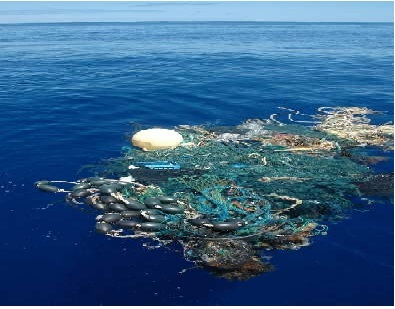
    Have you ever been to a garbage landfill? Have you seen cities where the garbage lies on the street without ever being cleaned up? If you have, you know all about the smell and the general unpleasantness. Did you know that the biggest landfill in the world is actually not on land but in the water? Far out in the Pacific Ocean is an area called the Great Pacific Garbage Patch, where plastic and other litter has been floating around and polluting the water. The patch is a major concern for scientists and other people who want to keep the oceans healthy.

    The world’s biggest garbage dump is made up of two sections in the Pacific Ocean, one between California and Hawaii and the other off the coast of Japan. The two sections are connected by a current called the Subtropical Convergence Zone and together make up the Great Pacific Garbage Patch. The area where the Garbage Patch is located is called the North Pacific Subtropical Gyre, a section of slowly spinning water. The area is often called an oceanic desert since it has very few plants or animals other than tiny plankton.

    Instead of animals, however, the North Pacific Subtropical Gyre has huge amounts of garbage, about 90% of which is plastic. The trouble with plastic is that it never completely disappears but instead photodegrades, breaking into smaller and smaller pieces of plastic called “mermaid tears” or “nurdles.” Garbage can float around in the ocean for years or even decades, but eventually it ends up in one of the garbage patches, often floating just below the surface or sinking down to the ocean floor. Some scientists estimate that the size of the garbage patch could be as big as the state of Texas, although others believe it to be much smaller. However big it is, it’s a cause for concern.

    As the pieces of plastic or other garbage float around in the water, they pick up poisons from fertilizers and other substances that wash into the ocean or they join other kinds of garbage floating in the water. Thousands of birds and marine animals, possibly up to a million every year, die from eating or being caught in the ocean’s garbage. Debris that floats in towards the land pollutes beaches along the coasts of countries like Japan and Canada, sometimes even piling up several feet high in some areas.

    Where does all of this garbage come from? Some of it comes from people dumping trash from ships, but about 80% of it comes from land. It could be garbage carried by the wind from landfills or from city streets, which eventually makes its way to the ocean. It could come from litter that people drop into in the lakes and rivers before it floats down to the oceans. That’s why some towns have banned plastic grocery bags, which make up a large part of the litter. In some towns and cities, volunteers help to clean up beaches and other areas where garbage accumulates.

    Every small change can help to get rid of garbage in the oceans. What will you do to keep the world’s water clean?