Tag: organization

  • Goal-Setting: Tips and Tricks

    Goal-Setting: Tips and Tricks

    Need to get something done? A strategy may be in order. Conscientious people know what they want and make concrete plans to get it, completing small tasks each day and slowly but steadily progressing towards their desired result. In other words, they’ve mastered the art of goal-setting, a fantastic skill that can help you further your achievement.

    Goal-setting is an asset when you’re working on long-term projects or towards your own self-fulfillment. It is also a skill that transfers well into higher education as well as into the workforce, where you will have more and more tasks and responsibilities to manage—and where it becomes even more important to keep your eye on the ball.

    Here is some advice that will help you develop your goal-setting skills, and that may, in turn, contribute to your long-term success.

    Dream big, start small.

    I’m sure a part of you secretly dreams of saving the world—whether it’s discovering the cure for cancer or being on the first human expedition to Pluto, we all have dreams that are certainly worth investing it. That being said, it takes small steps to accomplish any goal. Keep your long-term ambitions in mind, but stay focused on what you can do today that will bring you one step closer to achieving them.

    Keep it regular.

    Turn goal-setting into a habit. For instance, you can start your morning off by making a list of three things you want to accomplish by the end of the day. Though these things can be related to your long-term goals, don’t forget about daily chores and tasks to accomplish—even small things like completing your overdue homework or cooking a healthy meal can turn a regular day into a productive one.

    Motivate yourself.

    Most people want to be productive, but laziness or apathy often gets in the way of their accomplishments. Solve your potential lack of motivation by having a long-term vision that will pull you out of bed when all you want to do is sleep in. It’s also recommended that you reward yourself for your hard work: for example, when you reach 10 successfully completed goals, you can have a day off to relax.

    Hold yourself accountable.

    We all slip up from time to time, and that’s perfectly normal, but try not to let getting sidetracked become a bad habit. If you slack off or forget your responsibilities, make a commitment to yourself that you’ll do better next time—after all, you owe it to yourself and to your future. To help you keep track of your progress, you can use a goal-setting journal for personal reflection.

  • Organization for Dummies

    Organization for Dummies

    We all lose things from time to time. It’s understandable, and oftentimes it’s forgivable. Yet it’s when disorganization starts to become a pattern that it can actually start interfering with your life.

    Consider making some organizational improvements to your lifestyle. It takes work, but you’ll be thanking yourself the next time you find yourself in a jam (and the next time you can’t find anything else). Here are some tips to help you stay organized.

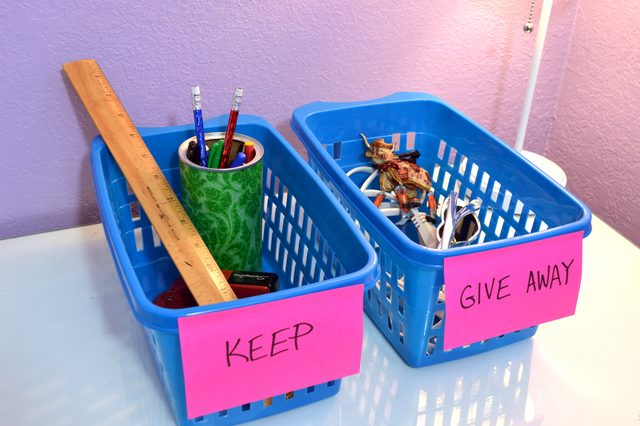
    De-clutter. Having to weed your way through clothes and piled-up dishes every time you want to enter your bedroom gets old pretty fast. To maintain a tidy living or work space, clear off surfaces, recycle/throw out what you don’t need anymore, and use cupboards or drawers to put away things that don’t belong. The best way to keep your space organized is to make de-cluttering a habit: take half an hour out of your week to clear up the accumulated mess, and you’ll notice a difference in no time.

    Label. Make sure you know where everything belongs by labeling file folders, drawers, and cabinets. That way, instead of rummaging through a massive pile of miscellaneous stuff, you’ll know where to look for something the next time it gets lost. This is also a good strategy for students who want to stay academically organized (for example, write the date and course code on every note you take, so you can file it away in the correct—and maybe colour-coded—folder at the end of the day).

    Trace your steps. Cell phones, bobby pins, house keys… If there are certain things you put down and just seem to never be able to find again, make it a point to put them in the same place each time. You can keep a list of “drop zones” (typical spots where you tend to leave things) so you know where to look the next time you absentmindedly put something down.

    Keep a “junk” drawer. This may seem counterintuitive, but when you’re in a rush, what can you do? There’s nothing wrong with tucking things away momentarily, to be revisited later—as long as you have one distinct place where you know you can find them again. The flip side to that, though, is that you have to clean out that junk drawer every once in a while. Once you get home and you have some time, make sure everything’s back in its proper place.

    Plan ahead. Before you go to bed, be proactive or “pre-organized”: try to get a jump-start on your morning routine. If you know you’re going to be up early the next morning, for example, you can prepare a lunch, pack your bag in advance, and set out the important things you’ll need (like your bus pass) in plain view, ready for you to grab on your way out the door. A little planning can save you a lot of scrambling!

  • The Importance of Being Early: Punctuality and You

    The Importance of Being Early: Punctuality and You

    Coming from a person who is predictably early, lateness can be incredibly unprofessional. I’m not just talking job interviews—this applies to meeting friends for coffee, extra-curricular meetings, and pretty much anything you sign up for. If you make a habit of being on time, it shows that you respect the commitments you’re making. In turn, people are going to respect you.

    Lateness can also have repercussions, especially in a professional environment. Showing up late to meetings or handing in projects days past the deadline sends the message that you don’t care about your job. When it comes time for a promotion or bonus, that reputation isn’t going to play well with your boss. Moreover, there are some things you just can’t hand in late—projects that meet urgent deadlines, or collaborative projects in which co-workers depend on one another to do their jobs. If you can’t fulfill those kinds of expectations, expect reprimand. Unfortunately, in fact, you might lose that job altogether.

    That’s why it’s so important to be early. The benefits of punctuality (developing a good reputation and avoiding some serious repercussions) far outweigh the drawbacks (getting up a little earlier in the morning). That being said, some people have trouble with punctuality, so it’s important to develop strategies that can help you be on time. If you get an early start on those habits—ha!—it will save you a lot of trouble in the long run.

    If you need help being on time, here are some general tips.

    1)      Do the math. Figure out how long it takes you to get ready in the morning, how long your bus ride is, etc. As a general rule, you should add 10-15 minutes of extra time for external variables, like traffic. According to that formula, set your alarm.

    2)      Have a game plan. If you can take 5 minutes the night before to lay out exactly where you have to be (and when), your routine will run more smoothly in the morning. You can also “cheat” by doing some things the night before, like laying out your outfit or packing your lunch.

    3)      Call ahead. If something does happen to hold you up, make sure you give as much notice as possible. That way, the person you’re meeting—a friend, a coworker, an employer—can be prepared for a 10- or 20-minute delay, and adjust their schedule accordingly.

    4)      Trick yourself (for a good cause). The classic strategy is setting your watch 10 minutes early: even if you plan your day perfectly and everything goes right, you’ll have some wiggle room. Another way to do this is overestimate how long it’s going to take you to do things. It’s better to have extra time than no time at all.

  • Workspace “Feng-Shui”

    Workspace “Feng-Shui”

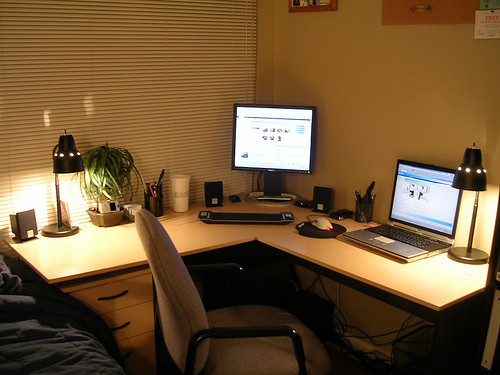
    Ever wonder why you can’t get any work done? It’s possible that your environment is contributing to your lack of productivity. Everyone has different preferences for their ideal study space. If you’ve got a big test or paper coming up, it’s best if you adjust your surroundings to help your brain function at its optimal level.

    Here are some things to consider if you’re looking to “feng-shui” your workspace.

    Space yourself.

    A lot of projects require a large amount of space. Plus, sometimes it helps to have your work laid out all around you (like when you’re doing research). To prepare for this, make sure to keep your desk clear and clutter-free. If you constantly find yourself buried in piles of books and random papers—all of which have nothing to do with your work—you’re going to find it harder to focus. If you live in a small area or can’t spare the space, relocate to the library or a café with large tables when you need to spread out.

    Sound (or silence) it out.

    Some people need absolute silence to focus, while others thrive in the midst of noise. You can save appropriate soundscapes on your computer or phone to help you focus. Create a study playlist of “working songs” (depending on the person, that could feature hard rock, dubstep, classical piano sonatas, etc.). If music isn’t your thing, check out ambient or white noise generators, which create background noise to fit your preferences (like rainfall or “coffeeshop” sounds). And if you really like your silence… A pair of earplugs is your best friend!

    Eliminate distractions.

    Next time you’re finding it hard to concentrate, try and figure out what exactly is stopping you from getting your work done—and get rid of it. If Facebook updates or texts are constantly distracting you, disable those features on your devices (or put them away altogether). If you’re in a spot where people won’t stop talking, pack up your things and grab an individual study room. If you’re working near a window and can’t stop people-watching, close the curtains. It’s for your own good!

    Make it your own.

    The image of a cramped gray cubicle in a dimly lit office strikes panic in many of our hearts. Your workspace doesn’t have to be synonymous with a jail cell. You can actually form positive associations with your work if you personalize your environment a little. This can take on many forms: an inspiring desktop background, a mug of your favourite tea, a scented candle, a cat on your lap, etc. When work gets stressful, having familiar and comforting objects around can help you calm down.

  • Practicing Time Management

    Practicing Time Management

    Time management is a problem for many people because there are so many distractions in our day-to-day lives that can interfere with whatever goals we have to accomplish that day, week or year. Often we can have a to-do list, but none of the items end up getting done because we get caught up in doing everything but what we are supposed to be doing. Sometimes, when there is too much to do, we feel especially challenged to make the most of our time. When we are short on time and have a lot to do, we must learn to prioritize.

    This means cutting off some of the less important things and focusing our energy on accomplishing what is the most important. Making lists that order your tasks from most important to least important is a really good trick that can save time and keep you on track. The worst scenario, when short on time, is wasting your energy worrying about everything that you have to do. What you want to do is get down to work as soon as possible, as soon as you are finished drawing out what it is that you are needing to get done.

    If, for example, you have 5 assignments that need to get done, focusing on the assignment that is due next week is more important than focusing on the assignment that is due in two months. You may want to create a short list of the tasks that you want to get done and order them by nearest date to farthest date. Think about how long it will take you to accomplish each one of the tasks, and jot this down next to the due date. Create a schedule for when you will start working on the task and how much time you will devote to it. By doing this, you are assuring that you will not forget about one project in favor of focusing on another or getting distracted entirely.

    If you are really crunched for time, you may also want to include what grade you are expecting to get on each one of the assignments so that you can put a little more time and care into the ones that will mean more to get a good mark on. In this way you will not be wasting your time doing too much research on an assignment for which a good grade will not mean much to you, or for which the overall weighting of the assignment is minimal.

    One last way of practicing good time management is to avoid procrastinating. Often, if we have a lot to do, we may be tempted to do anything but what it is that we are supposed to be doing. This is a natural tendency and we all do it at some point. The important thing to remember is that facing your challenge head on will actually facilitate the task and make it that much easier to complete. By making a list and prioritizing what is the most important (and the least important), we face the challenge head on and avoid procrastinating.

  • Study Tips for the New Semester!

    Study Tips for the New Semester!

    Now that 2013 and a new semester are upon us, you may have resolved to be more organized or to get higher grades in your classes. We are here to help, with some handy tips on how to better prepare yourself for educational success this year!

    Take Notes on ALL Readings
    This may come as a surprise to some students, but you should be taking notes on your readings. Some people may not see the point of note taking, but it is necessary if you want to do well on your exams. If you haven’t started already, start as soon as possible. Course readings are usually on the exam. Taking notes on each reading will ensure you have a brief summary that will save you from having to read it again come exam time.

    Start Organizing Study Groups
    Starting a study group is a great way to get ready for exams. Try talking to fellow students and sending out e-mails to see who is interested in joining a study group. A study group allows you to share lecture notes, divide up the chapters and share these notes amongst yourselves, get new perspectives on the material (this can be especially beneficial if you are struggling with certain concepts), and test one another on course concepts. Meeting with the study group may also point out some important course concepts that you have neglected to include in your study notes. Consider asking your Teaching Assistant to meet with your study group and help to facilitate a course review.

    Review and Revise Your Lecture Notes
    Yes, it is early in the course, but it’s never too early to start reviewing your lecture notes. Reviewing your lecture notes ensures you have the opportunity to re-engage with course material before your exams start. You could review your notes after class, later in the week, or while you prepare for next week’s class. The more you engage with the material, the more you’ll absorb and understand. As you engage more with the material and develop a deeper understanding of course concepts, you should revise your notes and focus on concepts that are more difficult.

    Start Researching Papers Early
    As soon as your professor hands out the instructions for your first assignment, you need to start doing preliminary research on your topic. Starting early allows you to find key resources, including books, which may come in limited quantities from the library. It also allows you to approach your Teaching Assistant or Professor about your topic. Both your Teaching Assistant and Professor are there to provide guidance through the research process. They can provide you with vital information that can help you find appropriate resources, ensure you’re on the right track with your assignment, and look over early paper outlines to ensure you have a good grasp of your topic.

    Use the Library
    Many students attempt to do as much research as possible on the Internet. Although you can certainly find many quality sources online, particularly through online journal databases, this can limit the resources used for your assignment. Using the library allows you to not only access major scholarly books that are relevant to your field of study, but also allows you to discuss issues with the librarian, who can give advice on where to look for offline resources, and even suggest some materials you have yet to consider. Most university libraries also host workshops on how to research effectively and how to use the library to your advantage. Explore these workshops and use your library. It will definitely pay off when you get that final grade! Professors and Teaching Assistants like to see that you used a wide-range of resources.

  • Getting Organized

    Getting Organized

    As we face another semester, the importance of getting organized is hugely evident. Whether you’re in Grade 9 or Grade 12, you are going to want to be sure that you know at least 4 pieces of information going in to this semester:

    1. What classes are you taking this semester? This question is really important for being able to prepare mentally for what is coming. If you know that you have five intensive classes, you are going to want to be sure to organize your social and extracurricular activities so that you have enough time to do homework. If you are also going to be working, you will want to be sure that you have organized your schedule to accommodate the extra stress of the difficult classes. This works the opposite way as well – if you have a lighter school schedule, you can pack more extracurricular and volunteer activities in to your schedule.

    2. Do you have all of the school supplies that you will need for the level of classes that you will be taking?
    Depending on what your semester has in store for you, you will need to make sure that you have at least the basics when it comes to school supplies, and you can wait until the first week of school to pick up any specialty supplies that you may need for an art or math class.

    3. Do you have a study spot that will be useful to you once the semester starts?
    Clearing off the holiday clutter from your desk will help you to start getting into “school mode”. You want to be somewhat mentally prepared for going back to school after the holiday break so that when your first assignment is due, you are ready to succeed. Feng Shui is the Japanese art of meditation and stress relief that says that having a calm environment helps to create calm in one’s mind. This is a useful tip to employ for your study area; try to keep it clean and organized so that your mind is less distracted when you need to focus.

    4. What are your rewards and landmarks along the way that will help you to keep going?
    School days can be tiring, especially if you are loaded down with courses that are heavy or difficult. You are still going to need to take some time off and make sure you allow time to have fun. Maybe your family is planning a vacation for spring break, or maybe you’ll go on a weekend shopping trip with friends. Whatever it is that you are looking forward to, be sure that you have those dates firmly implanted in your mind.When you are starting to feel stressed out, you will be able to persist because you know that you have something good to look forward to. If you don’t have anything planned, then plan something now!

  • Time Management Skills

    Time Management Skills

    At the end of the day, time management is going to be one of the chief challenges you face and one of the most valuable skills you develop throughout your post-secondary education. Though university and college is not the first time we’ve had to deal with time restraints, the increased focus on independent study and, for many students, the presence of a part-time job completely redefines how we appreciate and organize our schedules.

    A common joke you’ll hear in your post-secondary education is: “good grades, proper sleep, a social life: choose two.” This isn’t far from the truth! Though you are more than capable of doing all three, as well as hobbies, extra-curricular activities and jobs, many students are shocked by the time requirements called for in both university and college.

    For many this is made even more difficult by going away for school. For the first time you are solely responsible for getting up in the morning, organizing your meals and ensuring that you are capable of staying on top of your workload. It can be hard but it is possible! Developing your time management requires the growth of your individual organizational and prioritizing abilities, as well as sometimes forcing adjustments to certain study habits which may not function as well as they can or should.

    By the end of your degree I promise you’ll be laughing at your younger self, running around and stressing about first-year worries. Until then, let me try and give you some tips to help effectively organize your time:

    i) Design a class schedule around your own sleep pattern. Some of us are night owls, some are early birds. If you are like me and struggle to wake up for early classes, let alone study during that period, don’t be afraid to try and sign up for those 10:00 classes rather than the 8:30 ones.
    ii) Breaks are important. Some will make the argument that it is better to work through everything and, if it works for you, great. If not, accept well-deserved breaks as they come to you. If possible, do something that takes you out of the library or your room – a walk around the block? A jog? If not, try and do something with a clear start and finish. Watch an episode of a television show with the clear 21-minute end and don’t get lost on the internet only to look at the clock again two hours later.
    iii) Sleep is essential! Some cope with the time restraints by cutting back on their sleep schedules and for many we can afford to do this while maintaining a healthy lifestyle. Be careful, though, as it can be a slippery slope. Sometimes it’s better to sleep that extra hour than stare listlessly at the computer all morning trying to wake yourself up.

    Just make sure to be careful with your time and make the most of it. In the end you’ll be able to handle your time constraints with no problem!