Tag: outdoors

  • Embracing Nature Around Your Campus

    Embracing Nature Around Your Campus

    Being in school can be hard when the sun is shining and the weather is warm. It can also be hard to enjoy nature, but that can be a very important part of the learning process. Wherever you go to school, you can try to embrace the natural world around you and to appreciate the many benefits that people receive from it.

    Many people enjoy being outside, hearing the birds and looking at the trees and flowers around them. Natural settings can be very calming. It can help people relax and relieve stress that they might otherwise be feeling. Outside in the fresh air, people can interact with each other in ways that are harder inside with artificial lighting and stale air. Out in nature, people can see themselves and each other in new ways.

    Nature is not just about feeling good emotionally, however. It is also essential to people’s health. You probably hear a lot about the pollution in the air, which causes diseases and can seriously harm people. Trees help produce oxygen that people need to breathe, but they can also help reduce pollution by filtering out the chemicals in the air. On hot days, they help to keep the temperature down, and they provide shade from the sun. Other plants, including grass, are important, not only to make places look nice, but also to help keep the soil from washing away and otherwise keeping the environment clean and healthy.

    Embracing nature on campus is also about what people can do to help keep the environment healthy. One way to do that is through cleaning up the garbage that collects on the ground. Some schools and universities have clean-up days once or twice a year when people pick up garbage, recycle what they can, and put the rest in bags to take away. That helps to make the area look nice but also removes sharp objects that can injure people and other garbage that can clog drains or cause other problems.

    Your school campus might be small or very large, but you can help it to become an important natural area, whatever its size. Even after school is over for the year, you can start to make plans for how you will embrace nature wherever you go to school next. Many schools and universities have environmental policies, and it’s a good idea to learn as much as you can about that. If you see a problem, you can talk to others and see what you can do to help.

    Suppose your school’s administration plans to cut down some trees to build an addition to the school. You could learn as much as you can about the plans and try to think of alternatives to avoid getting rid of any trees. Or suppose your science class wants to go on a nature walk; you could suggest looking at nature right where you are.

    You might find more than you expect once you start to look.


    Bibliography:

    Durham College. “DC Embraces Nature During the 2015 Campus Clean-up.” http://www.durhamcollege.ca/new-notable/college-news/dc-embraces-nature-during-the-2015-campus-clean-up

    Project Evergreen.org. “Environmental Benefits of Green Space.” http://projectevergreen.org/resources/environmental-benefits-of-green-space/.

    Roden, Isabella. “Everyday Environmentalist: Go Green on Campus.” http://www.nature.org/greenliving/gogreen/everydayenvironmentalist/go-green-on-campus.xml.

    University of Western Ontario. “Sustainability: Campus Master Plan.” http://sustainability.uwo.ca/initiatives/buildings_green_space/campus_master_plan.html.

     

  • Outdoor Therapy

    Outdoor Therapy

    The benefits of outdoor activity are well known. Whether you’re hiking, biking, swimming, or running, these activities are all great ways to get your heart rate up and stay healthy. However, less physically demanding outdoor activities (such as gardening or washing a car) are also good for your health. Mental health, that is. Sometimes just being outdoors makes you feel good, and it’s no wonder. Fresh air, open space, sunshine, greenery…who doesn’t love these things? Especially after being cooped up in an office or classroom for hours on end every day, being outdoors is a sure-fire way to boost your mood and make you feel more relaxed.

    The positive influence of the outdoors is so great that it is even being recommended as a form of therapy in and of itself.1 Instead of relying on pharmacological intervention, some therapists recommend “outdoor therapy” as an alternative way to help people with affective disorders (such as depression).2 In general, it has been found that people who try outdoor therapy experience “improvements in self-concept, self-acceptance and more realistic self-perceptions, and reduced conflict, depression, and anxiety.”3 These effects have been shown with a variety of individuals of all ages, genders, races, personality types, and mental health statuses.4 Of course anyone can benefit from outdoor therapy, even if you’re simply having a bad day or are feeling a little under-the-weather.

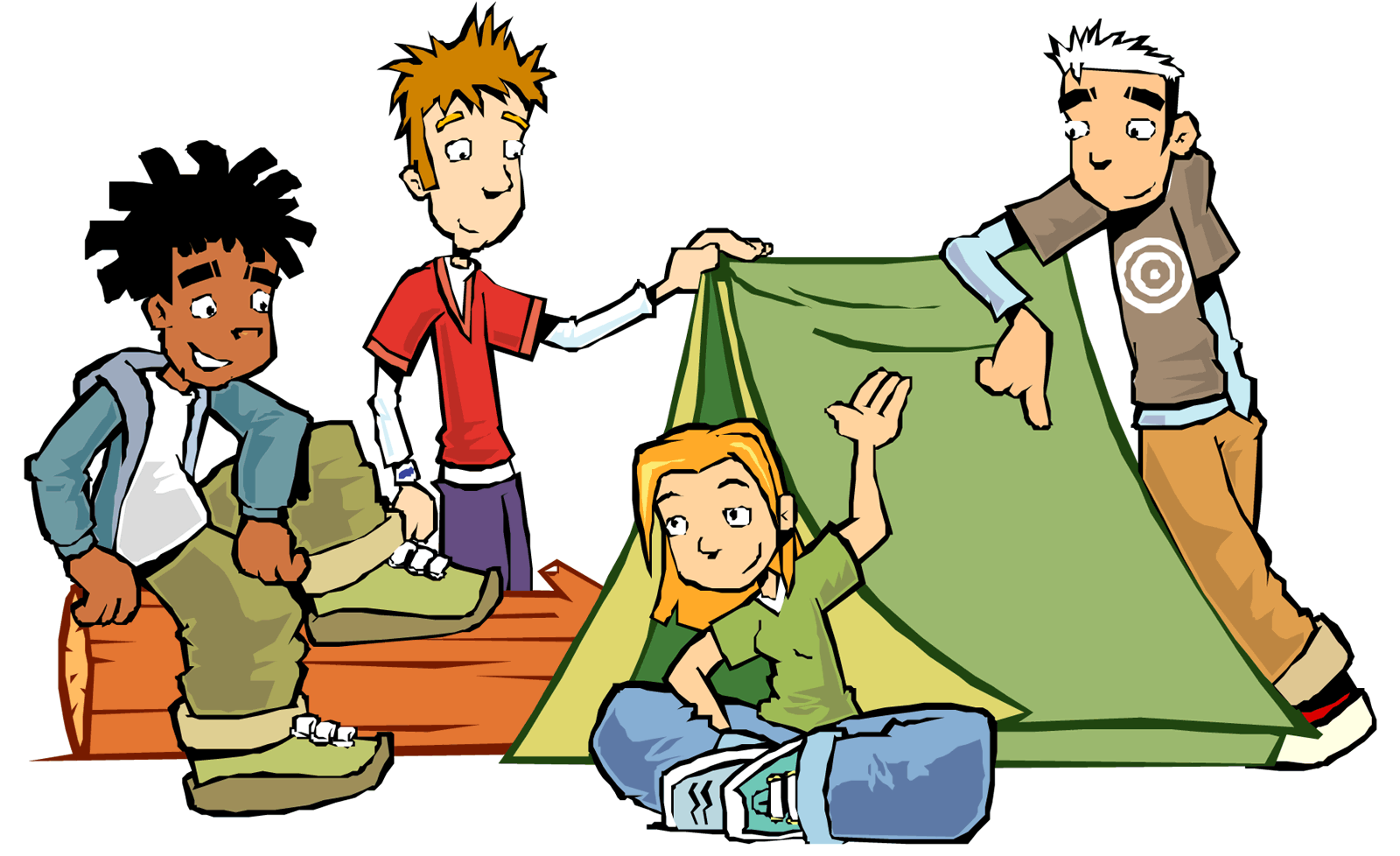
    There’s no one particular activity which is recommended above others as the best form of outdoor therapy; however, it has been noted that a short camping trip (even a mock-camping trip in one’s own backyard!) can be a remarkably effective way to reduce stress, anxiety, or bad mood.5 This may be due to the fact that camping is meant to take you away from the hustle and bustle of everyday life where most of one’s stress originates. When you’re camping you don’t have to worry about studying for an upcoming midterm or fret about that long list of things “to do.” In fact, when you’re camping the only things you really need to worry about are what you’re going to cook for your next meal and keeping ample wood on the fire. I wouldn’t necessarily classify these things under “worries,” however. Even though it may just be for a couple days, camping allows you to relax and rejuvenate, leaving you feeling refreshed and ready to once again tackle all life’s challenges. Granted, not everyone considers giving up all connections to civilization for a weekend foray into the depths of the wilderness to be a relaxing experience. If you don’t like camping, then it probably won’t help to ease your stress or anxiety. Conversely, it will probably increase your bad mood, which would be counter-productive. That’s why outdoor therapy can be tailored to individual preferences. If you’re an athletic person, then maybe going for a run or hiking with some friends will boost your mood. On the other hand, if you just need some time to yourself and prefer something a little more low-key, then just grab a book and head to the local park for a quiet afternoon.

    So next time you’re in a bad mood, feeling stressed out, lonely, overwhelmed, frustrated, or you simply want some alone time- head outside and try some outdoor therapy. Whether you decide to go for a five kilometer run or grab a coffee and read a good book, you’ll be amazed at how much better you feel after stepping outside to clear your mind.

  • Jobs in the Outdoor Adventure Industry

    Jobs in the Outdoor Adventure Industry

    A brief window into the thrill based and skill based world of adventure sport.

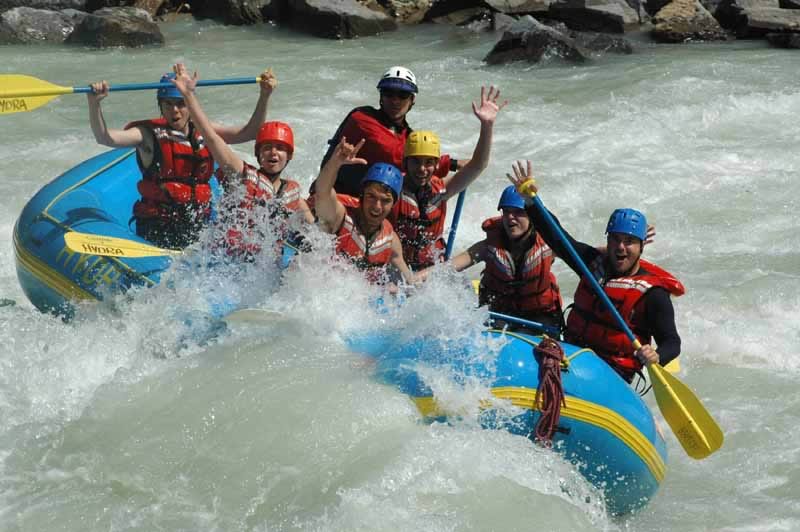
    The vast array of dangerous jobs out there has started to receive more exposure, especially with reality TV recognizing our love to experience these jobs from the comforts of our couch. From coal mining to deep sea fishing, television seems to cover it all. However, a less exposed but speedily growing industry falling into the “dangerous jobs” category is outdoor adventure. Whether it is rock climbing instructors, heli-ski guiding, white water kayak or raft guiding, Canada’s adventure sport scene is booming. An interview with Trevor Cardozo, who has rafted for Canadian Rockies Rafting in the Canmore/Banff area of Alberta, provides some insight on what it takes to work in a job so vastly different from the typical nine-to-five/sit at your desk kind of job that many of us will likely end up in.

    What made you decide to enter the outdoor adventure industry?

    I had done a ten day canoe trip in Quebec when I was in high school, and that was kind of my crash course into the outdoor adventure world. I got accepted into university for a computer related program, but decided to rethink what I wanted to do, and to instead attend Algonquin College’s Outdoor Adventure diploma program, because of my experience on that canoe trip. The Algonquin program became my springboard into a career of climbing, paddling and eventually water raft guiding. Many people enter the industry because of the adrenaline rush, but for me it was more the ability to not be stuck in an office and be in the outdoors all the time.

    How do you deal with the “danger” aspect of the job?

    Always be on your toes, thinking about risk management and minimization. Know the difference between perceived risk and inherent risk, especially in rafting, as people often have a misconceived idea of it, often assuming it may be safer than it actually is.

    What are the some of the skills needed to succeed as a raft guide?

    You have to be really personable, loud and assertive. It is your job to make sure people have a great trip, so you almost need to be an entertainer. Between rapids there can often be quite a bit of time spent on flat water, and you want make sure your customers are not bored.

    What advice would you give to someone who wants to get into the outdoor adventure industry?

    Do it! There are basically two routes to go through. The first being broad outdoor adventure and education training, through companies like NOLS and Outward Bound, or college programs like the one at Algonquin (at the Pembroke ON campus) or Thompson Rivers University (in Kamloops BC). The second way to get into the industry would be to go directly to the company you are interested in working for, with no experience and work your way up.. if you take that route, you need to pay your dues.. work hard, work a lot and maybe even work for free.. but it will be a great learning experience. Specifically with white water rafting, most companies offer a guide training program. Some companies charge for this or others will pay you for it, but not until the end of the season, to ensure guides do not skip out after training and work for another company. A great certification to get that most companies will require is Wilderness First Responder.

  • What to Take Backpacking

    What to Take Backpacking

    So you’ve decided to take a trip backpacking. This is quite the adventure and you are going to have to be well prepared for such a time away from home and in the wilderness. You are going to want to make sure that you have covered all of your bases so that you will have the most easy and worry-free trip. The important thing to remember is to plan well and then follow the plan.

    Creating a good list is your first step. Think about where it is that you are going and what it is that you are going to need while backpacking. Are you going hiking? Are you staying overnight? Are you going with friends and sharing the burden of the food preparation? Knowing the general sweeps of your itinerary is a really good start, and then following this general formula will ensure success.

    1. Outdoor gear: Will you be sleeping in a tent and will you be needing warmer clothing for cooler weather? These considerations will be very important in order to ensure that you will have everything you need.

    2. Indoor gear: Will you be spending time indoors? You may need to pack lighter clothing for times that will be spent indoors or in restaurants along the way.

    3. Swimming gear: Will there be lakes or rivers along your route? If so, you will need to make sure that you are bringing a bathing suit and towel.

    4. Technical gear: Are you responsible for bringing a tent or for bringing a sleeping bag and mattress? If you are, you will have to be sure to pack that (if you are backpacking, be sure that it is compact).

    5. Food: Are you bringing food with you or eating along the way? Will you need to bring a stove to cook your food or will you need to bring materials to start and keep a fire going? These are all things to consider.

    Whatever your trip is, be sure to know exactly where it is that you are going, what kind of weather is expected, what your friends are bringing, what kind of terrain is expected and where you will be staying. Knowing these things in advance will help you to pack well and be efficient with your use of space.

    A last consideration is to remember that sharing space with your friends is essential. You need to communicate with them so that you don’t end up all bringing the same thing. If you need to bring a stove, one person should bring it – not everyone. If you need to bring pillows, you may need to decide that you will bring only one or two pillows and share them, alternating people who get the pillow each night to save space in your backpack. If you are bringing food, make sure that you have discussed who is bringing what and that you have enough for each day and night. Planning and communication with your fellow backpackers will be your keys to success.

    Above all, enjoy your trip and stay safe!