
Tag: planning

  • School to Work

    School to Work

    Whether you plan to go to college or university, or you want to get right into the workplace after high school, there is co-operative education, internship, and apprenticeship programs all designed to aid students in making the transition from school to the workforce.

    Co-operative Education programs are available at the secondary and post-secondary levels. High school co-ops earn you credits toward your high school diploma, and provide you with first-hand experience in a potential career. Skills learned through a co-op also help to build up your resume, which will help you with future schooling or job applications. Check with your guidance counsellor to arrange a co-op program. Usually a teacher must monitor these programs, and provide a study curriculum related to your co-op work placement.

    Post-secondary co-op programs exist through many of Canada’s universities and colleges. These offer an educational experience combining work placements and academic studies. These tend to be complete degree or diploma programs, requiring formal enrollment in the program the same as any other college or university degree. Co-op programs may take longer to complete than a standard degree, since the work placements are interspersed between your class semesters. These programs are a great way to get hands-on experience in your chosen field, which will give you a competitive edge when applying for jobs after graduation.

    Internships operate a bit differently than a co-op. Many internships are posted, and applied for, in the same way regular jobs are: you need to apply with a resume and cover letter, perform an interview, and get hired for the position. Internships are great for students and recent graduates because you have a chance to work at a job to see if it is right for you, without committing to a permanent position, since most internships are only a few months or a year in length. Also, more awareness of un-paid internships is being recognized and in the future, laws may change to benefit the intern more than the corporation they are working at. When you become an intern, make sure you are getting what you deserve and want out of the internship; it needs to benefit the next step in your career path. There are too many grads walking around busting their backs for companies that do not pay them, or don’t pay them enough.

    Lastly, if you plan to go into one of the skilled trades, an apprenticeship is the way to go. Apprenticeships differ from co-ops and internships in that most of your learning takes place as a paid working apprentice, where you learn on the job in order to develop and refine the technical skills specific to that particular trade. Only a small part of an apprenticeship is comprised of class time, usually taking place at a technical school, union training centre, or through online study. You do have to register with your local or provincial apprenticeship office, who will help you track your hours, inform you of grants to help pay for your apprenticeship, and assist you in obtaining your professional certifications.

    While asking your school guidance department, and family or friends, are good places to start your search for a co-op, internship, or apprenticeship, there are also a number of online resources dedicated to helping Canadian students connect with these opportunities.

    Sources:

    Canadian Association for Co-operative Education

    http://www.cafce.ca/

    Public Service Commission of Canada – Post Secondary Co-op and Internship Program

    www.cappa.ca/index.php/en/students/post-secondary-co-op-internship-program

    Careers in Trades

    http://www.careersintrades.ca/

    Government of Canada Services for Youth

    www.youth.gc.ca/eng/topics/career_planning/coop.shtml
     

  • Organization for Dummies

    Organization for Dummies

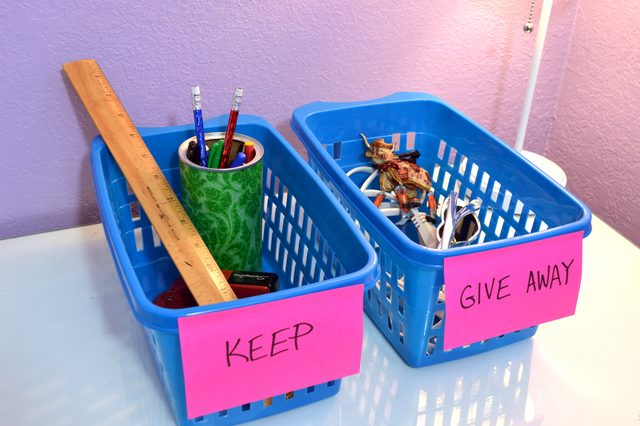
    We all lose things from time to time. It’s understandable, and oftentimes it’s forgivable. Yet it’s when disorganization starts to become a pattern that it can actually start interfering with your life.

    Consider making some organizational improvements to your lifestyle. It takes work, but you’ll be thanking yourself the next time you find yourself in a jam (and the next time you can’t find anything else). Here are some tips to help you stay organized.

    De-clutter. Having to weed your way through clothes and piled-up dishes every time you want to enter your bedroom gets old pretty fast. To maintain a tidy living or work space, clear off surfaces, recycle/throw out what you don’t need anymore, and use cupboards or drawers to put away things that don’t belong. The best way to keep your space organized is to make de-cluttering a habit: take half an hour out of your week to clear up the accumulated mess, and you’ll notice a difference in no time.

    Label. Make sure you know where everything belongs by labeling file folders, drawers, and cabinets. That way, instead of rummaging through a massive pile of miscellaneous stuff, you’ll know where to look for something the next time it gets lost. This is also a good strategy for students who want to stay academically organized (for example, write the date and course code on every note you take, so you can file it away in the correct—and maybe colour-coded—folder at the end of the day).

    Trace your steps. Cell phones, bobby pins, house keys… If there are certain things you put down and just seem to never be able to find again, make it a point to put them in the same place each time. You can keep a list of “drop zones” (typical spots where you tend to leave things) so you know where to look the next time you absentmindedly put something down.

    Keep a “junk” drawer. This may seem counterintuitive, but when you’re in a rush, what can you do? There’s nothing wrong with tucking things away momentarily, to be revisited later—as long as you have one distinct place where you know you can find them again. The flip side to that, though, is that you have to clean out that junk drawer every once in a while. Once you get home and you have some time, make sure everything’s back in its proper place.

    Plan ahead. Before you go to bed, be proactive or “pre-organized”: try to get a jump-start on your morning routine. If you know you’re going to be up early the next morning, for example, you can prepare a lunch, pack your bag in advance, and set out the important things you’ll need (like your bus pass) in plain view, ready for you to grab on your way out the door. A little planning can save you a lot of scrambling!

  • School vs. Life

    School vs. Life

    When you  make the move to junior high and high school, everyone seems to think that there is no way to balance both having a social life and excelling in you academics. However, there is always a way – as long as there is a will!

    The way I see it, you need to earn your breaks, vacations and time off; That is what used to drive me to finish up my last essays and my final projects. I would look at the calendar and mutter to myself, “It’s almost March Break – I got to work hard now so that I can fully enjoy my time off school”. Then I would put all of my effort into my work until the very last class and forget about (almost) everything! Essentially, you want to be able to relax during your breaks and long weekends, so you just have to think of this as a “crunch time”.  Even now, in university, I do this to myself – I work and study hard and once I finish the exam, I shop! Sounds odd to some people, but I call it a “Celebratory Spree Day”, the day when I get to relax after pushing myself to study so hard for my exam period.

    One can also practice time management by planning when you will study and setting aside a few hours for fun with friends, too. For example, give yourself some hours to hang out with your friends before heading home to finish assignments and study.  It’s possible to have great academic standing and a social life, you just need to have the determination and the planning.

    Always remember to enjoy life!

  • Career Profile: Travel Agent

    Career Profile: Travel Agent

    Imagine being able to travel around the most interesting tourist spots in the world and getting paid for doing it. Finding a job like that might be difficult, but becoming a travel agent can be the next best thing. Although travel agents work mainly to plan other people’s trips, their work can often include many other benefits such as the chance to see and explore travel destinations. It can be a busy and sometimes frustrating job, but for anyone who is organized and likes to work with people, it can be a fun and fulfilling career.

    Have you ever helped make arrangements for a trip that you went on with your family or friends? If so, you probably used the Internet to search for information on the places you wanted to see. You might have reserved your flights and hotels online and maybe even booked tickets for trains or other local transportation. In the past, only travel agents had access to the kind of information that people can now find for themselves. Many travelers now prefer to take care of many of their own arrangements. However, well-qualified travel agents can still have an important role in making sure that people have the best possible experiences on their trips.

    The most important requirement for travel agents is knowledge of various destinations and the needs of travelers. Travel agents can help them learn about what kinds of sights and activities are available. They have experience in working with tour guides and hotel managers. This gives them an advantage in dealing with different situations that the tourists might encounter. They can advise travelers on what to take, what they need to do to avoid getting sick, and anything else that they might need to know.

    Becoming a travel agent normally requires no specific training or education beyond a high school diploma. However, some people find that getting a certificate in travel and hospitality or even a degree from a university is helpful for their work. Most of all, travel agents need the ability to use computers to find information and to work well with people. Travel agents should be friendly and efficient, able to find information easily. Good organizational skills are essential, and some knowledge of a second or third language is helpful. Salaries are generally between about $23,000 and $47,000, depending on experience.

    Some travel agents work alone, but others work in travel offices. Many travel agents never need to leave their home cities to do the job, but personal experience with travel is helpful. Some travel agents might even be asked to stay at some of the overseas hotels so that they can really know the good and bad points of the places where they send people. If you like working with people and would like to see the world, the job of travel agent could be a good choice for you.

  • What to Take Backpacking

    What to Take Backpacking

    So you’ve decided to take a trip backpacking. This is quite the adventure and you are going to have to be well prepared for such a time away from home and in the wilderness. You are going to want to make sure that you have covered all of your bases so that you will have the most easy and worry-free trip. The important thing to remember is to plan well and then follow the plan.

    Creating a good list is your first step. Think about where it is that you are going and what it is that you are going to need while backpacking. Are you going hiking? Are you staying overnight? Are you going with friends and sharing the burden of the food preparation? Knowing the general sweeps of your itinerary is a really good start, and then following this general formula will ensure success.

    1. Outdoor gear: Will you be sleeping in a tent and will you be needing warmer clothing for cooler weather? These considerations will be very important in order to ensure that you will have everything you need.

    2. Indoor gear: Will you be spending time indoors? You may need to pack lighter clothing for times that will be spent indoors or in restaurants along the way.

    3. Swimming gear: Will there be lakes or rivers along your route? If so, you will need to make sure that you are bringing a bathing suit and towel.

    4. Technical gear: Are you responsible for bringing a tent or for bringing a sleeping bag and mattress? If you are, you will have to be sure to pack that (if you are backpacking, be sure that it is compact).

    5. Food: Are you bringing food with you or eating along the way? Will you need to bring a stove to cook your food or will you need to bring materials to start and keep a fire going? These are all things to consider.

    Whatever your trip is, be sure to know exactly where it is that you are going, what kind of weather is expected, what your friends are bringing, what kind of terrain is expected and where you will be staying. Knowing these things in advance will help you to pack well and be efficient with your use of space.

    A last consideration is to remember that sharing space with your friends is essential. You need to communicate with them so that you don’t end up all bringing the same thing. If you need to bring a stove, one person should bring it – not everyone. If you need to bring pillows, you may need to decide that you will bring only one or two pillows and share them, alternating people who get the pillow each night to save space in your backpack. If you are bringing food, make sure that you have discussed who is bringing what and that you have enough for each day and night. Planning and communication with your fellow backpackers will be your keys to success.

    Above all, enjoy your trip and stay safe!