Tag: pollution

  • Carbon Scrubbers to Clean Up Emissions

    Carbon Scrubbers to Clean Up Emissions

    Research into methods of reducing carbon emissions is a continually advancing field, and a team of researchers developed an improved way to remove emissions directly from sources like smokestacks.

    The team recently had an article published in the Journal of the American Chemical Society detailing their findings, which focused on using substances based on a material called polyethylenimine to remove carbon dioxide (CO2) from sources. According to the article, these substances whoed some of the greatest results in removing CO2 from the air when compared to alternatives. The substances also proved capable of effectively capturing the CO2, and could either be re-used or isolated, so it wouldn’t contribute to global climate change.

    The team, which consisted of researchers from the Loker Hydrocarbon Research Institute and Department of Chemistry from the University of Southern California, explained in their article that the materials used are uniquely effective largely due to their low cost and reusability. The material is relatively inexpensive when compared to other options, and can be reused numerous times without losing its ability to capture CO2.

    The article also explains that materials manage to remain effective in real-world conditions. This means that the materials were observed as being able to accommodate for exceptionally humid, moist or dry environments, something that is important when considering practical application of scientific research such as this.

    Other options for CO2 reduction are more expensive, less effective or durable and use large amounts of energy than the processes being researched by this team. If the researchers are able to effectively implement these polyethylene materials, they will have created a valuable resource that is much easier to use. Considering the cost-effectiveness and stability of the polyethylenimine materials, the application of them will make sustainability much more accessible, and therefore potentially more widespread.

    The material’s main target for carbon reduction is smokestacks; however the research could also potentially be used to reduce CO2 emissions from car exhaust, submarines, and even the open atmosphere itself. Cleaning of the upper atmosphere would hopefully reduce the greenhouse effects of the CO2.

    CO2 is one of the greatest threats to the environment in recent years. The amount of CO2 emissions produced by humans is of great concern to the population due to its effects on climate change,rising sea levels and air pollution. Research on ways to reduce emissions of CO2 is an area of international concern.

    According to the World Health Organization, high levels of greenhouse gases — of which CO2 is a prominent part of — affect necessities to health like clean air and water and increase the incidence rates of climate-sensitive diseases.

    Up until now, finding ways to reduce these emissions has proven challenging and unpromising. However, if this research team is successful in implementing polyethylenimine as a way to reduce emissions, the levels of CO2 in the atmosphere may be significantly reduced. This would help reduce concerns of climate change, and result in cleaner air in an effective and affordable way.
  • Great Changes for the Great Lakes

    Great Changes for the Great Lakes

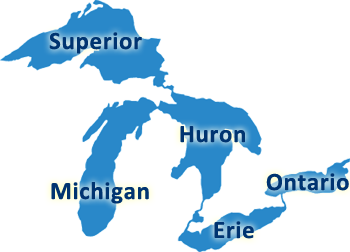
    Across the world, North America is known for many things; the culture, the people and the great outdoors. Part of that great outdoors is the Great Lakes. The Great Lakes are an integral part of our North American identity; and to preserve that identity in 2005 the premiers of Ontario and Quebec and the leaders of eight American states that border the lakes came together and signed the Great Lakes Water Pact.

    The Great Lakes Water Pact is a pact that has introduced strict regulations in regards to the usage of the Great Lakes and it has sunk the tentative thoughts of shipping water to thirsty regions in the United States and Middle East. It was signed by the Canadian provinces and the American states that surround the Great Lakes; Ontario, Quebec, Ohio, New York, Pennsylvania, Michigan, Indiana, Illinois, Wisconsin and Minnesota. The agreement includes rules that make it difficult for communities surrounding the Great Lakes watershed to use the water and also aims to prohibit the commercial export of the lake water by restricting withdrawals of water to five gallon (twenty litres) containers.

    The affects this pact has on future generations are great. The Great Lakes are a natural resource that are depleting and are not renewing as fast or as much that is necessary. More than thirty five million people rely on the lakes for drinking water, and the lakes are only able to replace one percent of that per year.

    The Great Lakes Pact is important for North America’s future generation because it ensures that not all the lakes will be used up and it will be saved from disappearing. This works in the favour of future generations because it guarantees that the lakes will be there for their own usage as well just as it was there for the past generations usage. Not only does it assure fresh and natural drinking water for generations to come but it also promises that the amount of surface water in the world stays intact. The Great Lakes contains twenty percent of the world’s surface water and this pact will make sure that the surface water will remain for years to come. Without that surface water the world may dry up which in turn will not only affect people directly but also indirectly via the drying up of crops and vegetation.

    The Great Lakes Water Pact was signed in the year 2005 but its positive effects will last the world for years to come, both directly to people close to them and indirectly to people around the world. Directly through the fact that the Great Lakes are a source of fresh drinking water for people that surround them and indirectly because of the Great Lakes being a source of surface water that helps hydrate crops and vegetation, and without the lakes those crops and vegetation’s would dry up and therefore not feed communities around the world.

  • A Garbage Patch In The Great Lakes?

    A Garbage Patch In The Great Lakes?

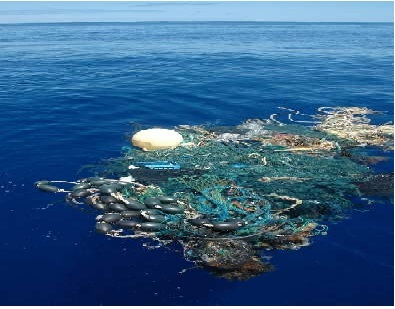
    You may have heard about the garbage patches that exist in the oceans – where specific ocean and atmospheric conditions ensnare debris, small pieces of plastic, which accumulate into large amounts of trash hundreds of kilometres from coastlines.

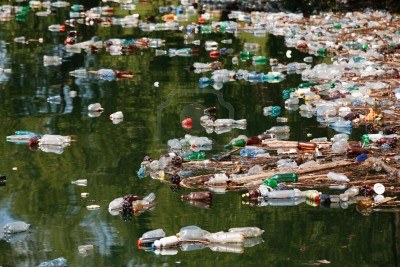
    Recent research has just discovered that the Great Lakes, the world’s largest freshwater ecosystem, are also being affected by plastic pollution.

    Collecting water samples from Lakes Superior, Erie and Huron researchers found plastic concentrations ranging from 600 to 650,000 plastic pieces per square kilometer.

    While these plastic particles aren’t always visible, they’re there, absorbing toxic chemicals from the water, entering the food chain and impacting wildlife.

    For more information on issues impacting Canada’s water resources and actions we can take to help curb our impacts, please visit Rivers To Oceans.

  • The Great Pacific Garbage Patch: Filling the Ocean with Plastic

    The Great Pacific Garbage Patch: Filling the Ocean with Plastic

    Have you ever been to a garbage landfill? Have you seen cities where the garbage lies on the street without ever being cleaned up? If you have, you know all about the smell and the general unpleasantness. Did you know that the biggest landfill in the world is actually not on land but in the water? Far out in the Pacific Ocean is an area called the Great Pacific Garbage Patch, where plastic and other litter has been floating around and polluting the water. The patch is a major concern for scientists and other people who want to keep the oceans healthy.

    The world’s biggest garbage dump is made up of two sections in the Pacific Ocean, one between California and Hawaii and the other off the coast of Japan. The two sections are connected by a current called the Subtropical Convergence Zone and together make up the Great Pacific Garbage Patch. The area where the Garbage Patch is located is called the North Pacific Subtropical Gyre, a section of slowly spinning water. The area is often called an oceanic desert since it has very few plants or animals other than tiny plankton.

    Instead of animals, however, the North Pacific Subtropical Gyre has huge amounts of garbage, about 90% of which is plastic. The trouble with plastic is that it never completely disappears but instead photodegrades, breaking into smaller and smaller pieces of plastic called “mermaid tears” or “nurdles.” Garbage can float around in the ocean for years or even decades, but eventually it ends up in one of the garbage patches, often floating just below the surface or sinking down to the ocean floor. Some scientists estimate that the size of the garbage patch could be as big as the state of Texas, although others believe it to be much smaller. However big it is, it’s a cause for concern.

    As the pieces of plastic or other garbage float around in the water, they pick up poisons from fertilizers and other substances that wash into the ocean or they join other kinds of garbage floating in the water. Thousands of birds and marine animals, possibly up to a million every year, die from eating or being caught in the ocean’s garbage. Debris that floats in towards the land pollutes beaches along the coasts of countries like Japan and Canada, sometimes even piling up several feet high in some areas.

    Where does all of this garbage come from? Some of it comes from people dumping trash from ships, but about 80% of it comes from land. It could be garbage carried by the wind from landfills or from city streets, which eventually makes its way to the ocean. It could come from litter that people drop into in the lakes and rivers before it floats down to the oceans. That’s why some towns have banned plastic grocery bags, which make up a large part of the litter. In some towns and cities, volunteers help to clean up beaches and other areas where garbage accumulates.

    Every small change can help to get rid of garbage in the oceans. What will you do to keep the world’s water clean?

  • Are plastic bags really necessary?

    Are plastic bags really necessary?

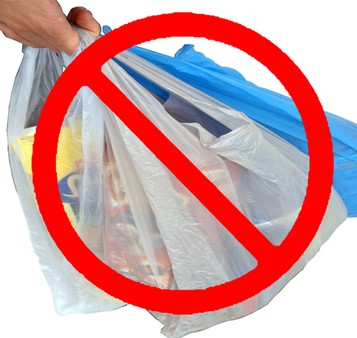
    A national newspaper columnist wrote that “banning plastic bags will do exactly nothing to save the planet.” She went on to argue that they’re even environmentally friendly. Outright bans may not be the best solution, but plastic bags pose a big problem that must be addressed. The columnist appeared to be more interested in contrarianism for its own sake than in acknowledging the environmental harm these products cause.

    Plastic bags are bad and for the most part unnecessary. Many of us older folks remember a time, only a few decades ago, when we didn’t have them. Sure, they’re convenient, but is that an excuse to damage the environment and the life it supports?
    Subscribe to Science Matters

    A University of British Columbia study found that 93 per cent of beached northern fulmars (migratory seabirds related to the albatross) had bellies full of plastic — a substantial increase from the last time they were tested, in 1980. Head researcher Stephanie Avery-Gomm told the Globe and Mail that one bird had 454 pieces of plastic in its stomach. Eating plastic can severely harm or kill birds, as well as the 260 other marine species, including turtles and fish, that we know eat or get entangled in the stuff.

    It’s not just bags, of course. We humans have become dependent on plastic for a range of uses, from packaging to products. Reducing our use of plastic bags is an easy place to start getting our addiction under control.

    Canadians use between nine- and 15-billion plastic bags a year, enough to circle the Earth more than 55 times, according to the Greener Footprints website. (U.S. citizens use about 100 billion a year!) Few plastic bags are recycled. Most are used for a short time to carry groceries, and then maybe re-used as garbage bags or to wrap dog poop before ending up in the landfill or the ocean. Some people argue that, because they make up about one per cent of the volume of waste in landfills, we shouldn’t worry. But one per cent of the massive amounts of what’s in landfills is a lot, especially since plastic doesn’t biodegrade.

    Because they’re lightweight, plastic bags are easily carried by wind and water. Besides accumulating in the ocean, they litter our streets and natural areas, often clogging drainage systems and contributing to flooding. They take at least 1,000 years to break down, and even then, they don’t biodegrade; rather, they fragment into smaller and smaller pieces, making them more likely to be eaten by marine and land animals.

    Plastic is also a petroleum product, so continued and increasing use of it accelerates the depletion of valuable fossil fuels. According to Greener Footprint, 8.7 plastic shopping bags contain enough embodied petroleum energy to drive a car one kilometre.

    Finding something to carry your groceries in is easy; inexpensive re-usable bags come in a variety of materials and sizes. Many are small and light and can be carried in a purse or daypack. I carry one in my back pocket and have refused dozens of plastic bags as a result. Some people worry about bacteria and other contaminants that may accumulate in the bags, but you just need to wash them regularly.

    One of the bigger issues is what to put garbage in. Before the 1980s, no one used plastic bags for groceries or garbage, nor did we have composting or recycling programs, so we know that plastic garbage bags aren’t entirely necessary. The first step is to reduce the amount of garbage we produce. In fact, there’s really no such thing as garbage. It’s all resources, so we should more accurately refer to it as “waste”.

    Buying products with less packaging and reducing overall consumption of unnecessary goods is a start. Re-using, recycling, and composting also help you cut down what you send to the landfill. For the unavoidable waste, and the dog poop, use bio-compostable bags.

    Outright bans on plastic bags may not be the best solution, but education and incentives to get people to stop using them are necessary. If we have any hope of finding ways for seven billion people to live well on planet with finite resources, we have to learn to use our resources efficiently. Plastic bags are neither efficient nor environmentally friendly.

  • Canada’s Environmental Changes – How You Can Make A Difference

    Canada’s Environmental Changes – How You Can Make A Difference

    When you hear the words “global warming” or “climate change” you might immediately think of its impact on humans and our habitat. But what about the animals living in Canada – how does climate change affect them?

    Canada is the second largest country in the world and home to many different species of animals, all with unique needs. Some thrive in rainforest temperate , like that found on Vancouver Island in British Columbia. Others need the cold climate of Canada’s vast north, like Iqaluit or Churchill, Manitoba on Hudson’s Bay.

    Climate change affects all of these animals. Perhaps the most well-known issue is with polar bears in Canada’s north. Global warming is changing how long ice is available in the north and this greatly affects the ability of the polar bear to hunt, swim and move about their habitat. Ice has been thinner and melting faster than ever before, causing many polar bears to scavenge for food in nearby towns. Unfortunately, many of these bears then can easily come into contact with humans and will have to be either put down or tranquilized and moved away from the town. However, the problem of not being able to hunt will cause a vicious cycle of the bear then returning to the town to find food again.

    A similar problem exists in the temperate rainforest of British Columbia (yes, Canada does have a rainforest. How amazing is that?). Grizzly and black bears thrive on hunting salmon in these habitats, but even the salmon spawns have been decreasing in size due to pollution and overfishing. When they cannot hunt, they also enter nearby towns and inadvertently threaten human populations.

    What can we do to help these animals? There are a number of seemingly small steps we can take to help slow down the effects of climate change that will in turn work to restore the natural habitats of these beautiful animals. One of the easiest things we can do is to turn down our thermostats. It may seem like a difficult thing to do in a Canadian winter, but lowering our heat consumption saves energy. Saving energy reduces the amount of fossil fuels our energy-producing plants need to expend. Turn your heat off when you leave the house or when you are sleeping.

    Another easy change is to take public transportation. Even if you only take it once a week, you are reducing the number of harmful emissions and pollutants in the air which threaten the ozone layer (causing the heat to rise). Imagine if we all took public transportation more rather than drove our cars – we would make a huge impact on the amount of pollution in our air!

    Our cell phone chargers, MP3 player chargers and other electronic devices all use up energy when they are plugged into the wall – even if they are not charging anything! Always unplug these chargers from the wall when you are finished using them.

    Finally, an easy way to reduce waste in our environments (which pollute our waters and forests) is to bring a reusable bag with you whenever you buy groceries. Most grocery stores now charge for plastic bags in an effort to convince people to bring their own reusable bags. It’s very easy to do – just pop one in your back pack and leave it there! You will never be without it or run the risk of forgetting it. Plastic bags do not break down for hundreds of years – imagine an entire forest filled with plastic bags, or our rivers and lakes choked with them. Breaking our addiction to these bags because they are convenient is very easy to do and will make a huge difference for our environment and animals.

    It may seem like an impossible feat, but making small changes in our everyday lives will make a big impact on the wonderful environment we get to call home. We are lucky to share this world with beautiful animals like polar bears, and it is our responsibility to help protect them. Implement these small changes listed above, encourage your friends and family to do the same, and we can ensure Canada remains beautiful and diverse.