Tag: profile

  • Industrial Electrician

    Industrial Electrician

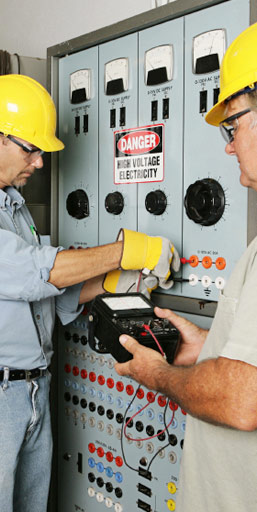
    Industrial electricians install, maintain, test, troubleshoot, service and repair industrial electrical equipment and associated electrical controls. These include equipment or components directly or indirectly exposed to electrical power such as motors, generators, pumps and lighting systems. Industrial electricians are employed by electrical contractors and maintenance departments of factories, plants, mines, fabrication facilities and government, and other industrial establishments.

    Industrial electricians must read and interpret prints, drawings and code specifications for layout and installation of electrical equipment. They install, service and maintain electrical components such as lighting fixtures, switches, conduit and electrical controls. They test electrical systems and continuity of circuits using test equipment to ensure system safety and compatibility. They conduct preventative and predictive maintenance programs and keep maintenance records. Some industrial electricians specialize in maintenance functions in areas such as high voltage and process controls.

    Industrial electricians must possess manual dexterity, and good planning, organizational and communication skills. They also require strong analytical, mathematical and problem-solving skills in order to read and interpret schematics, drawings and specifications. They should have good mechanical aptitude to install, troubleshoot and repair equipment. They must also have good vision and hearing, the ability to distinguish colours and a willingness to keep up with new developments in the trade.

    The work environment of industrial electricians can expose them to hazards. Their work is performed indoors or outdoors in extreme climate conditions, and may be at variable heights or in confined spaces. Other occupational risks include electrical shocks, arc flashes, falls, and injury from lifting and kneeling.

    This analysis recognizes similarities or overlaps with the work of construction electricians, powerline technicians, instrumentation and control technicians, electric motor systems technicians, heating, ventilation and air conditioning (HVAC) technicians, telecommunications technicians and industrial mechanics (millwrights). Industrial electricians also work with process operators, engineers and inspectors.

    With experience, industrial electricians may act as mentors and trainers to apprentices in the trade. They may also advance to managerial, inspection or teaching positions.

  • Interview with a Hairdresser

    Interview with a Hairdresser

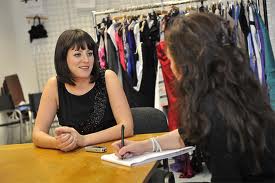
    Fashion is a huge industry worldwide. People care about how they look, so they turn to professionals to give them exactly what they’re asking for. One such profession that benefits from making people look good is that of hairdressing. I interviewed a local hairdresser, Sarah Hearsey, about her schooling, professional opportunities, and how it feels to be in the business.

    M: When did you decide to become a hairdresser?
    S: I decided to become a hairdresser in the middle of my aesthetics training. I saw what the girls in the hairstyling class were doing, and I figured that since I was there already, why not do hairdressing as well? It turned out to be just what I wanted to do in the end. I do cuts and colours more than I do anything else now.

    M: How much schooling did you go through before becoming certified?
    S: Well, I was about five months into my aesthetics course as I mentioned before. I took my teachers aside to discuss doing the hairstyling course and they agreed that it was an excellent idea. The total time that I was in school was nearly two years because I had to make up lost time due to illness.

    M: With your qualifications, where are you able to get hired?
    S: With all of the qualifications I have, I can work in salons, kid’s salons, barber shops, makeup stores, and makeup counters.

    M: Would you say that getting a job in a salon is the best way to go, or can a freelancer make just as much?
    S: I think that it depends on if you want to do hair every single day. I find freelancing better for me because you can make up your own hours and wages, and you aren’t really under a time restriction like you would be in a salon. It depends on the individual.

    M: What are some other benefits of freelancing over working in a salon?
    S: Another perk of freelancing is that anything you make goes into your pocket. Honesty is important in this respect because you have to write down everything you make if freelancing is the way you are going to go.

    M: How do years of experience relate to the amount a hairdresser can charge for their services?
    S: I think that because they [experienced hairdressers] have been in business longer than those who are newer, they become more trusted with their employers and clients. They will get more clients so I believe that raising their wage by year seems fair.

    M: What is the best thing about having this trade under your belt?
    S: The best thing about being a hairdresser is all the types of people you work with. You make them feel good about themselves. They leave with a smile on their faces and they play with their hair and say, “I love it and I can’t stop touching it!” It’s a good feeling.

  • Career Profile: Fashion Buyer

    Career Profile: Fashion Buyer

    You might have heard of the term “buyer” referenced on TV or in movies. He or she is usually fashionable dressed and always in a rush to find the next big thing clothing designers have to offer. Admittedly, in this case, fiction is not that far off from the truth. Fashion buyers are usually employed by clothing retailers, both big and small, to stock their shelves with products that are most likely to keep the customers walking through the front door. Though the term isn’t exclusively used with the fashion industry, the fashion buyer is the most popular incarnation of the job.

    Where does a buyer work and who do they work with?
    Oftentimes, a buyer will find him or herself attending runway shows, wholesale markets and special showcases put on by designers to present new products lines. Buyers are expected to take notes and keep a look out for the next trend destined to hit the market. Every buyer’s ultimate goal is to have the retailer they work for be one of the first retailers on the market to promote the next trend in time to scoop up the majority of the sales.

    Along with designers, buyers work closely with sales department representatives and clothing suppliers to ensure the products stocked are marketed in the best way and that they are no discrepancies with the products received. The majority of a buyer’s job involves negotiating the terms of a stock order with the supplier.

    Specializing
    Depending on the size of retailer, which varies from large department chain to privately owned boutique, there may be individual buyers responsible for specific products – like women’s shoes or men’s pants. Larger retailers will also have multiple levels of seniority determined by experience and responsibility given. Securing a position as an assistant buyer, for example, will allow new graduates and those who have been around for less time in the industry to gain experience and exposure under the wing of a senior employee.

    Certification
    Colleges focused on fashion education will offer certification for students interested in buying and merchandising. Some community colleges will also offer similar programs, but for those seeking opportunities right out of school, attending a program known for its fashion centric education might be a better option – particularly for networking and gaining contacts.