
Tag: recycling

  • Students Going Green

    Students Going Green

    Focusing on the sustainable environment as a student can help you reduce your ecological footprint while at the same time stepping in the right direction for your future career path.

    As the global warming debate increases its heat in society, universities are picking up on the need to teach students the importance of being environmentally friendly in their future places of work.   The Calgary Herald recently stated that “so-called “green jobs” are growing at more than twice the rate of traditional jobs in Canada–9.1 per cent over the last decade compared with the average of 3.7 per cent”(Sankey, 2009). Starting to incorporate sustainable thinking into your student life not only does the obvious, which is to help the environment, but can give you a competitive edge in a job market that is increasingly catering to environmentally friendly applicants.

    Many colleges and universities are offering programs that are entirely environmentally focused.  If you are passionate about the environment, this is a great route to take, as it will allow you to not only embrace your passion, but enter a growing and dynamic industry.  Some examples of environmentally focused programs are:

    • Trent University’s degree in Environmental and Resource Studies
    • York University’s Faculty of Environment offers a wide variety of environmentally focused programs ranging from environmental design to ecofeminist politics.
    • Seneca College’s Environmental Technician program

    This is just a small sampling, and most post secondary institutions offer similar programs.  If a program entirely devoted to the environment is not for you, try to take some sustainability focused course along your educational path.

    Incorporating environmentally friendly thinking into your everyday campus life will not only contribute to improving the natural environment, but can help you to obtain skills and knowledge that will give added value to your employers in the work place.  Here are some great ways to be environmentally friendly in your university life:

    • Walk, bike, bus to school.  Many schools offer bus passes included in tuition or a discount on monthly passes.  As well, Bixi Bikes, available in places like Toronto and Montreal, is a great way to get around (Bixi Bikes, 2010).  Bixi Bikes provides the ability to rent a bike from one location, and drop it off at another.  On campus parking can be expensive and scarce, so alternative transportation is not only great for the environment, but also great on your wallet.
    • Buy used text books instead of new ones, which is also a wallet-friendly environmental move.
    • Save paper! If your professor allows it, email in assignments instead of hard copies.  If you are required to hand in hard copies, print on both sides!
    • Bring a travel mug to school for your coffee – most coffee places will offer you a discount.  When you think of all the time spent at school, and all the coffees you will drink, the savings can actually add up! The same goes for reusable bottles for water.
    • If you are doing your own groceries, bring a backpack and reusable bags to the grocery store.  If you are eating in the cafeteria, bring a container for leftovers so you do not waste food, and get a snack for later.

    A pro-environmental attitude in university can be a spring board for a lifetime focus on sustainable living, which will only become increasingly important in years to come.
  • Gum Recycling

    Gum Recycling

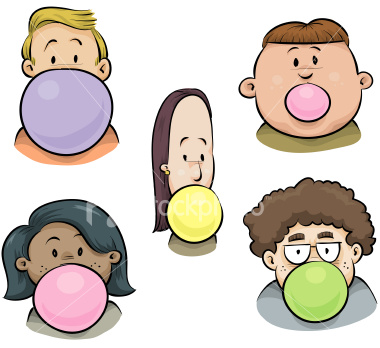
    Do you ever chew gum? How many times have you heard your parents or teachers tell you to put your finished gum in the garbage instead of spitting it out onto the sidewalk or leaving it under your chair? That’s good advice, since no one likes to have gum stuck to the bottom of their shoe or on their clothes or hair. Gum is sticky, and it can create a mess that is very difficult to clean up. Even in the garbage, however, gum can be a problem, since it never biodegrades. It would be far better if the gum could be reused or turned into something different. What if you could reuse gum and make it into a chair, a plastic container or fertilizer? Some scientists and inventors have found ways to turn discarded gum into many different products, and it’s helping to make cities cleaner.

    Cleaning up used chewing gum might not seem like a big problem, but it can be very expensive and difficult for city governments. According to research company Euromonitor International, Canadians bought more than 15,600 tonnes of gum in 2011. Much of that gum ended up on the streets. In one small area of a Toronto sidewalk, city officials once counted 2000 gum stains. Getting rid of that much gum can be difficult because it’s so sticky.

    One way to get rid of discarded gum is to use high-powered hoses that spray water and chemicals, but that can be expensive and wasteful. In Calgary, the government spends $50,000 each year on removing gum just from its light rail train stations, besides the money it spends to remove it elsewhere. The process ends up wasting a lot of water, as well as uses chemicals that might harm the environment. However, gum recycling might help to provide a solution for the problem.

    One of the first people to discover a way to recycle gum was a student named Anna Bullus from England, who found a way to change gum, which is made of rubber, into plastic. She now uses this plastic to make bright pink Gumdrop Bins where people can put more of their used gum. The bins come in 250-piece and 500-piece sizes and are appearing all over the country.

    Officials at the Southampton Airport in southern England, for example, claim to have the first airport in the world with gum recycling bins. Some of the gum from these bins ends up being recycled into a rubbery material used for construction and for running tracks. Some of the gum even ends up as toys. The United Kingdom already has a thousand gum bins in bus depots, train stations and other public areas. Some people estimate that the bins have reduced gum litter by 75%, and the project is still growing.

    Gum recycling is also coming to other parts of the world. Gumdrop Bins have appeared in an amusement park in the United States. In Canada, a company called Envyrobubble collects gum in 1000-piece containers and recycles it into fertilizer. If the idea of gum recycling catches on, who knows where it might appear next!

  • Are plastic bags really necessary?

    Are plastic bags really necessary?

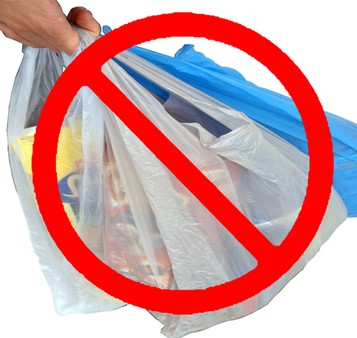
    A national newspaper columnist wrote that “banning plastic bags will do exactly nothing to save the planet.” She went on to argue that they’re even environmentally friendly. Outright bans may not be the best solution, but plastic bags pose a big problem that must be addressed. The columnist appeared to be more interested in contrarianism for its own sake than in acknowledging the environmental harm these products cause.

    Plastic bags are bad and for the most part unnecessary. Many of us older folks remember a time, only a few decades ago, when we didn’t have them. Sure, they’re convenient, but is that an excuse to damage the environment and the life it supports?
    Subscribe to Science Matters

    A University of British Columbia study found that 93 per cent of beached northern fulmars (migratory seabirds related to the albatross) had bellies full of plastic — a substantial increase from the last time they were tested, in 1980. Head researcher Stephanie Avery-Gomm told the Globe and Mail that one bird had 454 pieces of plastic in its stomach. Eating plastic can severely harm or kill birds, as well as the 260 other marine species, including turtles and fish, that we know eat or get entangled in the stuff.

    It’s not just bags, of course. We humans have become dependent on plastic for a range of uses, from packaging to products. Reducing our use of plastic bags is an easy place to start getting our addiction under control.

    Canadians use between nine- and 15-billion plastic bags a year, enough to circle the Earth more than 55 times, according to the Greener Footprints website. (U.S. citizens use about 100 billion a year!) Few plastic bags are recycled. Most are used for a short time to carry groceries, and then maybe re-used as garbage bags or to wrap dog poop before ending up in the landfill or the ocean. Some people argue that, because they make up about one per cent of the volume of waste in landfills, we shouldn’t worry. But one per cent of the massive amounts of what’s in landfills is a lot, especially since plastic doesn’t biodegrade.

    Because they’re lightweight, plastic bags are easily carried by wind and water. Besides accumulating in the ocean, they litter our streets and natural areas, often clogging drainage systems and contributing to flooding. They take at least 1,000 years to break down, and even then, they don’t biodegrade; rather, they fragment into smaller and smaller pieces, making them more likely to be eaten by marine and land animals.

    Plastic is also a petroleum product, so continued and increasing use of it accelerates the depletion of valuable fossil fuels. According to Greener Footprint, 8.7 plastic shopping bags contain enough embodied petroleum energy to drive a car one kilometre.

    Finding something to carry your groceries in is easy; inexpensive re-usable bags come in a variety of materials and sizes. Many are small and light and can be carried in a purse or daypack. I carry one in my back pocket and have refused dozens of plastic bags as a result. Some people worry about bacteria and other contaminants that may accumulate in the bags, but you just need to wash them regularly.

    One of the bigger issues is what to put garbage in. Before the 1980s, no one used plastic bags for groceries or garbage, nor did we have composting or recycling programs, so we know that plastic garbage bags aren’t entirely necessary. The first step is to reduce the amount of garbage we produce. In fact, there’s really no such thing as garbage. It’s all resources, so we should more accurately refer to it as “waste”.

    Buying products with less packaging and reducing overall consumption of unnecessary goods is a start. Re-using, recycling, and composting also help you cut down what you send to the landfill. For the unavoidable waste, and the dog poop, use bio-compostable bags.

    Outright bans on plastic bags may not be the best solution, but education and incentives to get people to stop using them are necessary. If we have any hope of finding ways for seven billion people to live well on planet with finite resources, we have to learn to use our resources efficiently. Plastic bags are neither efficient nor environmentally friendly.