Tag: resume tips

  • Uncover the Tricks for an Outstanding Cover Letter

    Uncover the Tricks for an Outstanding Cover Letter

    We all know that a resume is a necessary tool when you set off to go job hunting. However, not a lot of people are aware that they should submit a cover letter along with their resume.

    Writing a cover letter though requires patience and attention to detail. However, once you have prepared a good resume for yourself, a cover letter will be manageable to craft within a few hours. The thing to remember about a cover letter is that a generic one is a no-no; you should always tailor it according to your target job. To do this, here are the tricks to keep in mind:

    Understand what your target position needs

    However, sometimes it will take you two or three passes to process what the essentials are. As such, when you see a job posting you are interested in , don’t be keyboard-happy and send your resume right away. Take the time to read the qualifications and skills required for the position and be sure to note a commonality. The most common thing you find out about them will be the one to highlight in your cover letter.

    Summarize your qualifications

    This is similar to the qualifications summary in your resume where you detail your job positions, core competencies, industry, length of experience, strengths, accomplishments, and educational experience. In this part, ensure that you are providing information that is relevant to the position you are applying for. For example, say you take pride in your email communication skills, but you are applying to a direct sales representative role. In this instance, you can play up your interpersonal skills and outgoing personality and mention your persuasive skills, but your writing skills may have to take a backseat.

    Align your strengths with the prioritized requirement

    If you are looking to apply as a shift supervisor at a busy café, what do you think is the most important quality that the hiring manager or recruiter will look for? The first thing an employer might look for in this role is a candidate who can provide efficient service and a positive environment. Once you know that, you can do a self-evaluation and look for your skill that best fits this necessity. For example, you worked as a supervisor at a clothing store at a busy mall during Christmas time; this will catch the attention of a prospective employer of a busy commercial establishment.

    Research the company

    A cover letter is essentially about you, but hiring managers and recruiters will also want to know how you fit into their team. This is the part when you have to take the time and do research on the company you are applying to. Find out about their mission and vision. Research their company values. Discover what foundations or organizations they support. Once you have researched these aspects, you can find something that speaks to you.

    A cover letter complements your resume, and it should not be taken for granted. It gives the hiring manager or recruiter a glimpse of what you can offer them. A cover letter can also distinguish whether they should have a look at your resume or throw it away. Follow the tips above and you will be on your way to having a cover letter that grabs attention.

    SOURCES:

    https://blog.livecareer.com/how-to-tailor-your-cover-letter-the-easy-way/

    http://careers.workopolis.com/advice/how-to-tailor-your-resume-to-any-job-posting/

    http://www.bubble-jobs.co.uk/blog/b2c/tailor-write-cover-letter/

  • Dressing Up Your Resume: Knowing the Essentials

    Dressing Up Your Resume: Knowing the Essentials

    Job hunting is a grueling process so you would like to have the right tools to make it a less grueling task, and the best way to do that is to have a well-written resume. A resume reflects what you have to offer, and if it does not succeed in doing that, it will end up in the bin (harsh, I know).

    As such, Think of preparing a resume to dressing up for the job interview itself:  Wear your best suit or dress, your best hairstyle, your best pair of shoes, and your best accessories. Below is a short guide on how your resume should be dressed for success:

    Objective

    If you are meeting a friend you have not seen for a long time at an unfamiliar restaurant or café, the first thing you do is research for directions to get there. If you don’t, you might end up at the wrong place; this applies when you are preparing your resume. . The objective should clearly state to the Hiring Manager or Recruiter what position or job title you are applying to. Otherwise, you will end up going through the application process for a job you are not interested in or might not like at all. Or because your objective is unclear, the recruiter may pass on your resume altogether.

    As such, when writing your objective, keep in mind the position you are aiming for, the key skills that make you qualified for the position, and the benefits or values that you bring to the table. If you are an aspiring digital marketing freelance writer, for example, a good objective is “Well-versed digital marketing specialist who aims to be part of an online marketing team to craft strategic copies and campaigns which focus on brand establishment and loyalty.”

    Qualifications Summary

    We all want to put our best foot forward in a resume, but you do not want to give away too much information that will give your readers a difficult time. Thus, instead of listing down all your qualifications, be sure to condense them coherently so it is readily apparent what you can offerthe company.

    To summarize your qualifications, the key points to include are: Title, core competencies, industry, length of experience, strengths, combination of accomplishment highlights, and academic experience. You can also mention language skills, technical skills, and personal profile. Some examples are:

    • Self-motivated and customer service-focused supervisor with two years of experience in retail and customer service industries providing exceptional frontline assistance.
    • Demonstrates outstanding time management skills and prioritization skills.
    • A Journalism graduate at Ryerson University who is a well-articulate communicator fluent in English and French and proficient in Microsoft Office Suite, Customer Relationship Management systems, and Sales Force.

    Professional Experience

    When noting your professional experience, conciseness is key since you would not want too many details which might make your resume longer than necessary. To start on a good note, remember this simple format: company name, city and state, month and year of employment, and position title.

    A rather easy part of putting your professional experience on paper is that you do not necessarily have to be creative as the primary focus is to list your job descriptions. You can refer to your contract. If that is not available, you can refer to internet postings or detailed classified ads in newspapers.  Do not merely copy or paste, though. You have to relay how you performed on those respective responsibilities. Highlight your accomplishments and provide statistics when you can. For example, we all know what a customer service representative does, but what made you different from the rest? Write “Achieved 95% quality score in the first year” or “Increased sales performance for the campaign by 5% in the first quarter.”

    Educational Attainment

    As high school or college or university graduates, you are not expected to have a lot of information under educational attainment like an MBA or Ph.D. as compared to those who have been working for several years. However, realize that job search is truly competitive and you would like to stand out from the rest by highlighting your skills as a student.

    So apart from noting down your degree or coursework, you can also mention your extra-curricular activities like sports or participation in the school newspaper. You can also mention your leadership skills and say you were elected as Treasurer in Senior Year or you represented your class in school board meetings.

    Readying a resume is overwhelming for newcomers and old-timers to the job search process. However, once you take note of those essentials above, you can get the hang of it and you will have your resume all dressed up to get the job.

    SOURCES:

    Resume Magic – Trade Secrets of a Professional Resume Writer by Susan Britton Whitcomb (Book)

    https://www.thebalance.com/what-do-employers-look-for-in-a-resume-4050949

    https://www.glassdoor.com/blog/4-employers-resumes/

  • Writing Effective Cover Letters

    Writing Effective Cover Letters

    A cover letter is the first thing a potential employer sees, even before they look at your resume. Without a strong cover letter, they may not even get that far.

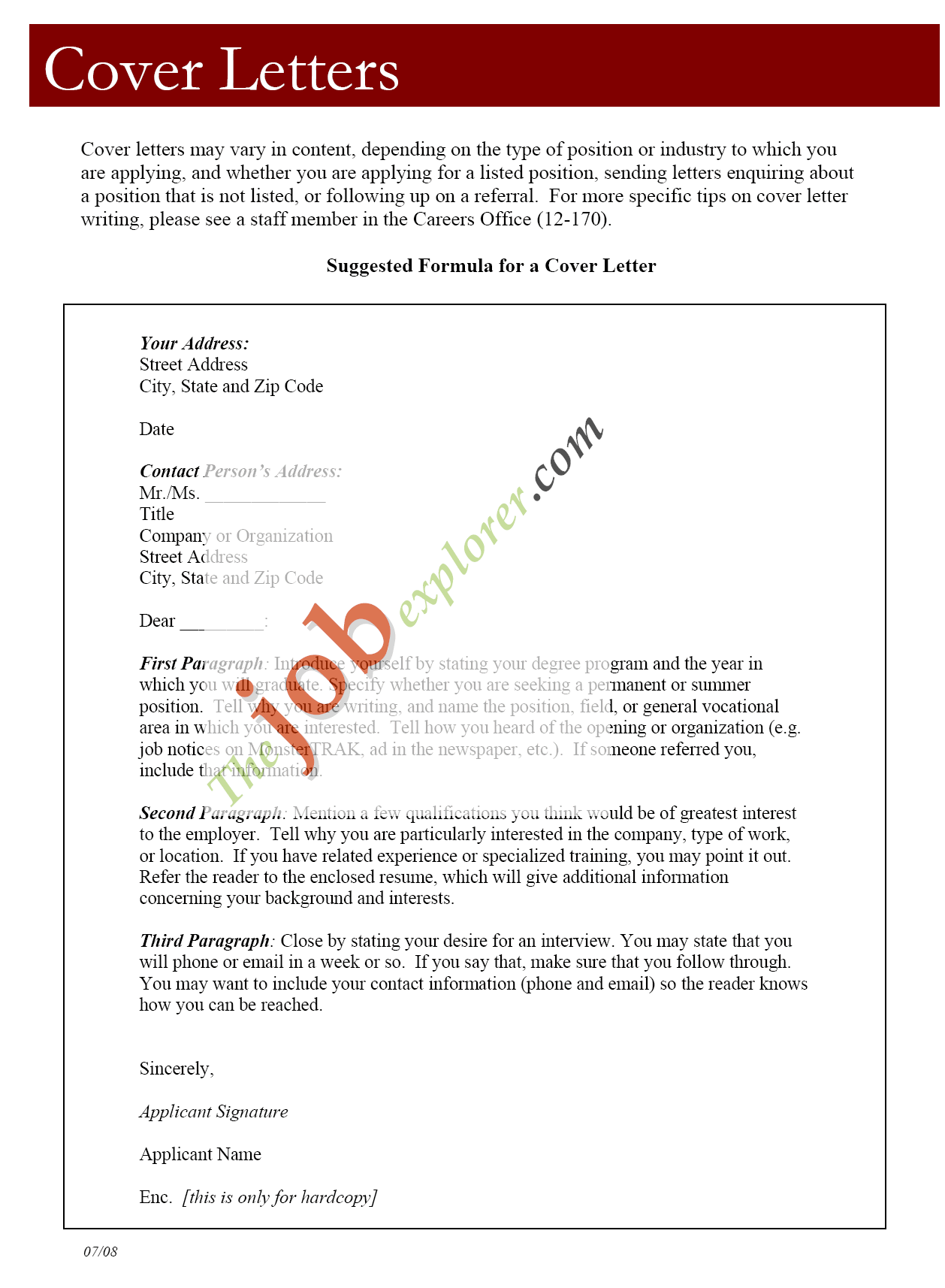
    Cover letters are more often sent by email these days, with your resume sent as an attachment. But, whether print or paper, the anatomy of a cover letter is essentially the same. You open with a greeting, state the position you’re applying for, outline your qualifications, and sign off.

    It may sound like a lot, but your cover letter should only be about one page long.

    Greeting
    Start it as you would a letter, “Dear So-and-So.” Using “Hi” or “Hello” in place of “Dear” may come across as too casual.

    If possible, your letter should be addressed to the specific person doing the hiring, and lead “Dear First Name Surname.” You can find this out from the ad, through a contact who already works there, or by calling up the human resources department and asking. But if not, “Dear Hiring Manager” works in a pinch. However, going the extra step will help your cover letter stand out.

    In the past, you’d preface the name with Ms or Mr, but these days it seems a little fussy and can quickly become confusing for gender neutral names.

    Position You’re Applying For
    Following the greeting should be a short statement about the position you’re applying for – “Please consider my application for [position title] at [company].” You may want to include a note about how you heard about the position. If a friend or family member who already works for the company recommended that you apply, the hiring manager will take a closer look at what you have to offer.

    Your Qualifications
    This is the most important part. It’s what gets them to flip to your resume and call to arrange an interview. Depending on your level of experience, this section may be one to three paragraphs long.

    The focus should be on showing how your skills meet the employer’s needs. Highlight the work, volunteer, or personal experience you have that demonstrates you’re a perfect fit for the position. Don’t just give a bald work history – they can read that in your resume. Instead list your professional skills, soft skills or interests, how you won employee of the month, or had the highest sales during the holidays. If you’ve taken any certified courses relevant to the position, be sure to include them here.

    Closing Remarks
    Close with something courteous like, “Thank you for your time and consideration. I look forward to hearing from you.” On another line, your valediction, “Sincerely,” or “Regards,” another line break, your name, phone number, and email address.

    Look It Over
    Once it’s finished, look it over and make sure it flows. Don’t solely rely on spell check to catch spelling and grammar errors. “Deer” may be spelled correctly, but if you write “Deer Jane Smith,” you’re going to look pretty silly – and even sillier if it’s actually “Jayne Smyth.” Triple check the spelling – there’s nothing more embarrassing than getting someone’s name wrong.

    It’s a good idea to have another pair of eyes go over it. Have a friend or family member who may be able to offer suggestions or catch any typos or omitted words you might have missed.

    Good luck!

  • Resume Writing Tips

    Resume Writing Tips

    Include a Summary
    Everyone wants to make a good first impression. Carefully read the job application summary, highlight keywords and phrases, then think of how you meet or exceed the job expectations and required skills. Tailor your summary for each job you apply for. Don’t make your resume “one size fits all.” You might think it’s more efficient and less time consuming, but employers might think you’re lazy and not ambitious enough to address each position you apply for individually. Also, employers will think you went the extra mile — it will demonstrate initiative and that you really do want this job.

    Choose a Template
    Don’t reinvent the wheel. Browse hundreds of free template options online and choose one that catches your eye. If you can’t find a free template that suits your fancy, you can also purchase several options from various websites. Choose a template that you find attractive and that suits your personality, but don’t try to be too unique or stand out from the crowd too much because — while your resume will surely get noticed — you might get the “wrong” kind of attention. The trick is to express your personality in a subtle way; it’s all about balance.

    Use the Active Voice
    Show power, confidence, and that you mean what you say. Speak like you know what you’re talking about to grab your potential employers’ attention and maintain their interest. The passive voice, while appropriate in many cases, often conveys a sense of hesitancy and is much less powerful.

    Get to the point and don’t beat around the bush. Also, don’t try to sound too smart or sophisticated by using long, complex words. Employers are more interested in your skills, experience, and what you can offer them rather than your extensive vocabulary and sophisticated understanding of the English language.

    Avoid the First Person Pronoun
    Yes, this is about you—but what it’s really about is getting you a job, so avoid using “I” and “me” in your resume. The third person conveys a sense of professionalism, while the first person is too personal and informal for resume writing.

    Less is More
    Make your words and sentences pack a punch. Also, make your resume easy-to-read for the often impatient and overworked person viewing your resume. Avoid flowery language like the plague and don’t embellish your words. Although it might be counter-intuitive, you’ll actually be more convincing if you use less dramatic and descriptive language. Your point can get lost if it’s surrounded by too many adjectives and long, ornate words.

    Look Attractive
    Don’t use fancy font. A sans serif-style font is most appropriate and attractive looking for resumes — examples include Calibri, Arial, and Lucida Sans. Lucinda Calligraphy might be calling your name with her ornate, fancy beauty, but the font will be too difficult to read.

    Add a bit of colour. Use only one colour and choose the tone carefully. Use this colour sparingly. For example, make your name your favourite shade of pink for an added punch that will get you noticed, but wont make your resume look “gaudy” or too flashy.

    Be Conscious of Length
    One to two pages will suffice. Any more than two pages and your employers probably won’t read the whole thing or they will just scan the last part.