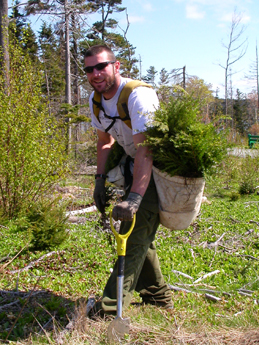
What does a tree planter do?
Tree planters and other forestry workers perform physically demanding work. Some of their main duties are to:
– Clear brush.
– Carry and plant trees using manual tools.
– Feed machines manually.
– Prepare a site for planting.
– Use, clean and maintain various equipment.
– Work with chemicals for growth, or for weed and pest control.
– Supervise other workers.
What are some health and safety issues for tree planters?
Tree planters face a variety of physical, biological, chemical, ergonomic and safety hazards. These include:
– Insect bites or stings.
– West Nile virus (mosquitoes).
– Lyme disease or rocky mountain spotted fever.
– Rabies.
– Allergic reaction to plants.
– Exposure to bird or rodent droppings:
– Histoplasmosis
– Psittacosis
– Hantavirus
– Exposure to chemicals.
– Risk of pain or injury from working in awkward positions, performing repetitive tasks or lifting.
– Risk of injury from hitting a hidden rock with a shovel.
– Exposure to extreme temperatures or other extreme weather conditions.
– Driving – vehicle safety hazards.
– Slips, trips and falls.
– Working with chainsaws and other tools/equipment.
– Stress.
– Working alone.
– Extended work days.
What are some preventive measures for tree planters?
– Learn safe lifting procedures.
– Keep tools and equipment in good working order.
– Use appropriate personal protective equipment (PPE) for the task.
– Wear appropriate footwear.
– Avoid awkward postures and repetitive manual tasks, or take frequent breaks.
– In the warmer months, cover up for protection from sun, heat and insects.
– Stay hydrated.
– In vehicles, always wear a seatbelt.
What are some good general safe work practices?
Use safety procedures for:
– Safe lifting
– Selection, use, maintenance and storage of PPE
– Working with pesticides and other substances
– Using chainsaws and other tools or equipment
– Follow company safety rules.
– Learn about chemical safety, WHMIS and MSDSs.
– Know how to report a hazard.
– Follow good housekeeping procedures.