
Tag: school

  • How to Pick a School that Works for You

    How to Pick a School that Works for You

    Deciding which post-secondary institution to attend is easily one of the most difficult decisions you may face in your lifetime. If you find yourself scattered and unsure of where to begin, just think of PED: Program, Environment, and Distance. This is a useful technique that can help you organize your thoughts and carefully lay out the important factors.

    Program: The very first thing you should do when picking a school is question whether they have the program that is right for you. A common mistake that students tend to make is to pick a school based on its overall reputation as opposed to the reputation of its programs. A school could be ranked at the top of all the major lists but that doesn’t necessarily mean that they’re the best for whatever program you intend on enrolling in. If you’re the type of person who refers to ranking lists, make sure these lists are program specific. If you can find a way to do so, talk to students who are actually enrolled in the programs you’re considering and discuss any concerns you may have. They’re likely to be very honest with you and you can get some insider-info that you won’t find in the fancy brochures.

    Environment: Believe it or not, your surroundings can have a major impact on how well you do in university or college. I’m the type of person who needs a refreshing walk when I get stressed so it was important for me to choose a school that had a beautiful campus. For some, old-style traditional buildings and scenic walkways will do the trick. For others, modern buildings and high-tech facilities are a must. Keep in mind that many schools have a good balance of both! Also take a look at the environment outside of the school’s campus and ask yourself if you’d prefer to be located in a big city or something with more of a suburban feel. If you plan on living off campus in upper years, this could be a bit of a deal-breaker for you.

    Distance: One of the most difficult things about going away for school is being away from your family and friends. If you’ve got tight-knit relationships, going too far away from your support system may be too much to handle. And that’s ok. You might not even have to leave home if you’d prefer to commute. However, if you’re determined to leave the nest you should always pause to consider how often you intend to visit home (if at all). If you’re making many trips, things can become quite costly if you live hours away from home. The important thing here is to speak to your parents or guardians and figure out a system that works best for everyone. Before you do this, though, have an honest think-session with yourself and decide what’s most important for you. If independence is key, be prepared to negotiate and do quite a bit of reassuring.

    Each school you consider is bound to have its pros and cons. The best you can do is weigh all of your options and choose a school that you’re most comfortable with. Others may input their opinions but the choice is ultimately yours to make!

  • School vs. Life

    School vs. Life

    When you  make the move to junior high and high school, everyone seems to think that there is no way to balance both having a social life and excelling in you academics. However, there is always a way – as long as there is a will!

    The way I see it, you need to earn your breaks, vacations and time off; That is what used to drive me to finish up my last essays and my final projects. I would look at the calendar and mutter to myself, “It’s almost March Break – I got to work hard now so that I can fully enjoy my time off school”. Then I would put all of my effort into my work until the very last class and forget about (almost) everything! Essentially, you want to be able to relax during your breaks and long weekends, so you just have to think of this as a “crunch time”.  Even now, in university, I do this to myself – I work and study hard and once I finish the exam, I shop! Sounds odd to some people, but I call it a “Celebratory Spree Day”, the day when I get to relax after pushing myself to study so hard for my exam period.

    One can also practice time management by planning when you will study and setting aside a few hours for fun with friends, too. For example, give yourself some hours to hang out with your friends before heading home to finish assignments and study.  It’s possible to have great academic standing and a social life, you just need to have the determination and the planning.

    Always remember to enjoy life!

  • Child Labour: Working For A Living

    Child Labour: Working For A Living

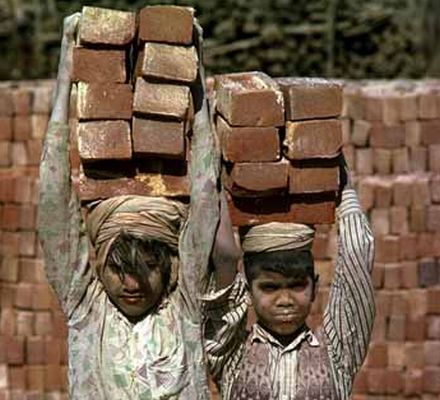
    Do you usually have a lot of chores to do at home when you return from school? Do you have to help cook supper, walk the dog, mow the lawn, or shovel the driveway? If you’re like most Canadians, you probably have to do at least some of that kind of work. You might even have a paid job like delivering flyers or babysitting after school. Does it ever feel that you have to work too much? Many children around the world have to do much more. That’s why people in many countries have been working to end child labour by the year 2016.

    When people talk about child labour, they don’t mean the times when parents tell their children to set the table for supper or to help wash the dishes. They mean work that prevents children from receiving an education or that damages their growth in any way. Sometimes the work even kills them. Young children sometimes work all day in factories or other unhealthy or dangerous places instead of going to school and getting an education.

    Canada has laws that require parents to send their children to school, and most people follow the rules. From the age of twelve, children are allowed to have jobs that don’t interfere with their education or harm them in other ways. In countries like Canada and the United States, rules about child labour usually work fairly well, although there are still many cases of children working long hours in dangerous conditions. Sometimes, the children even die on the job. The official estimate of child labour in wealthy countries is about one percent.

    In poorer countries, however, the situation is worse. Parents have many children to feed and often also have to support their own parents or other relatives. Even with long hours of work, parents might still not make enough money to survive. In some cases, they might not be able to find any work at all. They might need the income their children bring into the family. Also, sending children to school can often be too expensive for them to afford. The highest level of child labour is in Asia, where about sixty percent of children work.

    According to the International Labour Organization, in 2008 about 215 million children around the world had jobs which kept them from going to school or playing. That number was down slightly from 2004, but it actually increased among some groups of children. The problem will continue until people do something about the causes.

    How can you help solve the problem of child labour? You can encourage people in government to make better laws, but a more effective way to end the worst kinds of child labour is to get involved personally in helping the families. Even if the child labourers live in another country, you can donate money to help raise the family income or you can tell your friends and family about the issue. Every bit of help can make a difference!