Tag: skilled trades

  • Career Profile: Roofer

    Career Profile: Roofer

    Description:

    When you are a roofer, you have many jobs. However, the main part of being a roofer is to install, re-install or repair roofs on any type of building structure. They can work on industrial or residential buildings. You must not be afraid of heights, love working with your hands, and have a keen eye for detail. Roofers work with materials such as shingles, slate, asphalt, aluminum, wood, or related materials.[1] Some sample job titles within the roofing industry can be: aluminum shingle roofer, applicator, composition roofer, gravel roofer, gypsum roofer, metal roofer, slate roofer.[2] A roofer, as you may have already guessed, works outside, 99% of the time. You might end up working in harsh weather, and or be a seasonal worker. Although roofers work in the winter, there are always more jobs available in the spring, summer and fall seasons.

    Education and Training:

    The best way to become a roofer is through an apprenticeship. However, according to http://www.roofingcanada.com/, you can either choose to have around 3 years of work experience in the trade with your high school diploma or GED, or a two-three year apprenticeship program in order to qualify for trade certification. Also, “Roofing trade certification is compulsory in Quebec and British Columbia and available, but voluntary, in Newfoundland, Nova Scotia, Prince Edward Island, New Brunswick, Ontario, Manitoba, Saskatchewan, Alberta, the Yukon and the Northwest Territories.”[3] Thus, it is much better to learn everything you can through programs and education, or you will be working outside of the industry standard requirements. As always, the more education and experience you gain, the better your salary will be. Conestoga College in Ontario offers a Roofing Fundamentals program that will set you up to receive an Ontario College Certificate. It will teach you the basics of roofing and also give you a chance to work in the field.

    Salary and Wages:

    The national pay range for a roofer is from $14.75 to $31.29. The national average pay per hour is $21.94. Again, when starting out or working in an apprenticeship program, you might not be making very much money. Your pay will increase with time like every job, within reason. The national salary range for a roofer is $31,411 to $73,978. So, if you keep learning and gaining experience in roofing, you can make very decent money.

    There are 3 consistent job characteristics of being a roofer: working outside, being up high (heights), and working with your hands. If you can accept those main characteristics of the job, give it a try!

    Sources:

    [1] http://www.myplan.com/careers/roofers/description-47-2181.00.html

    [2] http://www.myplan.com/careers/roofers/description-47-2181.00.html

    [3] http://www.roofingcanada.com/html/careersinroofing/appinfo.html
  • Career Profile: Cabinet Maker

    Career Profile: Cabinet Maker

    Description:

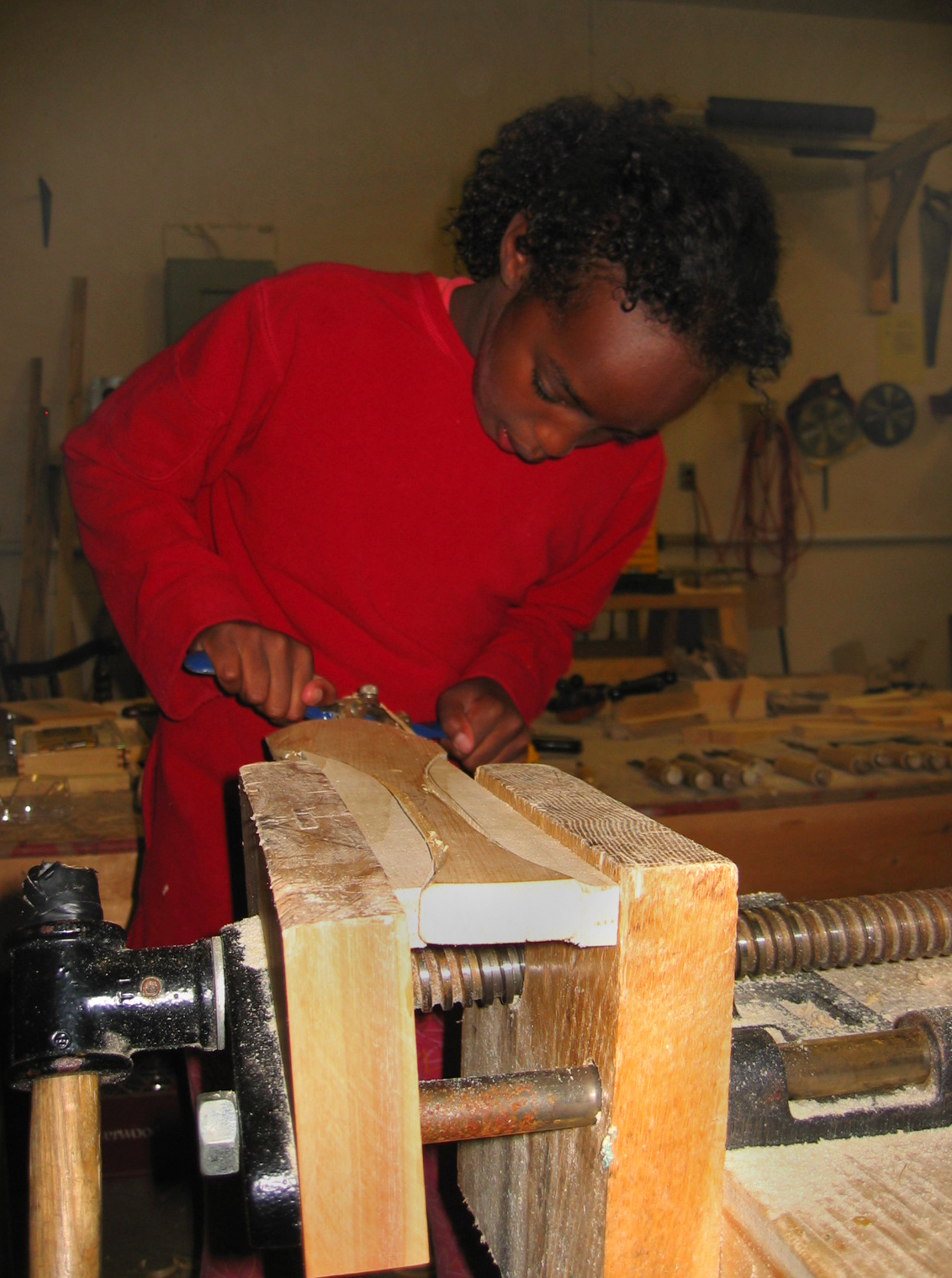
    A cabinet maker has the ability and skills to build furniture, re-finish furniture, and design furniture of all kinds. Say your mom wants to re-design her kitchen cupboards; a cabinet maker will work with her on a design, and then install it for her. To be a cabinet maker, it is as important to be creative as it is handy with power tools and blue-prints. A cabinet maker may work for a corporate company, or as a contractor, or both. Furniture is something that is always needed, and people love to have stylish, attractive things – a cabinet maker can create these things. Mainly, a cabinet maker works with different types of wood. However, they may work with different kinds of plastic and synthetic materials. As our forests grow smaller, people are starting to use more man-made materials in order to “cut back” on deforestation.

    Training and Education:

    If you want to be a cabinet maker, you should enjoy working with your hands and not be afraid to use machines and power tools. You must also have the ability to read blue-prints and technical drawings. It is important to have decent math skills in order to calculate measurements, as well. You will also need to know how to operate and read CNC machines (Computer Numerical Control machines).[1] Generally, you can attend a 1-2 year college course where you will learn furniture design and construction, carving, elements of design, cabinet making and finishing. Employers mostly want to see that you have your high school diploma, but having extra education is recommended. It is also common to obtain the skills needed to be a cabinet maker by entering into an apprenticeship program. In an apprenticeship, you will most likely be making money at the same time you are learning the trade.

    Hours and General Duties:

    As a cabinet maker, your tasks may include[2]:

    • Estimating jobs costs and material requirements
    • Performing on-site repairs and cabinet adjustments
    • Working with clients on designs
    • Cleaning and maintaining CNC machines
    • Assembling and installing cabinets
    • Reading and interpreting documents and measurements, making sure they match with customer requests
    • Match materials for colour, grain, texture

    As a cabinet maker, you can work 9-5 hours for a corporate company, or set your own hours as a contractor, depending on your client’s requests. You may also work in a factory setting where you may have to take part in shift work at night, and during the day.

    Salary and Wages:

    A cabinet maker earns an average wage of $19.77 per hour. Your rate can go up depending on your skills, experience and education. There is always room to grow in this trade. You can also overlap your skills with training to become a master carpenter. The national hourly rate for a cabinet maker can range from $13.32 to $29.00. The national cabinet maker salary may range from $27,972 – $62,701.[3]

    If you like working with your hands, being creative and working with people, this may be a career option for you. It is a hands on job mixed with coordinating, planning and design-the best of all worlds! Check out your local and community colleges and get started!

    Sources:

    [1] http://www.jobguide.thegoodguides.com.au/occupation/Cabinetmaker

    [2] http://www.jobguide.thegoodguides.com.au/occupation/Cabinetmaker

    [3] http://www.payscale.com/research/CA/Job=Cabinet_Maker/Hourly_Rate

  • Skilled Trades: The Basics

    Skilled Trades: The Basics

    In Canada, the skilled trades industry has had steady employment growth since the mid-1990s. It’s an industry that has attracted many unions and has also paved the way for self-employed workers. It is an industry that keeps growing, as there will always be a demand for skilled trade workers.

    The average wage for workers in skilled trades is $22.36 per hour, which is twice the amount of the Ontario’s $11.00/hour minimum wage for adult workers. Within the next two decades, 40% of the jobs created will be in skilled trades. This means that employment will be steady, plentiful and secure. As many skilled trades’ workers are unionized, their wages tend to be higher than that of a non-unionized worker.

    Ontario, in particular, has been improving the industry by investing more $165 million dollars to support apprentices. The Ontario Ministry of Training, Colleges and Universities offers plenty of information on how to obtain apprenticeships and educational programs that lead into skilled trades. They also assist in providing loans and grants to individuals who qualify.

    With the skills of a tradesperson, you are not limited to one location. You’re free to employ yourself anywhere. Western Canada has a high demand for trade workers and many workers from Ontario move all over Canada and work on contracts through corporations.

    The skilled trades industry has great opportunities and flexibility for its employees. It’s an industry that offers great pay, great security and great amount of work now – and in the future.

  • Women in Skilled Trades

    Women in Skilled Trades

    You’re a girl that knows what she wants.

    Rolling up your sleeves for a demanding, rewarding, and well-paying career that combines both your hands-on and creative interests; that’s the future you want. And now is the perfect time to go get it!

    Currently, the Canadian government is working to address a skills mismatch, which has many workers under trained or unprepared for the current economy’s workforce.

    According to a February 2013 publication titled Looking for a job? Why you should consider a trade in The Globe and Mail, there will be a shortage of one million tradespeople in Canada by 2020. For women interested in pursuing a career in the skilled trades, this means that now is the perfect time to start the path to career success in this high-demand industry.

    While some may be nervous to start a career in the skilled trades, which has been and is predominantly male, there are a number of support programs and aids available to assist women as they train for a career in the trades.

    The government of Ontario offers a Women in Skilled Trades and Information Technology Training program, which provides unemployed and underemployed women in communities with a high demand for skilled trades and IT professionals funding and training both in-class and on-the-job.

    Additionally there are other organizations and support programs throughout the province, country, and world dedicated to women interested in the trades. For example, Women in Nuclear (WIN) offers mentorship, networking and professional development opportunities for women interested in nuclear energy.

    Similarly, the Canadian Association of Women in Construction provides support for women interested in pursuing a successful career in the construction industry.

    There are plenty of other programs designed for women interested in pursuing a career in the skilled trades, offering a community of mentorship, funding, networking, and support specifically for women.

    With a growing presence of women entering the skilled trades, there has also been a growing presence of women’s skilled trades equipment and clothing. Moxie Trades provides mentorship, support, and apparel for women working in the trades. Whether it’s pink work boots, hard hats or safety glasses, or speaking at events across North America, Moxie Trades is a voice for women in the trades.

    Once thought of as primarily a male industry, women are moving toward more inclusion in the skilled trades.

    If you’re looking for a rewarding, secure, financially stable career in your future – it’s time to invest in the next steps toward a career in the skilled trades.

  • Why you should Consider the Skilled Trades

    Let me start with a disclaimer: I am not a tradesperson. But I know enough to know why you should consider this kind of career.  My goal here is to help you check out the skilled trades to see if that’s an option that you would like to consider, especially if it’s something you never thought of before.

    The number and range of trades have expanded greatly in recent years: it’s not just construction, plumbing and electrical. Those are the primary careers (the foundation, if you like) but they branch out into lots of different fields: such as painters, installers (say, for hardwood floors, cabinets, home security, roofing, or even for renovations in a house); and sheet metal workers.  There are welders and furniture makers and finish carpenters. There are even HVAC technicians (Heating, Ventilation and Air Conditioning). There are lots of jobs that aren’t as well known and should be considered when entering the trade sector.

    When there are some trades that may not interest you, consider the variety that are available. Most offer an apprenticeship once you get through school, allowing you to get the immediate experience that many others spent a lot of time searching for in order to become employable.  Apprenticeships generally involve spending time on the job site, learning from people who actually do that job, as well as in-class instruction.  While others are searching for a career, you are already gaining experience from someone who can answer your questions one-on-one.  And remember: there is no such thing as a stupid question.   You are there to learn, and they are there to help you do that, and make sure that you develop a sound body of knowledge and learn the proper and safe way to do things.

    In addition, work done by tradespeople must follow a set of rules and requirements, as per the Building Code, to be approved or inspected before it can be called complete.  Therefore, with an apprenticeship you can claim that your work fits the requirements necessary (or to a higher standard), and be known as someone who does the right job in the right way.

    Apprenticeships tend to vary in the length of time, so research helps you here if you know the career. You can also examine the job trades through the Canadian Job Bank, which helps you find occupations related to that career along with the average wage.

    I had always thought the trades were something not to be admired or respected, because many people strive for something with an “intellectual pursuit” (as in working in an office or something like that). However, I’ve come to realize that the trades are actually a highly-desired career choice, if you can complete the tasks required of you. The stereotypes of trades workers not being “smart” or “intelligent” is just wrong and misguided. They are highly respected because they can do beautiful things that you can’t.  I can’t make furniture or lay bricks in a straight line, but a skilled tradesperson can do these things and make them look wonderful as well as work the way they should.   The trades are considered reliable jobs (particularly when compared to teachers) – you can start up your own company marketing your skills and develop clients that way. More people are employed than those looking for jobs, so the trades really help you obtain all the things people from all industries strive for: hard work, steady income, and the satisfaction of a job well done.