Tag: skills

  • Youth Apprenticeship Programs

    Youth Apprenticeship Programs

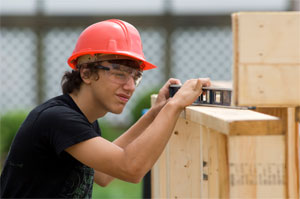
    Youth apprenticeship programs are available in most provinces and territories. Check out the programs available in your area.

    Alberta
    The Registered Apprenticeship Program (RAP) allows high school students to participate in an apprenticeship program while they are still attending school. RAP apprentices earn income as well as hours of on-the-job training and work experience as credit towards their apprenticeship program, and their high school diploma. Scholarships are also available for RAP students.

    British Columbia
    The Secondary School Apprenticeship (SSA) is a career program that provides students with the opportunity to begin an apprenticeship while still in high school, and to earn high school credits for doing so. It provides a smoother road from school to work, and a head start to an apprenticeship.
    ACE IT is an industry training program for high school students, with trade classes offered at colleges and sometimes at a high school. ACE IT programs involve a partnership of schools, employers and industry and provides funding for the first level of schooling. Local employers get involved in the development of ACE IT programs, leading to a higher employment rate following completion of the program.

    Manitoba
    The High School Apprenticeship Program (HSAP) combines regular high school instruction with paid, part-time, on-the-job training. Students can earn up to 8 supplemental academic credits for graduation based on 110 working/practical hours per credit.
    Youth Build is a job training and pre-apprenticeship program whereby young people are working under the supervision of a journeyperson to renovate homes and develop building skills. Young people can attend the Youth Build Program full time, as an alternative to school. In Manitoba, there is a 30 hour per week paid vocational component and a 10 hour per week unpaid academic component.

    New Brunswick
    The Career Connections Program (CCP) offers students experience, hands-on paid work experience, and expands their essential employability skills.

    Newfoundland and Labrador
    Youth apprenticeship courses are available for high school students through Skilled Trades Jump Start Your Life.

    Northwest Territories
    The Schools North Apprenticeship Program (SNAP) is an opportunity for high school students to earn credit and pursue a career in the trades.

    Nova Scotia
    The Workit Youth Apprenticeship Initiative is open to youth between the ages of 16 and 19.
    Options and Opportunities (O2) offers students more hands-on learning experiences with a career focus. It’s designed to prepare students for successful transitions from high school to work, a career path, or a post-secondary program.

    Ontario
    The Ontario Youth Apprenticeship Program (OYAP) is a School to Work program that opens the door for students to explore and work in apprenticeship occupations starting in Grade 11 or Grade 12 through the Cooperative Education program.

    Prince Edward Island
    Youth Apprenticeship or Accelerated Secondary Youth Apprenticeship Program (ASAP)Youth Apprenticeship is for students wanting to explore their trade career options and gain a head-start on the post-secondary apprenticeship training program while working toward their Grade 12 diploma.

    Québec
    Québec offers vocational and technical education programs under the apprenticeship system, which are run jointly by Emploi-Québec and the Ministère de l’Éducation, du Loisir et du Sport.

    Saskatchewan
    Saskatchewan Youth Apprenticeship (SYA) raises awareness of apprenticeship in Saskatchewan schools by helping young people discover what rewards come with being a Youth Apprentice and working in the skilled trades.

    Yukon
    The Yukon Secondary School Apprenticeship Training program is open to Yukon secondary school students who would like to explore a skilled trade and complete high school at the same time.

  • Recognize Your Skills and Talents – and Use Them!

    Recognize Your Skills and Talents – and Use Them!

    Do you know yet what you want to do with the rest of your life? If you have a talent for singing or playing an instrument, you might want to be a professional musician. Maybe you love to work with your hands and want to become a mechanic or a carpenter. Whatever you want to do, it’s never too early to start working on your skills and talents. You can enjoy what you’re doing now and also prepare for the future.

    Everyone has some kind of talent, but it needs to be developed to be useful. If you have a talent for working with your hands, you’ll still need to learn building and repair skills. Even if you have a talent in music or art, you’ll need to develop it. You’ll have to learn skills like teamwork, leadership, and commitment so that you can work well with others. Your skills can help you turn the things you love to do into a job that can support your lifestyle.

    Skills fall into two main categories: hard or soft skills. Soft skills can usually be transferred from one type of job to another, and they include personal skills like the ability to listen to others or to get along with people at work or school. Communication skills, a strong commitment to the job, and self-confidence are other important soft skills that can help you work well.

    Hard skills are more likely than soft skills to lead directly to a job. Knowing how to design a bridge that doesn’t fall down will help you get a job as an engineer and knowing how to use machinery will help with finding work in construction or mining. For some jobs, having these hard skills is the best way to find work.

    Almost every job is a combination of hard and soft skills. Even if you get a job as a welder, you’ll need interpersonal and problem-solving skills to be able to work with other people and to deal with equipment failures or sudden increases in the workload. If you get work at a television station, you might need to have many different hard and soft skills to use the equipment and maybe edit the stories.

    Career-related training programs are often the best places to learn hard skills, but you can work on your soft skills anywhere. Developing your ability to work with others or to complete assignments on time, for example, will always be useful no matter what career you choose.

    How you learn these skills depends on your talents and interests. You could develop your artistic and leadership skills by volunteering to lead art sessions at a summer camp. You could develop your ability to work with others by being part of a sports team or develop your ability to listen by volunteering at a seniors’ home. You can also improve your management skills by organizing a sports event, art show, or concert, even if only your family attends the event.

    Whatever you decide to do in the future, you can already start developing your skills and talents now.

  • Why Young Workers Fall Behind for a Decade or More

    Why Young Workers Fall Behind for a Decade or More

    Michelle Bucek thought she would be working full-time in her chosen career by now.

    The 24-year-old from Brantford, Ontario, who has a degree in radio and television broadcasting from Ryerson University, recently returned from a one-year stint teaching English in South Korea.

    She subscribes to five different job boards, checks social media, and sends out resumes for three to five postings each day.

    “Over the next couple of months I’m going to do some volunteering and work some retail on the side to keep money coming in, keep pushing, sending out applications, making myself known, hoping something will come through,” Bucek said.

    “A job you get straight out of university doesn’t really exist anymore, and I find that really frustrating.”

    That’s not the only thing at stake, experts say.

    When young people can’t break into the labour market, the risks range from social unrest to mass migration to a wage gap that can persist for a decade, or even longer.

    Long-term unemployment, defined as joblessness that persists for a year or more, can scar young workers for the rest of their lives, the Organization for Economic Co-operation and Development warned Tuesday.

    “It is imperative that governments use every possible means at their disposal to help jobseekers, especially young people, by removing barriers to job creation and investing in their education and skills. The young are at most risk of long-term damage to their careers and livelihoods,” said OECD Secretary-General Angel Gurría, presenting the report in Paris.

    Across OECD countries, those ages 15 to 24 years old had an average unemployment rate of 16.1 per cent in April. That’s just over two times the rate for workers of all ages.

    The U.S., in particular, has recorded an unprecedented increase in the share of long-term unemployed, from around 10 per cent in 2007, to around 30 per cent in the first quarter of 2012.

    “These worrying figures emphasize that a growing number of people, the young in particular, are becoming disconnected from labour markets,” Gurria said. “We need to avoid the risk of a lost generation by all means.”

    It’s not surprising that social unrest is taking hold in Greece, where youth unemployment is running as high as 50 per cent, said Charles Beach, economics professor at Queen’s University.

    Frustrated young men in particular, who are unable to find gainful employment, “tend to get worked up about things and they have a lot of time on their hands,” Beach said.

    Unemployed young people are missing out on opportunities to gain practical work experience to go along with their education. That combination is crucial for eventually moving up the career ladder.

    “If youth aren’t getting that labour market experience, that has a scarring effect which can last a long time,” Beach said.

    Multiply that by thousands of young people, and there are implications for the wider economy, Beach said. “In the economy as a whole, there’s less skill that’s built up. That will have a long-term negative impact on the collective knowledge base and GDP growth.”

    Individuals who have lower income and not as many opportunities may delay marriage and starting a family. Many young people decide to go abroad to find jobs.

    “They have no opportunities as they see it at home. They have to pay higher taxes, and it’s because of nothing they did. Why should they stick around and pay higher taxes on infrequent jobs?” Beach said.

    In Canada, the rate for unemployed youth stands at about 15 per cent, just over twice the national average of 7.2 per cent.

    Professor Philip Oreopoulos, associate professor of economics at the University of Toronto has studied the long-term consequences of youth unemployment.

    Entry level wages tend to be about 10 to 15 per cent lower for a new graduate who finds a job during a recession rather than an economic boom, he said.
    On average, the wage gap persists for about 10 years. But for some people, particularly those in low-paying positions, it never closes.

    The most effective way to close the wage gap is job-hopping, moving from smaller firms to larger ones that offer more opportunities.

    “The good jobs are not there in recessions but if you are patient and wait eventually they become available and if you can grab onto to them, the wages will catch up,” Oreopoulos said.

    But that will likely take longer in the aftermath of the Great Recession, he said.

    “To the extent that we are in a more prolonged recession and it’s taking longer for those good jobs to come back, that would imply a longer time period to catch up,” Oreopoulos said.

  • Co-Operative Education and Volunteering

    Co-Operative Education and Volunteering

    When we think of work we usually immediately think of compensation – which, in all fairness, is why we work. However, working for free or enrolling in what is called a co-operative education program can be quite beneficial for young individuals trying to get their foot in the door. It is usually offered to high school students and young adults working towards a high school diploma. Volunteering is also another way to get experience, so let’s take a deeper look into both of these options.

    Co-operative education is aimed at both high school students and young adults who have not yet completed the requirements for a high school diploma. The student normally chooses their place of employment and is scheduled to come to class a few times a week to log in what they did at their workplace and what they learned.

    Co-op placements, much like volunteering, gives hands on experience in the workplace. They do not differ much except that successful co-op students may be hired on by the employer upon successful completion of their assignment. In addition, students earn credits through the co-op program that go towards their high school diploma.

    Co-op is perfect for students who have not yet graduated; not only will they receive credits, but they may also be setting themselves up for future employment.

    Co-operative education is offered by all high schools and adult education centres in Ontario. Perquisites vary, but are not very strict. Check with your local high school or adult learning centre.

    Volunteering is ideal for high school students who are either looking to complete their 40 hours of community service (which is a mandatory requirement for high school graduates) or students who would like to see more of the workplace, gain first hand exposure at working life and determine which career would most suit them.

    In this day and age, networking is a must. By volunteering students can meet employers, build strong professional relationships with their colleagues and apply these skills to life after high school. Students can gain valuable workplace experience, use them as references and share their knowledge with classmates.

    With so many employment opportunities, students can limit their career choices and choose the appropriate courses that will guide them to their chosen field of study.

    Both volunteering and co-op serve as great chances to develop strong communication skills, familiarize yourself with the workplace and its people and get to know what career best suits you.

    By engaging in volunteering or co-op, students will carry life long references and lessons brought on by early workplace exposure. This will follow students to and from college or directly to the workplace.

  • What Does a Project Manager Do?

    What Does a Project Manager Do?

    The field of project management is fast growing and changing the way companies perform certain tasks. There is a high demand for project managers and those who can couple their education with technical skills. It is common for those with a career in technology to stumble into the often relatable field of project management.

    Project managers have a lot of responsibilities. Organizations depend on them to handle the resources of assigned projects. They are responsible for the initial plan of the proposed project and organizing its execution. They also ensure the proper closing of the project. Most project managers work in the field of software development, construction, architecture and industrial plants of substantial size. However, they can also work in any industry that is involved with ongoing projects of a certain scope.

    A project manager has clear roles of established authority and takes on the responsibility of the overall success and completion of projects. They manage cost, time, scope, quality and their assembled team.

    Required Learned Skills of a Project Manager:
    – conflict resolution
    – leadership
    – proficient writing skills
    – excellent oral communication
    – ability to negotiate
    – coaching/mentoring

    Required Personal Skills of a Project Manager:
    – honesty
    – integrity
    – persuasiveness
    – assertiveness
    – self-awareness
    – decisiveness

    Education
    There are different credentials a project manager can obtain. The first and most noteworthy is the PMP which indicates your level of education and proficiency. Another is the CAPM which means certified associate. Some positions only require on the job training, whereas the PMP is a certification offered by the Project Management Institute. Becoming a PMP requires a four year degree and three years of project management experience. There is a requirement of 4500 hours leading and directing projects as well as 35 hours of education. Without these requirements, you would need five years of experience as a project manager, 7500 hours leading projects and 35 hours of education relating to the field. Obtaining the credentials of a PMP means you have in depth knowledge regarding how to direct teams, lead people and provide the deliverable results all within the defined schedule, budget and resources.

    Recertification
    Every three years, a PMP is required to become recertified in their credentials. This means earning 60 professional development units (PDUs). This is not as arduous as it sounds. A PMP can earn PDUs by attending in-house training sessions, certain approved self-learning, attending seminars, workshops and webinars, or by offering volunteer hours to certain Project Management organizations.

    In the past it was not rare for professionals to ‘fall into’ the position of project manager and thus work efficiently in the role based on learned and personal skills. However, the field of project management has changed a lot over the years and it is now recognized as a valuable and necessary position. Many companies are now intentionally looking for PMPs who have the recognized credentials.