Tag: space

  • Cure the Winter Blues: Spruce Up Your Space (French version available)

    Cure the Winter Blues: Spruce Up Your Space (French version available)

    Are the winter blahs getting you down? Do you feel like you need a change? If only you could get away from it all.

    Well, maybe you don’t have to. Changing your space (both your physical space and your head space) can make you happier and healthier.

    There are a lot of little things you can do to improve your mood and your outlook on life.

    Colours, for example, are a great way to express yourself and they also emote certain feelings. This concept is called “colour psychology”. Though there isn’t a lot of research on the subject right now, it is commonly considered in marketing, design and art.

    Certain colours are believed to make a room give off a certain vibe. Blue is considered to be a calming, tranquil colour that may help people sleep, which is why lighter shades of blue are often seen in bedrooms. Violet can bring inner peace and balance. Green reminds people of the outdoors and has a calming, refreshing feeling (there’s a reason TV studios leave guests in what is referred to as a “Green Room”). Grey is cooling and soothing. Red is vibrant and brings energy to a room. Yellow is bright, happy and joyful. Brown also represents nature and gives a more earthy feel. And purple (the colour of royalty) often makes people feel sophisticated and wealthy.

    If you are going to paint your room, think of how you would like to feel in the space before you pick a colour. If you want to feel calm and relaxed, you probably wouldn’t want to pick bright red.

    Painting isn’t the only way to spruce up your space. You could create original art for your walls, dresser or bookshelves. Buy a blank canvas at a craft store and let your imagination inspire you. This will help you feel like your room is yours. It will also give you something to do on cold, wintery nights. If you’re handy, you could look at making a new lamp for your desk. There are a number of great ideas online that can get you started. You could try reusing some old household materials and creating a unique statue or sculpture.

    Try moving your furniture around, even just a little bit. People who believe in the power of Feng Shui, which in simple terms is a Chinese system that believes the positioning of certain items in your home has a direct relationship to the flow of energy, believe even a slight movement will help improve the mood in your room.

    Reorganizing your space will not only alleviate the tension between you and your parents, but it is a proven fact that a clean, tidy, organized room has a positive effect on your mood. De-cluttering can make you feel calm, in control and grateful. If you clean out your old clothes that no longer fit, old sporting equipment you don’t use and old toys you have outgrown, you’ll not only notice how lucky you are for having so much, but you can also help others by donating them to a charity or organization for people in need. Another benefit to having a tidy, well-organized space is you will become more creative and efficient. Writing a big paper will be way easier in a room you enjoy being in, rather than a messy, disorganized space you can’t even find the top of your desk in. And actually being able to find your clothes and backpack in the morning will reduce stress and probably make you late less often.

    Whatever you choose to do to embrace your space, make it your own. You’ll be much happier in the long run, and it’ll give you a project to help banish those winter blues.

    Who knows? You may even inspire the rest of your household to revamp, rejuvenate and de-clutter other rooms this winter.

  • New Discoveries in Space

    New Discoveries in Space

    2016 was a big year for space news! While there was one unfortunate blunder—the ExoMars mission sent a lander and an orbiter to Mars but unfortunately the lander crashed into the surface of the planet—a lot of missions last year went extremely well. Scientists are constantly discovering new things, and as we get more technologically advanced the discoveries will only keep piling up. So advanced, in fact, that we may get to one day live on other planets. So what exactly is new in space news?

    Gravitational waves

    In February of 2016, the first ever direct detection (or finding) of gravitational waves were discovered. What this means is that scientists have found ripples in space that stretch and flatten space itself. While these are invisible, they are extremely powerful and very, very cool. These ripples (or waves) carry information about objects and the events that created them. These waves came from black holes that were swirling and running into each other. Stay tuned for plenty more news about this finding in the coming years.

    A new planet beside the nearest star to Earth’s sun

    In August scientists found a planet orbiting the star Proxima Centauri. This star is the nearest star to Earth’s sun. Scientists have called this new planet Proxima b, and it has the mass of about 1.27 times Earth’s mass. What this means is that there is a very strong possibility that the planet could be habitable. In other words, it may be possible for organisms to live on Proxima b.

    Ices deposit found on Mars

    A very large ice deposit was found on Mars. It is about the size of New Mexico (which is huge!) and its volume is close to the same as Lake Superior’s volume. What that means is that humans would find the ice deposit extremely helpful for drinking water purposes if they ever settled on Mars. One step closer to a real life Star Wars situation…

    Water plumes on Europa

    The Hubble Space Telescope found what looks like plumes of water spewing from the surface of Jupiter’s moon Europa. What this means is that there may be a portion of liquid water ocean deep below the surface of Europa. Wherever there is water there is the possibility of life. NASA may want to launch an orbiting mission to sample this water. They have plans to send an orbiting probe to study Europa in the near future.

    Works Cited:

    http://www.space.com/35099-most-amazing-space-astronomy-discoveries-of-2016.html

  • Astronauts and Chris Hadfield

    Astronauts and Chris Hadfield

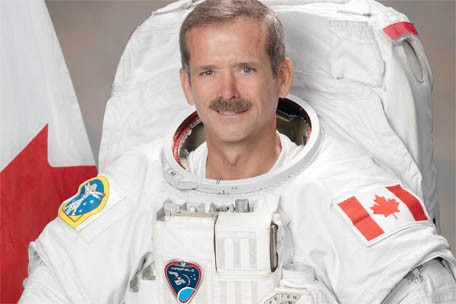
    Retirement is a good time for people for look back at what they have done over their lives and in their work. Some people’s careers never go beyond their own town or city. For other people, however, a job can take them far away, even beyond the earth. When Chris Hadfield retired from his career as an astronaut on July 3rd, 2013, he had a chance to look back on a long career in space. His most famous success was being the leader of the International Space Station. The education he received and the work he did in his early years all helped him to do well in his career as an astronaut.

    Chris Hadfield grew up on a farm in Ontario. He became interested in flying and joined the Air Cadets at a young age. During this time, he learned to operate first gliders and then regular powered airplanes. By the time he retired, he had flown over seventy different types of planes and other aircraft.

    After he finished his basic schooling, Chris Hadfield went to study at the Royal Military College in Kingston, Ontario. He completed a degree in mechanical engineering there before going on to do research at the University of Waterloo. Next, he studied at the University of Tennessee and received a Master of Science. Early in his career, he became a fighter pilot in the Canadian Armed Forces. In 1983, he received an award for best pilot in the Basic Jet Training in Moose Jaw, Saskatchewan.

    In 1992, Chris Hadfield became one of four astronauts working at the Johnson Space Center in Houston, Texas. He traveled into space several times and even helped to install a tool called the Canadarm onto the International Space Station. He worked with the Russian space program between 2001 and 2003 and later used his research skills to test the possibilities of underwater life at a station near the coast of Florida.

    In 2012, Chris Hadfield was chosen to work as the head of the International Space Station. He worked there for five months, conducting scientific experiments in areas such as gravity’s effects on humans. All the way through, he used social media sites like Twitter to tell people on earth what he was doing. He returned to earth in May 2013 and announced his retirement a month later. His official retirement began on July 3rd, 2013.

    Not all astronauts train in the same way as Chris Hadfield did, and some might never actually work in space. However, an education in one of the sciences or engineering, and also work experience, is necessary for most jobs in this field. Some knowledge of medicine is necessary since astronauts have no access to hospitals in space. Astronauts need to be in fairly good health and to be able to move to different locations for work. The pay is good, and astronauts can often have extremely varied careers. Not too mention that you get to go where few other people have ever gone before!

  • Astronomers: Observers of Space

    Astronomers: Observers of Space

    It’s easy to imagine an astronomer spending their days (or, rather, their nights) gazing up at the stars observing planetary activity and other celestial bodies. To a certain extent you wouldn’t be too far off from the truth, but the life of an astronomer isn’t anywhere near as romantic as we’d like to think it is. In fact, the majority of the a professional astronomer’s career is spent analyzing pre-recorded data. There are occasions when an astronomer might take a seat at the helm of an optical telescope or use the recorded data from a radio telescope to inspect extraterrestrial space, but these instances will usually take place every few months or even years, depending on the nature of his or her research. Others exclusively use programmed computer simulations to research and simulate recorded findings to learn more about them. An astronomer’s primary focus, however, remains to observe planets, stars, galaxies and the ever changing intergalactic landscape.

    Education you say?
    The academic background of an astronomer can vary. There are universities like York and the University of Toronto that offer degree programs in Astronomy. Typically, a bachelor’s degree in science (usually chemistry or physics) is completed first. Then an aspiring astronomer might set his or her sights on a Master’s of Astrophysics and/or a Doctorate in Astronomy. Needless to say that there are a variety of paths to take, most of which generally stay close to the mathematics, chemistry and physics fields.

    Where can you get a job?
    Generally, astronomers find work with research institutions and universities. Working at a research station will require the astronomer to be fully focused on a branch of research, while a position at a university usually includes a teaching component, instructing courses at the undergraduate level, or supervising those at the master’s and doctorate levels.

    The skills you’ll need
    If you’re thinking of pursuing astronomy in the future, there are a few things you can start on now to help increase your chances of success. In high school it’s a good idea to take a wide range of courses while also taking all of the sciences and mathematics, of course. Geography and geology (if your school offers it) wouldn’t be such a bad idea either, since most celestial objects are composed of the same components as Earth. Lastly, work on developing your research skills, as well as reading and writing. As you enter post-secondary education you won’t have as much time to perfect those skills, so the sooner you feel confident in your ability to think critically and articulate your thoughts, the better.

  • Uncovering Life on Mars with the Curiosity Rover

    Uncovering Life on Mars with the Curiosity Rover

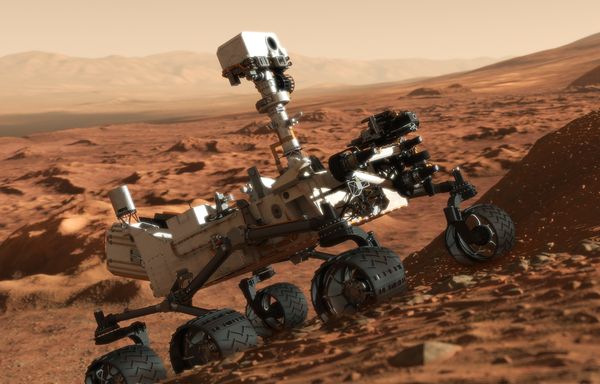
    The Curiosity Rover is a mobile laboratory built by NASA’s Mars Science Laboratory. Launched on November 26, 2011 from Cape Canaveral in Florida, Curiosity’s 23 month journey through outer space finally came to an end on August 6, 2012. On landing day, a live stream of NASA’s JPL (Jet Propulsion Laboratory) team gave the public a small glimpse into the landing process. Upon successfully reaching its destination, Gale Crater, Curiosity began its official mission to determine if that area of the Martian surface was ever able to sustain microbial life.

    Over the course of a two-year mission, Curiosity will deploy its 10 instruments to collect data on its surroundings. Curiosity will analyze samples of rocks, dust and minerals looking for any evidence of favourable conditions for life. In the first three weeks after arriving on Mars, NASA reported the rover had beamed back more data than all of the other rovers previously deployed to Mars.

    As of March 2013, Curiosity has uncovered considerable evidence that suggests ancient life existed on Mars. Samples from what is thought to be an ancient lake bed reveals the remnants of clay and minerals that could have only come into being with the presence of favourable conditions for microbes.

    Mount Sharp: The Key to a Martian History?
    Early on in its documentation of the Red Planet, Curiosity sent back various images of Gale Crater. One image, taken with a wide angle telephoto lens, revealed a “geological unconformity” in the layers of Mount Sharp, the 5km-high peak at the centre of Gale Crater. According to the New York Times, for planetary geologists, the layers of Mount Sharp are an archive of the planet’s history and could bring us closer to discovering if Mars sustained microbial life at one time.

    “Those layers are our ultimate objective,” says Mastcam (Master Camera) principal investigator Michael Malin. “The dark dune field is between us and those layers. In front of the dark sand you see redder sand, with a different composition suggested by its different color. The rocks in the foreground show diversity – some rounded, some angular, with different histories. This is a very rich geological site to look at and eventually to drive through.”

    Curiosity will take the better part of a year to make its journey towards Mount Sharp, making brief stops to take readings and test samples along the way.