Tag: student debt

  • Fighting Back Against Student Debt

    Fighting Back Against Student Debt

    Education is a crucial stepping stone towards your future aspirations. Yet what should be of great help to individuals instead has become a burden on many. Due to the importance parents, employers, and students themselves have placed on post-secondary schooling, it is a necessity that people often struggle to obtain. This is far from an isolated problem. In 2015, the amount of total outstanding student loan debt in the United States reached $1.2 trillion amongst 40 million students, meaning each graduate carried an average debt of $29,000.

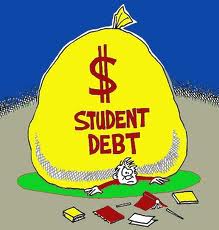
    Stepping out from college or university with this enormous weight on one’s head has led to setbacks and postponements. Although research shows that graduates typically fare much better economically than those who do not attend college or university, those who are still paying off their debt delay major purchases such as a car or home. They often take longer to have children due to the financial strain. This places a young, aspiring graduate in a disadvantageous situation at the very early stages of their career. Promotions will not come for years, and in turn the aforementioned life milestones happen later than one may expect and desire. People are also less likely to pursue entrepreneurial efforts, and fewer small businesses can damage the entire economy.

    Given all these negative consequences, you will want to mitigate the burden and find ways to eliminate that debt altogether. Working while in school can allow for additional income, and part-time or online jobs may be very helpful in chipping away at your debt. Watching your spending is also important. Restrict yourself to eating out only a certain number of times per month, be willing to rent a smaller place to live than you might have intended, and keep track of all your expenses via a spreadsheet each month. All of this might not be enough to overcome your debt, and further action may be required.

    It is important to know which type of loan you have, whether it be national, provincial, or private. This will allow you to contact the right organization for assistance. In Ontario, those who owe a debt through the Ontario Student Assistance Program can apply for financial relief. You will not have to pay until your income reaches a certain level. The National Student Loans Service Centre has programs to help struggling individuals. Options include term revision and a two-stage repayment assistance plan that can ease the burden. These choices, coupled with wise spending and saving, can lead to freedom from debt.

    Gaining an education should not be seen as a negative. That credential, and the knowledge and skills it has bestowed upon you, should be a stepping stone to bigger and better things. By knowing how to tackle your student debt, you can ensure that you utilize your schooling to live the life you deserve.

    Sources:

    Gorman, Ryan. How student-loan debt is dragging down the economy. Business Insider. http://www.businessinsider.com/3-charts-explain-the-effect-of-student-loans-on-the-economy-2015-5

    Holland, Kelley. The high economic and social cost of student loan debt. CNBC. http://www.cnbc.com/2015/06/15/the-high-economic-and-social-costs-of-student-loan-debt.html

    myMoneyCoach. Student Loan Repayment Assistance & Forgiveness Options in Canada. http://www.mymoneycoach.ca/budgeting/student-budgeting/national-student-loan-repayment-assistance
  • Making Peace with Debt

    Making Peace with Debt

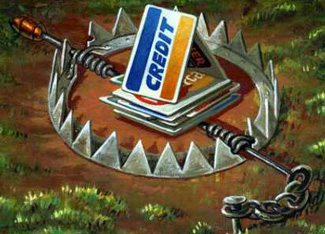
    Debt is a four letter word that should not be feared.

    Students who learn how to manage debt during university are paying themselves a great investment. You may be hearing horror stories of friends of friends who are paying off student loans years after graduation. Even the media pitches in and tells tales of students with debt so large that it seems unlikely they will ever pay off.

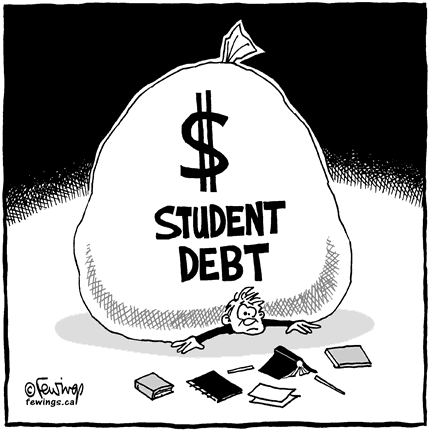
    No one wants to start out in life saddled with debt, but this could really be the best thing you do for yourself.

    Good Debt vs. Bad Debt

    A $1000 handbag or watch from your favourite designer is bad debt. $1000 towards books and supplies is good debt. Debt that goes towards something that will benefit you in the future is fine. Using borrowed money to earn your degree will only guarantee yourself a chance to earn much more than someone without a degree or diploma.

    Dr. Richard Settersten and Barbara E. Ray’s book Not Quite Adults highlights this fact, “taking on a little debt for a bigger payoff down the road is smart”. Settersten and Ray also shared Nobel laureate, Milton Friedman’s advice: people should borrow the most early on when their earnings are the smallest, save a lot when they are in their highest earning years in midlife, and then start spending all those savings after they retire.

    Be Realistic

    BMO Financial Group surveyed students across Canada and found that half believe that they will graduate with zero or less than $10,000 debt. This doesn’t quite match up with the findings from Statistics Canada, which states the average student graduates with $18,800. Be realistic when you’re borrowing money and always know how much you’ve taken out and how much you’re spending.

    Be Strategic

    Arthur Chan, who took out Canada Student Loans for fives years at Carleton University to complete his engineering degree, graduated with a debt of $21,000. He wasn’t able to find a job in his field until 8 months after graduation. Now, 2 years in a full time position with the government of Canada, that massive loan is all but a distant memory. How did he do it?

    Just because you’re able to borrow a large amount of money, doesn’t mean you have to spend all of it. Arthur lived at home during university and took public transportation everyday to keep costs low. He also worked part time retail jobs during summer vacations. When he wasn’t able to find a job right away, he applied for interest relief on his student loans. Once he was able to secure a job, he used his earnings to get rid of the debt as quickly as possible. The key is to learn how to save as much as you’re able to borrow.

    With tuition costs rising across Canada, sometimes adding everything up really discourages prospective students. Don’t let debt deter you from getting the education you want. Remember: education is a right, not a privilege.

  • Student Debt: Your New BFF

    Student Debt: Your New BFF

    Debt is a four letter word that should not be feared.

    Students who learn how to manage debt during university are paying themselves a great investment. You may be hearing horror stories of friends of friends who are paying off student loans years after graduation. Even the media pitches in and tells tales of students with debt so large that it seems unlikely they will ever pay off.

    No one wants to start out in life saddled with debt, but this could really be the best thing you do for yourself.

    Good Debt vs. Bad Debt
    A $1000 handbag or watch from your favourite designer is bad debt. $1000 towards books and supplies is good debt. Debt that goes towards something that will benefit you in the future is fine. Using borrowed money to earn your degree will only guarantee yourself a chance to earn much more than someone without a degree or diploma.

    Dr. Richard Settersten and Barbara E. Ray’s book Not Quite Adults highlights this fact – Taking on a little debt for a bigger payoff down the road is smart. Settersten and Ray also shared Nobel Laureate Milton Friedman’s advice: people should borrow the most early on when their earnings are the smallest, save a lot when they are in their highest earning years in mid-life and then start spending all those savings after they retire.

    Be Realistic
    BMO Financial Group surveyed students across Canada and found that half believe that they will graduate with zero or less than $10,000 debt. This doesn’t quite match up with the findings from Statistics Canada, which states the average student graduates with $18,800 in debt. Be realistic when you’re borrowing money and always know how much you’ve taken out and how much you’re spending.

    Be Strategic
    Arthur Chan, who took out Canada Student Loans for fives years at Carleton University to complete his engineering degree, graduated with a debt of $21,000. He wasn’t able to find a job in his field until 8 months after graduation. Now, 2 years into in a full-time position with the Government of Canada, that massive loan is all but a distant memory. How did he do it?

    Just because you’re able to borrow a large amount of money doesn’t mean you have to spend all of it. Arthur lived at home during university and took public transportation everyday to keep costs low. He also worked part-time retail jobs during summer vacations. When he wasn’t able to find a job right away, he applied for interest relief on his student loans. Once he was able to secure a job, he used his earnings to get rid of the debt as quickly as possible. The key is to learn how to save as much as you’re able to borrow.

    With tuition costs rising across Canada, sometimes adding everything up really discourages prospective students. Don’t let debt deter you from getting the education you want.

    Remember: education is a right, not a privilege.

  • Debt: Your New BFF

    Debt: Your New BFF

    Debt is a four letter word that should not be feared.

    Students who learn how to manage debt during university are paying themselves a great investment. You may be hearing horror stories of friends of friends who are paying off student loans years after graduation. Even the media pitches in and tells tales of students with debt so large that it seems unlikely they will ever pay off.

    No one wants to start out in life saddled with debt, but this could really be the best thing you do for yourself.

    Good Debt vs. Bad Debt

    A $1000 handbag or watch from your favourite designer is bad debt. $1000 towards books and supplies is good debt. Debt that goes towards something that will benefit you in the future is fine. Using borrowed money to earn your degree will only guarantee yourself a chance to earn much more than someone without a degree or diploma.

    Dr. Richard Settersten and Barbara E. Ray’s book Not Quite Adults highlights this fact, “taking on a little debt for a bigger payoff down the road is smart”. Settersten and Ray also shared Nobel laureate, Milton Friedman’s advice: people should borrow the most early on when their earnings are the smallest, save a lot when they are in their highest earning years in midlife, and then start spending all those savings after they retire.

    Be Realistic

    BMO Financial Group surveyed students across Canada and found that half believe that they will graduate with zero or less than $10,000 debt. This doesn’t quite match up with the findings from Statistics Canada, which states the average student graduates with $18,800. Be realistic when you’re borrowing money and always know how much you’ve taken out and how much you’re spending.

    Be Strategic

    Arthur Chan, who took out Canada Student Loans for fives years at Carleton University to complete his engineering degree, graduated with a debt of $21,000. He wasn’t able to find a job in his field until 8 months after graduation. Now, 2 years in a full time position with the government of Canada, that massive loan is all but a distant memory. How did he do it?

    Just because you’re able to borrow a large amount of money, doesn’t mean you have to spend all of it. Arthur lived at home during university and took public transportation everyday to keep costs low. He also worked part time retail jobs during summer vacations. When he wasn’t able to find a job right away, he applied for interest relief on his student loans. Once he was able to secure a job, he used his earnings to get rid of the debt as quickly as possible. The key is to learn how to save as much as you’re able to borrow.

    With tuition costs rising across Canada, sometimes adding everything up really discourages prospective students. Don’t let debt deter you from getting the education you want. Remember: education is a right, not a privilege.