Tag: student loans

  • Student Loan Repayment Assistance for Borrowers with Permanent Disabilities

    Student Loan Repayment Assistance for Borrowers with Permanent Disabilities

    Students with permanent disabilities who are having difficulty paying back their student loans are eligible for the Repayment Assistance Plan for Borrowers with Permanent Disabilities (RAP-PD). RAP-PD makes debt repayment easier for students with permanent disabilities by allowing them to pay back what they can reasonable afford.

    Under RAP-PD:

    • Loan payments are based on family income, family size and disability related expenses
    • Students will not make loan payments exceeding 20% of their income (on loans covered by RAP-PD)
    • In some cases, students will not have to make any loan payments until their income increases
    • No student with a permanent disability should have a repayment period longer than 10 years

    For other Inquiries relating to student loans contact:

    CANLEARN
    Web: http://www.canlearn.ca/
    Email: info@canlearn.ca
    National Student Loans Service Centre
    Within North America: 1-888-815-4514
    Outside North America: 1-800-2-225-2501
    TTY: 1-888-815-4556
    P.O. Box 4030
    Mississauga, ON, L5A 4M4

  • What Is the Canada Student Loans Program?

    What Is the Canada Student Loans Program?

    The Canada Student Loans Program provides financial assistance in the form of loans and grants to post-secondary students who demonstrate financial need.

    Application Information
    – Students must first apply for a provincial or territorial student loan. Students are automatically considered for a Canada Student Loan when they apply for a provincial or territorial student loan.
    – Loan application forms are available from provincial and territorial student assistance offices and at financial aid offices in educational institutions.
    – Students must apply every year in order to receive funding.

    Important Information
    – Students must give loan providers proof of enrolment within six months of finishing their last study period in order to maintain interest-free status while studying. Confirmation of Enrolment forms are issued by educational institutions.
    – The governments of the Northwest Territories, Nunavut and Quebec do not participate in the Canada Student Loans Program but offer their own financial assistance programs for students.

    Student Loans
    Government student loans are a great way to help you pay for your post-secondary education at a designated college, university or other post-secondary institution.

    The Government of Canada and most provincial or territorial governments work together to deliver federal and provincial student loan and grant programs. This makes things simpler for you.

    – In Ontario, British Columbia, Saskatchewan, New Brunswick, and Newfoundland and Labrador, the Government of Canada and the provincial governments work together to provide financial assistance through Integrated Student Loans.
    – In Alberta, Manitoba, Nova Scotia and Prince Edward Island, Canada Student Loans and Grants are available alongside provincial or territorial student financial assistance.
    – In Nunavut, the Northwest Territories and Quebec, Canada Student Loans are not available. These jurisdictions have their own student loan programs.
    – In Yukon, only Canada Student Loans and territorial Grants are available to permanent residents of the Yukon.

  • Books and Bills: Financing your Post-Secondary Studies

    Books and Bills: Financing your Post-Secondary Studies

    An education is a worthwhile investment—but if you’re making the decision to go to college or university, you may find yourself questioning the amount of money going into your studies. Tuition fees can pile up, and can range anywhere from five to eight thousand dollars per year. Specific programs, like business or engineering, are even more expensive at many institutions. When examining the costs of it all, post-secondary education seems more and more daunting, but (though it might take a little work) there are ways to get the learning you’re entitled to without breaking the bank.

    When you’re looking at a post-secondary program, finances should be one of your points of consideration. Depending on the university or college, tuition rates can vary, and if you know your program is offered in equal quality at a cheaper school, this could be a logical deciding factor. The thing is, post-secondary finances are comprised of much more than tuition payments: in all programs there are auxiliary costs, like textbooks, that you have to consider. Furthermore, there is the issue of residence; you may choose to live at home in order to save some money, since residence can cost you up to ten thousand dollars every year. But if you’re looking at an institution that’s a little further from home, living expenses are mandatory costs as well.

    Overall, going to college or university can be a financial ordeal if you don’t have the funding. That being said, don’t feel you have to miss out on educational opportunities due to financial problems. Scholarships that are awarded based on academic merit are often included upon your admittance to a post-secondary program, provided you fall into a certain grade category (typically, very large schools tend to have more stringent academic requirements for entrance scholarships). There are also scholarships you can apply for, whether based on grades, extra-curriculars, or community involvement, and these scholarships can be offered by the school itself or available through external sources. You just have to do your research.

    Financial assistance can be available to you even if you don’t qualify for scholarships—bursaries, which are based solely on financial need, are also offered by many universities. These require an application, but are definitely a worthwhile investment. Bursaries are grants, not loans, so they don’t need to be paid back! If scholarships and bursaries don’t work out, consider applying for a student loan (basically, borrowing money from the government). Programs like OSAP in Ontario are in place specifically to help people get through school, even if they don’t have the funding for it. They also allow some time after you graduate to get yourself organized until you are able to pay the money back.

    Post-secondary can be a financial burden, but don’t let yourself miss out on the opportunity to get an education. With scholarships, bursaries and loans in place, there are always ways to get the help you need.

  • Living Without a Salary – and Student Loans

    Living Without a Salary – and Student Loans

    Today my grandmother gave me a thick book entitled “How to Survive Without a Salary” by Charles Long.  The truth is that I’m employed, both as a writer and a barista at a coffee shop. With a career as a student and jobs that pivot around an education’s schedule, it’s pretty much impossible to predict long term income or complete financial stability anyway. My grandmother knows that despite the state of a person’s finances, tips on how to adopt what Long calls the “conserver lifestyle” are always good to consider.

    So let’s consider them. Long defines the term conserver lifestyle as “a means of coping better with what (one) already has.” Chapter one of his novel deals with internal factors preventing you from finding success in that regard. Chapter two is ‘Assessing Yourself: Making a Budget,’ which is definitely worth a look. You never want to be spending more than your wallet can handle, especially when, as students, there are some costs that can’t be evaded.

    According to Statistics Canada, Canadian student tuition fees alone averaged $5,777 in 2008-09, with Quebec’s $2,488 average the lowest and Ontario the highest at $8,797. But there are also “ancillary fees,” those compulsory extra charges over and above tuition to cover things like athletic programs, health services and student associations. These fees added an average of $695 more to the demands on a full-time Canadian undergrad in 2008-09, ranging from a low of $423 in New Brunswick to a high of $827 in Nova Scotia. Ancillary fees are usually unregulated, but you can often look into them on school websites and find opportunities to opt out of what you don’t need.

    We can all survive without a salary while we are students if we keep watch on costs and budget ourselves accordingly. Long claims that, “Costs are always more important than earnings – there is nearly always more advantage in reducing costs than in increasing earnings.”

    In order to be able to sustain yourself while you get an education with an unstable salary and all of these subsidiary costs to student life, several banks like RBC and TD Canada Trust have places for you to create your own budget lists on their websites. At the time the book was written, without widespread use of the Internet it was a bit tougher to budget. Today many student budget list templates can be found online as well. The Office of the Superintendent of Bankruptcy Canada’s student budget section is a good resource, at http://www.ic.gc.ca/eic/site/bsf-osb.nsf/eng/br01399.html.

    After the section on budgeting, Long gives eleven more chapters of detailed analyses on financial strategies, many of them useful. He says, “A penny saved is not a penny earned. A penny saved is a hell of a lot more than a penny earned today.” We know that simply by keeping our savings in the bank, they grow with interest. That can apply to scholarship money or bursaries that may be extractable for personal holding (OSAP, for example).

    Chapter six, on ‘The Second-Hand Market’, is my personal favourite, advocating the benefits of getting everything and anything used or pre-owned. Shopping in thrift stores doesn’t only help your wallet, but choosing to reuse can help our planet, too.

    I’m glad to have been given this book, and I’m now prepared to become more money-conscious. With sky high tuition costs and the absence of established careers at this point in our lives, it’s smart to consider advice from anyone.

    And where did my grandmother find this yellowing treasure? At Value Village, naturally.

  • What Is the Canada Student Loans Program?

    What Is the Canada Student Loans Program?

    The Canada Student Loans Program provides financial assistance in the form of loans and grants to post-secondary students who demonstrate financial need.

    Application Information
    – Students must first apply for a provincial or territorial student loan. Students are automatically considered for a Canada Student Loan when they apply for a provincial or territorial student loan.
    – Loan application forms are available from provincial and territorial student assistance offices and at financial aid offices in educational institutions.
    – Students must apply every year in order to receive funding.

    Important Information
    – Students must give loan providers proof of enrolment within six months of finishing their last study period in order to maintain interest-free status while studying. Confirmation of Enrolment forms are issued by educational institutions.
    – The governments of the Northwest Territories, Nunavut and Quebec do not participate in the Canada Student Loans Program but offer their own financial assistance programs for students.

    Student Loans
    Government student loans are a great way to help you pay for your post-secondary education at a designated college, university or other post-secondary institution.

    The Government of Canada and most provincial or territorial governments work together to deliver federal and provincial student loan and grant programs. This makes things simpler for you.

    – In Ontario, British Columbia, Saskatchewan, New Brunswick, and Newfoundland and Labrador, the Government of Canada and the provincial governments work together to provide financial assistance through Integrated Student Loans.
    – In Alberta, Manitoba, Nova Scotia and Prince Edward Island, Canada Student Loans and Grants are available alongside provincial or territorial student financial assistance.
    – In Nunavut, the Northwest Territories and Quebec, Canada Student Loans are not available. These jurisdictions have their own student loan programs.
    – In Yukon, only Canada Student Loans and territorial Grants are available to permanent residents of the Yukon.

  • What Is the Student Loans Process?

    What Is the Student Loans Process?

    As an Ontario resident, you have two different types of student loans you can apply for. The first is federally mandated (Canada Student Loan) and the second is from the provincial government itself (Ontario Student Assistance Program – OSAP). You can also apply for both at the same time using the Canada-Ontario Integrated Student Loan program, which is accessed via the National Student Loans Service Centre.

    Sounds good – but where do I go to apply?

    The best way to apply is online via the OSAP website. You will need to register to use the site by providing some personal information, including your social insurance number.

     https://osap.gov.on.ca/OSAPSecurityWeb/public/login.xhtml?lang=en

     I’ve registered – now what?

    Gather information about your financial situation. You will be asked to provide an overview of your expenses for the school year (rent, utilities, food, etc.). The more information you can provide the better. You will be asked to print out and sign a declaration indicating that the information you have provided is true and accurate. If a parent or guardian will be helping you out financially during the school year, this information needs to be included on your application and they will need to sign their own separate declaration form.

    How much money will I get?

    The amount you get will depend on your unique financial situation. This is why it is important to provide as much information as possible during the application process. The maximum amount you can receive per week is $210 from the Canada student loan portion and $150 per week for the Ontario portion. It is important to note that you will not be given money weekly – it will be paid out to you in a lump sum at the beginning of your semester. This means budgeting is extremely important!

    When can I apply?

    If you are going to be attending school in September 2012, you can apply as early as May 2012. The latest you can apply is 90 days before the end of your study period. It is recommend to apply as soon as you are able to prevent any delays in receiving your funding.

    My application was accepted – when do I get my loan?

    Shortly before the academic year commences, you will be either sent a cheque or a funding certificate. Most students will receive a funding certificate. This certificate is a legal form that authorizes the release of a loan to the student via the National Student Loans Service Centre. This certificate must be taken to a designated Canada Post outlet to be converted into your student loan (you can find a designated outlet by visiting the following link: http://www.canlearn.ca/eng/onlinetools/canadapost/cp_clf/on.shtml)

    You will need to provide a void cheque with your funding certificate so the funds can be electronically deposited into your bank account. You can arrange to have a cheque mailed to you if you prefer.

    Your student loan will then be dispersed to you twice – the first at the beginning of your studies in September (generally, 60% of your total loan amount) and the second at the beginning of January.

    You can always get help and more information by visiting the OSAP website directly. The following link will help you get the answers to the majority of your questions:

    https://osap.gov.on.ca/OSAPPortal/en/PostsecondaryEducation/OSAP/GettingOSAP/HowtoApply/OSAP004031.html

    Good luck and happy studying!


  • November Scholarships – Apply Now!

    November Scholarships – Apply Now!

    It’s November, so we know what you’re thinking about – getting through exams and counting down the days to when you will be on holidays come December. If you’re planning on starting post-secondary education next fall, thinking about scholarships is something you need to pencil in, too! Many scholarships are accepting applications NOW. Get yours in while everyone else is concentrating on Christmas vacation and you’ll have an even better shot at scoring that free money!

    1. Canadian Society for the Study of Religion Undergraduate Student Essay Contest – Open to all students enrolled in an undergraduate program at any school. Amount: $250. Deadline: April 18, 2014.

    2. Burger King Scholars Awards – Open to all students across Canada who are employed by Burger King or who are children of Burger King employees. Amount: Up to $50,000. Deadline: January 10, 2014.

    3. Terry Fox Humanitarian Award – Open to all students across Canada who demonstrate voluntary humanitarian work. Amount: $7000. Deadline: February 1, 2014.

    4. Dalton Camp Award – Open to all students across Canada. Amount: $10,000. Deadline: November 15, 2013.

    5. TD Scholarships for Community Leadership – Open to all students across Canada. 20 awards available! Amount: Up to $70,000 over 4 years. Deadline: December 6, 2013.

    6. RBC Students Leading Change Scholarship for Undergraduates – Open to all students across Canada entering post-secondary education on 2014. Amount: Varies. Deadline: Applications available November 1, 2013 – deadline TBD.

    7. Horatio Alger Canada Scholarship Program – Open to students in Quebec, Ontario, BC or Alberta. Amount: $5000. Deadline: December 1, 2013.

  • Tips on Student Finances

    Tips on Student Finances

    1. Start planning your finances early. Figure out how much money you’ll need as soon as possible (tuition, ancillary fees, books and supplies, living expenses) so you’ll know how much financial support you’ll need. Include a realistic monthly budget for transportation, laundry, groceries, toiletries, entertainment, rent, etc.

    2. Use free money first if you have access to it (money from parents, money saved for your education including RESPs, scholarships and bursaries, etc.). If you need to borrow money, use low interest or no-interest options first, with OSAP being the best example. If you need to borrow money on top of that, try and get a cheap student loan. Stay away from credit cards if you can.

    3. Check out the OSAP Access Window at http://osap.gov.on.ca. The OSAP Access Window was developed by the Ontario government to help students make informed decisions when planning for their post-secondary education. It provides approximate costs by post-secondary institution, OSAP funding estimators, repayment tools and lots of other useful information.

    4. Explore early the scholarships, awards and bursaries offered by the university. There may be some program-specific or special interest awards that you may be eligible for. Many scholarships, awards and bursaries have deadlines and require applications.

    5. Don’t miss an application deadline. Include deadlines for financial support applications in your calendar and make sure you apply in time to be considered.

    6. Investigate getting a job as a source of income. If you need to work, work as much as possible in the summer period, rather than during the school year. If you need to work during the school year, try to avoid working a great deal in your first semester or in any semester that you expect to be particularly challenging. If you expect to be pressed for cash, consider postponing your studies for a year and saving some money, or consider reducing your course load from five or six courses to three or four courses per semester.

    7. Look into various means of saving money:
    • Brown bag it. Packing your own lunch is cheaper and healthier.
    • Buy new to you. Whether it’s used books, secondhand clothing or garage sale furniture, you can find what you need at a fraction of the cost.
    • Shop online to browse, create budgets, compare prices and take advantage of online savings.
    • Take advantage of student discounts. Be sure to flash your student ID at entertainment venues, on public transportation and anywhere else that will take it. Check out special deals through your student union.
    • Pick up the free weeklies to see what entertainment is going on in the city for free. Also check out free events hosted by the university.
    •Maximize public and active transportation (walking, cycling) to keep commuting costs down.
    • Avoid the latte effect and buy a coffeemaker or a kettle to make your own.

    8. Resist the temptation to sign up for a student credit card. If you end up falling into the “this-is-my-only-credit-card” crowd, make sure you get one with a low interest rate and ask them to fix the credit level at $500. Then be sure to use it only for emergencies. When credit cards are the only accepted methods of payment, as in online transactions, save the money you will need before you make the purchase. Then pay off your credit card immediately after charging it.

    9. A line of credit typically has a much lower interest rate than credit cards. A line of credit can be a cost-effective, convenient way to borrow money for a short period of time. Most financial institutions have a student line of credit that offers a lower interest rate, no annual fee and fairly lenient terms and conditions.

    10. Monitor your expenses. Keep all your receipts and track your expenses. This will force you to write down how much you’re spending, prompting you to think about whether you really need to spend that money or not. This will also definitely let you know if you need to change your spending habits and/or increase your income before it’s too late.

    11. If you find you’re running into financial difficulties, immediately speak to a student financial assistance advisor on campus or at your bank. They will look at your budget and give you some good advice before you get in over your head.

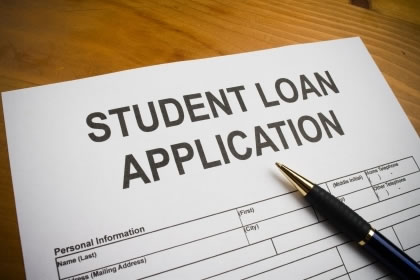
  • Student Loans: The OSAP Process

    Student Loans: The OSAP Process

    It is a question that student advisors are intimately familiar with and search engines encounter all the time. What is OSAP? If you are financially unable to attend post-secondary schooling, OSAP can help you with that. OSAP is run by the Ontario Ministry of Training and is funded by the province. Their services entail an individualized program specific to your needs. Potential applicants must prove their financial need to attain registered status.

    The criteria is particularly focused on demographics, income and loan history, according to campusaccess.com.

    “You must have either resided in Ontario all of your life or Ontario is the last province where you resided for 12 consecutive months without attending a post-secondary institution,” the site advises.

    There are two ways to apply for OSAP: The online application and the written application. Living in a digital age, online applications seem to be the more popular medium. The majority of applicants choose this because it is quicker, requires no fees, and the system provides online estimates of the funding you may receive. With this option, there is no waiting around and you are able to track the status of your application online.

    University graduate Sabrina Sagl is attending college and still using OSAP to fund her education.

    “I first got OSAP five years ago and was incredibly grateful , because of OSAP, I was able to afford to go to university,” said Sagl. Despite her ability to attend her school of choice, she was met with harrowing realizations about the negative sides of the service. “You get a certain amount of money per year, in two large lump sums, and it is incredibly easy to spend the money negligently.”

    The harsh realities are instilled after a few years of accumulated debt. Once students have completed their educational studies, they are given a six-month grace period to repay their student loans interest free. Some students are forced into trying to maintain a balancing act.

    “It was very difficult having to work, especially shift-work during the school year,” said Sagl. “I had to decrease my course load and take summer courses in order to obtain my degree.”
    If you are applying for OSAP, you need submit your application as early as you can. While OSAP provides a helping hand to students struggling with educational fees, it is far from a one-stop solution. The service often leaves students in a difficult spot financially. Students are advised to focus on their own fiscal prudence in addition to relying on the program for support.

  • The Cost of Education

    The Cost of Education

    Don’t let college and university be a costly mistake.

    Avoid the lure of a big paycheck for a diploma or degree that you really don’t love.

    It’s hard to make a decision at the tender ages of 16 and 17 regarding the career you’ll have for the next 30 years. Yet this is what parents, teachers and guidance counselors are hoping you would do when it’s time to apply for post-secondary. A Gallup and Sallie Mae survey titled How America Pays for College, found that more than half of high school seniors spent more time planning for the prom than thinking about university.

    CBC reports that the average cost for tuition in Ontario rose 207% from 1990 to 2007. It would now cost Ontario students $5,160 a year. It’s cheapest in Newfoundland and Labrador at only $2,606 and the most expensive tuition fee goes to Nova Scotia, where students fork over $6,571.

    With tuition fees on a meteoric rise, pressure is placed on the students often for the wrong reasons. Parents who are weathering the recession and stock market crisis will warn their son or daughter of choosing professions that offers stability and a large paycheck. Accountant? Programmer? Nurse? Sure, they all sound interesting…why not give it a try?

    Valentina (not her real name) started off going to university to pursue a Bachelor in Public Administration. It became evident that this really wasn’t for her. She then tried switching into Pharmaceutical Studies, only to finally graduate in Sociology. A year after receiving that degree she enrolled in college for Event Management. Still unhappy, she is now halfway through an Optician program. She feels confident that she has found her true career and even landed a student optician position during her studies.

    College and university can be very expensive, if you’re still unsure of what you would like to do. Not everyone can afford to switch around majors like Valentina did. Worse still if you stay in a program that you know you’re not suited for. Erica Cervini’s recent article for The Age found that, “If students don’t feel they belong to their university, the odds are high that they will drop out”. The greatest price to pay for education is an incomplete one.

    It’s okay to take your time and not rush into university or college when you’re not sure of what you would like to do. Volunteer during high school, talk to other adults, explore sites like Jobspeopledo.com or even consider taking a gap year to think about what would you be happy to do. Treat your future career like finding your soul mate. If you meet a big shot executive who makes loads of cash, would you be with him/her if your heart just isn’t into it?